Young protesters make education a test of government action
Students and young activists gathered at Bangkok's Democracy Monument on Nov. 20, calling for fairer education, a greater say in decisions that affect young people and action from Prime Minister Anutin Charnvirakul's government. The rally began at about 3 p.m. and was held on World Children's Day under the slogan "Wear Cat Ears to Chase Out Noo." Noo, meaning mouse or rat in Thai, is a nickname for Anutin.
Contents
- Young protesters make education a test of government action
- Four demands set out the students' aims
- Costs and school rights reach beyond tuition
- Protesters raised conscription and social tensions
- Organisers reject claims of party control
- Anutin says officials will consider the proposals
- Traffic restrictions changed as the crowd grew
- Key Points
Some participants wore school or university uniforms with cat ear headbands. Near McDonald's on Ratchadamnoen Avenue, speakers criticised unequal access to education and students' limited influence over school rules. Placards also raised concerns about other social problems, including living costs and compulsory military service.
The gathering was organised by student networks including Studem Network and Free Thai Youth. Organisers said it was independent of political parties. Their central argument was that education is shaped by decisions about money and power, so students should have a meaningful role in setting policy, not just follow rules made by adults.
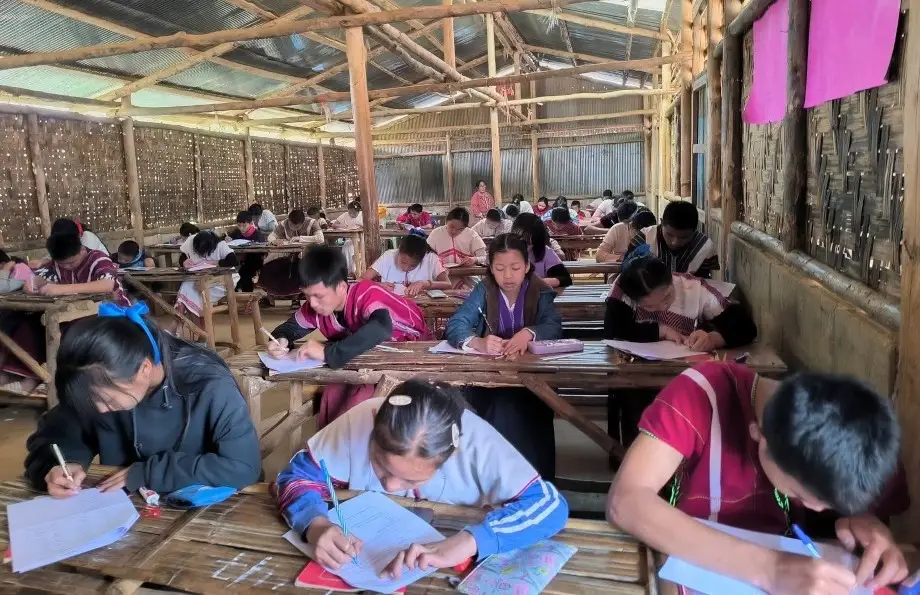
Teerapat, a representative of the student and youth network, said the rally drew inspiration from World Children's Day and a wider wave of protests led by young people. He described an education system where a family's finances can affect whether a student reaches a good secondary school or university, and where some graduates begin working life burdened by student loans despite uncertain job prospects.
Four demands set out the students' aims
Studem Network's statement grouped its education proposals into four demands. Together, they call for more equal access, greater freedom inside schools, a formal role for young people in public decisions and teaching that encourages independent thought.
- Equal access to quality education, regardless of a student's financial or social background.
- More democracy in schools, including restored student rights and a real say in school rules and policies.
- Meaningful youth participation in decisions that shape young people's lives and futures.
- Education that goes beyond preparing workers for business, and instead supports critical thinking, personal freedom and protection from exploitation.
The network said students should be able to question the social arrangements around them, rather than learn only how to compete within them. It also argued that education should help people shape their own lives and build a fairer society.
Teerapat questioned the drafting of a proposed National Education Act, raising concerns about the involvement of people who also helped draft Thailand's 2017 Constitution. The rally did not settle what changes the proposed law should contain. Its demand was that young people have a meaningful part in shaping the rules that govern their education.
Costs and school rights reach beyond tuition
On Nov. 21, former Pheu Thai Party spokesman Prompong Nopparit described a broader set of student demands, including free education through a bachelor's degree without hidden fees. He also cited student input into school rules and protection for teachers and education workers.
The proposals point to costs that can remain even when schooling is described as free, such as charges families may still have to pay. For students, a chance to help set school rules also concerns everyday life: what freedoms they have, how discipline works and whether they can speak up about decisions made at school.
Prompong urged Anutin and relevant government agencies to examine demands one by one, identify which agency is responsible and set clear dates for updates. He said some measures might be possible quickly, while wider changes would need an identified office and a timetable for responding.
His comments connected young people's concerns with those of parents and workers. A family can face school costs while also paying for fuel, food and other essentials. The students' call for fairer education therefore sits alongside broader pressure over household budgets, although the rally and other demonstrations involved different groups and demands.
Protesters raised conscription and social tensions
The young activists' complaints reached beyond classrooms. They called for an end to compulsory military conscription, raised discrimination based on race or nationality and objected to nationalist rhetoric around tensions between Thailand and Cambodia.
Teerapat argued that conflict between the two countries brings economic and social harm rather than benefits to either side. He also said migrant workers contribute to Thailand and should not be treated as threats. Those concerns broadened the rally's message from school reform to the treatment of people who live and work in the country.
Prompong also cited a proposed new constitution drafted by the people among the young people's demands. The constitutional question is separate from the detailed school reforms, but it reflects the protesters' wider request for a stronger public role in decisions about the country's rules.
A separate group led by Kamnan Mano was campaigning near Government House over living costs, low prices for agricultural produce and fuel. Prompong said the group sought a 10 baht per litre reduction in diesel prices. Its presence added to the day's wider picture of public grievances, but it was not the same organisation as the student networks at Democracy Monument.
Organisers reject claims of party control
Teerapat rejected accusations that political parties had directed the demonstration. He said the gathering had no single leader and that participants shared goals rather than taking instructions from a party.
Before his remarks, Teerapat said the young people's position was that political parties should serve the public. He also urged people not to dismiss the demands of students, farmers or ordinary citizens as political manoeuvring. The People's Party's leaders likewise denied being behind the protest, while saying they were willing to listen and raise concerns in parliament.
The question of party involvement matters because it can shift attention away from what protesters are asking for. Teerapat urged critics to judge the demands on their substance. He said the movement was seeking solutions to problems, rather than simply trying to remove the government.
Teerapat said Anutin's administration should step aside if it could not provide meaningful answers. He described young people as part of the country's present as well as its future. Asked whether the rally would grow, he did not promise further action, saying that any broader movement would depend on people outside Bangkok who faced similar problems.
Anutin says officials will consider the proposals
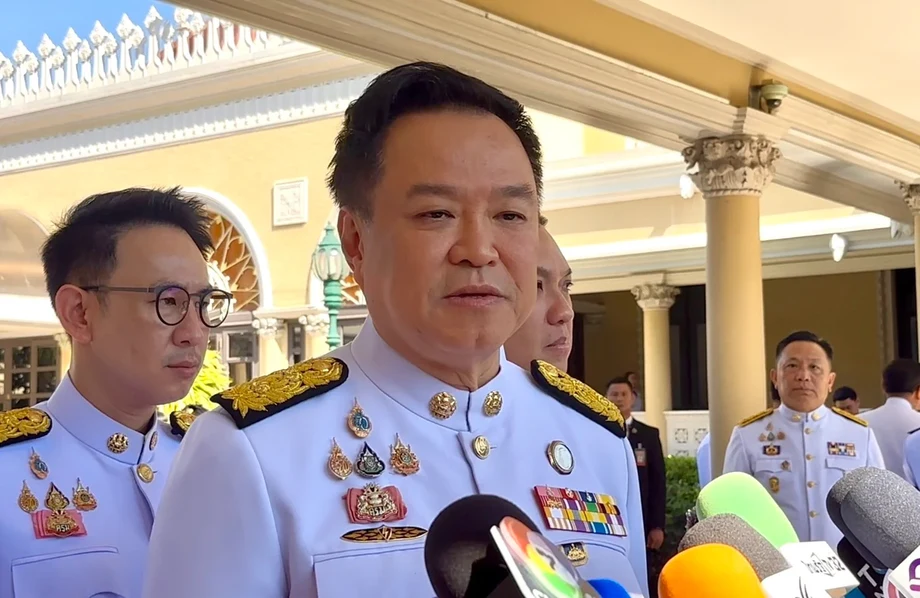
At Government House on the morning of Nov. 21, Anutin said the government was ready to hear demands expressed within the constitution and the law. He said officials would report the proposals, assess which ones could be carried out and pass feasible matters to the relevant agencies.
Asked whether he had heard the previous day's speeches, Anutin replied, "Someone will report." He also said he did not expect the protest to spread as youth demonstrations had in other countries. His comments came after the rally had ended, while its specific requests were still being relayed to him.
Government deputy spokeswoman Captain Phattharatsami Thongsaluangkon said the Education Ministry respected students' freedom of expression. She said the education minister had instructed schools and ministry bodies not to punish, threaten, pressure or harass students for taking part in the protest. The government was also prepared to receive the demands for consideration in reviewing education policy.
That instruction addresses an immediate concern for students who return to school after demonstrating: whether they might face punishment for participating. The government's broader response remains less defined. Anutin said proposals would be considered and assigned where possible, while Prompong called for clear responsibilities and dates for public updates. No timetable for those updates was given.
Traffic restrictions changed as the crowd grew
Police Major General Worasak Pisitbannakorn, commander of Metropolitan Police Division 1, said officers from Chana Songkhram and Samran Rat police stations, along with traffic police, were assigned to monitor the area and maintain order. Organisers had notified police of a gathering planned to continue until 8 p.m.
Worasak said Ratchadamnoen Road was open when he gave his briefing. Later, at about 6 p.m., protesters expanded their activity near Satriwitthaya School and traffic was closed along a stretch from Khok Wua intersection to the gathering. The road was reopened after participants left, according to the account of the event that recorded the closure.
The timing and location help explain the different descriptions of traffic conditions: police spoke about the road at the time of their briefing, while the closure was reported after the rally expanded. Thailand's Public Assembly Act 2015 requires organisers to notify authorities and participants to avoid blocking traffic or causing unnecessary public disruption.
Organisers announced the rally's end at about 7.25 p.m., while another account placed the announcement at 7.20 p.m. They asked participants to pick up rubbish before leaving, and the crowd gradually dispersed. The protest ended peacefully that evening.
Key Points
- Students and young activists rallied at Bangkok's Democracy Monument on Nov. 20 for education reform and a greater role in policymaking.
- Studem Network called for equal access, student rights at school, youth participation and education that encourages critical thought.
- Protesters also raised conscription, discrimination, living costs and calls for a people drafted new constitution.
- Anutin said officials would review proposals and send feasible ones to responsible agencies, but gave no dates for updates.
- Police monitored the gathering; a section of Ratchadamnoen Road was closed as the event expanded and reopened after the crowd dispersed.