A new education law reaches the Cabinet review stage
Thailand's proposed National Education Act would give public schools more control over staffing, spending, teaching and daily administration, while creating a national committee to coordinate education across at least 40 agencies and 10 ministries. Education Minister Prasert Jantararuangtong said the completed draft had reached the Secretariat of the Cabinet, with a first parliamentary reading targeted for early December 2026.
Contents
- A new education law reaches the Cabinet review stage
- What schools would be allowed to decide
- A national committee would coordinate a fragmented system
- Where the promise of autonomy faces scrutiny
- Teachers would spend less time on administration
- A Credit Bank would connect learning with work
- Keeping children in school means addressing costs and safety
- School leadership connects the law to daily experience
- The timetable and the measures of progress
- Key Points
Speaking at the Matichon Forum 2026 at Bangkok's Pullman King Power Hotel on October 28, Prasert presented the bill as a replacement for the education framework established in 1999. His central promise was practical: fewer instructions from the ministry, less paperwork for teachers and more decisions made closer to students.
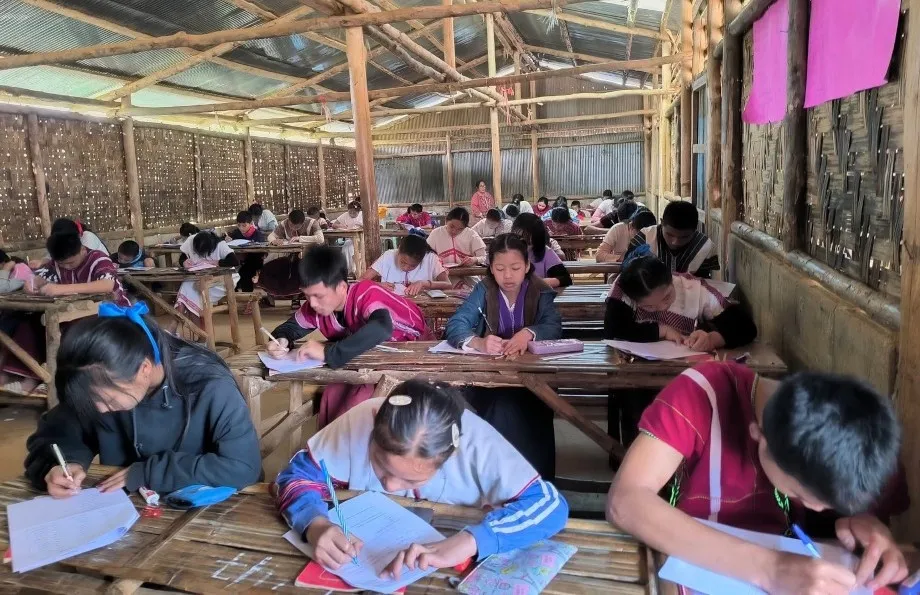
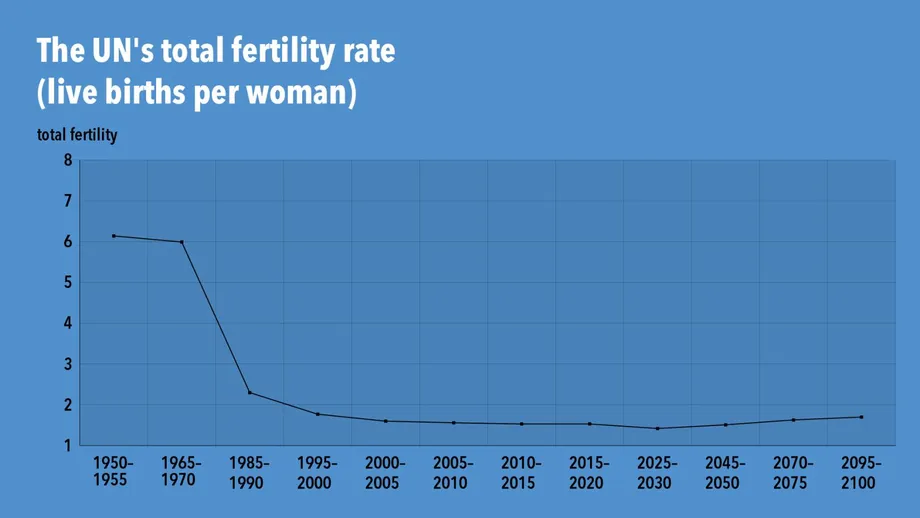
The pressure comes from several directions. Prasert cited 416,000 births in 2025, the lowest number in 75 years, alongside more than 600,000 children and young people outside the education system. He said Thailand needs more than one million skilled workers for the Eastern Economic Corridor and targeted industries by 2029.
The bill combines local freedom with stronger national coordination. Schools would gain room to respond to their communities, while a committee chaired by the prime minister or a designated deputy would set common policy. Education reform scholar Professor Pavich Thongroj argues that the details governing those powers will determine how much freedom actually reaches classrooms.
What schools would be allowed to decide
The proposal identifies four areas for school autonomy: academic affairs, finances, personnel and general administration. Schools with sufficient capacity could develop curricula themselves or work with other schools, local authorities, communities and businesses, within national education standards.
Prasert also proposed flexible block grants. These are grants that allow a school to decide how to spend an allocation within agreed rules, rather than having every expense tied to a narrowly defined purpose. Allocations would reflect student needs and local conditions, with requirements for transparency and responsible management.
For a school, the practical change would be the ability to align spending and teaching more closely. A curriculum developed with a local community would need suitable staff, materials and time. Giving schools authority across all four areas is intended to let those decisions support one another.
Funding reform also addresses differences between schools. Prasert's adviser, Peerawit Khantisuk, described plans for higher subsidies per student at small schools and schools serving families with low incomes. In April, Prasert had proposed a minimum funding floor for small schools in remote areas, where a small enrolment can leave too little money to cover basic operating needs.
A national committee would coordinate a fragmented system
Prawit Erawan, the Education Ministry's permanent secretary, identified three major problems at the forum: fragmented planning for people and skills, inefficient spending and unclear responsibility when education fails students. He said responsibility for children leaving school is too often passed among schools, parents and society.
The proposed National Education Policy Committee would bring ministries, education bodies and outside specialists into a common decision process. The education minister and higher education minister would serve as vice chairs. Expertise would include disability, child development, technology, lifelong learning and public finance, alongside business and local knowledge.
The committee would set policy and standards, establish budget allocation rules and coordinate implementation across ministries. It could also authorize a regulatory sandbox, a controlled setting where schools test new approaches with exemptions from specified existing rules before wider use.
Local education assemblies would give communities a route into education decisions. Prawit's argument is that families, local authorities and employers share responsibility for learning, rather than leaving the entire task to schools and teachers.
Prasert linked national coordination to political continuity. He said Thailand had changed education ministers 22 times over 27 years, with an average tenure of about one year and two months. A stable legal framework, he argued, should allow education plans to continue when governments change.
Where the promise of autonomy faces scrutiny
Pavich, who chairs a centre bringing together specialists in Thai education reform under the National Research Council of Thailand, examined the version circulated for consultation in July and August 2026. His concerns focus on who would control implementation after the law passes.
Section 15 of that consultation draft would place the national committee's secretariat inside the Education Ministry as a department, with its secretary general reporting directly to the education minister. Pavich argues that an office responsible for coordinating and monitoring several education providers needs greater independence from one of the largest providers.
Section 58 describes school autonomy in four areas, but makes it subject to rules and conditions set by the national committee. Pavich wants the law to specify a minimum set of powers that schools receive directly, so their freedom has a firm legal starting point.
He proposes a deadline of 180 days for implementing regulations and a plan to transfer powers within three years. Those are his recommendations. The text examined in his analysis was the consultation version; the final wording submitted to Cabinet and Parliament will determine the eventual arrangements.
Pavich also recommends preparing a separate Basic Education Act alongside the national framework, while keeping professional standards for teachers distinct from personnel management. His comparison reaches back to Section 39 of the 1999 act: a ministerial regulation on decentralization followed in 2007, an eight year gap that illustrates why implementation deadlines matter.
Teachers would spend less time on administration
The draft would change how schools are assessed, allowing different methods suited to their circumstances and stage of development instead of relying on a single assessment provider. Evaluation would focus on learning results and school improvement, with an explicit aim of avoiding unnecessary work for teachers.
Prasert's wider programme includes using artificial intelligence to reduce paperwork and procurement tasks. He has also proposed piloting central kitchens with local authorities to handle school meals, freeing teachers from duties such as buying ingredients.
Peerawit described plans to connect ministry systems with information through the ThaiID application, including attendance and grades. Better connected records could help schools identify children at risk of leaving education and reduce repeated data entry. He said some schools were already testing approaches using large datasets.
Professor Sompong Jitradub, an educator and former lecturer at Chulalongkorn University's Faculty of Education, called for changes to the incentives shaping teachers' careers.
"Teachers' academic rankings and salary upgrades should be tied to student development rather than administrative paperwork," he said.
The proposed teaching role would also shift toward guiding learning: helping students ask questions, practise skills and solve problems. Prawit placed teachers at the centre of reform, alongside schools that connect learning in physical classrooms with learning online.
A Credit Bank would connect learning with work
The proposed Credit Bank would let people accumulate and transfer recognized learning across schools, training programmes, informal study and workplace experience. Its purpose is to make learning gained through different routes count toward further education or qualifications under common rules.
A worker returning to study, for example, could seek recognition for relevant skills already acquired at work. The national committee would set criteria for assessing and transferring learning. The system would cover people of different ages, rather than treating education as something completed only during childhood and early adulthood.
Prasert said more than half of Thai workers are employed outside the subjects they studied and nearly three quarters lack digital skills at the required level. He also cited global projections of 170 million jobs being created and 92 million disappearing by 2030, with nearly 40% of current job skills changing.
The workforce targets have been expressed on different schedules. In April, Prasert outlined a goal of producing more than one million highly skilled people within five years; at the October forum, he described demand for more than one million skilled workers by 2029. Meeting that demand would require training adults as well as preparing current students.
The government's plan for 2028 to 2030 is to advance a curriculum based on competencies, meaning what learners can actually do with their knowledge. Digital skills, AI and critical thinking would receive particular attention, with a comprehensive lifelong learning system planned from 2030. Prawit also identified early childhood investment and changes to staffing and budgets as Education 2030 priorities.
Keeping children in school means addressing costs and safety
Prasert's figure of more than 600,000 children and young people outside education makes student retention a central test of the reform. His April measures addressed immediate household expenses, including uniforms, fees, books and stationery.
On April 10, the education minister explained the principle behind those measures.
Rules or hidden costs must not be the reason children fall out of the education system.
Schools were instructed to relax uniform requirements so children could continue using existing clothing after advancing a year or transferring. Other measures included simpler Scout and Guide clothing requirements, requests to reduce unnecessary fees and options for deferred or instalment payments. The ministry also sought books and stationery at controlled prices.
Student safety forms another part of the programme. Prawit said analysis conducted with the OECD placed online bullying among Thai students in the world's top 10; Peerawit described Thailand as approaching that group. Both identified bullying and emotional distress as problems affecting attendance and learning.
The ministry is working with Chulalongkorn University's Faculty of Psychology on support among students. Peerawit said existing tutoring networks could be extended to emotional wellbeing, with students trained to recognize signs of distress and seek help. He also described a dedicated rights protection centre, following Prasert's April proposal to establish one.
School leadership connects the law to daily experience
The Asia Foundation's education reform analysis, published on January 25, 2023, helps explain why transferring authority requires more than changing a law. It describes principals as the link between national policy and what children experience in classrooms.
The Foundation's study, The Challenges in Delivering Quality Education in Thailand: Rules, Resources, and Leadership, identified burdensome administration, legal uncertainty, shortages of resources and confusion about leadership as barriers to improvement. Those findings closely match the areas the new bill seeks to change: decision making, money, staff time and responsibility.
A national essay competition organized by the Foundation and partners received 3,300 student submissions describing an ideal principal. Students wanted leaders who were present at school, cared about them, supported teachers, created learning opportunities and stood up against bullying and unfair treatment.
Manasnan Kandon, a student at Sarakampittiyakom School whose essay appeared in the Foundation's account, described the importance of being heard.
My ideal principal is someone who is approachable and open-minded for students to talk to.
The Foundation worked with MCOT HD Television, the Education Ministry, Bangkok Metropolitan Administration and Ananda Mahidol Foundation on the Good Schools Are Everywhere campaign, highlighting examples of school leadership. For the proposed law, the concrete challenge is giving principals the authority, resources and time to concentrate on learning while remaining accountable to their communities.
The timetable and the measures of progress
The current push follows several attempts to replace the 1999 act. Pavich traced an earlier draft reviewed by the Council of State under file number 660/2564 that lapsed when the House's term ended, followed by another version that lapsed after a dissolution. Prasert said drafting efforts had stretched across almost a decade.
The latest sequence combines legal work with a longer education programme:
- May 27, 2026: Senior Education Ministry officials agreed to proceed with drafting a new National Education Act.
- July and August 2026: Consultations gathered views from teachers, students, parents, administrators and the public. An August 3 announcement described an online consultation lasting one month.
- October 28, 2026: Prasert said the completed draft was with the Secretariat of the Cabinet. He said about 90% of consultation respondents supported it.
- Early December 2026: The ministry targeted a first parliamentary reading, following Cabinet and Council of State consideration.
- 2028 to 2030: The government plans to advance the competency curriculum, followed by a comprehensive lifelong learning system from 2030.
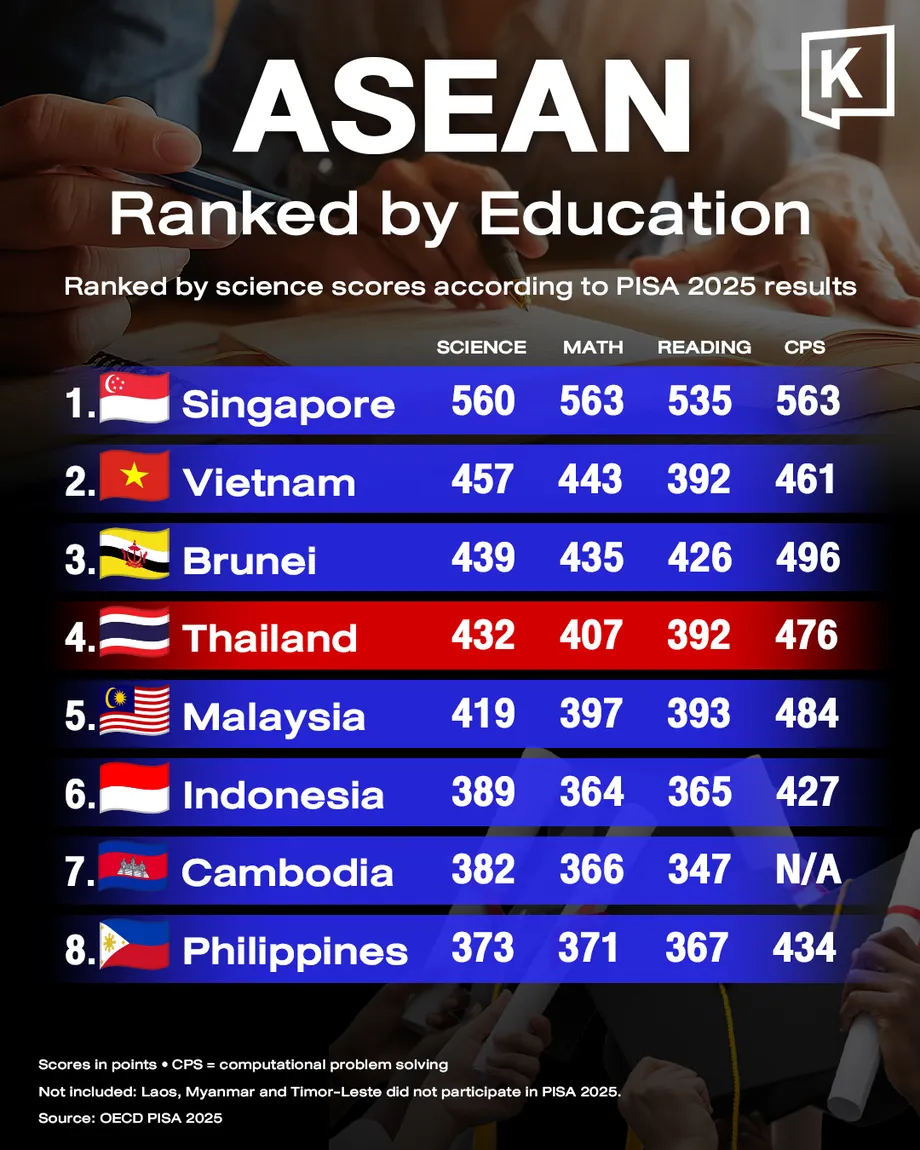
Prasert cited improvements in what he described as the PISA 2025 assessment: 23 points in science and 13 points each in mathematics and reading. PISA assesses how students aged 15 use knowledge in those subjects. He nevertheless said nearly six in ten Thai children remained below the OECD's basic level in mathematics and reading.
Peerawit described a sharp gap between specialized schools averaging around 600 PISA points and vocational schools scoring slightly above 300. Those figures put the difference at roughly 300 points, directing attention toward how resources and opportunities are distributed.
Prasert also cited an IMD education ranking of 52 compared with 58 previously, a gain of six places, although his speech described the improvement as three places. Sompong urged the government to examine whether better assessment results reflected lasting changes in teaching, and advocated more practical learning through science, technology, engineering and mathematics.
Thailand's international plans include preparations for OECD membership. Prawit said technical review work for the OECD Education Policy Committee had been completed and was ready for submission. Prasert also announced plans to host UNESCO's Global Education Meeting in Bangkok from March 31 to April 2, 2027, and said he wanted to advance an ASEAN Zero Dropout agenda in 2028.
Key Points
- The proposed National Education Act would give schools more authority over teaching, finances, staffing and administration.
- A national committee chaired by the prime minister or a designated deputy would coordinate education across ministries.
- Flexible grants, simpler assessments and reduced paperwork are intended to direct more resources and teacher time toward students.
- A Credit Bank would recognize learning across education, training and workplace experience.
- Pavich Thongroj recommends guaranteed minimum school powers and deadlines for transferring authority.
- The draft was at Cabinet Secretariat review, with an initial parliamentary reading targeted for early December 2026.