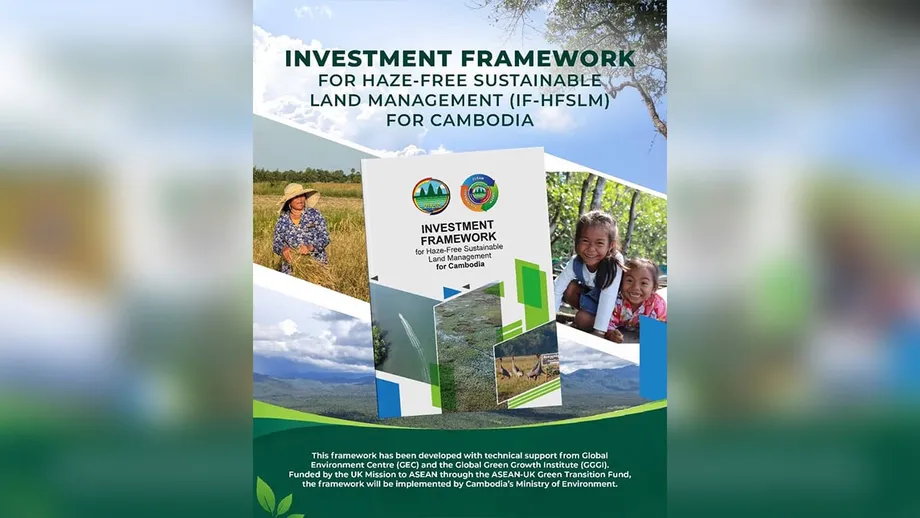
A plan built around farm deadlines, forest fires and climate finance
Cambodia has approved an investment framework proposing about $690 million across 15 project concepts to reduce land and forest fires and eliminate harmful open burning in priority agricultural and forest landscapes by 2035. The Ministry of Environment announced the approval on October 27, 2026, following consultations earlier in the year.
Contents
- A plan built around farm deadlines, forest fires and climate finance
- Why farmers burn rice straw
- Different landscapes need different responses
- Where the proposed money would go
- How public money could attract private investment
- The timetable from consultations to implementation
- Tonle Sap links fire prevention to water and livelihoods
- How Cambodia fits into ASEAN's funding picture
- What progress will need to show
- Key Points
The scale of the challenge appears in two figures in the ministry's approved investment framework: Cambodia generates approximately 8 million tonnes of rice straw annually, and NOAA-20 satellite sensors detected 16,766 fire hotspots classified with high confidence nationwide in 2025. Farmers in intensive rice growing areas can have just four to five days between harvesting one crop and planting the next.
Environment Minister Eang Sophalleth approved the Investment Framework for Haze-Free Sustainable Land Management 2026–2035. Its central approach is to make alternatives to burning practical and financeable, while strengthening fire prevention, restoring damaged ecosystems and improving waste services.
The $690 million is an indicative investment pipeline. The ministry is seeking support from financial institutions, development agencies, philanthropic organisations and private investors, while several proposed projects still need feasibility studies, market assessments and pilot demonstrations before financing can proceed.
For farming families, the immediate issue is whether machinery, services and buyers can make managing crop residues affordable within a tight planting schedule. For communities near forests and wetlands, the framework proposes earlier warnings, community fire prevention and restoration. Across Cambodia and neighbouring countries, the intended benefit is less seasonal smoke affecting health, agriculture and ecosystems.
Why farmers burn rice straw
Rice straw burning is identified in the framework as Cambodia's dominant domestic driver of haze. Consultations held in Phnom Penh on January 23, 2026, connected the practice to short planting intervals and limited access to machinery and markets for crop residues.
Prey Veng, Takeo, Battambang and Siem Reap are among the provinces identified for action on rice straw. In fields producing several crops a year, the four to five day turnaround makes burning the fastest available way to clear the ground. Changing that choice requires an alternative that fits the same agricultural timetable.
The framework gives priority to returning straw to the soil, including with decomposition agents such as Trichoderma, a fungus that helps break down plant material. Other proposed uses include compost, mushroom growing material, animal feed, building materials, paper and compostable packaging.
Collection businesses would need dependable buyers. An offtake agreement, discussed in the framework, is a commitment to purchase a product. Such an agreement could give a straw processor confidence that collected material will earn revenue. The document says soil fertility and nutrient recycling should come before diverting residues into industrial uses.
Different landscapes need different responses
Cambodia's fire problem extends beyond rice fields. The framework identifies forest fires associated with land clearing, hunting, drought stress and limits on enforcement capacity in provinces including Mondulkiri, Ratanakiri, Preah Vihear and Kratie.
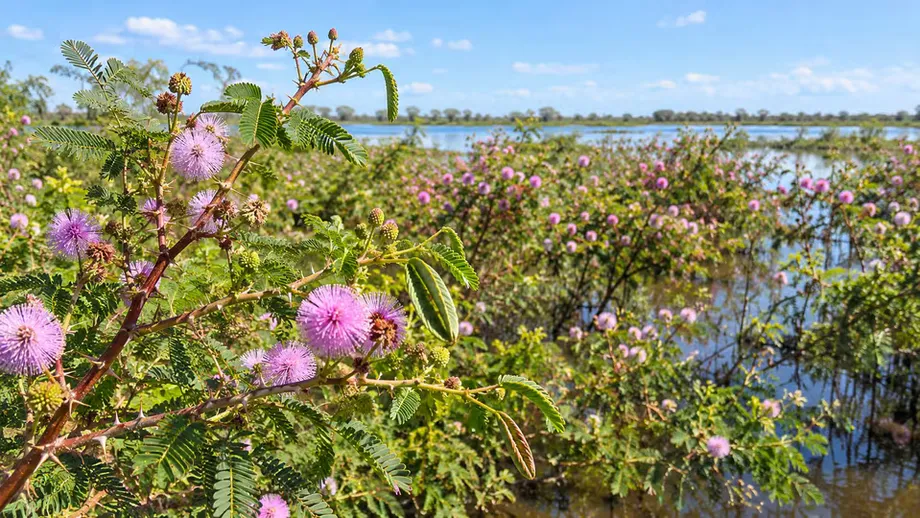
Tonle Sap floodplain wetlands face another combination of pressures: falling seasonal water levels, drying vegetation and changes in water conditions. The proposed response includes restoring water systems as well as preventing fires. In areas around towns, absent waste collection services contribute to rubbish burning throughout the year.
The framework names priority landscapes across Mondulkiri, Ratanakiri, Preah Vihear, Stung Treng, Kratie, Kampong Thom, Battambang, Siem Reap, Pursat and Kampong Chhnang. Its agricultural analysis also identifies intensive rice growing areas and provinces producing maize and cassava.
Fire and haze conditions typically worsen between December and April, with the framework identifying January and February as the peak. Forest fire risks can extend into May. That calendar makes preparation before the dry season central to the proposed programme, alongside services that address waste burning year round.
Where the proposed money would go
A $200 million Climate Finance Facility is the largest proposed component in the national framework. Its indicative value is about 29% of the stated $690 million pipeline, showing how much of the programme depends on creating a financing mechanism capable of attracting further capital.
Other major concepts include $150 million for climate resilient fisheries and watersheds, $80 million for forest fire prevention and restoration, and $65 million for Tonle Sap wetland restoration. The range reflects an approach that connects haze prevention with water management, land use and livelihoods.
Selected additional proposals include:
- $35 million for open burning and waste management.
- $25 million for sustainable upland agriculture.
- $21.6 million for early warning systems.
- $10 million for Tonle Sap peatland fire prevention.
- $7 million for a national monitoring, reporting and verification platform.
- $5 million for community fire management.
The framework identifies potential financing channels for these concepts, including the Green Climate Fund, Global Environment Facility, development banks and private investors. Institutions listed as possible funding sources would still need to assess and approve the relevant proposals.
Several business opportunities also require testing. The document identifies possible returns from straw processing, biomass energy and biochar, a carbon rich material produced by heating plant residues with limited oxygen. Commercial development would depend on reliable supplies, buyers, technical performance and environmental and social safeguards.
How public money could attract private investment
The Ministry of Environment proposes three financing layers. The first combines public resources with grants, loans on favourable terms and government green or sustainability bonds. These bonds raise money for eligible environmental or sustainability spending.
The second combines public or development finance with private investment. This approach, known as blended finance, can use guarantees or arrangements in which a public fund takes the first losses. Such tools reduce the risk facing commercial lenders and investors, potentially making unfamiliar projects easier to finance.
The third layer funds preparation, including studies, technical advice and institutional readiness. A community fire programme may need grants, while a residue processing business with dependable customers may be able to repay a loan. The framework's financing design recognises that these activities need different kinds of support.
Andre Nathalie, Cambodia Country Representative of the Global Green Growth Institute, explained the need to connect policy with workable institutions and finance during the January consultation. In the institute's January workshop statement, she said:
The ASEAN Investment Framework for Haze-Free Sustainable Land Management provides a strong regional foundation, but translating it into national action requires clarity on priorities, institutions, and financing pathways.
The timetable from consultations to implementation
The framework was developed with support from the UK Mission to ASEAN through the ASEAN-UK Green Transition Fund, with technical assistance from the Global Environment Centre and the Global Green Growth Institute. The Ministry of Environment coordinated the work through its General Directorate of Natural Protected Area.
Srey Sunleang, director general of that directorate, led the January workshop. Two consultations brought together 158 participants from government, financial institutions, businesses, development organisations, civil society, Indigenous Peoples and local communities.
The main dates and planned milestones are:
- January 23, 2026: The first consultation in Phnom Penh examined fire sources, priority landscapes, projects and financing options.
- January 27, 2026: GGGI published its workshop statement, with completion of the framework then expected in the first half of 2026.
- March 19, 2026: A second consultation helped validate and refine the framework.
- October 27, 2026: The ministry announced approval.
- Through December 2027: The implementation plan targets pilot projects, a blended finance facility, guarantees, early warning systems and mobilisation of $30 million to $50 million.
- By 2035: The framework aims to scale the investment pipeline and integrate haze prevention into national plans and budgets.
The approved document retains earlier preparation milestones, including adoption by the third quarter of 2026. Its broader sequence moves from institutional readiness in 2026 to pilot investment through 2027, followed by wider integration into government planning and spending. The next practical tests are project preparation, financing decisions and delivery in priority landscapes.
Tonle Sap links fire prevention to water and livelihoods
Tonle Sap receives attention in both Cambodia's national framework and ASEAN's regional implementation plan. The ASEAN document records that fires in 2016 destroyed roughly 50,000 hectares of flooded forest in the Tonle Sap core area.
Dry vegetation and changes in water conditions make prevention more complicated than deploying firefighting teams. Cambodia's proposed wetland restoration, peatland fire prevention, fisheries and watershed investments connect fire management with the conditions that keep these landscapes functioning.
Peat is partly decomposed organic material that accumulates in wet conditions and stores carbon. When it dries, it becomes vulnerable to persistent fires. ASEAN's plan describes Cambodia's peatlands as relatively limited and poorly documented compared with those of some neighbouring countries, while identifying rising risks from land clearing, development and drought.
The regional plan also lists a proposed Cambodian haze and land management project costing $3.5 million over four years. It would begin with baseline assessments and institutional work, move to demonstrations and community fire prevention, then expand successful practices and share knowledge regionally.
How Cambodia fits into ASEAN's funding picture
ASEAN estimates initial investment needs of $2.2 billion across five objectives: $850 million for sustainable agriculture, $300 million for Indigenous Peoples and local communities, $830 million for forests and peatlands, $85 million for sustainable finance, and $135 million for policy and governance.
As of January 2026, its implementation plan identified 82 ongoing projects worth nearly $885 million and nine pipeline proposals worth about $58 million. Climate change activities accounted for 41% of identified ongoing funding, while sustainable agriculture accounted for 29%.
Cambodia already has related programmes. Five ongoing projects listed in the ASEAN plan have combined estimated costs of $55,728,398. They cover landscapes and ecotourism, rice community livelihoods, industrial technology, agriculture in the northern Tonle Sap basin and resilience in agricultural value chains.
The largest of those five is the Public-Social-Private Partnerships for Ecologically-Sound Agriculture and Resilient Livelihood in Northern Tonle Sap Basin project, known as PEARL. Its estimated cost is $36,231,981, with a timeframe of 2023–2029. Cambodia's new framework therefore enters a field where related activities already have institutions, funding and implementation experience.
Regional cooperation matters because smoke crosses borders. The national framework translates ASEAN's investment approach into Cambodian priorities and supports the country's commitments under the ASEAN Agreement on Transboundary Haze Pollution.
What progress will need to show
Cambodia's framework aligns haze action with its third nationally determined contribution, or NDC 3.0, under the Paris Agreement. An NDC sets out a country's climate commitments. The document cites a conditional greenhouse gas reduction target of 55% by 2035, with forests and other land use accounting for 59.1% of planned NDC reductions.
Reducing land fires, protecting forests and restoring wetlands are therefore connected to both cleaner air and climate commitments. The framework also aligns with Cambodia's Environment and Natural Resources Code, its strategy for carbon neutrality and national plans covering climate change and protected areas.
A proposed national monitoring, reporting and verification system would track results and support climate finance reporting. In practical terms, that means collecting evidence, recording what projects deliver and checking the results. The implementation plan calls for an initial annual report during the phase running through 2027.
The framework includes commitments on gender equality, disability and social inclusion, alongside participation by Indigenous Peoples and local communities. Its success will depend on whether investment reaches the people managing fire prone land and whether alternatives to burning work within their daily constraints. The immediate delivery agenda is concrete: prepare viable projects, secure funding, provide usable farm alternatives and strengthen prevention before seasonal fires spread.
Key Points
- Cambodia has approved a framework proposing about $690 million across 15 project concepts for action through 2035.
- The ministry recorded 16,766 fire hotspots classified with high confidence using NOAA-20 satellite sensors in 2025.
- Approximately 8 million tonnes of rice straw are generated annually, while some farmers have only four to five days between harvest and replanting.
- Major proposals include a $200 million Climate Finance Facility, $80 million for forest fire prevention and restoration, and $65 million for Tonle Sap wetland restoration.
- The plan targets mobilisation of $30 million to $50 million during its investment phase through December 2027.
- Financing is being sought, and several proposals require further studies, demonstrations and market preparation.