260,000 fewer births in nine years
Thailand recorded about 510,000 births in 2023, down from 770,000 in 2014, according to Department of Provincial Administration figures cited by the Thailand Development Research Institute (TDRI). That is a decline of roughly 34% in nine years. By 2024, people over 60 accounted for about a fifth of the population, putting pressure on families, employers and public finances at the same time.
Contents
- 260,000 fewer births in nine years
- How the demographic shift developed
- Why the family budget matters
- Schools shape decisions before a child is born
- Parents need care that fits a working day
- Personal freedom and confidence also count
- Children already here need more support
- An older population changes work and taxes
- Migration and longer careers offer nearer options
- Key Points
The Department of Provincial Administration's official birth statistics dataset, sourced from its Bureau of Registration Administration, provides nationwide 2023 birth data in an XLSX file, with breakdowns by province and sex.
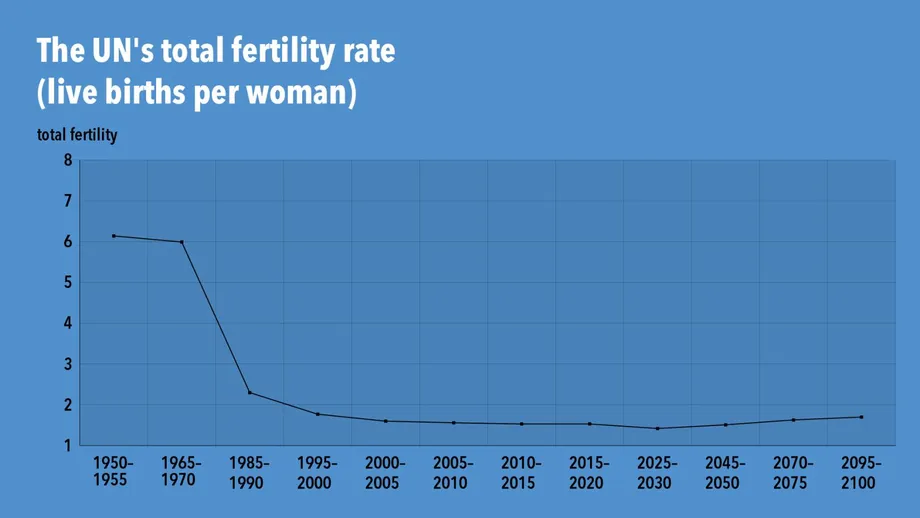
The World Bank's Thailand fertility data put the total fertility rate at 1.2 births per woman in 2024. This measure estimates how many children a woman would have over her lifetime if the birth patterns of that year continued. It is well below the roughly 2.1 children per woman generally needed for one generation to replace itself without migration.
Behind those numbers are decisions about money, time and the kind of childhood parents believe they can provide. Housing, schooling and care compete with wages and working hours. Smaller families also mean fewer relatives are available to help, while longer lives increase the need to care for older people.
Thailand therefore faces two tasks with different clocks: making parenthood more manageable for people who want children, and supporting an ageing population whose needs are already growing. A baby born today will take many years to enter the workforce. Better childcare, stronger schools, support for existing workers and a workable migration policy address different parts of the same problem.
How the demographic shift developed
Thailand once encouraged smaller families to slow rapid population growth. A 2019 research review published by Thailand Science Research and Innovation's Research Cafe traced the population's rise from 26 million in 1960 to 34 million in 1970. Better sanitation and healthcare helped more people survive, while women still had more than five children on average.
The review, drawing on research led by Manasigan Kanchanachitra, described a successful expansion of voluntary family planning. Contraceptive use rose from 14.8% in 1969 to 73.5% in 2002. Later, education, paid employment and changing expectations about family life helped sustain the move toward fewer children.
The main milestones show how a policy aimed at slowing growth gave way to concern about population decline:
- 1963 to 1983: Thailand recorded approximately 1 million births annually.
- 1970s: The national population programme promoted smaller families through voluntary family planning.
- 2014: Annual births stood at about 770,000.
- 2022: Health officials reported 485,085 births, the second consecutive year in which deaths exceeded births.
- 2023: Department of Provincial Administration figures cited by TDRI put births at about 510,000.
- 2024: The World Bank recorded a fertility rate of 1.2 births per woman.
The figures describe both a long decline and some movement between individual years. The 2023 total remained about half the annual number recorded during the decades when large families were more common.
Why the family budget matters
Urban estimates discussed in the debate put the cost of raising a child at 1.5 million to 5 million baht. The expense varies with schooling, housing, healthcare and family circumstances. For prospective parents, the practical question is whether they can meet those costs consistently while keeping their jobs and saving for their own later years.
TDRI's July 2024 analysis, based on comments by Somchai Jitsuchon, its research director for inclusive development, describes how expectations raise the perceived price of parenthood. Parents may want a respected school, tutoring, language lessons or music classes. Couples who feel unable to provide that standard may decide against having a child.
Somchai also identifies work stress as part of the calculation. Employees in a slowly growing economy may feel pressure to work harder, while caring for an infant requires substantial energy. Money and time reinforce each other: earning more can mean spending longer away from home, while reducing working hours can leave less money for childcare.
Sasiwimon Warunsiri Paweenawat, an associate professor of economics at Thammasat University, links higher education and employment among women to the income they risk losing when they take on more care. The cost of a child includes interrupted earnings and career progress as well as purchases and school bills.
Schools shape decisions before a child is born
Public education is central to TDRI's proposed response. Somchai argues that every school, including less prestigious public schools, should provide a good education. Parents would then have greater confidence that a child's prospects do not depend on paying for an expensive school.
Tutoring and additional lessons can turn education into a much larger household expense than basic school access suggests. When parents believe they must buy extra teaching to secure a child's future, the expected cost of parenthood rises long before enrolment begins.
The 2019 research review reached a similar conclusion. It proposed reducing education and healthcare costs while narrowing differences in school quality. Its approach connects support for births with services that families would use throughout childhood, rather than concentrating help around delivery alone.
The debate also includes concern about what students study. Estimates cited in discussion of Thailand's future workforce put humanities and social sciences at 70% to 75% of higher education enrolment, with science, technology, engineering and mathematics, known as STEM, taking a smaller share. The year and classification behind that estimate are unspecified. TDRI's wider priority is stronger skills across the workforce, so fewer workers can still produce more value.
Parents need care that fits a working day
Childcare is another point where family decisions meet workplace rules. Jongjit Rittirong, an associate professor at Mahidol University's Institute for Population and Social Research, argues that working parents need dependable care during the first five years of a child's life.
Jongjit describes the value of care located close to parents:
Some prefer childcare at their workplace, so they can stop by during the day to see their kids and give breastfeeding.
TDRI's 2024 proposals include quality childcare at work or near home, allowing parents to travel with their children and collect them after work. Smaller family networks make such services more valuable because fewer households can rely on grandparents, aunts or uncles to cover the working day.
Leave has also been a longstanding concern. The earlier debate described maternity leave of up to 98 days, or 14 weeks. The 2019 review discussed a 90 day framework and proposed extending leave to 180 days. Those figures belong to the policy settings discussed at the time; families need the rules applicable to their employment when planning leave.
The current statutory entitlement under the Labour Protection Act (No. 9) B.E. 2568 (2025) is 120 days of maternity leave, increased from 98 days with effect from December 7, 2025. Employers must pay normal wages for up to 60 days, according to a January 18, 2026 notice from the Ministry of Labour. The law also provides an additional 15 days of childcare leave for an ill, disabled or special-needs child at 50% pay, and 15 days of paternity leave at full pay.
Longer paid parental leave, flexible hours, affordable housing and medical insurance for young children are among Jongjit's recommendations. Together, they address the period after birth when parents must combine recovery, feeding, care and paid work.
Personal freedom and confidence also count
Young adults weigh more than the price of nappies or school fees. Somchai's analyses describe people who value travel, the freedom to change jobs and the ability to try a different way of living. Parenthood can make those choices harder, especially when care is difficult to arrange.
The 2019 review shows that reluctance to have children predates the latest economic pressures. It cited findings from 2012 that only 18.83% of married women of reproductive age wanted a child in the future. Among married women who had no children, 36.91% said they did not want any.
Middle income households may also feel less need to have children as a source of support in old age. Somchai's 2023 analysis describes couples who expect savings and public healthcare to help them manage retirement. Some also worry about the society, environment or political conditions in which a child would grow up.
Discussion of young Thais spending more on pets fits this wider change in household priorities. Some direct money and care toward animals while choosing a life without children. Their decisions sit alongside financial pressures, personal preferences and expectations about the future, making a single cash incentive an incomplete response.
Children already here need more support
TDRI's 2023 policy commentary puts the wellbeing of existing children at the centre of the response. Somchai cited figures showing that 57% of children under 15 lived in households belonging to the poorest 40% of the population.
That concentration matters for both fairness and the future workforce. Children whose families cannot afford adequate care or learning opportunities may have fewer chances to develop their abilities. With smaller generations entering adulthood, Thailand has an even stronger reason to invest in every child.
Somchai identified a specific gap in the child support grant: a 30% exclusion error among poor children. In plain language, about three in ten poor children who should receive support were missing out. He proposed making the grant universal, alongside wider access to good child development centres.
Grandparents also need practical help. In families where parents are absent and grandparents raise the children, training can improve care and support development. This connects the fertility debate to households that already carry substantial responsibilities, often with limited resources.
An older population changes work and taxes
Thailand's age structure is changing faster than any increase in births could repair. TDRI's July 2024 article put the number of older people above 13 million. Mahidol University's Institute for Population and Social Research estimated nearly 14 million people aged 60 or older within a population of about 66 million at the middle of 2024; other demographic accounts used a national population above 70 million.
Somchai warned that the older share, then about 20%, could reach 30% within a few years. A longer range projection cited in the debate put the population at 33 million by 2083 if the trend continued. Such projections depend on future births, deaths and migration.
For households, ageing can mean an adult cuts working hours to care for an older relative who cannot manage alone. For the government, it means greater demand for healthcare and support while fewer workers contribute taxes. The pressure therefore comes from both higher spending needs and a smaller pool of people earning income.
Somchai's 2023 commentary warned that annual economic growth could fall below 2% without substantial gains in productivity, compared with the 5% to 7% rates he cited for two decades earlier and 3% to 4% in more recent years. Productivity means the amount of value each worker produces. Better training, equipment and organisation can help a smaller workforce sustain more output.
Automation can fill some gaps, but workers need opportunities to gain the skills that new jobs require. Otherwise, firms may gain from machines while employees displaced by them struggle to find secure work.
Migration and longer careers offer nearer options
Older workers and migrants can help sooner than a future generation of babies. TDRI's 2024 analysis discussed extending working lives beyond retirement at 55 in many private businesses and 60 in government service. This would require jobs and working conditions that suit people's health and abilities.
Somchai also pointed to roughly 3 million workers from neighbouring countries. He argued that Thailand should improve benefits, welfare and skills training to attract and retain them, particularly as economic opportunities in their home countries improve.
His proposals extend to considering permanent residency or citizenship for some migrants and children who grow up in Thailand. Education and training would help them contribute more fully to the economy. These were policy proposals, with details still requiring consideration.
Other countries illustrate the range of responses. TDRI discusses Singapore's financial incentives, South Korea's efforts to address housing costs, and longer leave or leave for fathers elsewhere. Comparisons with China and with the welfare systems of Sweden and France broaden the debate to who pays for care: individual households, employers or taxpayers.
Thailand's central challenge is to make support dependable over many years. Better schools reduce expected education bills. Childcare helps parents remain employed. Training and migration support the workforce now. Jongjit cautions that increasing births takes sustained effort across social welfare, rather than a quick campaign.
Her assessment captures the timescale facing policymakers:
Increasing the birth rate within a short period or in a few years is impossible.
Key Points
- Thailand's annual births fell from about 770,000 in 2014 to 510,000 in 2023, a decline of roughly 34%.
- The World Bank recorded a fertility rate of 1.2 births per woman in 2024.
- Childcare costs, education expenses, work pressures and personal preferences shape decisions about parenthood.
- TDRI proposes stronger public schools, accessible childcare, universal child grants and support for grandparents raising children.
- An ageing population increases care needs while putting pressure on the workforce and tax revenue.
- Longer working lives, skills development and better support for migrants could help sooner than an increase in births.