A 19-year-old takes the first Asian Eurovision crown
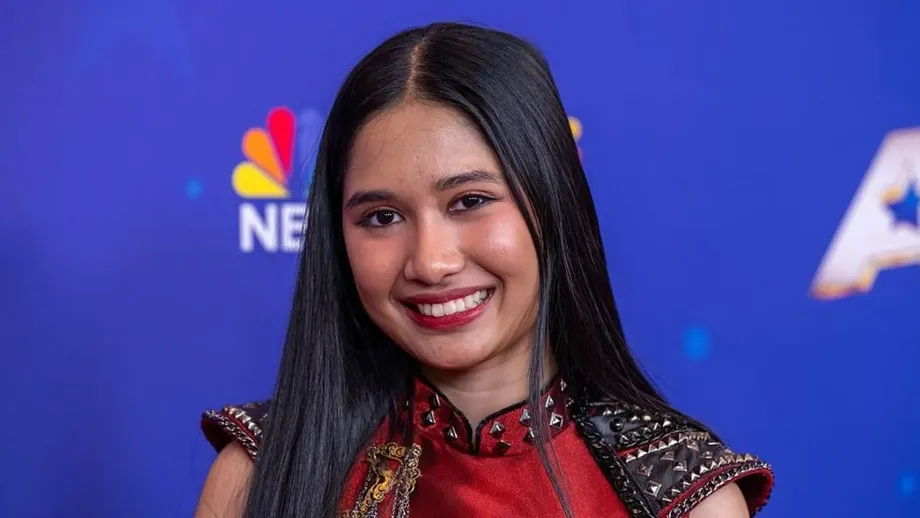
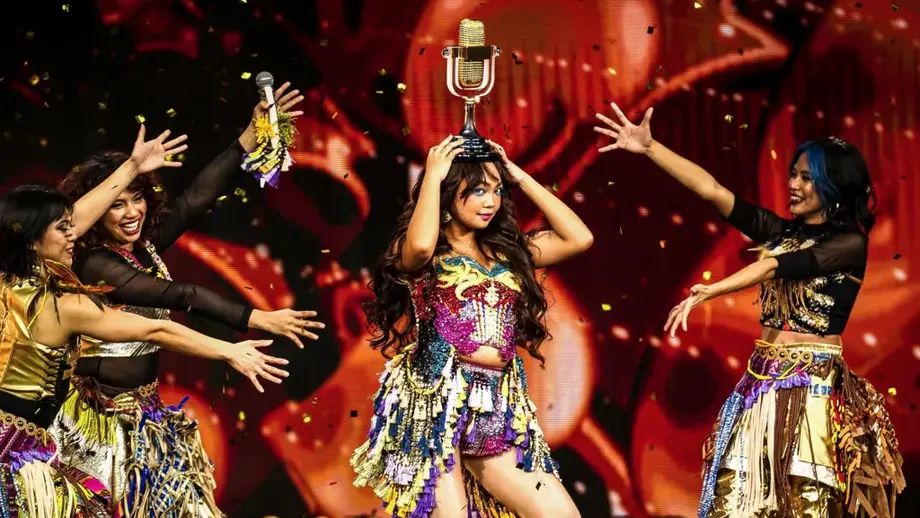
Carmelle Collado won the inaugural Eurovision Song Contest Asia in Bangkok on 14 November 2026, earning 211 points with Sobra-Sobra, a pop and rap anthem celebrating Filipino women. The 19-year-old topped both the professional jury vote and the worldwide public ballot, making the Philippines the first champion of the new competition.
Contents
- A 19-year-old takes the first Asian Eurovision crown
- What made Sobra-Sobra stand out?
- From Bicol talent contests to Bangkok
- How the voting worked
- The final standings and conflicting totals
- Local sounds shaped the performances
- Technical trouble affected Laos and Thailand
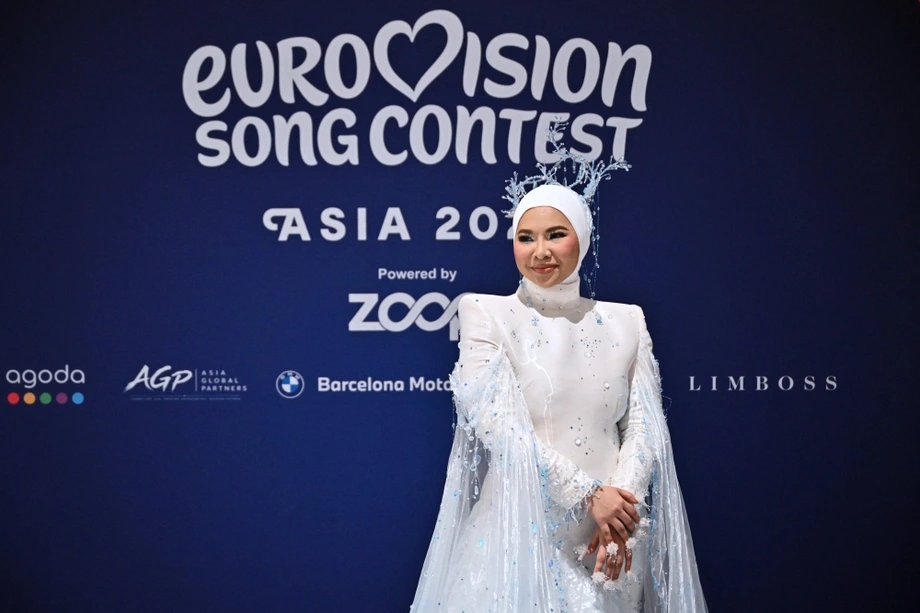
- Bangkok staged a regional television spectacle
- A victory celebrated in Manila and Sipocot
- Will Eurovision Asia return with more countries?
- Key Points
The European Broadcasting Union (EBU), in its official results announcement, placed Thailand's MANG x DAOU second with 170 points and Vietnam's Tóc Tiên third with 164. Carmelle received 93 jury points and 118 public points, finishing 41 points ahead of the host country.
Eleven countries competed at One Bangkok Forum, with viewers voting from 183 countries and territories. The performances brought together songs in 10 local languages and English, giving audiences a much wider picture of Asian pop than the international charts usually provide.
Carmelle, the youngest contestant, described her victory as both a personal achievement and a responsibility on an international stage. After receiving the trophy, the singer said:
I made history, since this was the first time. It's such a big responsibility for me, because this one is a global stage, so thank you everybody who voted for me.
The final also brought a long discussed project into reality. Eurovision's expansion into Asia had been considered for decades, with several earlier attempts failing to produce a contest. Bangkok delivered the first edition, complete with national flags, elaborate costumes, technical problems and a voting finish that rewarded the same singer across both halves of the competition.
What made Sobra-Sobra stand out?
Sobra-Sobra combines Tagalog and English lyrics with pop, rap and traditional Philippine instruments, including the kubing and kulintang. The kubing is a mouth instrument whose sound changes as the player shapes their mouth; kulintang music uses a row of small gongs to create melodies.
Carmelle's performance placed those sounds inside a contemporary dance song rather than presenting them as a separate traditional segment. Its catchy rap section and message of confidence helped turn the Philippine entry into a favourite before the final.
Carmelle described the song as "a tribute to all Filipino women." Explaining its message before the contest, she said:
It's about how unapologetic, independent and strong Filipinas are.
Written by Nica del Rosario and Mat Olavides, Sobra-Sobra won the Philippine national selection on 30 August against nine other entries. Eurovision's winner profile confirms that voters chose it from a field of 10 songs.
Carmelle had also spoken about using the contest to bring more attention to Original Pilipino Music, commonly called OPM. Her ambition extended beyond winning a trophy: she wanted international listeners to discover Filipino songs and connect with them wherever they lived.
From Bicol talent contests to Bangkok
Carmelle grew up in Sipocot, Camarines Sur, in the Bicol region of southeastern Luzon. Her mother noticed her singing ability when she was three, and by 12 she was competing internationally and appearing on Philippine television.
In 2019, she won seven gold medals at the World Championships of Performing Arts in Long Beach, California. That same year, she finished as runner-up on The Voice Kids Philippines as a member of singer Bamboo's team.
Her later achievements included winning Tawag ng Tanghalan: School Showdown in 2025, where her final performance earned a 98 percent jury score. She also joined Pinoy Big Brother: Celebrity Collab Edition 2.0 and released an album containing 11 tracks in May 2026. One song, Morena, was submitted for Grammy consideration in the Best Asian Pop Music Performance category.
Carmelle's route to Eurovision Asia unfolded over several years:
- 2019: Won seven international performing arts gold medals and finished second on The Voice Kids Philippines.
- 2025: Won Tawag ng Tanghalan: School Showdown.
- 30 August 2026: Won the Philippine Eurovision Asia selection with Sobra-Sobra.
- 13 November 2026: Performed at the dress rehearsal used by national juries to cast their votes.
- 14 November 2026: Won the inaugural Eurovision Song Contest Asia in Bangkok.
How the voting worked
Eleven national juries supplied half the result, while viewers supplied the other half. The juries voted during Friday's dress rehearsal, meaning their decisions were already made before Saturday's public broadcast began.
Public voting took place online. Eurovision's voting guidance advertised eight free votes per user once voting opened during the show. Voters had to spread their choices across at least three songs, could not support their own country and had the option to buy 10 additional votes.
Votes from outside the participating countries were grouped into a Rest of the World ballot. That group awarded one set of points equivalent to a participating country's public vote, allowing fans elsewhere to influence the result.
Carmelle earned 118 of a possible 132 public points, or 89.4 percent of the maximum. Those are scoreboard points awarded after votes are counted and ranked, rather than a percentage of individual voters. Her jury total of 93 points also put her first, ahead of Vietnam and Malaysia.
The Philippines' strong finish therefore came from two audiences: music professionals assessing the rehearsal and viewers watching around the world. Thailand also passed 100 public points, helping MANG x DAOU climb to second place.
A statistical examination of the scoreboard calculated a correlation of +0.81 between jury and public scores. In simple terms, countries that did well with juries generally also did well with viewers, although individual preferences varied.
The final standings and conflicting totals
The EBU's press release gives the leading three countries as the Philippines on 211, Thailand on 170 and Vietnam on 164. Eurovision's winner profile instead lists Thailand on 169 and Vietnam on 165, leaving their finishing order unchanged.
The final scoreboard, using the EBU press release totals for the top three, was:
- Philippines, Carmelle: 211 points.
- Thailand, MANG x DAOU: 170 points.
- Vietnam, Tóc Tiên: 164 points.
- Malaysia, Aina Abdul: 152 points.
- Laos, Thinla: 139 points.
- Bhutan, Nyendra: 126 points.
- Republic of Korea, JUNHEE: 113 points.
- Mongolia, Beck: 94 points.
- Nepal, Pratik Himal Rai: 69 points.
- Cambodia, Monetrey: 61 points.
- Bangladesh, Beatmosphere: 35 points.
Malaysia's Aina Abdul finished fourth with the power ballad Bluest Sky, while Thinla's dance track BAE placed fifth. Vietnam's Tóc Tiên, an established performer with more than two decades in entertainment, opened the competition with EM TIÊN amid dancers dressed as lotus leaves.
Local sounds shaped the performances
Bangladesh's Beatmosphere delivered one of the evening's most distinctive arrangements with Tumi Ele. The a cappella and beatbox group used voices to reproduce drums, basslines and other musical textures, performing without instruments.
The contest's limit of six performers on stage required the collective, normally comprising nine members, to leave three members out of its final performance. Its last place finish came despite an approach quite different from the more conventional pop productions around it.
Bhutan's Nyendra performed Lhayi Semo wearing a gho, the country's national dress for men, against images of Himalayan mountains. Mongolia's Beck wore a reinterpreted deel, a traditional robe, for Chamguigeer (Without You). Thinla appeared in traditional Lao hilltribe clothing.
Nepal's Pratik Himal Rai brought rock to the programme with Ananta Maya, using fire imagery and a large heart shaped structure. He ended with an appeal for support for Nepal following the August flood disaster. More than 1,500 people were killed and more than 5,000 were reported missing after a rock and ice avalanche near the Chinese border triggered flash floods.
Cambodia's Monetrey performed I Let You Go, while South Korea's JUNHEE brought DEEP DIVE. Across the field, 10 of the 11 entries included a local language, either alone or alongside English. JUNHEE's song was the only entry entirely in English, making language a central part of the competition's musical identity.
Technical trouble affected Laos and Thailand
Thinla could not hear her music during her live performance because of an earpiece problem. Footage from her rehearsal was shown after the live entries had finished, giving viewers another chance to hear BAE before voting.
The replay made the Lao song the last competing entry audiences heard before the ballot. Thinla ultimately received the third highest public score and finished fifth in the combined result.
Thailand's MANG x DAOU also encountered trouble during Aroma when Daou's microphone fell off. The duo continued their romantic performance, which drew loud support from the home crowd and went on to finish second.
The different performances seen by juries and viewers are part of how this format operates. Juries judged Friday's rehearsal, while the public watched Saturday's broadcast, including the mishaps and the Lao rehearsal replay.
Bangkok staged a regional television spectacle
Thai television personalities Woody Milintachinda and Cindy Bishop hosted the final, which ran for about two and a half hours including advertising. Its opening production, Bangkok Sounds and Senses, placed Muay Thai fighters alongside drag performers on street food carts.
The contestants then entered aboard tuk-tuks, the motorised vehicles familiar on Bangkok's streets, carrying their national flags. The official contest page gives the broadcast start as 8:30 p.m. Bangkok time, or 2:30 p.m. CET, from One Bangkok Forum.
Bulgarian singer Dara, winner of the 2026 European contest, performed Bangaranga and her new song Bad Idea before presenting Carmelle with the trophy. Thai star Jeff Satur performed Black Tie.
The final was produced by Voxovation and Bangkok based S20 Productions, with Thailand's Channel 3 among the broadcast partners. It aired through participating broadcasters and Eurovision's YouTube channel, as well as EBU members in Israel, Australia, Poland and Sweden.
Fans also travelled from outside Asia. Zelie Pereira, who came from Scotland, welcomed Carmelle's victory, while her friends Michael Peters and Scarlett Massie praised the singing, choreography, costumes and sets. The venue was crowded without being full, and the audience began thinning soon after the trophy presentation.
A victory celebrated in Manila and Sipocot
Fans at a late night watch party in the It's Showtime studio celebrated the result, including Tawag ng Tanghalan champion JM Yosures. Support also came from Sipocot, where residents had followed Carmelle's progress from local singer to international contestant.
Farm resort owner Vercille Vinculado praised the singer's humility, recalling her respectful manner during a meeting. The Diocese of Libmanan Office of Liturgical Music, where Carmelle serves as a psalmist, publicly encouraged her before the final.
Angelo Gonzales, a fan who met Carmelle during preparations for the Philippine selection, recalled that she recorded a video message for his girlfriend. He connected her win with hopes for more Filipino performers to reach international audiences:
I really want the world to know what the Philippines can really do. And this is just the start.
For Carmelle, the next international appearance is expected at Eurovision 2027 in Burgas, Bulgaria. Her Asian victory brought a trophy rather than prize money.
Will Eurovision Asia return with more countries?
Executive producer Assaf Blecher said 16 or 17 territories had expressed interest in the next edition, including China, Hong Kong and Taiwan. Negotiations had also involved Japan. China, India, Japan, Pakistan and Indonesia were all absent from the inaugural field.
Hosting arrangements remain unresolved in the official announcements. A later account named the Philippines as the 2027 host, while organisers said hosting rights would not automatically pass to the winner because smaller countries might lack the necessary infrastructure. No confirmed host or date for the next Asian final was given in the official releases.
Broadcaster participation will matter as much as performers' enthusiasm. Differences in what broadcasters will show were visible during the debut: Malaysia's TV3 cut the appearance of Philippine jury spokesperson Vice Ganda, a prominent comedian and drag performer, from its broadcast.
Eurovision historian Dean Vuletic, who attended the final, welcomed the atmosphere and the chance to hear a broad range of regional music. Organisers now face the practical task of securing returning broadcasters and expanding the field after delivering the first show.
Key Points
- Carmelle won the first Eurovision Song Contest Asia in Bangkok on 14 November 2026 with 211 points.
- Sobra-Sobra topped both the jury and public votes.
- Thailand finished second and Vietnam third, although two official publications give slightly different totals.
- Eleven countries competed, with votes arriving from 183 countries and territories.
- Laos received a rehearsal replay after Thinla experienced an audio problem during her live performance.
- Carmelle is expected to perform at Eurovision 2027 in Bulgaria; the next Asian edition's host and date await official confirmation.