Malaysia gets the final competitive slot in Bangkok
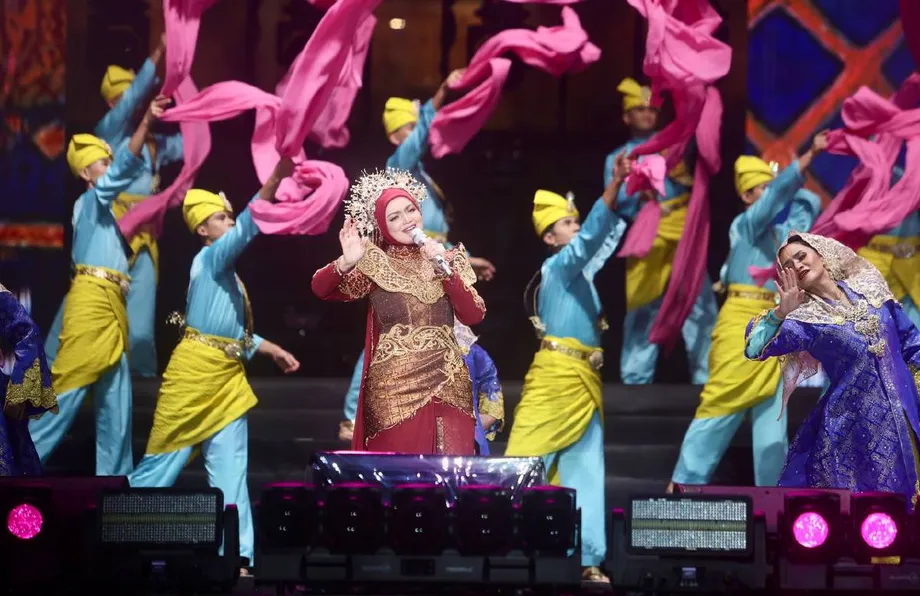
Malaysia's Aina Abdul will perform last among 11 competing acts at the first Eurovision Song Contest Asia on Saturday, November 14, 2026, bringing her song "Bluest Sky" and a dress that took 600 hours to make to Bangkok's One Bangkok Forum. The singer will face performers ranging from an adviser to Mongolia's deputy prime minister to a Bhutanese musician making his first journey abroad.
Contents
- Malaysia gets the final competitive slot in Bangkok
- Aina brings her own song and a demanding final position
- How the voting will work
- Bhutan and Mongolia bring unusually personal journeys
- K-pop precision meets Filipino confidence
- Eleven entries, different ways to sound international
- Hosts, guest stars and the dates to watch
- A famous brand still has to win an audience
- Politics follows the contest into a new region
- Key Points
The contest combines a familiar Eurovision formula, original songs, elaborate staging and votes divided between juries and audiences, with a new challenge: building a shared television event across countries with different languages, music industries and viewing habits. India, China and Japan are absent from the inaugural lineup.
Aina, already known in Malaysia for powerful vocals and extravagant costumes, has received public encouragement from Prime Minister Anwar Ibrahim. Her domestic popularity, however, comes with a practical limit in Bangkok: viewers cannot vote for their own country's entry.
Aina, who cites former Eurovision winner Celine Dion among her musical inspirations, said the Asian edition gives regional performers a bigger platform.
"We are music enthusiasts, we want to be noticed. And we feel like Eurovision is the best platform for us," she said.
The opportunity extends beyond the trophy. Commercial broadcasters organising the Asian contest have assembled established stars and emerging performers for a show carried on television and YouTube. For artists from smaller music markets, a single performance could introduce their language, clothing and music to audiences far beyond home.
Aina brings her own song and a demanding final position
"Bluest Sky" was written and composed by Aina and produced by Mac Chew. Its lyrics include English and Malay, combining an attempt to reach international listeners with a connection to her home audience.
Aina's selection was announced at the 40th Anugerah Juara Lagu on August 15. Organisers confirmed on October 29 that she would sing 11th, closing the competitive performances after Nepal's Pratik Himal Rai. Vietnam's Tóc Tiên will perform first.
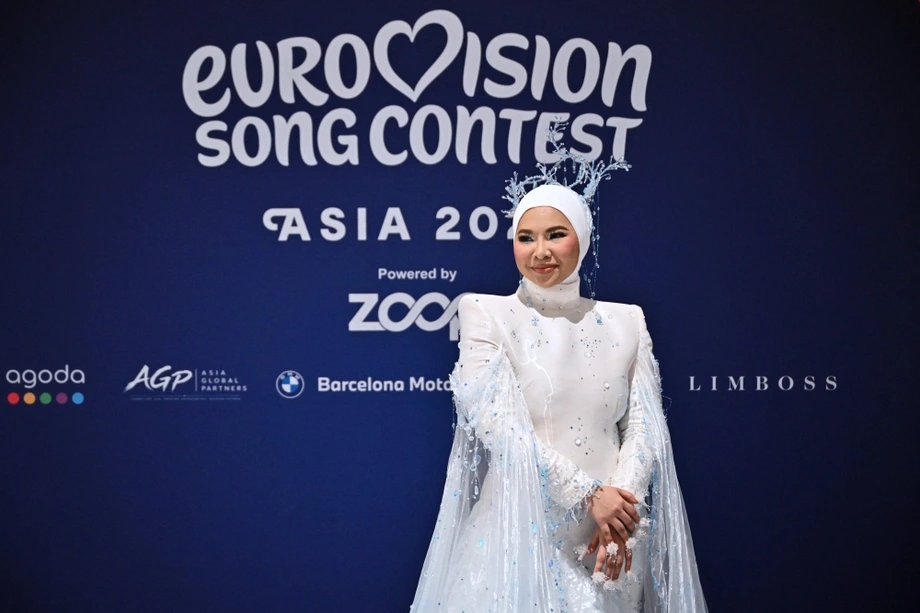
Her blue and white dress represents another major investment in the performance. Aina said it required 600 hours of work, making costume design part of a presentation built around her voice and visual identity.
Anwar offered his support in a Facebook post on November 10. The Malaysian prime minister said:
All the best to Aina Abdul, who will represent Malaysia at the inaugural Eurovision Song Contest Asia 2026 in Bangkok, Thailand. Win or lose, Aina will always be our pride. Fly high, Aina!
Aina first gained wider recognition through Mentor Legend in 2014, before building a career that included winning The Masked Singer Malaysia in 2020. Bangkok places that experience inside a different voting system, where support must come from beyond Malaysia.
How the voting will work
Jury votes and audience votes will each account for 50% of the result. The split gives music professionals and viewers equal weight, rather than allowing either group to choose the winner alone.
Malaysia's broadcaster TV3 has named five jurors: music producer and composer AG Coco, who heads the panel; producer and composer Justin Seow; event manager and concert promoter Iman Tang; director Bobby Husaini; and entertainment editor Shamshul Azree Samshir. They are due to assess performances during Friday's jury show.
The Malaysian panel determines half of Malaysia's voting result, while online voting supplies the other half. Viewers worldwide can also participate, although international votes operate within a system that retains the national jury and public voting structure.
Fans watching from a participating country cannot select that country's act. Carmelle, the Philippine representative, hopes Filipinos working overseas will help support her. Aina has also joked about the calculations her fans might make when choosing other entries.
National friendships and rivalries can influence audience choices, a familiar feature of the European contest. In Bangkok, the jury share provides a second route to points alongside public enthusiasm.
Bhutan and Mongolia bring unusually personal journeys
Nyendra, Bhutan's 24-year-old representative, has supported himself for five years by singing in bars and restaurants in Thimphu. He moved to the capital to study at 19 and usually performed acoustic covers and ballads rather than his own work.
Winning Bhutan's national selection, Rhythm of Bhutan, led him to apply for his first passport. Before the trip to Thailand, he had never travelled outside his country or taken a plane or train.
His entry, "Lhayi Semo," is sung in Dzongkha, Bhutan's national language. The title means roughly "the angel," and Nyendra describes the song as a sad expression of longing for someone he has never seen but believes is listening. He will perform in handmade traditional clothing.
Nyendra said victory would carry meaning for a country with about 800,000 people.
"Winning would mean the entire world to us, not only for me, but for the entire country," he said.
Mongolia's Beck brings a different combination of careers. A performer since 2007, he is also a trained economist who advises the country's deputy prime minister on banking matters.
Beck will sing "Chamguigeer (Without You)," telling the story of a warrior mourning his lost love. His orange and gold traditional costume is what he calls a "suit of a warrior." He described representing his heritage as a central part of the performance.
"It's very important for me to show up, to show respect to our ancestors on this big stage," he said.
K-pop precision meets Filipino confidence
South Korea's Junhee arrives with years of experience in an internationally recognised music industry. He debuted in 2017 as leader of A.C.E and now records solo under his own label.
His entry, "Deep Dive," mixes electronic dance music, a change into a hip hop rhythm and R&B vocals. AleXa, winner of the American Song Contest in 2022, helped write its lyrics. Junhee said fitting his ambitions into a three minute performance and a limit on the number of performers had been challenging.
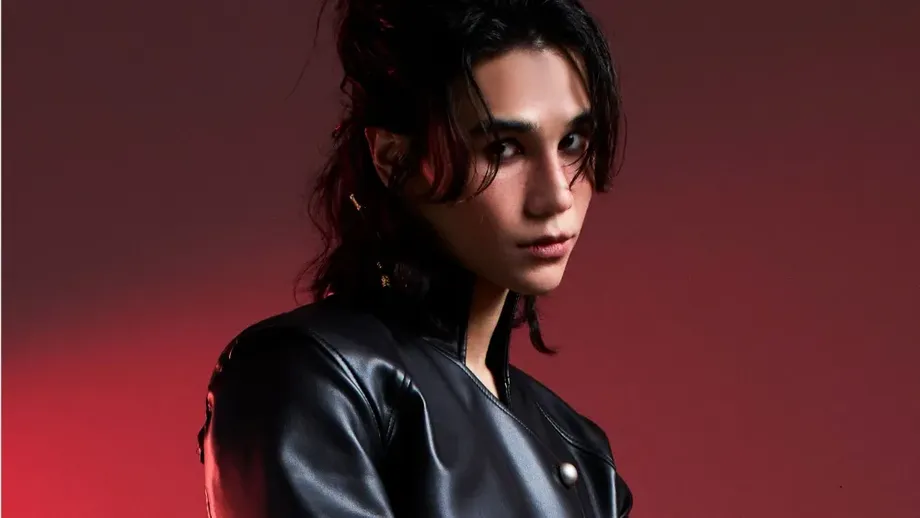
Junhee has studied previous Eurovision performances and is aiming to become the first Asian winner. His Bangkok costume, a shiny red jacket and matching trousers, places him firmly in the contest's tradition of conspicuous stagewear.
The Philippines' Carmelle Collado, 19, will perform "Sobra-Sobra," meaning "Too Much." Written by Nica del Rosario and Mat Olavides, the song combines pop and rap with the sounds of the kubing, a jaw harp, and kulintang, an instrument consisting of a row of small gongs.
Carmelle sings in Tagalog and English about confidence and women's independence. The song's message is that someone who considers a woman too much may simply be unable to match her.
Carmelle, who grew up in Bicol in a house beside railway tracks, described the women represented in her performance:
"This is how Filipina women are – strong, fierce, independent," she said.
She defeated nine other acts in the Philippine selection on August 30. A former The Voice Kids runner-up and a Tawag ng Tanghalan winner, she released her debut album in May and has been combining vocal preparation with her first year of psychology studies.
Eleven entries, different ways to sound international
Vietnam's Tóc Tiên will open the competition with "Em Tiên," adding English lyrics and a revised arrangement to the version presented at her national selection. Her staging includes three moving lotus leaves and updated choreography, alongside a glamorous interpretation of a traditional Vietnamese wide, flat hat.
Laos's Thinla will perform "BAE." Since her debut in 2021, she has released more than 20 recordings, drawing on traditional Morlum music alongside pop, R&B and dance.
Bangladesh's Beatmosphere offers a contrast to the solo singers and Thailand's duet. The a cappella and beatbox collective, formed in 2009, will perform "Tumi Ele," using voices to create percussion, basslines and other sounds often supplied by instruments.
Cambodia's Monetrey brings "I Let You Go," an emotional ballad combining contemporary pop with Khmer influences. Nepal's Pratik Himal Rai, whose experience spans more than a decade, will sing "Ananta Maya," drawing from a musical background that includes ballads, slow rock and Nepali folk.
Host country Thailand is represented by Mang x Daou with "Aroma," a love duet. Mang brings her pop style and vocals, while Daou's career includes winning the television competition Laz Icon and performing with the group LAZ1.
The lineup shows several approaches to reaching listeners across borders. Aina and Tóc Tiên include English, Nyendra sings in Dzongkha, and Carmelle combines two languages with traditional instruments. Beatmosphere puts the human voice itself at the centre of its sound.
Hosts, guest stars and the dates to watch
Thailand's Woody Milintachinda and Cindy Bishop will host the final. Eurovision's official host announcement, published on September 25, confirms November 14 and One Bangkok Forum as the date and venue.
Woody is known for his interview programme Woody Talk and for founding the S2O Songkran Music Festival. Bishop, a host of Asia's Next Top Model, works in English and Thai and serves as a UN Women Goodwill Ambassador for Asia and the Pacific.
The preparations and final weekend follow this timetable:
- August 15: Aina's selection is announced at Anugerah Juara Lagu.
- August 30: Carmelle wins the Philippine national selection.
- September 25: Woody and Bishop are announced as hosts.
- October 29: The running order places Vietnam first and Malaysia last.
- November 13: A preview show is scheduled, with juries assessing performances on Friday.
- November 14: The inaugural grand final takes place in Bangkok.
The production will open with a specially created performance, "Bangkok Sounds And Senses." Thai singer and songwriter Jeff Satur and Bulgaria's Eurovision 2026 winner Dara are scheduled as special guests. Dara will perform a special version of her winning song, "Bangaranga." Azerbaijani singer Jamal Gasimov will appear as the warm-up act.
The final will stream free on the official Eurovision Song Contest YouTube channel and air on television in participating countries. Published schedules give inconsistent start times: the YouTube listing cited for the event gives 7:30 p.m. in Bangkok, while Philippine broadcast information gives 9:30 p.m. Philippine time. Those times are two hours apart, although the countries' clocks are only one hour apart. Viewers should check the current listing for their chosen broadcast.
A famous brand still has to win an audience
Executive producer Assaf Blecher said preparations had taken three years. Unlike the European contest, which grew through national public broadcasters, the Asian edition is organised through commercial television stations, several of which have selected performers with existing fan bases.
Early audience indicators show how much work remains. About 65,000 accounts had followed the Asian contest's Instagram page, compared with 2.3 million following the main Eurovision account. Tickets remained available a week before the final, with sales described as sluggish.
Dean Vuletic, author of Postwar Europe and the Eurovision Song Contest, argues that the European event's success is tied partly to its beginnings during the expansion of television and closer cooperation between European countries after the Second World War. The American Song Contest ran for one season in 2022 and was not renewed.
Vuletic also sees a creative challenge in an Asian lineup dominated by love songs. He singled out Carmelle's message of women's empowerment as an exception, arguing that stronger messages and provocation help distinguish Eurovision from other singing competitions.
Production finances have added pressure. A reported US$1 million budget cut prompted organisers to issue a statement in October confirming that the show would proceed. Blecher acknowledged budget limitations while promising a polished production.
Blecher said 16 or 17 places had expressed interest in a 2027 edition, including China, Hong Kong and Taiwan. Participation and arrangements for a second edition have not been confirmed.
Politics follows the contest into a new region
Eurovision's European edition drew 131 million viewers in 2026, down 35 million from the previous year. Those figures put the earlier audience at 166 million, making the decline about 21%. Five countries boycotted the 2026 event over Israel's participation.
The Asian edition arrives with its own sensitive relationships. Thailand and Cambodia fought over their border last year, and Blecher has acknowledged that tensions could affect voting. Mang and Daou declined to engage with questions about the dispute.
Beck has taken a different approach, presenting the stage as a place to step away from conflict. His ambition reaches beyond an Asian expansion to a contest bringing together all continents.
For now, the practical test is smaller and more immediate: whether 11 performances can hold viewers' attention across national boundaries. Aina needs votes beyond Malaysia, Nyendra is introducing his own music beyond Bhutan, and established performers such as Junhee and Tóc Tiên are adapting their acts to a new format. Bangkok will put those ambitions before juries and audiences on the same night.
Key Points
- The first Eurovision Song Contest Asia final is scheduled for November 14, 2026, at One Bangkok Forum.
- Aina Abdul will perform "Bluest Sky" last among 11 competing entries.
- Juries and audiences each supply 50% of the result; viewers cannot vote for their own country's entry.
- Woody Milintachinda and Cindy Bishop will host, with Jeff Satur and Dara appearing as special guests.
- The show will stream on YouTube and air on television, but published start times are inconsistent.
- Organisers report interest in a 2027 edition while facing an immediate test of audience demand and production finances.