A cheaper route to private care, with costs patients still share
Malaysia plans to roll out MediAsas nationwide by the end of January 2027, offering basic medical insurance and takaful with indicative premiums of RM60 to RM550 a month. Budget 2027 support includes RM200 towards the first year of premiums for eligible small business employees, backed by an allocation of RM40 million.
Contents
- A cheaper route to private care, with costs patients still share
- What Teras and Fleksi would cover
- How much would patients pay themselves?
- Hospital access could decide the real price
- Existing customers have a route to switch
- What the RM40 million subsidy pays for
- How hospital payments would change
- What the pilot tested and what comes next
- MediAsas sits inside a wider cost reform
- Key Points
The central choice for households goes beyond the monthly price. The proposed Standard plan provides RM100,000 in annual protection, with a higher limit for older policyholders, but patients would still pay an initial share of treatment costs. Using a hospital outside the participating network could bring an additional payment of 20 per cent, capped at RM3,000 per disability.
Bank Negara Malaysia (BNM), in its MediAsas introduction, describes a voluntary, annually renewable plan with standardised benefits and terms. It is intended for people without medical protection and existing policyholders who need a more affordable alternative after premium increases or changes in their finances.
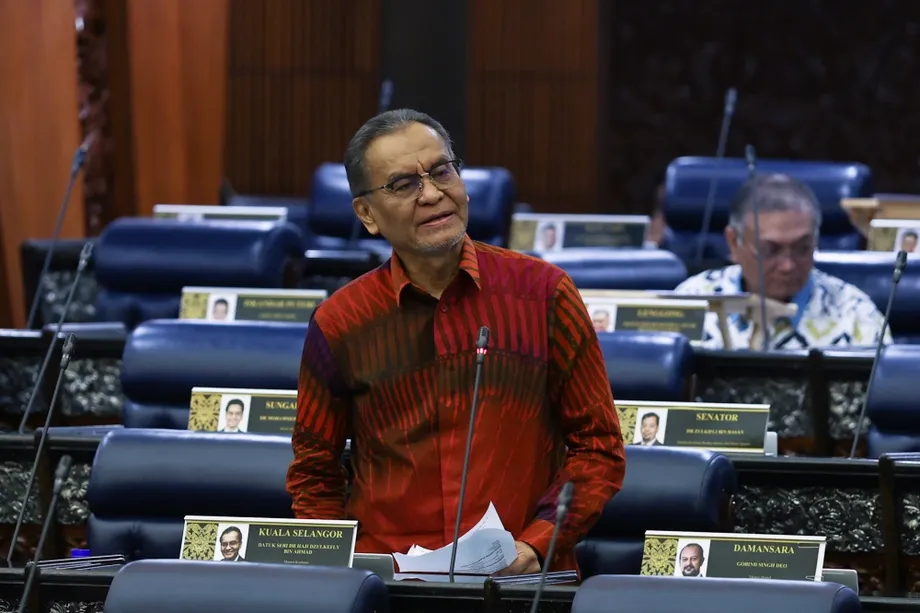
Deputy Finance Minister Liew Chin Tong told the Dewan Rakyat that MediAsas would provide another route into private hospitals while public healthcare continued serving Malaysians. Responding to questions about coverage for unemployed people, he explained its voluntary structure:
MediAsas, at this stage, is not a national health insurance scheme. It is a voluntary insurance scheme.
For an uninsured worker, MediAsas could provide access to private treatment through regular premium payments. For someone already insured, the decision involves comparing existing protection with a basic plan's limits, exclusions, hospital access and personal share of bills. Those differences will determine whether a lower premium produces a manageable household healthcare budget.
What Teras and Fleksi would cover
MediAsas has two product options: MediAsas Teras, the Standard plan, and MediAsas Fleksi, the Standard-Plus option. Both are standalone medical protection, separate from investment products. Takaful provides protection through an arrangement consistent with Islamic principles, with participants contributing to a shared fund.
Teras has a proposed annual limit of RM100,000, rising to RM150,000 for older policyholders. The latest consumer outline places the increase at age 61, while descriptions of the pilot and white paper place it at 60. Fleksi would offer RM300,000 annually in exchange for a much larger initial payment by the patient.
BNM says the plan's annual limits are intended to cover up to 99 per cent of common treatments. Coverage spans care before admission, hospital treatment, care after discharge and selected outpatient services. The proposed benefits include hospital room and board, surgery, medication, hospital supplies and day surgery.
Outpatient treatment under consideration includes dengue, influenza A and B, bronchitis, pneumonia and bronchopneumonia. Individuals would be able to enrol up to age 70, with protection extending to age 85, subject to annual renewal.
The annual limit is the maximum the plan pays within a policy year. A household therefore needs to consider both the size of that limit and the treatment covered within it. A larger limit is useful only alongside terms that cover the care a patient needs.
How much would patients pay themselves?
Teras proposes a deductible of RM500 per disability, rising to RM1,000 for people aged 61 and above. A deductible is the initial amount a patient pays before insurance contributes towards eligible costs. The policy definition of a disability determines how related treatment is grouped for this purpose.
At designated participating hospitals, the proposed arrangement has no additional percentage payment. Outside that network, patients would pay 20 per cent of eligible costs, capped at RM3,000 per disability, on top of the deductible.
Under those proposed terms, a patient with a RM500 deductible who reaches the additional payment cap would contribute RM3,500 towards the eligible bill. For someone with a RM1,000 deductible, that combination would be RM4,000. Expenses excluded from the policy would remain a further household responsibility.
Fleksi takes a different approach, with proposed deductibles of RM10,000 to RM15,000. Pilot descriptions assign RM10,000 to treatment within the network and RM15,000 outside it. The much larger deductible helps reduce premiums by leaving patients, or their other medical benefits, to meet more of the initial bill.
That structure could suit some employees seeking protection above their employer's medical benefits. Someone without savings or other insurance would need to consider whether they could meet such a large initial expense when treatment becomes necessary.
Hospital access could decide the real price
Liew told Parliament that the additional payment arrangements were still being reviewed through the pilot. Hospitals following MediAsas pricing requirements could allow patients to avoid the extra percentage charge, while treatment elsewhere could require it.
Datuk Dr Alias Razak, the MP for Kuala Nerus, raised the practical concern for Terengganu and other east coast states: patients may have fewer participating hospitals nearby. He asked whether people in those areas would receive exemptions from the proposed 20 per cent payment.
Liew said four major hospital groups had expressed interest in joining. Their participation had not been finalised, and the parliamentary response gave neither confirmed hospital numbers for those states nor a decision on geographic exemptions. Final benefits, prices, hospital participation and outstanding eligibility details are due to be settled around the national launch.
Distance matters alongside charges. A patient who needs to travel farther to reach a participating hospital may face transport, accommodation and time away from work. BNM says panel hospitals will offer cashless admission for eligible treatment, making the eventual network an important part of the product's value.
Liew, describing the government's effort to widen that network, told MPs:
Bank Negara Malaysia and the government hope that as many hospitals as possible will participate in the MediAsas scheme.
Existing customers have a route to switch
Existing medical insurance and takaful customers would be able to move to MediAsas with their current insurer or takaful operator without fresh medical underwriting or new waiting periods. Underwriting is the process through which an insurer assesses an applicant's health and decides the terms of cover.
BNM has encouraged policyholders to maintain their current policies until MediAsas becomes available. That allows them to compare the new product before surrendering existing protection. The switching arrangement applies within the same provider.
New applicants face a different process. Pilot descriptions include health declarations and underwriting, with waiting periods of 30 days for general conditions and 120 days for specified illnesses. They also identify 35 exclusions, including existing medical conditions, congenital conditions, mental health treatment, pregnancy related care, dental treatment and treatment overseas.
Pilot descriptions also include protection after seven years of continuous coverage against claim rejection for innocent failure to disclose information, while retaining exceptions such as fraud. Applicants still need to answer health questions fully, and customers considering a switch need to compare how their existing conditions and exclusions would be handled.
Interim premium measures provide some breathing space before launch. BNM says increases arising from medical claims inflation implemented from 2024 through 2026 are being spread over at least three years, with the vast majority of policyholders experiencing annual adjustments from that cause below 10 per cent. Total premium changes can also reflect other factors, including movement into a higher age band.
What the RM40 million subsidy pays for
Budget 2027 provides a subsidy of RM200 towards the first year of MediAsas premiums for each eligible employee at small and medium enterprises with fewer than 75 workers. Support is capped at 50 employees per company, with priority directed towards workers who have limited or no existing medical insurance or takaful.
The allocation of RM40 million matches the stated ambition to reach up to 200,000 workers: 200,000 multiplied by RM200 equals RM40 million. A company receiving support for the maximum 50 eligible workers would account for RM10,000 in subsidies.
For a household, RM200 is equivalent to about RM16.67 a month across the first year. Using BNM's indicative premium range, annual premiums would run from RM720 to RM6,600. The subsidy would cover about 28 per cent of the lower figure or 3 per cent of the higher figure, depending on the worker's actual premium.
EPF members below 55 would also be allowed to use savings in Akaun Sejahtera to pay premiums. This offers another payment source for people with tight monthly budgets, while reducing the savings left in that account and the future returns those withdrawn funds could earn.
The Finance Ministry says premiums or takaful contributions for individuals and their immediate family members will qualify for income tax relief. Relief reduces taxable income, so its cash value depends on the person's tax position. The SME subsidy, EPF withdrawals and tax relief each work differently: one contributes public money, one uses personal savings and one reduces eligible tax liability.
How hospital payments would change
MediAsas will progressively adopt Diagnosis-Related Group payments, usually called DRG. Instead of charging separately for every service, a hospital receives a payment linked to the patient's diagnosis and treatment category. The aim is to encourage efficient care and more predictable treatment costs.
The rates have been developed using about RM5 billion in voluntarily submitted private hospital claims, representing roughly 40 per cent of total claims value. ProtectHealth shared the DRG rates with private healthcare operators on November 4. For now, their application is limited to MediAsas, while existing business using separate charges for each service continues.
Dr Yap Wei Aun, chief executive officer of the Health Ministry's Health Transformation Office, has said rates will be reviewed for inflation, new technology and operating costs. Hospitals would therefore operate within a pricing framework that can be adjusted as costs and treatment change.
A planned single national base rate could be relatively favourable to some smaller regional hospitals and east coast facilities whose existing charges are lower. The commercial effect will also depend on how many hospitals join and how quickly patients take up the plan.
Early industry assessments anticipate a gradual increase in patients rather than an abrupt change in hospital business. KPJ Healthcare's regional presence and IHH Healthcare's Pantai network have been identified as possible routes for participation. Those commercial assessments sit alongside the government's more immediate task of securing a usable hospital network across states.
What the pilot tested and what comes next
BNM designed MediAsas after more than 60 stakeholder engagements, consumer focus groups and analysis. Its Klang Valley pilot involved six insurers and takaful operators and 10 hospitals, testing systems, admissions, customer understanding and operational readiness before wider implementation.
The Finance Ministry's July 6 statement named the pilot providers: AIA, Allianz Life, Great Eastern Life, Prudential BSN Takaful, Etiqa Family Takaful and Syarikat Takaful Malaysia Keluarga. Participants included staff of selected statutory bodies, companies linked to the government and SMEs; subsequent parliamentary updates also described participation by gig workers and other groups.
- December 2024: BNM announced interim measures to ease medical insurance premium revisions.
- July 6, 2026: The government announced the MediAsas brand, product options and pilot arrangements.
- Late July to October 2026: The Klang Valley pilot tested implementation, with the start identified as July 29 in pilot descriptions.
- November 4, 2026: ProtectHealth shared DRG rates with private healthcare operators.
- November 11, 2026: Liew updated Parliament on rollout preparations and the review of additional patient payments.
- End of January 2027: Nationwide implementation is targeted.
Liew described initial feedback as encouraging and said engagement would continue to refine the plan. BNM's official introduction targets January 2027, with the parliamentary update specifying the end of that month.
MediAsas sits inside a wider cost reform
The Finance Ministry, Health Ministry and BNM are developing MediAsas through RESET, a programme comprising five strategic areas and 11 initiatives. The Joint Ministerial Committee on Private Healthcare Costs, established on June 25, 2025, is jointly chaired by Finance Minister II Amir Hamzah Azizan and Health Minister Dzulkefly Ahmad.
The committee is forming an Independent Governance Board to oversee MediAsas after full implementation. Its wider work includes improving the presentation of private hospital bills, modernising licensing processes under Act 586 and developing secure exchange of electronic medical records.
The Malaysian Digital Health Certification Network is intended to let patients access and share records across healthcare providers. Private hospitals participating in MediAsas are expected to join, helping reduce repeated diagnostic procedures when patients move between facilities. A common framework for categorising and presenting hospital charges was also scheduled for development by August 2026.
Affordability concerns extend beyond insurance prices. Health economist Professor Syed Aljunid has argued that MediAsas should be scrapped because of its financing approach. Parliamentary questions have focused on whether patients can reach participating hospitals, while consumer concerns include annual coverage limits and the use of EPF savings.
The practical test is whether premiums, personal payments and hospital access work together for the people the plan targets. Standard benefits can make products easier to compare. Predictable hospital prices can help control claims costs. Households still need enough protection for treatment and enough money to meet the part of the bill they retain.
Key Points
- MediAsas is targeted for nationwide rollout by the end of January 2027, with indicative monthly premiums of RM60 to RM550.
- Teras proposes annual protection of RM100,000, rising to RM150,000 for older customers; Fleksi proposes RM300,000 with much larger deductibles.
- The proposed additional payment outside the hospital network is 20 per cent, capped at RM3,000 per disability, alongside the deductible.
- Existing policyholders can switch through their current provider without fresh underwriting or new waiting periods.
- Eligible SME employees can receive RM200 towards the first year of premiums, supported by RM40 million for up to 200,000 workers.
- EPF payment access and income tax relief offer further support, while public healthcare continues serving Malaysians.
- Final product terms and the participating hospital network will determine the plan's practical value for households.