Malaysia projects lead a possible first for the National Growth Fund
South Korean financial authorities are considering about 1 trillion won in loans at low interest rates for POSCO International's overseas rare earth supply projects, potentially making the package the National Growth Fund's first investment in critical minerals and its first overseas investment.
Contents
- Malaysia projects lead a possible first for the National Growth Fund
- What the proposed loan would finance
- How Malaysia and Laos fit into the company's plan
- From high purity metals to American magnets
- The production timetable has two versions
- Why Seoul is looking beyond a single supplier
- A public investment restart, with tighter limits
- Past losses explain the demand for safeguards
- Korea Zinc shows the wider financing challenge
- Key Points
Discussions reported on November 17, 2026, cover a package of two or three projects in Malaysia and elsewhere. Options include investments in overseas mines and acquisitions of business divisions belonging to rare earth companies. POSCO International has reportedly requested financing of around 1 trillion won.
The proposal brings together two priorities: reducing dependence on China for industrial materials and helping companies finance resource projects that can take years to generate reliable sales. By the end of October, the National Growth Fund had approved investments in 10 of its 13 eligible sectors, but none in critical minerals.
POSCO International already has a wider plan linking Southeast Asian raw materials, separation and refining facilities, and American magnet production. The financing talks could support that expansion as Seoul also prepares legislation to restore a public agency's ability to invest directly in overseas mineral projects.
What the proposed loan would finance
Financial authorities and POSCO International are holding working discussions before a review by the Investment Review Committee. The package approach would bring several overseas projects into one financing proposal, rather than treating a single mine or factory as the entire supply solution.
Loans at lower interest rates would reduce the company's financing costs while mines, processing facilities and transport arrangements are developed. Those costs matter because resource businesses often spend heavily before production begins and may then wait years to recover their investment.
The final project list, loan amount, interest rate and repayment conditions have not been disclosed. Differences over lending terms leave approval before the end of 2026 uncertain. After working discussions, the proposal would pass through the Investment Review Committee and the Fund Management Deliberation Committee, among other reviews.
A financial authorities official said several critical mineral proposals, including POSCO International's, were under consideration. The company is therefore a leading candidate for the fund's first investment in the sector, with selection still dependent on the review process.
How Malaysia and Laos fit into the company's plan
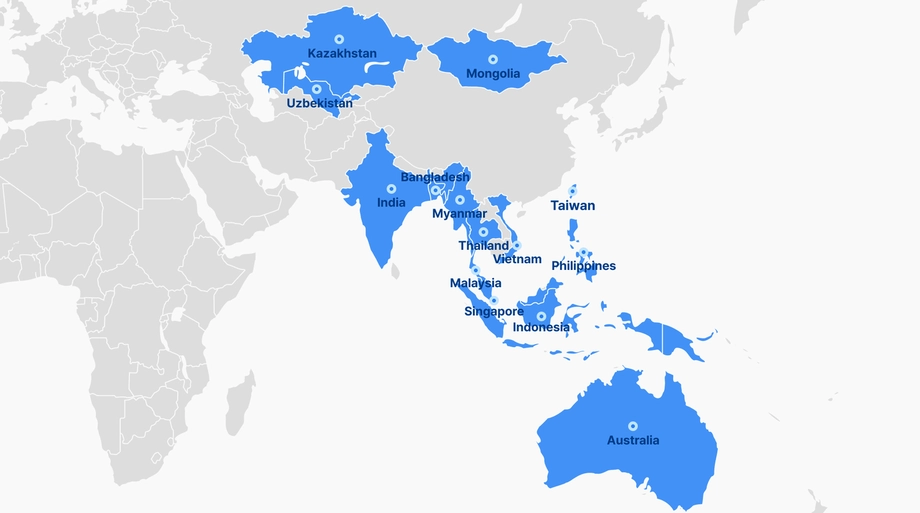
POSCO International's rare earth supply plan describes a proposed $30 million joint venture with a Malaysian specialist in separation and refining. The company says it will validate the mining approach and production system before moving to production at full scale.
Laos provides another part of the sourcing network. POSCO International says it is participating in a rare earth separation and refining project there, broadening its procurement base across Southeast Asia.
The company expects these regional efforts to secure roughly 4,500 tons of separated and refined rare earth products annually, valued in its announcement at approximately $230 million at then prevailing prices. Further investment is intended to raise production capacity above 10,000 tons a year, more than twice the initial volume.
Mining is only the first step. Rare earths must be separated from other materials and from one another, then refined to the purity manufacturers need. A factory making magnets needs usable material delivered consistently, so access to a mineral deposit must be matched with processing capacity and transport.
From high purity metals to American magnets
POSCO International and POSCO Investment have also launched a corporate venture capital fund worth 25 billion won. Such a fund invests in businesses whose technology can support the parent company's industrial plans. Its first commitment is 8 billion won for a South Korean specialist in rare earth separation and refining, equivalent to 32% of the fund's size.
The specialist has technology to produce heavy rare earth oxides at 99.5% purity and metals at 99.9% purity, according to POSCO International. Those capabilities connect raw material procurement to the forms manufacturers can use.
Dysprosium and terbium, two heavy rare earth elements identified by the company, help powerful permanent magnets retain their magnetism under intense heat. That makes them useful in the motors that drive electric vehicles. POSCO International wants to connect their supply with its existing motor core business.
In the United States, the company plans a separation and refining plant with ReElement, initially capable of producing 3,000 tons annually. It also targets annual permanent magnet production capacity of 3,000 tons by 2028. Refining and magnet production are different stages, each requiring its own facilities and inputs.
The production timetable has two versions
POSCO International's published plan puts the start of production at full scale at the American refining plant in the second half of 2027. More recent project details describe pilot production in the fourth quarter of 2027, followed by mass production in 2028. That later schedule places commercial expansion after a period of testing.
The American partnership is described as a $200 million joint investment. Half would initially pay for the plant, equipment and early operating needs. The other $100 million would fund expansion according to demand, with annual processing capacity intended to rise from 3,000 tons to 6,000 tons.
POSCO International and ReElement are also operating a joint raw material task force that is examining both mined and recycled resources. Alongside that work, POSCO International and South Korean semiconductor materials company MiCo are exploring nonmagnetic rare earth supplies and a possible facility for semiconductor ceramic materials.
The main policy and project milestones are:
- November 3, 2026: Lawmakers submitted amendments intended to permit new public investment in overseas minerals, with financial and oversight safeguards.
- November 16, 2026: The industry ministry discussed its overseas critical mineral strategy at a public and private sector meeting in Seoul.
- November 17, 2026: Financing discussions involving POSCO International and the National Growth Fund became public.
- Second half of 2027: Public agency investment could restart if the legislation passes by the end of 2026.
- Late 2027 and 2028: The newer American plant timetable targets pilot production and then mass production, respectively.
Why Seoul is looking beyond a single supplier
South Korea's industry ministry has selected seven priority candidates from the 51 critical minerals it manages: tungsten, silicon, graphite, cobalt, nickel, gallium and rare earths. The selection reflects their industrial importance and the concentration of imports in particular countries.
Figures attributed to the Korea Mine Rehabilitation and Mineral Resources Corporation show the scale of that concentration. China supplied 93.2% of South Korea's graphite imports in 2025 and approximately half its tungsten and rare earth imports. New Caledonia accounted for 80.3% of nickel imports.
China's position in rare earths extends across mining, separation and refining. For Korean manufacturers, securing another mine is therefore part of a larger task: obtaining a dependable route from raw material to a finished industrial input.
The ministry's proposed Critical Minerals Pipeline Project would connect ore procurement, refining and the production of essential materials. The practical objective is to keep factories supplied. Additional semiconductor or electric vehicle production capacity can operate reliably only when the necessary materials arrive on time.
A public investment restart, with tighter limits
The government is seeking to restore the overseas direct investment function of the Korea Mine Rehabilitation and Mineral Resources Corporation. The proposed restart comes five years after direct investment was formally prohibited when the corporation was established in 2021. Its predecessor's overseas investment activity had effectively stalled from 2013.
Officials plan to limit the restored role to investment alongside private businesses and participation through minority stakes in projects considered necessary for resource security. A dedicated Resource Security Fund would provide another source of financing for projects with long development periods.
Amendments to the Special Act on National Resource Security and the Korea Mine Rehabilitation and Mineral Resources Corporation Act would support the changes. Legislation submitted on November 3 would raise the corporation's statutory capital ceiling from 3 trillion won to 5 trillion won, an increase of 2 trillion won, or about 67%.
New investments would be recorded in separate accounts, and an Overseas Resource Development Deliberation Council under the industry ministry would review decisions. The ministry also plans a task force to strengthen the corporation's expertise, bring in outside specialists and dispose of noncore assets.
These public investment proposals would create another route for sharing mineral project risks alongside lending through the National Growth Fund. They require legislative action before the corporation can resume investment.
Past losses explain the demand for safeguards
South Korea's earlier overseas resource investments provide a costly reference point. More than 2.8 trillion won went into Mexico's Boleo copper and cobalt mine between 2008 and 2012, while recoveries amounted to roughly 200 billion won. That was about 7% of the amount invested.
The corporation sold all its remaining Boleo shares and bonds for $2 in November 2025. Losses on overseas projects helped drive its predecessor into severe financial difficulty and shaped the restrictions imposed when the current corporation was created.
New projects face several sources of uncertainty. Mineral prices can fall after a company has committed money to a mine or factory, delaying recovery of its investment. Governments hosting projects can restrict raw material exports, require local processing or change permit and contract conditions.
Kim Jin-su, a professor in Hanyang University's Department of Earth Resources and Environmental Engineering, has called for careful project selection while arguing that Korean companies need financial support to compete. He said:
Investment targets need to be selected carefully, but China even uses predatory pricing policies to maintain its market share.
At the ministry's strategy meeting, Kim also said resource development requires sustained investment for more than 10 years and that public institutions should provide patient capital. In plain terms, that means financing able to stay committed through a long period of development rather than requiring quick returns.
Korea Zinc shows the wider financing challenge
Korea Zinc's planned American smelter illustrates how mineral supply security is drawing on several forms of public support. Its Project Crucible in Tennessee carries an estimated $6.6 billion in facility investment and a total cost of $7.4 billion including operating funds and financing costs.
The facility would process approximately 1.1 million tons of feedstock annually, producing zinc, lead and copper as well as materials including gallium and germanium. Korea Zinc has obtained approval from the Tennessee Valley Authority to use 230 megawatts of electricity and plans to begin construction in 2027, with commercial production of some products in 2029.
Export Import Bank of Korea President Hwang Ki-yeon told a parliamentary audit on October 20 that support through the Supply Chain Stabilization Fund was being discussed. That financing discussion concerns a different fund from the National Growth Fund proposal involving POSCO International.
For POSCO International, the immediate decision remains the proposed package of roughly 1 trillion won. For the government, the wider task is to connect financing, raw material access and processing capacity while applying the controls designed after earlier losses. The next steps are agreement on loan terms, committee reviews and parliamentary consideration of the resource investment legislation.
Key Points
- Financial authorities are considering around 1 trillion won in loans for two or three POSCO International overseas rare earth projects.
- Approval would make the package the National Growth Fund's first critical minerals investment and first overseas investment.
- POSCO International plans sourcing and refining operations in Malaysia and Laos, linked with American refining and magnet production.
- Its Southeast Asian supply target begins at roughly 4,500 tons annually, with plans to expand capacity above 10,000 tons.
- Seoul is pursuing legislation to restore limited public investment in overseas minerals and establish a Resource Security Fund.
- Loan terms remain under negotiation, while new public investment depends on legislative approval.