Parliament backs a 42.4 billion manat spending plan
Azerbaijan's parliament has approved the first reading of its 2027 state budget bill, setting out 42.4 billion manat in expenditure and 39.254 billion manat in revenue. The resulting deficit, the gap between spending and income, is projected at 3.146 billion manat, or about $1.85 billion.
Contents
- Parliament backs a 42.4 billion manat spending plan
- More revenue from outside oil and gas
- Growth forecasts depend on a stronger non-oil economy
- Social services receive the largest allocation
- Defense and reconstruction remain major commitments
- The audit chamber warns about recurring costs
- Debt guarantees bring another fiscal decision
- The wider budget draws on fund reserves
- District finances and the timetable to 2030
- Investment incentives meet demands for clearer accounts
- Key Points
The draft law, discussed in the Milli Majlis on November 16, combines higher social spending with substantial defense and reconstruction allocations. Its central economic ambition is to collect a record 60.6% of state revenue from outside the oil and gas sector, while continuing to draw heavily on the State Oil Fund of Azerbaijan, known as SOFAZ.
Social spending is planned at 18.73 billion manat, defense and national security at about 8.82 billion manat, and reconstruction in territories returned to Azerbaijani control at 3.42 billion manat. Total expenditure is approximately $24.94 billion and is 696.4 million manat above the 2026 forecast.
First reading approval follows parliamentary discussion and a vote. The bill still requires further consideration before becoming law; no dates for the next readings were given.
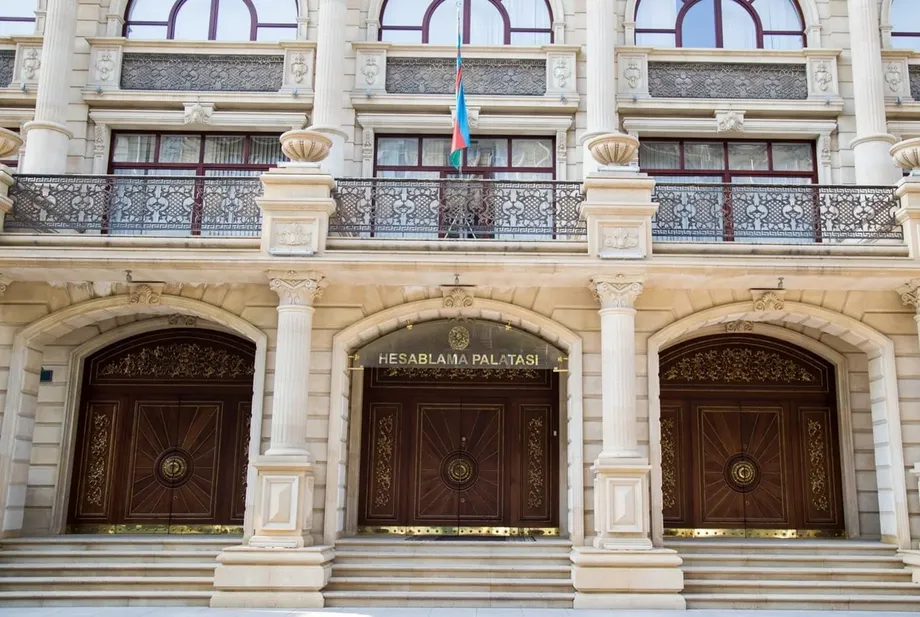
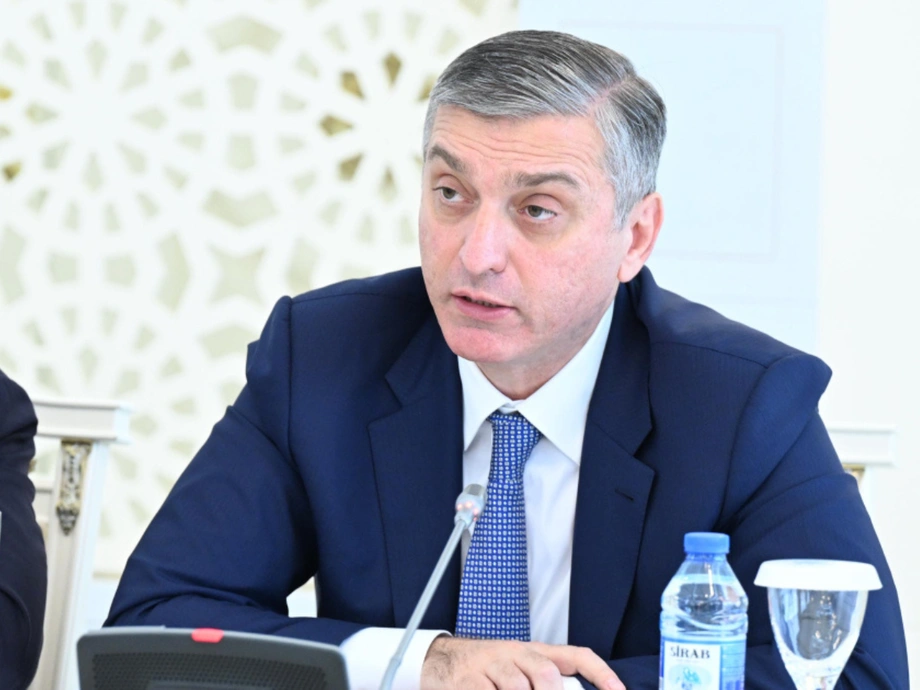
Finance Minister Sahil Babayev presented the budget as a way to fund national priorities while reducing dependence on energy income. Vugar Gulmammadov, chairman of the Chamber of Accounts, supported its legal compliance but warned about the growing share of routine expenditure and called for tighter rules on spending and state guarantees.
The central question is whether Azerbaijan can expand the income generated by businesses and workers outside the energy industry quickly enough to pay for its continuing commitments. The draft makes progress toward that goal, but still budgets for spending above revenue.
More revenue from outside oil and gas
The non-oil and gas sector is expected to contribute 23.774 billion manat to the state budget in 2027. Oil and gas revenue is projected at about 15.48 billion manat. Babayev said the non-oil share would rise by 3.2 percentage points from the 2026 forecast to 60.6%.
The State Tax Service is expected to collect 18.43 billion manat, including 14.85 billion manat from outside oil and gas. Other major sources are an 11.9 billion manat SOFAZ transfer, about 6.87 billion manat from customs, 949 million manat from paid services provided by budget funded organizations, and roughly 1.4 billion manat in other revenue.
Excluding the SOFAZ transfer, state revenue would total about 27.35 billion manat. The transfer alone represents approximately 30.3% of the proposed state budget's income, calculated from 11.9 billion manat out of 39.254 billion manat. Energy savings therefore remain a major source of government financing even as other revenue grows.
State enterprises are also expected to contribute more directly. Dividend revenue, the portion of company earnings paid to the state as owner, is forecast at 872 million manat. The number of enterprises expected to pay dividends rises from two to 52.
Economy Minister Mikayil Jabbarov said non-oil and gas revenue had exceeded 55% of budget income during the first 10 months of 2026, compared with 49% in 2021. Annual revenue from that sector is estimated at 22.2 billion manat in 2026, up from 12.9 billion manat in 2021.
Growth forecasts depend on a stronger non-oil economy
The Economy Ministry forecasts real GDP growth of 2.7% in 2027, following an expected 1.7% in 2026. GDP, the value of goods and services produced in the economy, is projected to reach 141 billion manat next year.
Non-oil and gas output is forecast to grow 4.4% to 109.1 billion manat, while oil and gas output is expected to fall 1.8%. The budget assumptions include an oil price of $65 a barrel.
Gulmammadov said the non-oil and gas sector would account for more than 77% of GDP, its highest share to date. Jabbarov put its share in 2025 at 71.5%, with a forecast of 82% by 2030. Both growth outside energy and declining energy output contribute to the changing balance.
The latest economic figures show a slower starting point: real GDP grew 1.5% in January–September 2026, while the non-oil and gas sector grew 2.6%. Annual inflation was 5.5% in September. By 2030, GDP is forecast to reach 169.1 billion manat and average annual inflation to ease to 4.3%.
Social services receive the largest allocation
Social expenditure is budgeted at 18.73 billion manat, representing 44.2% of total spending and an increase of 9.2% from the 2026 forecast. This broad allocation covers public services and support that households depend on, including education, healthcare and social protection.
Education and science together receive more than 5.3 billion manat. Nearly 5.1 billion manat is planned for education and 257.9 million manat for science. Healthcare receives 2.08 billion manat, including 1.1 billion manat for state funded mandatory health insurance.
Social protection and security are allocated 4.91 billion manat. The budget also provides 1.6 billion manat to balance the State Social Protection Fund's budget, helping finance the system that supports pensions and other social obligations.
Across the expenditure plan, labor costs total 11.89 billion manat, social payments 3.46 billion manat, and grants and other payments 3.41 billion manat. These figures describe spending by economic type, while education and healthcare describe its purpose, so the categories overlap.
Agriculture, housing and communal services, and environmental protection receive a combined 2.15 billion manat. Culture, arts, information, sport and youth policy are allocated 643 million manat. For residents, these allocations set the proposed funding available for services; actual delivery will depend on how the money is used.
Defense and reconstruction remain major commitments
Defense and national security account for about 20.8% of state expenditure, with an allocation of approximately 8.82 billion manat. This includes 4 billion manat for special defense projects.
Babayev said defense and security spending would be 748 million manat, or 9.3%, above the amount spent in 2025. That comparison uses actual spending two years before the proposed budget, whereas the headline increase in total expenditure compares the 2027 plan with the 2026 forecast.
Reconstruction and the Great Return program receive about 3.42 billion manat. The program supports rebuilding and the return of displaced residents to territories restored to Azerbaijani control.
Of the 5.3 billion manat public capital investment allocation, roughly 3.4 billion manat is intended for this reconstruction work. That is about 64%, showing how strongly the investment program is concentrated on rebuilding these areas.
Total capital expenditure is broader than the public capital investment allocation and is projected at 13.8 billion manat, or 32.5% of state spending. Capital expenditure finances assets and infrastructure intended to serve people over several years, rather than only paying the costs of operating services today.
The audit chamber warns about recurring costs
Current expenditure, the money used to keep government and public services operating, is projected at 26.4 billion manat. Its share of the budget rises from 60.4% to 62.3%, an increase of 1.9 percentage points.
Gulmammadov warned that a continuing rise in this share could put pressure on public finances over time. Salaries, benefits and operating expenses tend to recur each year, leaving less room to adjust spending when revenue weakens.
The Chamber of Accounts chairman proposed a limit within Azerbaijan's fiscal rule, the framework used to constrain government finances:
Given that a sustained increase in the share of current expenditures within the budget could pose a risk to long-term fiscal sustainability, we propose establishing a limit on the growth rate of current expenditures within the fiscal rule,
Babayev said non-oil revenue would cover 90.1% of current expenditure in 2027, with full coverage targeted by the end of the medium term. Using the budget totals, 23.774 billion manat in non-oil revenue would leave approximately 2.626 billion manat of the 26.4 billion manat current spending bill to be covered from other sources.
The chamber examined the draft's compliance with legislation, the reliability of its figures and the sustainability of public finances. Gulmammadov said refinements had been made following discussions with executive authorities and judged the documentation largely accurate and reliable.
Debt guarantees bring another fiscal decision
Azerbaijan's public debt stood at nearly 23.9 billion manat on October 1, 2026, equivalent to 17.3% of projected GDP. The 2027 budget sets aside 2.2 billion manat for debt servicing, or 5.2% of expenditure.
The draft also proposes a 6 billion manat ceiling for state guarantees in 2027. A guarantee is a government promise to meet a borrower's obligation if that borrower cannot pay, creating a potential future cost for public finances.
Gulmammadov called for a new public debt management strategy covering 2027–2030. The previous strategy, covering 2022–2025, has expired. It had allowed consideration of guarantees of up to 2 billion manat for 2025–2030 and targeted total state guaranteed financial obligations of 16.8 billion manat by the end of 2030.
The proposed annual guarantee ceiling is three times that earlier 2 billion manat figure, although the two limits cover different periods. The chamber wants the new strategy aligned with spending plans and fiscal targets.
Financial reserves provide a cushion: strategic currency reserves were approximately $89 billion on November 1, 2026, about twice their level at the end of 2018. Gulmammadov also pointed to SOFAZ reserves as support for the country's ability to manage debt and economic shocks.
The wider budget draws on fund reserves
The consolidated budget combines the state budget with other public funds and the budget of the Nakhchivan Autonomous Republic, accounting for transfers within that system. Its projected revenue is 47.6192 billion manat and expenditure is 50.3771 billion manat.
That produces a deficit of about 2.758 billion manat, approximately 2% of forecast GDP and 28.7% below the 2026 level. Consolidated revenue is forecast to grow 5.9%, faster than expenditure growth of 3.1%.
SOFAZ is expected to receive 13.3 billion manat and spend 12.1 billion manat, leaving a 1.2 billion manat surplus. Several social funds, however, plan to spend more than they receive:
- The State Social Protection Fund forecasts revenue of 9.2 billion manat and expenditure of 9.3 billion manat.
- The Compulsory Health Insurance Fund forecasts revenue of 2.3 billion manat and expenditure of 3 billion manat.
- The Unemployment Insurance Fund forecasts revenue of 268.9 million manat and expenditure of 319.2 million manat.
Babayev said these fund deficits would be covered by accumulated reserves. Those savings allow spending to continue above annual receipts, while reducing the balances available for later years.
District finances and the timetable to 2030
Babayev said all Azerbaijani districts would cover their expenditure from their own revenue in 2027, leaving none dependent on subsidies for the first time. The draft lists local revenue and local expenditure at an equal 735.575 million manat each, with the state budget deficit concentrated in the centralized accounts.
Nakhchivan's budget is separately projected to balance at 510 million manat. Its own revenue is expected to rise by 40 million manat, or 15%, allowing its state subsidy to fall by 13.6 million manat, or 6.4%.
The government also plans to narrow the consolidated budget's non-oil primary deficit relative to non-oil GDP. This measure looks at the spending gap after excluding oil revenue and debt interest, then compares it with the size of the economy outside oil. It helps show how much spending still depends on resource income.
The main milestones are:
- October 1, 2026: Public debt stood at nearly 23.9 billion manat.
- November 16, 2026: Parliament discussed the 2027 budget bill and adopted it in the first reading.
- 2027: The non-oil primary deficit ratio is targeted at 17.1%, down 1.7 percentage points from 2026.
- 2029: The government aims to lower that ratio to 13%.
- 2030: The target falls to 12%, while the non-oil and gas share of GDP is forecast to reach 82%.
Investment incentives meet demands for clearer accounts
Jabbarov said private investment in the non-oil and gas sector grew approximately 18% during the first 10 months of 2026. Non-oil goods exports are expected to exceed $4.2 billion by the end of the year, about 2.5 times their 2018 level.
The government's wider investment agenda includes tax incentives lasting up to 20 years for innovation, startups and technology parks, alongside new frameworks for venture finance and crowdfunding. Venture finance supplies capital to young businesses, while crowdfunding allows many contributors to provide smaller amounts.
Gulmammadov's recommendations focus on making the public side of that investment easier to track. Nearly 30 state programs and other strategic documents have been adopted under rules approved in 2021. He proposed separate budget lines for targeted programs and measures of results beyond the amounts spent.
The chamber chairman also proposed a unified environmental tax administered by the State Tax Service, using technical expertise from the Ministry of Ecology and Natural Resources. His aim was to preserve the connection between environmental collections and environmental spending after targeted funds were abolished.
Gulmammadov called for updates to Articles 12, 16, 18 and 20 of the Law on the Budget System, including documentation requirements suited to digital administration. He said conflicting legal provisions should be brought together in one framework:
We see the solution to these contradictions in consolidating the entire budget process into a single legal document, i.e., by drafting a Budget Code,
These proposals accompany a budget that increases social allocations while seeking a smaller dependence on energy income. The next parliamentary stages will determine the final spending plan and which safeguards accompany it.
Key Points
- Parliament approved the 2027 state budget bill in its first reading, with expenditure of 42.4 billion manat and revenue of 39.254 billion manat.
- The state budget deficit is projected at 3.146 billion manat.
- Non-oil and gas revenue is forecast to supply a record 60.6% of state income, alongside an 11.9 billion manat SOFAZ transfer.
- Social spending receives 18.73 billion manat, defense and security about 8.82 billion manat, and reconstruction 3.42 billion manat.
- The Chamber of Accounts called for limits on current spending growth, an updated debt strategy and clearer program accounts.
- The budget still requires further parliamentary consideration before becoming law.