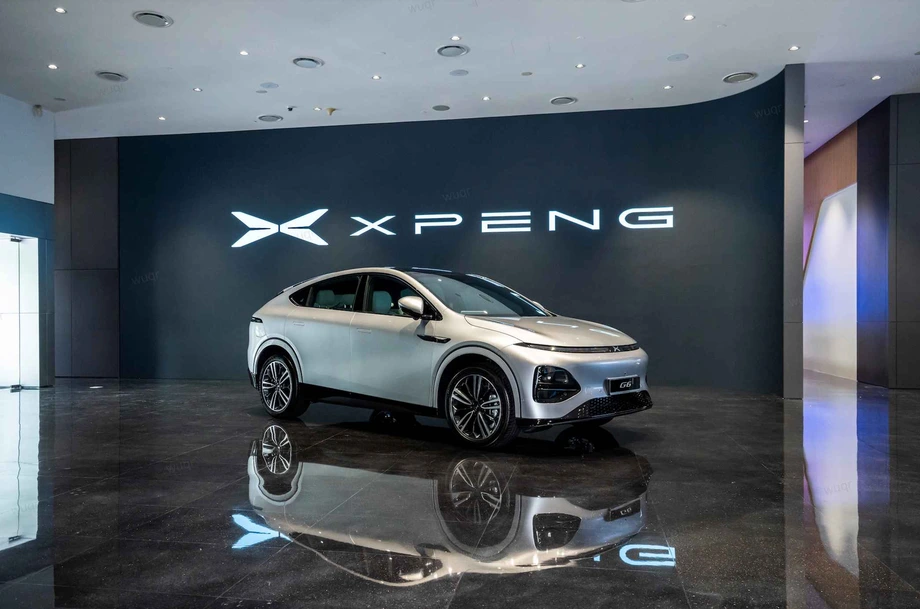
Record sales put the focus on turning growth into profit
XPeng reported record quarterly revenue of RMB24.28 billion and deliveries of 118,390 vehicles on November 16, 2026, as a richer mix of models and rising overseas sales strengthened its automotive business. Its next challenge is to turn those gains into sustained profits while financing robotaxis and humanoid robots.
Contents
- Record sales put the focus on turning growth into profit
- Why revenue rose much faster than deliveries
- Better car margins, weaker service margins
- A larger cash cushion supports the investment plans
- New MONA models carry the next sales push
- Overseas growth is changing the profit equation
- Driving software and engineering become products of their own
- Guangzhou is the starting point for XPENG YOYO
- IRON moves from factory preparation toward customer trials
- The dates that will test the strategy
- Key Points
The Guangzhou company's unaudited quarterly results showed revenue rising 19.1% from a year earlier, although deliveries increased just 2.1%. Vehicle revenue grew faster than sales volumes because customers bought a more expensive mix of cars.
XPeng still posted a net loss of RMB870 million for the three months ended September 30. That was smaller than the RMB1.34 billion loss in the second quarter, but larger than the RMB380 million loss a year earlier.
Chairman and Chief Executive Officer He Xiaopeng wants the automotive business to generate positive cash flow and profits to support investment in physical AI. The term means artificial intelligence operating machines in the real world, such as cars that navigate roads and robots that perform physical tasks.
XPeng's plans now connect three businesses with different commercial timetables: cars already selling in growing numbers, robotaxi demonstration operations in Guangzhou, and IRON humanoid robots scheduled to reach outside business customers in the second quarter of 2027.
Why revenue rose much faster than deliveries
Vehicle sales generated RMB21.63 billion in the third quarter, up 19.8% from a year earlier and 26.9% from the preceding quarter. XPeng attributed the increases to higher deliveries and an improved product mix, meaning a greater contribution from models carrying higher prices.
Dividing vehicle revenue by deliveries gives roughly RMB182,700 per vehicle, compared with about RMB155,600 a year earlier and RMB165,100 in the second quarter. Those calculations use vehicle revenue of RMB18.05 billion and RMB17.05 billion, respectively, and deliveries of 116,007 and 103,295.
The GX delivered more than 20,000 vehicles during the quarter, adding a substantial contribution from a model aimed at a higher price segment. MONA models continued to widen the customer base at the same time.
Third quarter revenue also exceeded the previous guidance ceiling of RMB23.4 billion by about 3.8%. Deliveries, however, were close to the midpoint of the earlier forecast of 115,000 to 121,000 vehicles. The stronger revenue result therefore rested on more than simply selling additional cars.
Better car margins, weaker service margins
XPeng's vehicle gross margin rose to 13.1% from 12.1% in the second quarter, matching its level a year earlier. Gross margin measures the share of revenue left after the direct costs of producing the goods or services sold, before expenses such as research and marketing.
The group gross margin moved in the opposite direction, falling to 18.9% from 20.7% in the second quarter and 20.1% a year earlier. The reason lay largely outside vehicle manufacturing.
Services and other revenue totaled RMB2.65 billion, up 13.7% from a year earlier but down 1.9% from the second quarter. Its gross margin fell to 67.1%, compared with 74.6% a year earlier and 75.1% in the preceding quarter.
XPeng said technical research and development services contributed less revenue in the latest quarter. Earlier periods had benefited from revenue recognized when significant project milestones were reached. Higher carbon credit trading revenue helped services revenue grow from a year earlier, even as the segment became less profitable.
The combined result was RMB4.60 billion in gross profit, against RMB2.85 billion in research spending and RMB2.78 billion in selling, general and administrative expenses. Building more profitable cars is helping, but research, sales and other operating costs continue to weigh on earnings.
A larger cash cushion supports the investment plans
XPeng ended September with a cash position of RMB45.41 billion, an increase of RMB4.93 billion from June. That measure includes cash and cash equivalents, restricted cash, short term investments and time deposits.
Management also reported operating cash flow exceeding RMB2 billion in the third quarter. Operating cash flow tracks money entering and leaving through business activities, while accounting profit includes expenses and adjustments recognized under financial reporting rules.
Research and development spending rose 17.5% from a year earlier, mainly because of work on new vehicles and AI technologies. Selling, general and administrative expenses increased 11.4%, with advertising, sales personnel and payments to franchised stores contributing to the rise.
XPeng's adjusted net loss was RMB890 million, compared with RMB1.24 billion in the second quarter and RMB150 million a year earlier. That measure excludes share compensation and changes in the value of a liability tied to its acquisition of DiDi's smart automotive business.
He Xiaopeng, chairman and CEO, set out the connection between scale and operating improvement in the company's earnings statement:
Over the coming quarters, we will continue to grow our scale, while technology-driven revenue growth and cost optimization will become increasingly evident,
Management has made automotive profitability a priority, but it gave no firm date for achieving sustained profits.
New MONA models carry the next sales push
October deliveries reached 50,237, the first month above 50,000, bringing deliveries for the first 10 months of 2026 to 334,604. The MONA L03 contributed more than 20,000 vehicles in October, with production capacity still increasing.
The MONA L05 went on sale on October 29, followed by nationwide volume deliveries from November 1. He said he hoped its first month of deliveries would exceed 10,000.
XPeng said 98% of L05 customers selected the Ultra SE or Max versions equipped with advanced driving assistance. The MONA family had passed 360,000 cumulative global deliveries by the end of October.
The company expects November deliveries to exceed 60,000 for the first time. Its fourth quarter guidance calls for 169,000 to 174,000 deliveries and revenue of RMB30.40 billion to RMB31.80 billion.
After October's 50,237 deliveries, reaching that quarterly target requires an average of about 59,382 to 61,882 vehicles in each of November and December. The forecast therefore depends on a further production and delivery increase, rather than maintaining October's pace.
Overseas growth is changing the profit equation
International deliveries reached 59,481 in the first nine months of 2026, double the level a year earlier. The third quarter contributed 27,882, equivalent to about 23.6% of XPeng's total deliveries of 118,390.
October overseas sales exceeded 13,000, setting another record. Management is targeting more than 40,000 international deliveries in the fourth quarter and more than 100,000 for the full year.
Overseas sales matter because management says they make a substantially higher profit contribution per vehicle than domestic sales. During the earnings call, executives said export gross margins were more than twice domestic margins.
XPeng plans to more than double international sales in 2027 and expand its overseas sales network to more than 1,000 outlets. Its expected regional mix is more than half in Europe, about 30% in Southeast Asia and the broader Asia Pacific region, and roughly 20% in the Middle East and Latin America.
The GX had attracted nearly 4,000 Middle East orders before local pricing was announced, according to management. XPeng is also introducing the G9L and MONA L05 internationally and developing local subsidiary operations in Australia and the United Kingdom.
James Wu, vice president of finance and accounting, identified rising costs for AI memory chips as a pressure on the business. He also warned that export VAT refunds being phased out in 2027 could affect international margins. Overseas growth therefore brings a stronger earnings opportunity alongside changing costs.
Driving software and engineering become products of their own
XPeng launched XPENG AI ENGINEERING in October to sell technology solutions to other businesses. Its proposed services span AI chips, models, automated driving and robotics, extending the company's commercial reach beyond selling its own vehicles.
A dedicated business development team is discussing cooperation with companies in China and abroad. The approach would create revenue from technology developed for XPeng products and then supplied to partners.
XPeng is also testing its Turing driving system in Europe using its second generation vision, language and action model. Such a model connects what a machine sees with language and the actions it takes.
Management plans to begin gradually delivering NGP driving features to global customers from 2027. He also said the company hopes to obtain European Union regulatory permissions in 2027 and introduce urban driving assistance in Europe.
Domestic users have already received a new version of the second generation model, including VLA Lite for Max owners. For overseas customers, local testing and regulatory approvals will shape when particular functions become available.
Guangzhou is the starting point for XPENG YOYO
XPeng announced on October 26 that it had received approval for intelligent connected vehicle demonstration operations across Guangzhou. The permission covers Level 4 robotaxi demonstrations.
Level 4 means a vehicle can perform driving tasks without human intervention within specified operating conditions. XPeng's robotaxi business, branded XPENG YOYO, had completed more than 2,000 internal test orders, management said.
The company plans to use the fourth quarter to refine a product and service system in Guangzhou that can be repeated elsewhere. It then aims to supply complete solutions to partners in 2027 and begin expansion at scale in 2028, starting overseas.
Management expects potential revenue from hardware and software sales, services and a share of operating proceeds. The Guangzhou demonstration program is the immediate stage in that longer commercial schedule.
IRON moves from factory preparation toward customer trials
XPeng said its first automated production line for advanced humanoid robots began operating in September, with more than 80% automation across core manufacturing processes. The company also completed supplier nomination agreements to support production.
He said the latest IRON robot would appear at XPeng Tech Day and the Guangzhou Auto Show later in November. The earnings statement described the robot as moving toward a mass production milestone by the end of 2026.
The first batch is scheduled for trials in selected XPeng stores in the first quarter of 2027. A formal release to outside business customers is planned for the second quarter.
He argues that XPeng's experience in hardware, manufacturing, computing and collecting data from physical machines gives it a foundation for robotics. He expects wider deployment to generate data that can help improve the robots' AI models.
The CEO also said IRON could eventually exceed popular premium cars in sales potential and the amount of gross profit generated. For now, the concrete steps are production preparation, store trials and the planned business customer release.
The dates that will test the strategy
XPeng's timetable places the next delivery push alongside preparations for two newer businesses. Vehicle sales must fund ongoing product development while robotaxis and robots move through their own launch stages.
- September 2026: The humanoid robot production line began operating.
- October 26, 2026: XPeng announced Guangzhou approval for Level 4 robotaxi demonstrations.
- October 29 and November 1, 2026: MONA L05 sales opened, followed by nationwide volume deliveries.
- November 2026: Management expects monthly deliveries above 60,000 and public appearances for the latest IRON.
- First quarter of 2027: Selected stores are scheduled to begin trials with the first production robots.
- Second quarter of 2027: IRON is scheduled for release to outside business customers.
- 2028: XPENG YOYO aims to begin expansion at scale, starting in overseas markets.
XPeng already had 731 domestic sales stores covering 253 cities and 4,035 company operated charging stations at the end of September. Its next operating test is to turn that established automotive base, new models and higher overseas sales into enough earnings to support its broader ambitions.
Key Points
- Third quarter revenue reached a record RMB24.28 billion on deliveries of 118,390 vehicles.
- Net loss narrowed from the previous quarter to RMB870 million but widened from a year earlier.
- Vehicle gross margin improved to 13.1%, while weaker service margins reduced the group gross margin to 18.9%.
- Fourth quarter guidance calls for 169,000 to 174,000 deliveries and revenue of RMB30.40 billion to RMB31.80 billion.
- Overseas deliveries represented about 23.6% of third quarter volume, with management reporting higher margins abroad.
- Robotaxi partner solutions and IRON business customer releases are planned for 2027.
- Management wants automotive profits and cash generation to support continued physical AI investment.