A $32.2 billion plan puts financing at the centre of Cambodia's climate goals
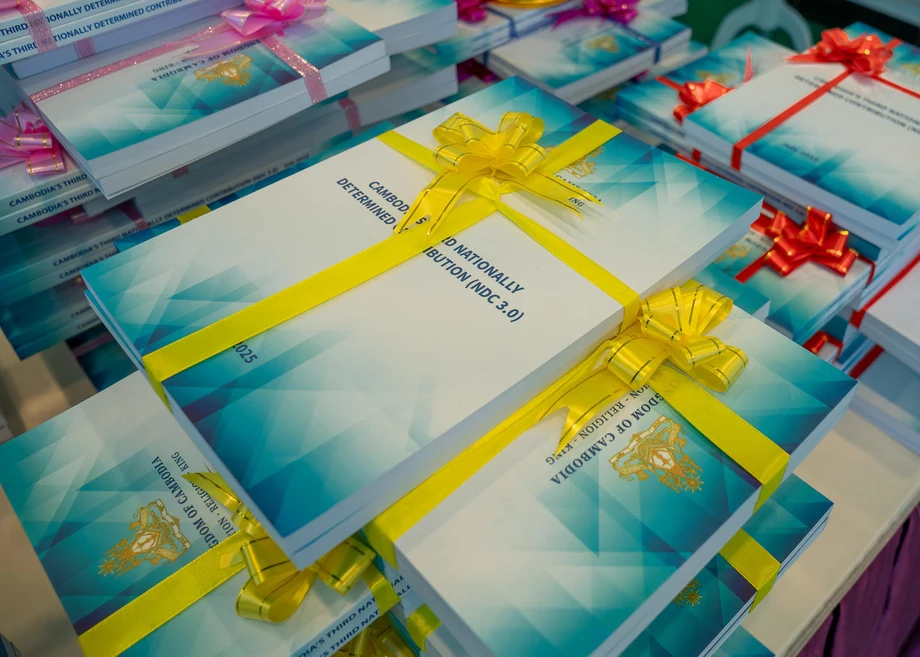
Cambodia's plan to cut greenhouse gas emissions by up to 55% by 2035 comes with a major financial requirement: about $22.5 billion in investment depends on international support. The country's third Nationally Determined Contribution, known as NDC 3.0, sets out $32.2 billion in climate measures for 2026–2035, linking cleaner electricity, forest protection and better waste management with protection against climate damage.
Contents
- A $32.2 billion plan puts financing at the centre of Cambodia's climate goals
- What does a 55% emissions reduction mean?
- How the commitments have developed
- Where the money would go
- Cleaner power, wider access and changes in transport
- Forests carry the largest projected reduction
- What farmers and urban communities would see
- Health, clean air and schools are part of adaptation
- The next tests are institutions, deadlines and delivery
- Key Points
The Ministry of Environment's plan contains two levels of ambition. Cambodia commits to reducing emissions by about 16% against its projected 2035 baseline using national resources and support already confirmed by development partners. Reaching the higher 55% target requires additional finance, technology and technical skills from abroad.
The government submitted the plan to the United Nations Framework Convention on Climate Change on August 8, 2025, and formally launched it in Phnom Penh on September 18. It supports Cambodia's longer commitment to achieve carbon neutrality by 2050, when emissions released would be balanced by carbon removed from the atmosphere.
The Ministry of Environment's NDC 3.0 summary, published on August 8, identifies 163 measures: 49 to reduce emissions, 75 to help people cope with climate change and 39 to support implementation through financing, institutions, information and skills.
For Cambodian households, the programme reaches beyond international negotiations. Its targets include electricity access, safer sanitation during floods, irrigation powered by solar energy, cleaner air and schools better prepared for climate risks. Whether those measures receive funding will shape how much of the plan becomes practical change.
What does a 55% emissions reduction mean?
Cambodia measures its target against a business as usual projection, an estimate of how much the country would emit in 2035 without the additional measures in the plan. The government's full climate plan puts that baseline at 133.7 million tonnes of carbon dioxide equivalent.
Carbon dioxide equivalent combines different greenhouse gases into a common unit according to their warming effect. Under the scenario supported by international assistance, Cambodia projects annual emissions of 60.4 million tonnes in 2035. Under its unconditional commitments, emissions would reach 112.1 million tonnes.
The detailed emissions table calculates a reduction of 73.3 million tonnes under the conditional scenario, while the ministry's summary and the United Nations Development Programme's launch statement give approximately 73.7 million tonnes. Both describe the headline goal as a reduction of up to 55%.
The gap between the two scenarios is substantial: international assistance would help lower projected annual emissions by a further 51.7 million tonnes in 2035, calculated from the difference between 112.1 million and 60.4 million tonnes. Financing therefore affects the scale of Cambodia's promised climate action.
How the commitments have developed
Cambodia's earlier climate plans targeted reductions of 27% in 2015 and about 42% in 2020 against business as usual projections. NDC 3.0 raises the headline target to 55%, while moving the target year from 2030 in the updated plan to 2035.
The main dates show how the new programme connects immediate implementation with longer national goals:
- 2015: Cambodia submitted its initial contribution, targeting a 27% reduction against business as usual.
- 2020: The updated contribution raised the target to about 42%.
- August 8, 2025: Cambodia submitted NDC 3.0 to the UN climate convention.
- September 18, 2025: The government formally launched the plan in Phnom Penh.
- 2026–2035: The new programme's $32.2 billion implementation period.
- 2050: Cambodia's target year for carbon neutrality.
A Nationally Determined Contribution is a country's climate action plan under the Paris Agreement. Cambodia's latest version combines efforts to limit warming with measures intended to protect development, public services and livelihoods as climate risks grow.
Where the money would go
Cambodia estimates that reducing emissions will cost $22.68 billion, while adaptation, helping people and infrastructure cope with climate effects, will require $9.37 billion. Another $172 million is allocated to enabling measures, including the systems and skills needed to carry out the programme.
About $9.5 billion falls within the unconditional commitment, covering national resources and assistance already confirmed by development partners. Around $22.5 billion depends on additional international support. Those financing figures mean roughly seven dollars in every ten needed for implementation are tied to outside assistance.
The energy sector accounts for $20.37 billion, nearly two thirds of the total programme. Within that allocation, $12.78 billion is intended to support the higher renewable energy ambition. Electricity and fuel use therefore dominate the investment needs, even though forests provide the largest projected reduction in the sector emissions table.
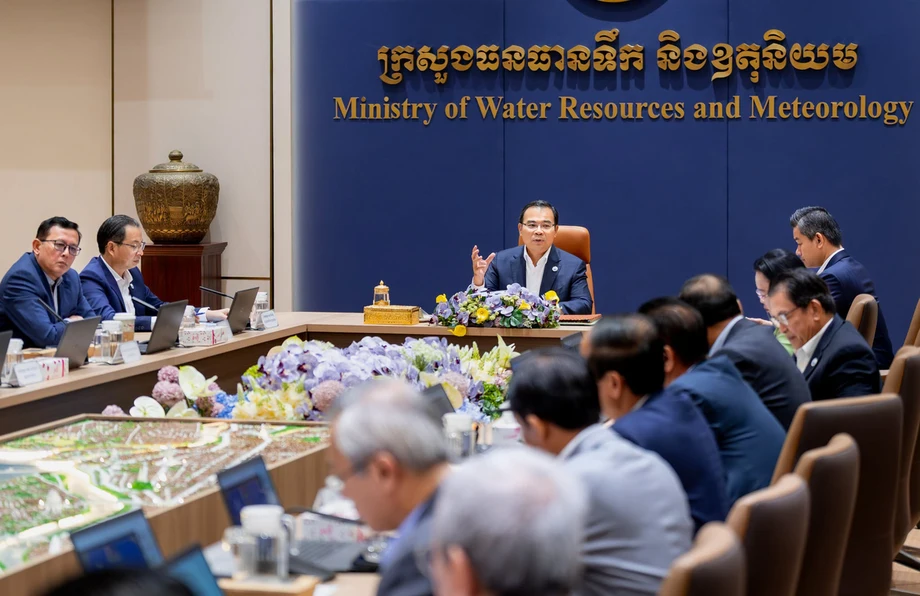
Environment Minister Eang Sophalleth, who also chairs the National Council for Sustainable Development, stressed the need for broad participation at the September launch. The UNDP launch statement records his assessment:
The successful implementation of Cambodia's NDC 3.0 depends upon the participation of all sectors and stakeholders, particularly sustained international collaboration and support.
European Union Ambassador Igor Driesmans pointed to investment through the EU's Global Gateway strategy and partnerships between public authorities and private businesses. UNDP Resident Representative Enrico Gaveglia called for public, private, international and national financing, together with technology and training. The launch statement did not announce funding commitments covering the full conditional requirement.
Cleaner power, wider access and changes in transport
Cambodia aims for renewable sources to account for 72% of installed electricity capacity by 2035, rising to 80% with international support. Installed capacity measures the maximum output that generating equipment can provide; actual electricity production also depends on operating hours and conditions such as sunshine and water availability.
The programme also targets electricity access for 99% of villages and households by 2035. Renewable systems serving local communities would help replace diesel and other fossil fuel sources, connecting the emissions agenda with access to an essential service.
A policy against new coal power supports the planned reduction in coal use. The document also proposes examining technologies that capture and use carbon emissions from existing plants.
Factories and transport are part of the same transition. Measures include minimum efficiency standards and energy labels for industrial equipment, fuel economy and emissions standards for vehicles, and charging infrastructure and incentives for electric mobility. Industrial equipment covered by the proposed standards, including pumps, boilers and compressors, accounts for more than half of industrial energy consumption in Cambodia.
Forests carry the largest projected reduction
Cambodia's conditional scenario assigns its largest sector reduction to forestry and other land use. The plan projects that this sector would move from emitting 27 million tonnes of carbon dioxide equivalent under business as usual to removing a net 13 million tonnes in 2035, a change of 40 million tonnes.
That projected change represents more than half of the 73.3 million tonnes of total reductions in the detailed table. A negative emissions figure means forests and land are expected to absorb more greenhouse gases than the sector releases.
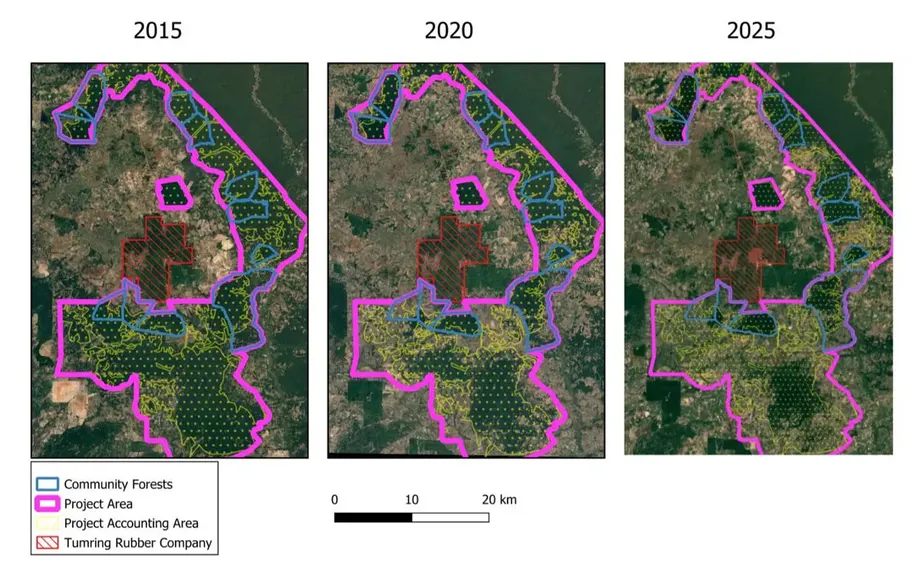
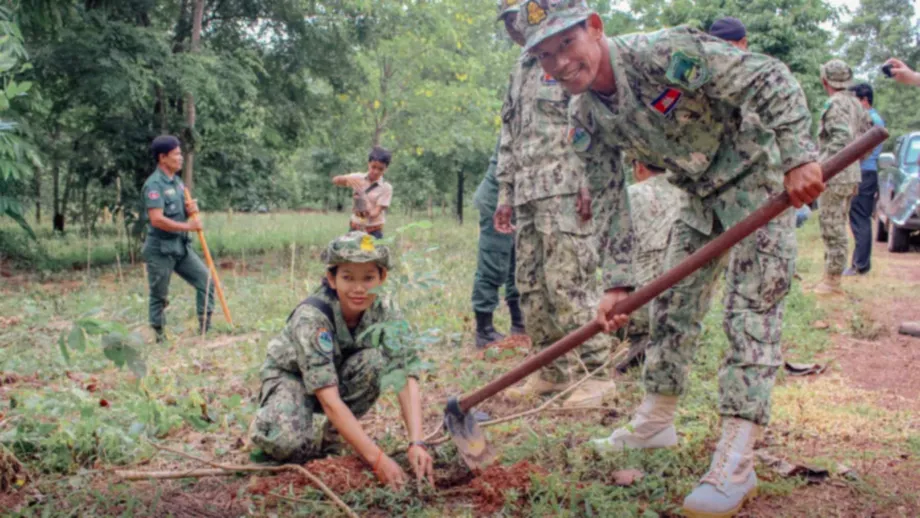
The proposed measures include reducing deforestation through the REDD+ mechanism, which supports forest protection and carbon storage, planting trees, restoring forest cover and improving forest management. The programme includes distributing at least one million saplings annually, involving communities in planting and strengthening forest monitoring.
Energy provides the next largest reduction, at 23.3 million tonnes in 2035 under the conditional scenario. Waste contributes 5.4 million tonnes, while agriculture and industrial processes each contribute about 2.2 million tonnes. Cambodia's emissions strategy consequently depends on both changes in energy use and sustained protection of forests.
What farmers and urban communities would see
Farmers are central to measures covering both emissions and resilience. The plan proposes intermittent irrigation in rice fields rather than continuous flooding, alongside suitable rice varieties. Changing how fields are flooded can reduce methane, a greenhouse gas produced when organic material breaks down without oxygen.
Livestock waste would be managed to improve soils and produce rural energy. A separate adaptation measure targets a 40% increase in the adoption of solar irrigation in selected areas by 2035, using a survey of current systems as its baseline. The measure aims to reduce energy costs and improve water use for small farms.
Urban areas are targeted for at least a 30% expansion in coverage of sewage and faecal sludge management systems by 2035. The programme connects sanitation with protection against wastewater overflows and contamination during floods, with services intended to reach poorer households, women and children.
Waste measures also include composting, better landfill operations, textile collection and sorting, and improved treatment of industrial wastewater. Organic waste from households and agricultural processing would be directed towards suitable treatment facilities, including systems that produce compost or biogas.
Health, clean air and schools are part of adaptation
Cambodia's 75 adaptation measures cover health, water, sanitation and hygiene, infrastructure, livelihoods, ecosystems, disaster risk management, social protection, food systems and air quality. The range reflects a practical concern: climate damage can interrupt several essential services at once.
Health authorities are expected to develop guidance for diseases and conditions affected by climate, and incorporate climate risks into national and provincial health planning. Urban planning guidelines intended to improve resilience are due by 2028, with climate considerations targeted for half of commune and district land use plans by 2035.
Air quality measures include dust controls at construction sites and stronger enforcement of pollution regulations and emissions standards. The plan calls for technical guidance, compliance monitoring and legal enforcement, connecting cleaner air with the wider climate programme.
Schools have specific targets too. By 2035, 1,000 schools are to implement national guidelines for eco schools, while another 1,000 implement the Safe School Framework guidelines. Climate change is to enter primary and secondary curricula, supported by teacher training. These measures would bring climate preparation into classrooms as well as government offices.
The next tests are institutions, deadlines and delivery
Cambodia's financing request sits alongside plans to make climate spending easier to track. NDC 3.0 proposes an inclusive financing framework, mechanisms for local climate funds, wider access to green finance and further work on carbon markets and pricing.
The document sets a 2027 target for establishing a carbon tax and climate investment fund, followed by public access to climate finance data by 2030. It also calls for annual tracking reports, a carbon registry and 500 local plans incorporating climate considerations. These are planned milestones that require policy decisions and implementation.
Women's participation is another measurable commitment. By 2028, the plan targets average representation of 31% in senior and middle management across ministries responsible for NDC implementation, and 32% at provincial and district levels.
Sophalleth has linked NDC 3.0 to the Pentagonal Strategy, Phase I, the Circular Strategy on Environment 2023–2028 and the Cambodia Climate Change Strategic Plan 2024–2033. The practical challenge now is to connect those national strategies with funded projects, functioning services and the emissions reductions set out for 2035.
Key Points
- Cambodia targets an emissions reduction of up to 55% against its projected 2035 business as usual baseline, conditional on international support.
- The unconditional target is about 16%, using domestic resources and assistance already confirmed.
- The 2026–2035 programme costs an estimated $32.2 billion, with around $22.5 billion dependent on outside support.
- Forests provide the largest projected sector reduction; energy accounts for nearly two thirds of planned spending.
- The 163 measures also cover sanitation, farming, health, schools, clean air and protection against climate risks.
- Upcoming milestones include a proposed carbon tax and climate investment fund by 2027, and public climate finance data by 2030.
- Cambodia retains its longer goal of carbon neutrality by 2050.