Face matching joins a network heading toward 60,000 cameras
Hong Kong police will activate facial recognition on their SmartView surveillance network on November 16, 2026, adding automated searches for criminal suspects and missing people to a system that police say has helped solve 2,192 criminal cases and contributed to 2,831 arrests by the end of October.
Contents
- Face matching joins a network heading toward 60,000 cameras
- What will officers be able to do?
- How will searches be authorised?
- What have police tests shown?
- How much has SmartView contributed so far?
- Where are the cameras, and how fast will the network grow?
- Which shopping centres are joining?
- How long will images and facial records be kept?
- What safeguards and limits have police described?
- Key Points
Commissioner of Police Joe Chow Yat-ming announced the activation date on November 14 after a passing out parade at the Hong Kong Police College. The network, introduced in 2024, currently has more than 10,000 cameras and is scheduled to reach about 60,000 by 2028.
The change will let authorised officers search recorded footage for a particular face and receive alerts when cameras detect a person being sought. Police say searches will serve specified purposes, including finding missing people, investigating crime, protecting public safety and safeguarding national security.
Shopping centres are also joining the network. At least four have agreed to connect their CCTV systems, extending police access beyond cameras mounted on lamp posts, government buildings and police vehicles. The first shopping centre connections are expected by the end of 2026.
Chow described facial recognition as protection for residents who obey the law and surveillance for people contemplating crime. Asked whether the technology could recognise someone wearing a mask, he declined to disclose its capabilities, saying operational details could help people evade police.
The launch brings together three changes: software that searches for faces, a growing camera network and access to footage held by participating organisations. Police say facial recognition will be activated for specific searches, with approval required before use.
What will officers be able to do?
SmartView will offer two forms of facial recognition. Officers can search historical footage within a specified period, or use alerts to identify when a missing person or someone of interest appears on a connected camera.
Facial recognition uses software to compare measurable features of faces captured in images. In practical terms, it helps investigators find footage that may show the person they are looking for, reducing the amount of video officers must review manually.
Senior Superintendent Leung Ming-leung of the police Operations Wing said officers would still decide the next enforcement steps. The software supplies a possible location or match; police personnel determine how to act on it.
SmartView already uses artificial intelligence for counting people and reading vehicle number plates. Face matching adds a way to search for an individual across footage from different places, rather than relying only on a vehicle or an officer spotting someone while watching recordings.
How will searches be authorised?
Leung said applications to use facial recognition must come from trained personnel serving in designated posts. An officer at inspector rank or above must approve the request, and use of the system will be reviewed afterward.
Police say officers must explain the purpose and scope of each search. The stated objectives include crime prevention and detection, public safety and national security. Scope matters because it determines the cameras, locations and period covered by a search.
Computing capacity will also shape deployment. Police expect roughly 60,000 cameras to be capable of supporting facial recognition by 2028, but say they will not activate the function on every camera simultaneously. Matching will be used for particular searches rather than continuously across the entire network.
For residents, the operational change is that footage can be searched by facial features through a shared system. For investigators, the approval process determines when that search capability can be used.
What have police tests shown?
Police described a test involving a missing person in their 80s who had dementia. The person was found about an hour and a half after police received the report. Dementia can affect memory and orientation, making it difficult for someone who becomes lost to explain where they are or return home.
Another test involved a robbery suspect. Police said the system used the suspect's facial features to locate a later appearance on camera, helping officers track the person and make an arrest.
The examples show the two practical uses police are promoting: locating someone who may need help and following a suspect after an offence. Both depend on finding a relevant appearance among footage that would otherwise require officers to inspect recordings from multiple cameras.
Chow also presented the technology as a deterrent. In remarks translated from Cantonese, the police commissioner said:
I believe using facial recognition is a safeguard for law-abiding citizens, and a form of monitoring for those who try to commit crimes. We hope they will think more about the consequences.
Asked about masks and other methods of concealment, Chow said police could arrest offenders regardless of how they committed an offence. He withheld technical details to prevent people from using that information to evade investigation.
How much has SmartView contributed so far?
Police figures put the network's contribution at 2,192 criminal cases solved and 2,831 people arrested by the end of October 2026. Those totals cover SmartView's work since its introduction, including the use of camera footage before the scheduled public activation of facial recognition.
An earlier police tally recorded 1,659 cases solved by June 30, 2026. The October figure is 533 cases higher, an increase of about 32 percent over four months. Cases cited in descriptions of the programme include murder, robbery and wounding.
Chow described the programme as having helped solve more than 2,000 criminal cases during nearly two years of operation. The more precise October tally shows the scale of its reported contribution ahead of the new function's launch.
Where are the cameras, and how fast will the network grow?
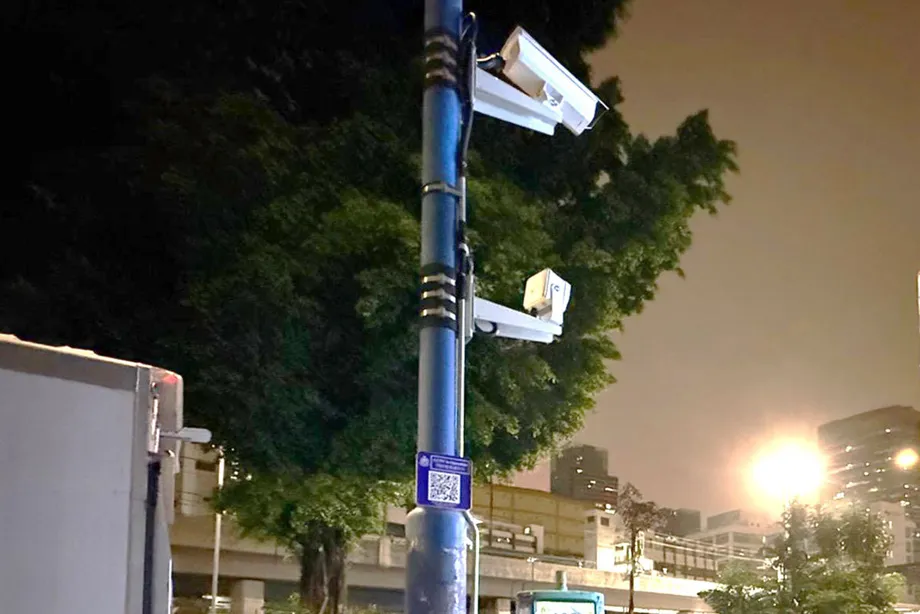
SmartView cameras are mounted on ordinary lamp posts, smart lamp posts, government buildings and police vehicles. The programme focuses on busy public places and locations with higher levels of crime, giving investigators footage from areas where large numbers of people move through the city.
The first phase included about 5,000 police cameras across Hong Kong's 18 districts and approximately 6,000 feeds from other government agencies and public institutions. The network therefore combines cameras operated by police with connections to systems operated by other bodies.
The second phase aims to add more than 20,000 cameras annually and reach roughly 60,000 by 2028. That target is about six times the current scale of more than 10,000 cameras. The expansion increases the number of places where police could obtain a useful image during an investigation.
The main milestones are:
- 2024: SmartView was introduced.
- June 30, 2026: Police recorded its contribution to solving 1,659 criminal cases.
- End of October 2026: The tally reached 2,192 cases and 2,831 arrests.
- November 16, 2026: Facial recognition is scheduled to be activated.
- End of 2026: The first shopping centre connections are expected.
- 2028: The network is intended to reach about 60,000 cameras.
Which shopping centres are joining?
At least four shopping centres have agreed to connect their CCTV systems: Sino Group's Olympian City and Tuen Mun Town Plaza, the Housing Authority's Kwai Chung Shopping Centre, and the Housing Society's activity and shopping development in Fanling known in Chinese as Ling Lok Wut.
Connecting those systems will change how officers obtain footage during an investigation that crosses several locations. Leung said police would spend less time seeking access separately at each shopping centre and finding personnel to operate the recordings.
Shopping centres must display general CCTV notices. Police encourage additional signs identifying a connection to SmartView, but disclosure of that connection is voluntary. A visitor may therefore see a notice saying cameras are in use without seeing a notice naming the police network.
The shopping centre agreements extend the programme into premises managed by private businesses and housing bodies. The planned connections make their camera feeds part of a wider search process, alongside footage from police and other public institutions.
How long will images and facial records be kept?
Police give a maximum retention period of 31 days for surveillance footage and 180 days for facial recognition data. A description of the backup arrangements puts video backup retention at 30 days.
Facial recognition records can include images, timestamps and location information. That means the system can retain a record showing where and when a face was detected for longer than it keeps the underlying video footage.
The two retention periods serve different parts of an investigation. Video provides the wider scene, including movements and surrounding activity. A facial recognition record focuses on a detected person, a place and a time, allowing investigators to follow up a possible match.
Police say footage covers public areas and that operating procedures draw on privacy impact assessments conducted in consultation with Hong Kong's privacy regulator. The Office of the Privacy Commissioner for Personal Data says organisations collecting and using personal data through facial recognition must comply with Hong Kong's privacy laws.
What safeguards and limits have police described?
Leung said police had consulted legal experts and third party organisations about the system. He said information security must meet the government's highest standards and that data would travel through a dedicated private fibre network. Police described the risk of hackers stealing the information as very low.
The safeguards described by police cover several stages: trained personnel apply to search, a sufficiently senior officer approves the request, the search must have a specified purpose and scope, and use is reviewed afterward. Retention limits govern how long footage and facial records remain in the system.
Technical performance remains undisclosed. Chow did not answer whether the system can recognise masked faces, and police have not given a public accuracy figure or explained how often it may match the wrong person. Officers' decisions about possible matches will therefore be a central part of how searches lead to action.
November 16 is the immediate operational milestone. Shopping centre connections expected by the end of 2026 and the camera expansion planned through 2028 will then increase the reach of the same search capability. For someone seeking a missing relative, that may mean a faster location alert; for someone moving through a connected public space, it means their recorded image can become part of an authorised facial search.
Key Points
- Hong Kong police plan to activate SmartView facial recognition on November 16, 2026.
- The system supports searches of recorded footage and alerts for missing people or people of interest.
- Searches require approval from an officer at inspector rank or above and are reviewed afterward.
- Police credit SmartView with helping solve 2,192 cases and contributing to 2,831 arrests by the end of October.
- At least four shopping centres have agreed to connect their CCTV systems.
- Police give retention limits of up to 31 days for footage and 180 days for facial recognition records.
- The network is intended to reach about 60,000 cameras by 2028, with facial recognition activated for specific searches.