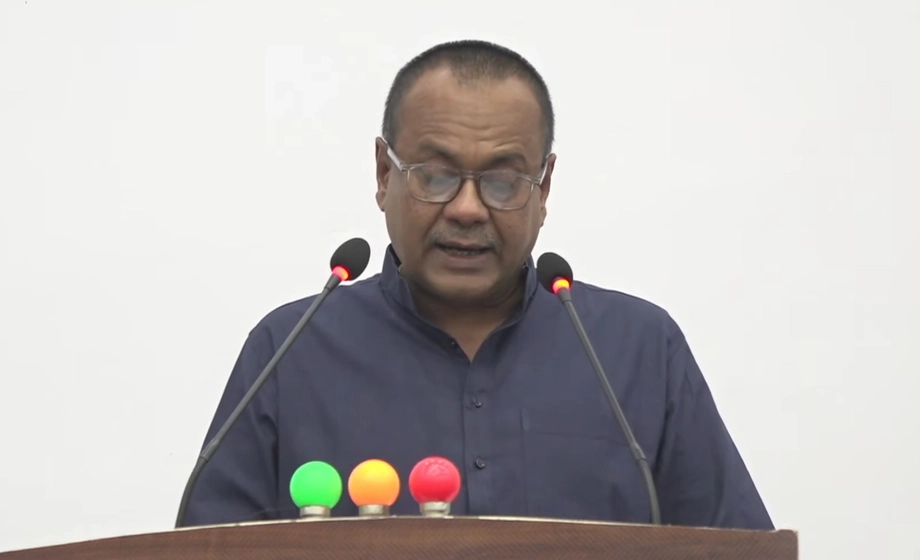
Yadav steps down before confidence vote
Madhesh Chief Minister Krishna Prasad Yadav resigned on Saturday, November 14, 2026, after losing the support of two coalition partners, opening a new contest to govern the Nepalese province. Province Chief Surendra Labh Karn accepted his resignation and invited claims to form a government by 4 p.m. on Friday, November 20, corresponding to Mangsir 4, 2083, in Nepal's calendar.
Contents
- Yadav steps down before confidence vote
- How the coalition lost its majority
- The assembly numbers need care
- The dates behind the resignation
- What Yadav said about leaving office
- How the next chief minister will be chosen
- JSP Nepal faces an internal leadership contest
- The existing cabinet stays until a replacement is formed
- Key Points
Yadav, the Nepali Congress parliamentary party leader, announced his decision at the Provincial Assembly in Janakpurdham during a sitting called for a vote of confidence. Speaker Ram Ashish Yadav had allocated time for the vote, but the chief minister resigned before seeking it, having concluded that he could not gather a majority.
The immediate contest centres on Janata Samajbadi Party Nepal, or JSP Nepal, which has 27 seats. The CPN-UML and the Nepali Communist Party, or NCP, have been discussing a government under its leadership. Disagreement within JSP Nepal over who should become chief minister has delayed an agreement, while Janamat Party chair Dr. CK Raut has said his party will stay out of the next government.
The outgoing Council of Ministers will continue working until a replacement is constituted, according to the Province Chief's office. Residents therefore face a change in political leadership without an immediate vacancy in the provincial executive.
How the coalition lost its majority
Yadav's government brought together Nepali Congress, UML and NCP. Its position weakened as the coalition partners failed to reach an agreement at the central level and then withdrew their support in Madhesh.
Four UML ministers left the government first. Four NCP ministers subsequently resigned on November 6, removing another bloc of support and leaving Yadav dependent on finding new partners. Nepali Congress holds 22 seats, well short of either majority threshold cited for the assembly.
A confidence vote asks legislators whether a government still has enough support to remain in office. Once coalition partners withdrew, Yadav faced the requirement to demonstrate that support in the assembly. Negotiations with other parties continued before the scheduled sitting, but no replacement coalition supporting him emerged.
The assembly numbers need care
The current sitting membership is given as 102, with 52 votes needed for a majority. The corresponding party figures are JSP Nepal with 27, UML with 24, Nepali Congress with 22, NCP with 15 and Janamat with 12. The Federal Socialist Party and Rastriya Prajatantra Party have one member each. Those figures add up to 102.
Another published tally gives the chamber's membership as 107, the majority threshold as 54 and UML's strength as 23. Its listed party totals add up to 101. An explanation for the differences in membership and UML's seat count has not been given.
Using the detailed tally of 102 sitting members, Nepali Congress's 22 seats left Yadav needing another 30 votes to reach 52. Even bringing Janamat's 12 members into his camp would have produced only 34, requiring support from at least one more substantial bloc.
The proposed combination of JSP Nepal, UML and NCP has a much larger numerical base. Their respective 27, 24 and 15 seats total 66, or 14 above the 52 votes required under that tally. Using the alternative UML figure of 23, the same three parties would have 65 seats, still above the alternative threshold of 54.
The central obstacle to that proposed coalition is therefore agreement over leadership and participation. The three parties have enough seats under either calculation, but they still need to settle on a candidate and present a claim backed by a majority.
The dates behind the resignation
Yadav's departure followed a series of appointments, ministerial resignations and coalition negotiations. The key dates are:
- Mangsir 19, 2082: Yadav took office as chief minister under Article 168(2) of Nepal's Constitution, according to his resignation letter.
- October: Four UML ministers left the government. Their departure is dated October 11 in one account, while other accounts place UML's withdrawal of support on Asoj 30 in Nepal's calendar.
- November 6, Kartik 20: Four NCP ministers resigned and the party withdrew support. UML also said a new alignment involving JSP Nepal, UML and NCP had taken shape.
- November 14, Kartik 28: Yadav announced his resignation in the assembly and submitted it to the Province Chief, who accepted it.
- November 20, Mangsir 4: Claims to form the next government must reach the Province Chief by 4 p.m.
The November 14 resignation brought the search for a replacement into a formal constitutional process. Parties now have a stated deadline to turn their negotiations into a majority claim.
What Yadav said about leaving office
Yadav told the assembly that public service and people's trust mattered more than staying in office through calculations over legislative support. He presented his resignation as a way to allow a political resolution and the formation of a stable government.
The chief minister also outlined what he regarded as his achievements before announcing his departure. His resignation letter thanked the Province Chief, assembly members, cabinet colleagues, public employees, journalists and provincial residents for their support during his term.
The letter cited Article 169(1)(a) of the Constitution and made the resignation effective from Saturday, Kartik 28. It also recalled his appointment under Article 168(2) on Mangsir 19, 2082.
Yadav's decision ended the scheduled confidence proceedings before a vote took place. His government had lost its coalition backing, and he chose to leave office after assessing that the necessary votes were beyond reach.
How the next chief minister will be chosen
Province Chief Karn has invited claims under Article 168(2) of Nepal's Constitution. That provision allows an assembly member who can command a majority with the support of two or more parties to be appointed chief minister.
A party's seat total is only the starting point. A prospective chief minister must bring together enough parties and members to support the appointment. For Madhesh, this makes negotiations over a common candidate essential even when the proposed partners collectively hold more than half the seats.
The Province Chief's office issued the invitation after accepting Yadav's resignation under Article 169(1)(a). The deadline is 4 p.m. on Mangsir 4, 2083, identified in the notice as Friday, November 20, 2026.
The immediate process is therefore a call for a coalition majority, rather than an automatic appointment of the leader of the largest party. JSP Nepal has the biggest individual bloc, but its 27 members alone fall short of the votes needed to govern.
No successor had been appointed when the invitation was issued. The next concrete step is the submission of a claim within the deadline, supported by parties able to assemble a majority.
JSP Nepal faces an internal leadership contest
JSP Nepal parliamentary party leader Saroj Kumar Yadav has been trying to form a government led by his party. He is a different politician from the outgoing chief minister, Krishna Prasad Yadav of Nepali Congress.
UML has said that an alignment with JSP Nepal and NCP was formed on November 6, the same day NCP left the outgoing administration. UML and NCP have shown willingness to support JSP Nepal's leadership of the next government.
Competition within JSP Nepal over the chief minister's position has slowed efforts to turn that alignment into a completed agreement. The party must resolve its own leadership choice while negotiating terms with its prospective partners.
Janamat's decision to stay outside the next government narrows the range of combinations being pursued. Its 12 seats would be useful to a coalition seeking a majority, but the proposed JSP Nepal, UML and NCP grouping can reach the threshold without them.
Raut's position also leaves a clear political separation between Janamat and the parties negotiating to take office. Whether the proposed three party coalition can settle its remaining disagreements is the immediate issue before the November 20 deadline.
The existing cabinet stays until a replacement is formed
The Province Chief's office said the existing Council of Ministers would continue to act under Article 169(3) until another provincial Council of Ministers is constituted. Yadav's resignation therefore starts a transition rather than ending the executive's work immediately.
For provincial residents and public employees, that provision means the current administration remains in place while parties negotiate. Responsibility will pass to a newly constituted government once the appointment process is completed.
The political change is nevertheless substantial. Nepali Congress has lost the coalition that sustained its chief minister, while JSP Nepal has become the centre of negotiations for the next administration. UML and NCP, having left Yadav's government, are now potential partners in its replacement.
The decisive test is whether a candidate can submit a majority claim by November 20. The proposed partners have sufficient combined seats, but they must agree on who will lead and secure the support needed for appointment.
Key Points
- Krishna Prasad Yadav resigned as Madhesh chief minister on November 14 before taking a scheduled confidence vote.
- UML and NCP withdrew support, leaving his Nepali Congress party without a majority.
- Province Chief Surendra Labh Karn accepted the resignation and invited coalition claims by 4 p.m. on November 20.
- The detailed sitting membership tally gives 102 members and a majority threshold of 52; another tally gives 107 and 54.
- JSP Nepal, UML and NCP are pursuing a new government, with leadership disagreements delaying an agreement.
- Janamat Party chair Dr. CK Raut has said his party will not join the next government.
- The existing Council of Ministers will continue until a replacement is constituted.