Only half of young children receive all basic vaccines
Timor-Leste has expanded its vaccination programme and eliminated measles, yet only 52.3% of children aged 12–23 months received all basic vaccinations in 2025–26, almost unchanged from 52.6% in 2009–10. First measles vaccine coverage fell to 63.9%, while just 45.8% of children aged 24–35 months had received their second measles dose.
Contents
- Only half of young children receive all basic vaccines
- What the different coverage figures mean
- Why children are missing later doses
- Measles protection is weakening in urban and wealthier groups
- A narrower wealth gap can hide falling coverage
- Why health records and surveys give different numbers
- What the 2023 campaign and digital surveys add
- How the national strategy took shape
- What implementation will require
- Key Points
The government's Key Indicators Report, based on interviews conducted from September 29, 2025, to January 31, 2026, reveals a further challenge: coverage drops when measured against the country's expanded national schedule. Only 35.3% of children aged 12–23 months and 24.3% of those aged 24–35 months had received every vaccination listed for their age group.
The findings arrive as the Ministry of Health develops its National Immunization Strategy for 2026–2030. Decisions about staffing, outreach, vaccine supplies and record keeping will determine whether children who begin vaccination return for the remaining doses.
Measles deserves particular attention. First dose coverage declined from 69.3% in 2016 to 63.9% in 2025–26, a fall of 5.4 percentage points. Preventing sustained measles transmission requires about 95% coverage with two doses, leaving a large gap between current uptake and the protection needed.
Wealth gaps have narrowed, but part of that change reflects falling vaccination among better off children. Children whose mothers have no education remain especially underserved. The central task is therefore broader than raising a national average: services must reach children who receive no vaccines and help those already attending complete their schedule.
What the different coverage figures mean
The basic vaccination measure provides a consistent way to compare surveys over time. It requires one BCG dose against tuberculosis, three doses each of polio and DPT containing vaccines, and one measles containing dose. DPT protects against diphtheria, pertussis, also called whooping cough, and tetanus.
The national schedule includes more protection. For children aged 12–23 months, the survey also counts birth doses, an injected polio vaccine, and vaccines against hepatitis B, Haemophilus influenzae type b, pneumococcal disease and rotavirus. For children aged 24–35 months, it adds a second measles dose and a fourth DPT dose.
The difference is substantial: 52.3% of younger children completed the basic set, compared with 35.3% completing the national schedule, a gap of 17 percentage points. Among older children, fewer than one in four completed the larger schedule.
Timor-Leste has nevertheless made progress in reaching children at least once. The share receiving no vaccinations fell from approximately 23% in 2009–10 to 15.4% in 2025–26. BCG coverage rose from 76.7% to 83.8%, and receipt of the first DPT containing dose increased from 75.1% to 79.8%.
Why children are missing later doses
Repeated visits remain a weak point. In 2025–26, first DPT dose coverage was 79.8%, but third dose coverage was 68.2%. The dropout rate, calculated as the share of first dose recipients who missed dose three, was 14.5%.
DPT dropout exceeded 10% in all three national surveys: 11.6% in 2009–10, 21.3% in 2016 and 14.5% in 2025–26. The latest improvement leaves a persistent problem with completing vaccination after the first contact.
Third oral polio dose coverage was just 60.1%. Among children aged 24–35 months, fourth DPT dose coverage was 48.4%, showing that attendance also weakens for later boosters.
Another 20.2% of children aged 12–23 months had never received a first DPT dose. Immunization programmes commonly use this indicator to identify children described as zero dose. The survey separately counts children receiving no vaccines at all, explaining why its 15.4% figure is lower.
Measles protection is weakening in urban and wealthier groups
Urban children experienced a steep fall in first measles dose coverage, from 74.2% in 2016 to 61.7% in 2025–26. Coverage among children in the richest fifth of households dropped from 78.2% to 66.5% over the same period.
Those declines challenge an approach focused mainly on remote or poor communities. Dili and other urban areas also need attention, including predictable vaccination sessions and appointment times that working caregivers can attend.
Studies in Dili identified irregular sessions, incomplete communication with caregivers and competing family obligations. Research also found missed vaccination opportunities among 41% of eligible children attending health facilities. Checking vaccination records during visits for illness or growth monitoring could help recover some of those opportunities.
Timor-Leste eliminated measles in 2018 and rubella in 2023. Elimination means sustained local transmission has stopped; maintaining it requires continued vaccination and rapid detection of infections. A national serosurvey, which examines blood samples for evidence of protection, identified measles immunity gaps among children and young adults and high outbreak potential.
The practical response proposed for the new strategy is a rapid review of measles and rubella registers, vaccine stocks and surveillance data, followed by targeted vaccination. Laboratory reporting also needs improvement: only 38% of measles and rubella IgM results, tests used to help identify recent infection, were returned within four days.
A narrower wealth gap can hide falling coverage
Children in the poorest fifth of households made gains in third DPT dose coverage, from 48.1% in 2016 to 60.5% in 2025–26. Coverage in the richest fifth moved from 72.4% to 68.5%. Here, the narrowing gap included a substantial improvement among disadvantaged children.
Measles followed a less encouraging pattern. First dose coverage among the poorest children changed from 54.4% to 58.4%, while coverage fell among children in the three wealthiest groups. Much of the apparent improvement in equality came from declining uptake among better off families.
The slope index of inequality, a measure that considers the whole wealth distribution, fell from 29.4 to 7.9 percentage points for DPT3 and from 31.0 to 8.1 points for the first measles dose. Reading those figures alongside coverage in the poorest group shows whether a smaller gap reflects wider protection or losses elsewhere.
Maternal education remains a strong dividing line. First measles dose coverage was 50.2% among children whose mothers had no education, compared with 67.7% among those whose mothers had secondary education. Third DPT dose coverage was 55.7% and 71.6%, respectively. Nearly three in ten children of mothers with no education had missed even the first DPT dose.
The all basic vaccinations indicator can conceal these differences because a child must receive every required component to count. In 2025–26, the wealth gap for that measure was only 1.4 percentage points. Low oral polio coverage among the richest children, at 55.3% for dose three, helped compress the combined measure despite gaps in other vaccines.
Why health records and surveys give different numbers
WHO and UNICEF's 2023 coverage estimates placed first DPT dose coverage at 89%, third DPT dose coverage at 83% and first measles dose coverage at 72%. The later 2025–26 household survey recorded 79.8%, 68.2% and 63.9%, respectively. These figures cover different periods and use different methods: household surveys collect children's vaccination histories, while WHO and UNICEF assess several types of evidence to estimate annual coverage.
The institutional review also identified serious problems in routine reporting. WHO and UNICEF excluded reported coverage data for 2022 and 2023 and recommended revising the historical series. Reported DPT3 coverage reached 114% in 2023, while reported first measles dose coverage reached 104%.
Clinic coverage is usually calculated by dividing doses administered by an estimated eligible population. Vaccinating older children during catch up activities can increase the dose count, while inaccurate population estimates can distort the denominator. Both issues complicate the calculation. WHO and UNICEF said their adjusted estimates might understate coverage achieved, but the share delivered through routine services could not be determined.
The 2025–26 survey used vaccination cards, the LISIO mother and child health booklet, and caregivers' verbal reports. Its estimates are preliminary, and a comprehensive final report is planned for the end of 2026. Unpublished sampling errors limit precise comparisons, particularly for small national changes and differences between municipalities.
What the 2023 campaign and digital surveys add
Timor-Leste has already shown it can organise a broad vaccination drive. From January 12 to March 3, 2023, an integrated campaign targeted children aged up to five with measles and rubella, oral polio and pneumococcal vaccines, alongside vitamin A and deworming treatment. Preliminary programme figures indicated vaccine coverage above 95% in every district.
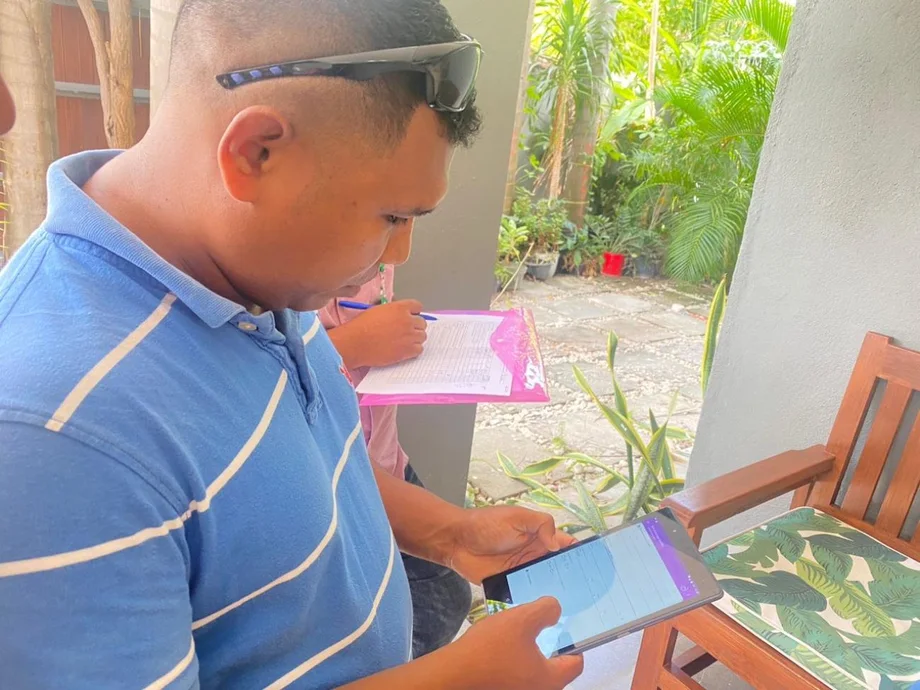
The Ministry of Health then deployed 64 health workers to assess the campaign and routine vaccination during 2021 and 2022. WHO and the national statistics institute identified 194 enumeration areas and mapped 5,044 households. Digital questionnaires sent information directly to the national health information system, according to the UN's digital survey account.
Campaigns reach several age groups at once, while routine services must keep up with each new group of infants. The latest survey points to the need for reliable appointments and follow up between campaigns, especially for doses requiring repeat visits.
In 2026, the ministry began piloting an Immunization e-Tracker in Dili, its first digital immunization record for individual children. Such records could generate lists of children overdue for vaccination and support reminders and community visits. Expansion will require accurate data and enough staff, with digital entry replacing duplicate paperwork wherever possible.
How the national strategy took shape
The Ministry of Health launched development of the costed National Immunization Strategy at a workshop on June 27, 2025, after four days of technical discussions. WHO's strategy launch statement describes a technical working group of 34 experts, with WHO providing technical leadership in partnership with UNICEF.
Dr Flávio Brandao, vice minister of health responsible for hospital operationalization, identified sustainability and staff responsibility as central challenges:
"One of our biggest gaps is sustainability and ensuring that every health worker sees immunisation as part of their core duty," he said.
The main milestones connect programme expansion, planning and the latest evidence:
- 2002: Timor-Leste began its Expanded Programme on Immunization.
- 2012, 2018 and 2023: The country eliminated maternal and neonatal tetanus, measles and rubella, respectively.
- 2024: Pneumococcal conjugate and human papillomavirus vaccines were introduced.
- June 27, 2025: The ministry launched development of the 2026–2030 strategy.
- August 12, 2025: A public consultation lasting three days opened in Dili.
- September 29, 2025–January 31, 2026: Fieldwork took place for the latest national survey.
The August consultation addressed financing, uneven service performance, outdated guidance and training needs. The strategy was expected to be finalized after that workshop; its final approval status is not specified in the published planning accounts.
What implementation will require
Timor-Leste's vaccine management assessment score improved from 43 in 2015 to 63 in 2024. The government's share of vaccine financing also rose from 64% in 2022 to 80% in 2023. These gains provide a stronger base for delivery as international immunization funding contracts.
Vaccine purchases are only one expense. Outreach needs transport, staff allowances and a cold chain, the refrigerated storage and transport system that keeps vaccines usable. Reaching remote communities generally costs more per child than providing vaccination at a fixed clinic.
Health workers also need time and training. National Immunization in Practice training began in 2025, the first such rollout in nearly two decades, following reports of shortages of skilled vaccination staff. Digital tracking and additional outreach will depend on the same workforce.
For families, practical changes could include regular mobile sessions, clearer explanations of the next appointment, extended or weekend hours in towns, and vaccination checks at other health visits. Public health services are free for Timorese nationals, but attendance still depends on time, travel and dependable service schedules.
The proposed monitoring approach would track each vaccine separately, alongside completion of the full schedule. It would also show results by household wealth, maternal education, residence and municipality. Reviewing the coverage of the least reached children alongside inequality measures would give municipal teams a clearer basis for deciding where to send staff and supplies.
Measles campaigns may be needed where immunity data support them, but routine services must continue during those drives. The practical goal is sustained protection: reaching children who have never attended, recovering missed doses and keeping each new generation on schedule.
Key Points
- Basic vaccination coverage was 52.3% in 2025–26, almost unchanged from 52.6% in 2009–10.
- First measles dose coverage fell from 69.3% in 2016 to 63.9%; second dose coverage among children aged 24–35 months was 45.8%.
- Only 35.3% of children aged 12–23 months completed the national schedule assessed by the survey.
- Children whose mothers had no education had first measles dose coverage of 50.2%, compared with 67.7% for children whose mothers had secondary education.
- The 2026–2030 strategy is intended to connect vaccination priorities with budgets, staffing, outreach and stronger monitoring.
- The survey findings are preliminary, with a comprehensive final report planned for the end of 2026.