Three children's products exceed heavy metal limits
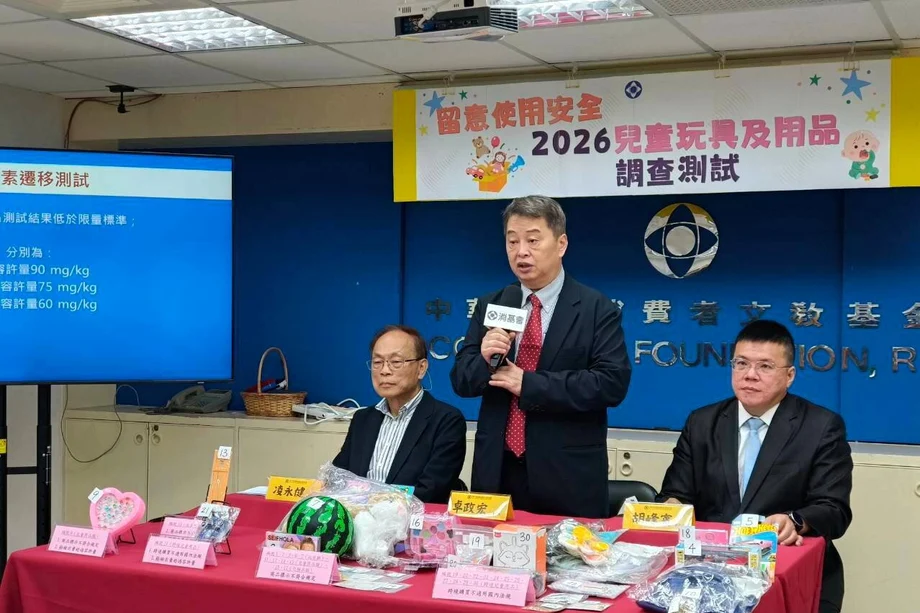
A children's ring bought through Shopee, a pineapple necklace purchased from Coupang Taiwan and a PAW Patrol flip cover watch ordered from SHEIN exceeded heavy metal migration limits in testing by Taiwan's Consumers' Foundation. The foundation purchased 30 children's toys and other products in June 2026 from shops in Taipei and New Taipei and from online platforms, including 12 items obtained through cross border purchases.
Contents
- Three children's products exceed heavy metal limits
- Which products failed the tests?
- What the laboratory test measures
- Why these metals matter for children
- Missing labels were widespread online
- When a child's accessory falls outside toy rules
- What authorities and sellers are being asked to do
- Refunds and penalties depend on the sales route
- Key Points
The ring released lead above the national standard's limit of 90 milligrams per kilogram, the necklace released cadmium above 75 milligrams per kilogram, and the watch released chromium above 60 milligrams per kilogram. Exact measured concentrations were not given, leaving the size of each exceedance unknown.
The three products represented 10% of the sample. A separate examination of labels found that 13 of the 18 products assessed under domestic labeling requirements failed to comply. Online purchases accounted for 11 of those labeling failures, including 10 products with no labels at all.
The findings bring together two problems for families: potentially harmful substances in objects children wear or put in their mouths, and missing information that makes it harder to identify a product's origin, understand its warnings or pursue a complaint.
The foundation urged stronger customs and market checks, closer scrutiny of online listings and consideration of mandatory inspection for children's metal jewelry. It also warned that obtaining refunds or compensation can be especially difficult when a platform has no local service location.
Which products failed the tests?
The foundation identified three products with excessive migration of a specific metal:
- A children's ring purchased through Shopee exceeded the lead limit of 90 milligrams per kilogram.
- A children's gift necklace with a pineapple design purchased from Coupang Taiwan's official website exceeded the cadmium limit of 75 milligrams per kilogram.
- A PAW Patrol rotating flip cover watch purchased through SHEIN exceeded the chromium limit of 60 milligrams per kilogram.
The foundation's account identified all three as online purchases, with two obtained domestically and one through a cross border transaction; another description of the findings classified two as online purchases and one as a shop purchase. Both descriptions identified three products exceeding the limits.
The sample was described as comprising eight toys, seven children's products, three cosmetics and 12 children's products purchased across borders. Nineteen products carried labels identifying mainland China as their place of manufacture, one identified Taiwan, and 10 had no origin label.
The place where a product was bought and the place where it was made answer different questions. A purchase from a domestic website can still involve an imported product. For parents seeking a remedy, the identity and location of the responsible seller are also practical concerns.
What the laboratory test measures
The foundation used CNS 4797-2, Taiwan's standard for the migration of certain elements from toys. Testing covered eight elements and assessed how much could be released from the tested material under the prescribed conditions.
Migration means the movement of a substance out of a material. A painted or metal object may contain a metal within its structure, while some portion can come out when the material encounters liquid. This type of test helps assess exposure associated with a child sucking or swallowing material from a product.
The figures of 90, 75 and 60 milligrams per kilogram are the respective limits cited for lead, cadmium and chromium in this examination. A milligram is one thousandth of a gram. The laboratory expresses the amount released relative to the mass of material tested.
The foundation's recommendations also referred manufacturers and importers to CNS 4797 and CNS 15503, asking businesses to arrange testing before putting children's products on sale and to obtain reports showing compliance with the applicable limits.
Why these metals matter for children
Lead can damage the nervous system and interfere with the body's production of blood cells. Children are especially vulnerable because their brains and bodies are developing. Exposure can affect brain development and intellectual ability, according to the health concerns outlined by the foundation.
Cadmium can accumulate in the kidneys and contribute to chronic kidney disease and weakened bones. The International Agency for Research on Cancer classifies cadmium and cadmium compounds as carcinogenic to humans. For a child wearing jewelry, the immediate prevention message is to keep the object out of the mouth and limit avoidable exposure.
Chromium exposure can cause skin allergy and inflammation, and prolonged exposure can lead to ulceration, the foundation warned. Chromium exists in different chemical forms with different health effects; the findings described here identify chromium without specifying its chemical form.
Children can encounter substances from these products through sucking or biting them, contact with skin, or putting unwashed hands into their mouths after handling them. A ring or watch is particularly easy to bring close to the mouth during ordinary play.
The foundation advised parents to stop young children from chewing metal jewelry or watches. It also recommended that children with sensitive skin avoid wearing metal accessories of uncertain composition for long periods.
Missing labels were widespread online
The domestic labeling assessment covered 18 products. Thirteen failed, a rate of about 72%. Within that group, 11 of 13 online purchases failed, compared with two of five shop purchases. Those figures translate to about 85% and 40%, respectively.
Ten of the online products had no labeling at all. The remaining online failure carried only its place of origin and intended age group. Both shop products that failed carried only origin information, leaving other required details absent.
A complete label gives families basic information they can use before and after a purchase, including the product's intended users, warnings and responsible business. Missing details become especially troublesome when a parent needs to ask about a material, report a defect or identify who should handle a return.
The online labeling failure rate in the assessed group was more than twice the shop rate. With only 13 online products and five shop products in that comparison, the finding is most useful as a reason for closer checks of the products and sales channels examined.
The foundation called for stricter checks of Chinese labeling on online marketplaces. It also asked both websites and physical retailers to establish review procedures and conduct regular spot checks, making product information part of routine sales oversight.
When a child's accessory falls outside toy rules
Taiwan's inspection system often turns on whether a product is legally classified as a toy, the foundation said. That classification matters because it helps determine whether mandatory inspection applies before a product reaches buyers.
A colorful ring, necklace or watch may appeal to children while being sold as a fashion accessory. The foundation warned that sellers may use descriptions such as suitability for people aged 15 or above, or classify an item as a decorative accessory, to avoid toy inspection requirements.
The foundation therefore proposed that authorities assess whether children's metal jewelry should become a category subject to mandatory inspection. Such a change would bring the material and intended use of these objects into closer consideration when deciding which checks are required.
Its comparison was with the European Union's REACH chemicals framework, which restricts lead and cadmium in jewelry and nickel release from articles intended for direct and prolonged skin contact. Nickel release refers to the amount that can leave an object and reach the skin, an issue associated with allergic reactions.
The practical difference is the regulatory starting point: restrictions aimed at jewelry and skin contact can reach an accessory through its materials and use, while a system centered on toy classification first asks which product category it belongs to.
What authorities and sellers are being asked to do
The foundation recommended more frequent checks at customs and in the market, with priority given to brightly colored plastic products, painted surfaces and other children's products considered more likely to contain hazardous metals.
One proposed screening tool is a handheld X ray fluorescence analyzer, commonly called XRF. It uses X rays to identify elements in a material, allowing inspectors to screen products quickly and select items for further laboratory examination. Measuring migration requires the relevant laboratory test.
Foundation chairman Cho Cheng-hung urged businesses to choose suppliers that can be held accountable. He also called on the government to examine gaps in tax administration and safety inspection associated with newer trading arrangements.
Hu Feng-pin, a lawyer and the foundation's publisher, called for more frequent customs and market sampling, particularly for brightly colored children's products considered at greater risk. The foundation also sought corrective action, recalls or destruction under the Consumer Protection Act where violations warrant those measures.
Manufacturers and importers were asked to arrange testing before selling children's products. Online platforms were urged to require independent sellers to submit compliant test reports and inspection markings, check products regularly and remove noncompliant listings promptly.
Refunds and penalties depend on the sales route
The foundation said the ring and pineapple necklace could attract penalties under the Commodity Inspection Act if authorities determine that they violate requirements and belong to a category subject to mandatory inspection. The cited fines range from NT$200,000 to NT$2 million.
The watch purchased through SHEIN presents a different enforcement problem because it was obtained across borders. The foundation described that purchase as falling outside the domestic inspection provisions discussed for the other two products, and warned that the absence of a local service location makes seeking compensation harder.
Cho said cross border returns can involve complicated procedures and extra shipping costs. A low purchase price can therefore be followed by a costly or time consuming effort to secure a refund.
Parents were advised to look for the required commodity inspection mark and complete Chinese labeling, avoid unlabeled products, and consider how a seller would handle a complaint before buying inexpensive metal jewelry. For families already using the named products, preventing chewing and prolonged contact with sensitive skin are the foundation's immediate precautions.
Key Points
- Three of 30 children's products purchased in June 2026 exceeded migration limits for lead, cadmium or chromium.
- The identified products were a Shopee ring, a Coupang Taiwan pineapple necklace and a PAW Patrol watch purchased through SHEIN.
- Thirteen of 18 products in the domestic labeling assessment failed, including 11 of 13 online purchases.
- The Consumers' Foundation called for more customs and market testing and a review of mandatory inspection for children's metal jewelry.
- Parents were urged to check inspection marks and Chinese labels, prevent children from chewing accessories and consider the difficulty of cross border returns.