A cheaper visa application, with approval steps still ahead
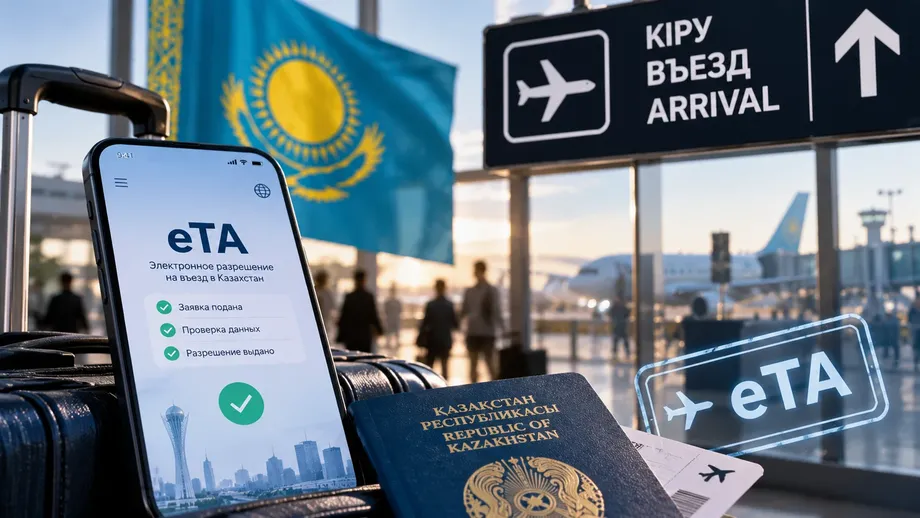
Kazakhstan and the European Union have negotiated draft agreements that would lower the standard Schengen visa application fee for Kazakh citizens from €90 to €35, alongside longer visas allowing repeated trips, faster decisions and simpler paperwork for some applicants. The EU delegation in Kazakhstan confirmed that these proposals are included in the drafts.
Contents
- A cheaper visa application, with approval steps still ahead
- What would the €35 fee change?
- Longer visas and fewer repeated applications
- Who could face less paperwork?
- How the negotiations reached this point
- Why approval takes more than a political announcement
- What Kazakhstan would accept under readmission
- How the return provision relates to the summer denial
- Travel changes within a wider partnership
- Key Points
The proposed reduction would save €55 on the standard application fee, a cut of about 61%. Students, scientists, journalists and people travelling for business are among the groups expected to benefit from simpler requirements for supporting documents.
The package also includes a readmission agreement, setting out arrangements for returning people who are staying unlawfully in another country. The EU delegation confirmed that the draft includes an obligation for Kazakhstan to accept certain citizens of other countries who reached the EU after travelling through Kazakhstan, alongside Kazakh citizens.
The political milestone came on 23 June 2026 in Brussels, when President Kassym-Jomart Tokayev met European Council President António Costa and European Commission President Ursula von der Leyen. Their joint press statement welcomed the successful conclusion of discussions at negotiators' level on both agreements.
Travellers must still wait for the legal procedures that would put the changes into effect. Kazakhstan's Foreign Ministry described preparations for signing in June, while the EU delegation subsequently described approval and ratification procedures as continuing. No date has been announced for the new rules to begin, and the precise visa validity periods, processing deadlines and conditions for accepting citizens of other countries have not been disclosed.
For applicants, the immediate position is straightforward: the €35 fee belongs to the negotiated draft. The ordinary standard fee remains €90 while the agreements move through the remaining procedures.
What would the €35 fee change?
The proposed fee reduction would make a clear difference to the cost of applying. Two applications charged at the standard rate currently cost €180 in consular fees; at €35 each, the same number would cost €70, saving €110.
Visa centre charges are an additional expense. Applicants currently pay those service charges separately, so their total bill includes more than the consular fee. The announced proposal concerns the standard visa fee.
Children aged six to 11 currently pay a consular fee of €45. A refused application does not bring a refund of the consular fee, making the expense relevant even for people who ultimately cannot travel.
The €35 figure is lower than an earlier estimate given in June by Yermek Kosherbayev, then Kazakhstan's foreign minister, who suggested a possible fee of €50 to €60 while stressing that agreement had yet to be reached. The EU delegation's subsequent confirmation puts €35 in the draft now awaiting completion of the legal process.
Longer visas and fewer repeated applications
Kazakhstan also sought Schengen visas valid for several years rather than several months, allowing travellers to make multiple journeys during that period. A visa permitting multiple entries lets its holder leave and return while the visa remains valid, subject to the rules governing each stay.
Frequent business visitors, researchers attending meetings and people making repeated professional trips would have less need to submit fresh applications. The practical benefit would come from reducing how often they must assemble documents, pay application costs and wait for a decision.
The draft also covers shorter processing times. More predictable decisions would help applicants arrange travel around university dates, conferences and business appointments. Travellers would continue to apply for permission to enter, with the agreement changing the cost and administration of that process.
Who could face less paperwork?
Students, scientists, journalists and business travellers are specifically identified among the groups covered by proposals to simplify supporting documents. The existing process can require employment certificates, bank statements, insurance and other papers explaining the applicant's circumstances and journey.
Germany's ambassador to Kazakhstan, Monika Iversen, has described discussions about shortening that document list. France's ambassador, Sylvain Guioguet, said in October that the negotiations had advanced after Tokayev's visit to Brussels. Those comments point to continued diplomatic work on the package after the June announcement.
Kazakhstan's Foreign Ministry had already identified paperwork as a central issue in its June negotiation update. Following a further round on 12 June 2026, the ministry said discussions covered application processing times, visas allowing multiple entries and requirements for supporting documents. It recorded progress on most provisions and readiness to continue working.
For a student or scientist, fewer required documents could mean less time gathering evidence from a university, employer or bank. The final published rules will determine which documents each category of applicant must provide.
How the negotiations reached this point
Kazakhstan became the first country in Central Asia with which the EU began negotiations of this kind. The process developed over several years, from an agreement to begin consultations to formal negotiating rounds and the June 2026 announcement.
The EU delegation's first round announcement dates the opening formal round to 2 and 3 December 2025. This gives a precise marker for the treaty negotiations, following earlier political discussions and preparatory work.
- May 2023: Kazakhstan and the EU agreed to begin consultations on easier visa procedures.
- December 2023: Further talks were recorded as part of the early diplomatic process.
- 10 April 2025: EU member states approved the European Commission's mandate to negotiate the visa facilitation agreement.
- 1 December 2025: The launch was announced at the 22nd EU–Kazakhstan Cooperation Council in Brussels, chaired by EU foreign policy chief Kaja Kallas and Foreign Minister Yermek Kosherbayev.
- 2 and 3 December 2025: The first formal negotiating round took place in Brussels.
- 3 March 2026: A second round in Astana covered application procedures, visas allowing multiple entries and supporting documents.
- 12 June 2026: A further round recorded progress on most provisions of both agreements.
- 23 June 2026: Leaders announced that discussions at negotiators' level had concluded.
- 25 June 2026: Kazakhstan's Foreign Ministry said both sides had moved to internal procedures in preparation for signing.
The first round was jointly chaired by Johannes Luchner, deputy director general in the European Commission's migration and home affairs department, and Kazakhstan's Deputy Foreign Minister Alibek Bakayev. Its launch coincided with the tenth anniversary of the signing of the Enhanced Partnership and Cooperation Agreement between Kazakhstan and the EU.
Why approval takes more than a political announcement
Kazakhstan's Foreign Ministry spokesperson Yerlan Zhetybayev said on 25 June that negotiations at expert level had finished and the two sides were carrying out procedures needed before signing. Kazakhstan was handling its domestic formalities, while the European side was coordinating with countries in the Schengen area.
The Schengen area brings participating European countries together under common rules for short visits. An agreement affecting those arrangements requires coordination across the participating states, rather than approval by a single embassy.
EU Ambassador to Kazakhstan Aleška Simkić had explained in January 2025 that easier Schengen visa requirements needed consensus among all Schengen countries. Describing her efforts to advance the agreement, she said:
I am advocating for it to happen quickly because I would like to see a visa facilitation agreement finalized during my tenure.
Later comments from Foreign Ministry spokesperson Zhanbolat Usenov described discussions as advanced, while declining to identify remaining issues or promise signature before the end of 2026. Officials have therefore described progress at different stages: the June completion of expert negotiations, followed by continuing work toward formal approval and signature. Zhetybayev said fuller details would be published after signing.
What Kazakhstan would accept under readmission
The readmission agreement addresses a different part of the relationship: how to return people who lack a legal right to remain in another country. Readmission means a state accepts a person back under agreed rules.
The EU delegation confirmed that the draft covers Kazakh citizens and also includes an obligation concerning citizens of other countries who entered the EU through Kazakhstan. In this context, a citizen of a third country means someone who is neither a Kazakh citizen nor a citizen of the relevant EU country.
For Kazakhstan, this would create responsibilities extending beyond the return of its own nationals. The conditions attached to that provision will matter for identifying the people covered and deciding how return requests are handled.
Kazakhstan and the EU negotiated the visa and readmission agreements alongside each other. Together, they connect easier lawful travel for Kazakh citizens with cooperation over people who are staying unlawfully.
How the return provision relates to the summer denial
Kazakhstan's Foreign Ministry rejected claims in summer 2026 that it was negotiating with the EU to host deported refugees or migrants staying unlawfully in Europe. The ministry said discussions had not covered holding, transit or accommodation arrangements for foreigners facing return or deportation from European states.
The ministry also said creating deportation centres in Kazakhstan had not been a subject of negotiations. That denial concerned facilities and arrangements for accommodating people being removed from Europe.
The EU delegation's confirmation concerns a treaty obligation to accept certain people who travelled through Kazakhstan. Readers need both pieces of information to understand the government's position: the ministry rejected negotiations over accommodation and deportation centres, while the draft readmission agreement includes a category of foreign citizens linked to transit through Kazakhstan.
Travel changes within a wider partnership
The Brussels meeting placed the visa agreements beside several concrete transport, education and investment initiatives. Tokayev, Costa and von der Leyen described the agreements as a way to strengthen connections and contacts between people in Kazakhstan and the EU.
The leaders also welcomed the signing of a Horizontal Aviation Agreement and an agreement involving the European Investment Bank worth €150 million to support transport connections. They highlighted the Trans-Caspian Transport Corridor as an important route linking the regions.
Air Astana and Airbus signed a certificate agreement covering up to 50 A320neo and A321neo aircraft, valued at €7.145 billion. The same statement welcomed expanded cooperation through Erasmus+, the education exchange programme, and Horizon Europe, the EU programme supporting research and innovation.
These initiatives give the visa changes a practical setting. Airlines and transport projects support journeys, while simpler applications would reduce some of the administrative work facing students, researchers and business visitors making those journeys. The EU is already Kazakhstan's leading trade and investment partner, according to the leaders' statement.
Key Points
- The draft would reduce the standard Schengen application fee for Kazakh citizens from €90 to €35, saving €55, or about 61%.
- Other measures include longer visas allowing repeated trips, faster processing and simpler documents for specified groups.
- Leaders announced completion of negotiations at negotiators' level on 23 June 2026.
- Approval procedures continue, and no date has been announced for the new rules to take effect.
- The readmission draft covers Kazakh citizens and certain foreign citizens who reached the EU through Kazakhstan.
- Kazakhstan's Foreign Ministry has denied negotiating arrangements for deportation centres or accommodation of deported foreigners.
- The ordinary standard application fee remains €90 while the agreements await implementation.