Eighteen patent applications put affordable access under scrutiny
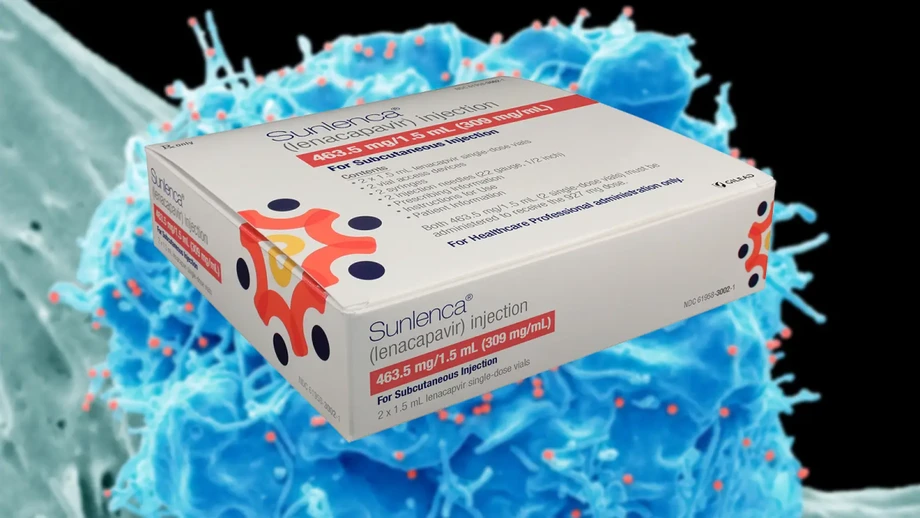
At least 18 Indian patent applications covering Gilead Sciences' HIV medicine lenacapavir have drawn challenges from patient groups, even as a licensed generic version moves toward supply at $40 per person a year. The dispute concerns how much control Gilead could retain over production and competition, with some applications potentially providing protection until 2042, 28 years after the first filing.
Contents
- Eighteen patent applications put affordable access under scrutiny
- What the Indian patent challenges target
- Why the expiry dates stretch from 2038 to 2042
- A prevention medicine with a different treatment role
- What the $40 price would change
- What tentative FDA approval allows
- Licences open markets but set boundaries
- How approval and access developed
- Funding and clinics will determine who receives it
- Key Points
Dr Reddy's Laboratories received US Food and Drug Administration tentative approval for its generic version, announced on November 2, 2026. Initial supplies are expected in designated international markets before the end of 2026, followed by broader distribution in 2027. India is among the 120 countries covered by Gilead's voluntary licences with six generic manufacturers.
Those developments create two routes toward access: licensed production under terms agreed with Gilead, and patent challenges that could give other manufacturers greater freedom to compete. Patients could benefit from the first while public health organisations continue pursuing the second.
The applications cover the basic compound, salt forms, formulations, dosing regimens, compositions and methods of use. Patient groups argue that secondary claims lack the novelty and inventive step required for a patent. They have asked the Department for Promotion of Industry and Internal Trade to ensure rigorous examination.
The stakes extend beyond the price of a single medicine. Lenacapavir offers HIV prevention through injections given twice a year, potentially making protection easier for people who struggle to take a pill every day. Whether that convenience reaches millions depends on patents, licensing, regulatory approval, public funding and functioning health services.
What the Indian patent challenges target
Sankalp Rehabilitation Trust has been a leading filer of pre-grant oppositions against lenacapavir applications in India. A pre-grant opposition allows a patent claim to be challenged before the patent office decides whether to grant it.
The objections include applications concerning lenacapavir's choline and sodium salts. Pharmaceutical salts are forms of a medicine made by combining its active molecule with another chemical component. They can affect properties such as stability or solubility, which matters when developing a medicine that must remain effective in the body for months.
Indian patent examination reports for five applications raised issues involving novelty, inventiveness, eligibility for patent protection and sufficient disclosure. Disclosure means explaining an invention in enough detail for a person with the relevant technical skills to understand and reproduce it. The patent office must consider the claims and responses before reaching its decisions.
KM Gopakumar, senior researcher and legal adviser at Third World Network, said the pattern of applications appeared to build layers of protection around one medicine. His concern is that overlapping patents could discourage generic entry and preserve monopoly control for longer.
Prathibha Sivasubramanian of the Working Group on Access to Medicines and Treatments argued that granting the secondary applications would legitimise Gilead's evergreening strategy. Evergreening describes the use of additional patents on forms, formulations or uses of an existing medicine to maintain commercial exclusivity.
Why the expiry dates stretch from 2038 to 2042
Some opposed applications have been described as potentially lasting until August 2038. The wider group of applications includes claims that could run until 2042. Those dates concern different applications within the same medicine's patent portfolio.
A patent normally lasts 20 years from its filing date, subject to the applicable legal requirements. When a company files additional applications in later years, the resulting patents can expire later than the original compound patent. For a generic manufacturer, the practical issue is whether producing its proposed version would fall within a claim that remains enforceable.
India's Section 3(d) restricts patents on new forms of known substances unless they demonstrate enhanced efficacy. Alongside tests for novelty and inventive step, that provision is central to disputes over secondary pharmaceutical patents. Each lenacapavir application requires examination of its particular claims and supporting evidence.
India rejected an application for a salt form of the tuberculosis medicine bedaquiline in 2023. Patient groups regard that decision as a relevant example of scrutiny of secondary claims. Lenacapavir oppositions have also been pursued in Argentina, South Africa, Thailand and Vietnam, showing that the access debate extends across several countries that rely on affordable medicines.
No final outcome or specific next hearing date for the Indian lenacapavir challenges is given. The patent examination process and preparations for licensed generic supply are continuing on separate tracks.
A prevention medicine with a different treatment role
Lenacapavir interferes with HIV's capsid, the protein shell that contains the virus's genetic material. HIV uses that shell at several stages of its life cycle. Disrupting it helps stop the virus from multiplying.
The medicine remains active in the body for a long time, allowing injections at intervals of about six months. For prevention, it is used as pre-exposure prophylaxis, or PrEP: medicine taken by someone who does not have HIV to reduce the chance of acquiring it.
The FDA first approved lenacapavir for treatment in December 2022, for use with other HIV medicines in eligible adults. In June 2025, the agency approved Gilead's prevention product, Yeztugo, as the first injectable PrEP option administered twice a year. The World Health Organization has designated lenacapavir an essential medicine.
Two major prevention trials explain the interest. In PURPOSE 1, no HIV infections occurred among 2,134 women receiving lenacapavir in South Africa and Uganda. PURPOSE 2 recorded two infections among 2,179 men and gender diverse participants receiving it. These results helped support the prevention approval.
HIV testing is required before starting PrEP. Giving lenacapavir alone to someone with an undiagnosed HIV infection can allow drug resistance to develop, making the virus harder to treat. Prevention services therefore need reliable testing as well as a supply of injections.
What the $40 price would change
Dr Reddy's agreed in September 2025 to supply generic lenacapavir at $40 per person annually through an arrangement supported by Unitaid, the Clinton Health Access Initiative and South Africa's Wits RHI. The partners describe that price as comparable to daily oral PrEP in the countries targeted for supply.
The branded prevention product has a US list price of $28,218 a year, before insurance or other adjustments. That is about 705 times the agreed $40 generic supply price. The comparison shows the scale of the price gap between markets, while the amount paid by an individual patient depends on the health system and coverage available.
Earlier price discussions cited an annual cost of $42,250 in high income markets and an estimated Indian generic production cost of $100. Later prevention pricing gives the $28,218 US list price and the $40 supply agreement. The earlier figures arose in discussions of lenacapavir before the latest generic prevention arrangement.
The $40 figure also appeared in a production estimate discussed at the 25th International AIDS Conference in Munich, based on supplying 10 million users. Large volumes matter because manufacturers can spread development and production costs across more doses. The subsequent agreement gives purchasers a specific price around which to plan procurement.
Health programmes will still need to pay for testing, clinical staff, appointments and distribution. The medicine's annual supply price is one part of the cost of providing prevention safely and consistently.
What tentative FDA approval allows
The FDA's tentative approval means Dr Reddy's product has passed the agency's applicable review requirements, while US patent or exclusivity protections continue to prevent commercial sale there. The decision supports supply through the framework used by the President's Emergency Plan for AIDS Relief, known as PEPFAR.
Dr Reddy's used the FDA's 505(b)(2) application pathway, combining prevention and treatment indications in one filing. The application received priority review and was assessed in six months, with technical and financial support from Unitaid, the Clinton Health Access Initiative and Wits RHI.
Neil Buddy Shah, chief executive of the Clinton Health Access Initiative, described the interval between the original medicine's approval and the generic decision:
Getting a generic approved just 16 months after the originator, rather than a decade later, shows what's possible when we prioritize access from the start. This should be the new standard for global health.
National regulators must still authorise use where required. Some countries can rely on the FDA's assessment to accelerate their own review. Other manufacturers' generic versions had yet to receive FDA approval at the time of the announcement.
Licences open markets but set boundaries
Gilead's royalty free agreements with six manufacturers permit supply in 120 low and middle income countries, including India. Dr Reddy's is developing and supplying its version within that framework. Licensed manufacturers can proceed under the rights granted by their agreements even while patent disputes continue.
Manufacturers outside those agreements face a different position. Their ability to produce and sell lenacapavir depends on the patents enforceable in each country and any other legal authorisation available. Additional valid patent claims could make independent entry more difficult and expensive.
The licensing territory excludes 26 middle income countries and territories. Patients and health programmes in those places fall outside the agreed route to the $40 generic supply. The patent challenges therefore concern both competition within licensed markets and the possibility of broader production and supply beyond the licence boundaries.
For India, the practical question is whether affordable access will depend mainly on manufacturers selected by Gilead or whether more producers can eventually compete. Additional competition could give purchasers more suppliers to choose from and reduce dependence on a limited group of companies.
How approval and access developed
Lenacapavir's journey from treatment approval to plans for affordable prevention spans several distinct decisions. The dates show how scientific approval, commercial agreements and delivery preparations have progressed alongside one another.
- December 2022: The FDA approved lenacapavir for HIV treatment in combination with other medicines.
- Late 2024: Gilead began voluntary licensing arrangements with six generic manufacturers.
- June 2025: The FDA approved Gilead's lenacapavir product for prevention.
- September 2025: Dr Reddy's and global health partners agreed an annual supply price of $40 per person.
- November 2, 2026: Partners announced FDA tentative approval for Dr Reddy's generic.
- Before the end of 2026: Initial generic supplies are expected in designated international markets, with broader availability planned for 2027.
Unitaid says more than 125,000 people in 10 African countries had already started receiving Gilead's lenacapavir before generic availability. Demand had outstripped supply in low and middle income countries, giving the planned increase in manufacturing immediate practical importance.
Funding and clinics will determine who receives it
The WHO figures cited alongside the generic announcement put the number of people living with HIV worldwide at about 41 million, with 570,000 deaths from HIV related causes in the preceding year. Carolyn Amole, who leads the Clinton Health Access Initiative's HIV programme, said about 20 million people worldwide need PrEP.
Using the agreed $40 price, supplying medicine to 20 million people would cost $800 million annually before testing and delivery expenses. That calculation illustrates why a steep reduction in price still requires substantial public and donor funding.
Amole described the work needed after approval:
The work is not done. Now, we need the funding to actually buy it for everyone who needs it, and then we need to do the hard work of getting it to the millions of people who need it and want it.
Professor Saiqa Mullick, director of implementation science at Wits RHI, has pointed to prepared health systems, confident providers and community involvement as requirements for rollout. Clinics need staff able to provide injections, conduct HIV testing and maintain appointments over time.
India's patent decisions will help shape who can manufacture lenacapavir and under what conditions. The licensed generic programme offers a near term route to lower prices. Wider access will depend on how those legal decisions, purchasing commitments and clinical services come together for people seeking protection.
Key Points
- Gilead has filed at least 18 lenacapavir patent applications in India, drawing objections from patient groups.
- Some opposed applications could last until August 2038; later claims in the wider portfolio could reach 2042.
- Dr Reddy's received FDA tentative approval for its licensed generic, announced on November 2, 2026.
- The agreed supply price is $40 per person annually in the 120 countries covered by the licensing framework.
- Initial generic supplies are expected before the end of 2026, with broader distribution in 2027.
- National approvals, funding, HIV testing and prepared clinics remain necessary for delivery.