Water and farming dominate Uzbekistan's climate bill
Uzbekistan needs an estimated $30.1 billion for climate adaptation by 2035, with agriculture and water resources accounting for more than 92% of the investment identified at its national pavilion at COP31 in Antalya, Türkiye. The figures put irrigation, food production and rural livelihoods at the centre of the country's search for affordable international finance.
Contents
- Water and farming dominate Uzbekistan's climate bill
- What the investment estimates cover
- Why water shortages threaten everyday life
- Irrigation improvements offer measurable benefits
- Stiell calls for cheaper capital and stronger institutions
- Global targets face a large funding shortfall
- ANORA aims to turn farm priorities into investments
- CLiCA brings specific plans for rural communities
- Regional cooperation and energy plans run alongside adaptation
- Dates that shape the next stage
- Key Points
The estimated requirement rises from $15.7 billion by 2030 to $30.1 billion by 2035, an increase of $14.4 billion between the two planning horizons. Agriculture accounts for $19.943 billion of the later total, while water resources require $7.954 billion. Housing and healthcare make up most of the remainder.
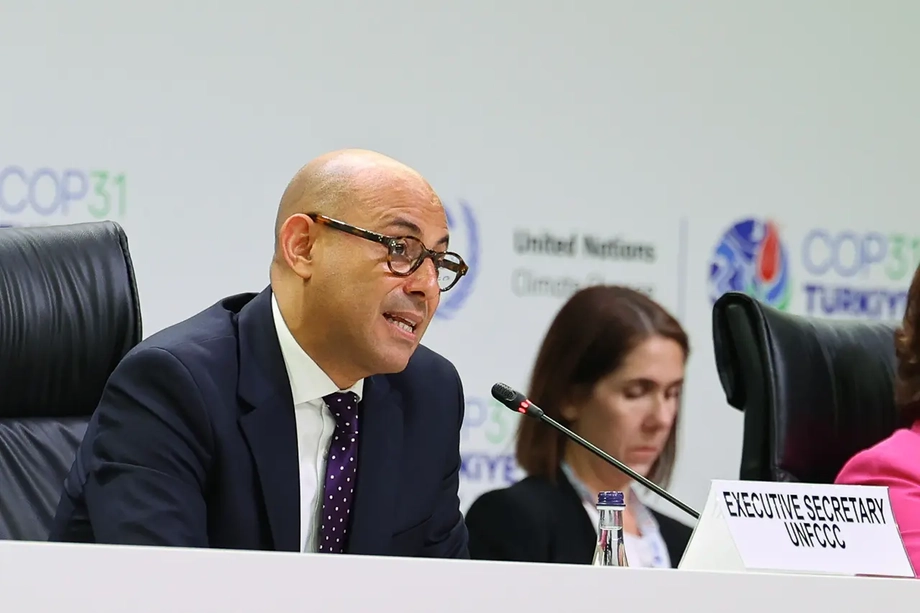
Simon Stiell, executive secretary of UN Climate Change, used a ministerial dialogue on November 13 to call for a broader approach: finance that strengthens national institutions and lowers borrowing costs, alongside funding for individual projects. His remarks included no new financial commitment specifically for Uzbekistan. The amount already secured against Uzbekistan's estimated needs has not been disclosed, and the pavilion presentation did not explain its calculation method.
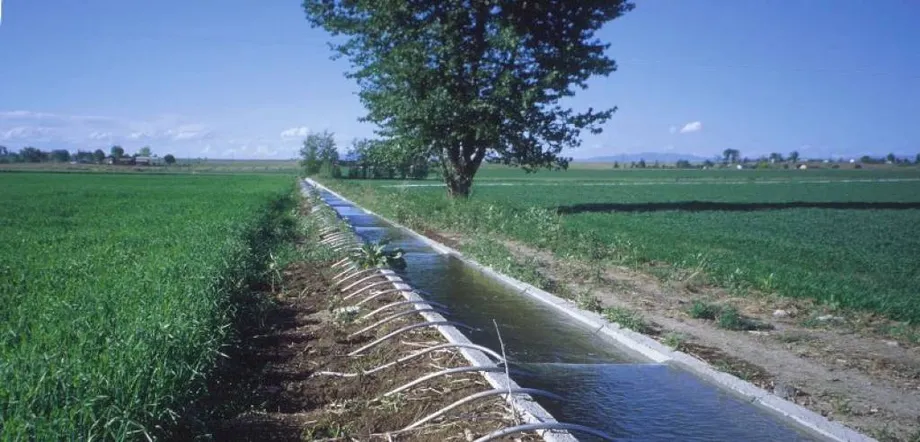
Climate adaptation means preparing people, farms and infrastructure for conditions such as hotter summers, droughts and floods. In Uzbekistan, that can mean repairing canals, improving water allocation, restoring damaged land and protecting essential services. These investments address a practical problem: keeping communities and businesses functioning as environmental pressures grow.
The World Bank's findings show the stakes. At least 8 million people are projected to live in areas of very high climate risk by 2030. Without adaptation, the country's economy could be 10% smaller by 2050 than it would have been without climate effects, with consequences for jobs and household incomes.
What the investment estimates cover
Uzbekistan's pavilion set out four main spending categories, showing how heavily adaptation priorities depend on productive land and reliable water supplies:
- Agriculture: $10.405 billion by 2030 and $19.943 billion by 2035.
- Water resources: $4.150 billion by 2030 and $7.954 billion by 2035.
- Housing: $924 million by 2030 and $1.771 billion by 2035.
- Healthcare: $197 million by 2030 and $378 million by 2035.
Agriculture and water together account for $27.897 billion by 2035. Dividing that figure by the headline estimate of $30.1 billion gives about 92.7%. This concentration means decisions about canals, pumping systems, farming practices and land restoration will shape much of the adaptation programme.
The World Bank Group's Climate and Development Report, released on November 21, 2023, sets out a wider investment picture. It estimates around $60 billion to address adverse climate impacts on labour productivity, roads and bridges, livestock and irrigation, alongside around $340 billion by 2060 for replacing ageing energy infrastructure and decarbonisation. The pavilion estimate focuses on needs through 2035, while the Bank's figures cover a different set of investments and a longer energy transition.
Why water shortages threaten everyday life
Uzbekistan's average temperature rose by 2.9°C between 1950 and 2020, according to the World Bank's Adaptation and Resilience Assessment. The assessment projects a further increase of 1.21°C to 1.94°C this century and ranks the country as potentially the world's 29th most water stressed by 2040.
The assessment projects that flows in the Amu Darya and Syr Darya could fall by 5% and 15%, respectively, by 2050, alongside more frequent dry years. Uzbekistan's annual water shortfall could reach 7 billion cubic metres by 2030 and 15 billion by 2050. Hotter conditions also increase water demand.
Farmers face pressure from both directions: less reliable supplies and crops needing more water. Reduced agricultural and livestock production could affect food availability, family incomes and migration. The assessment identifies the Ferghana Valley, Khorezm, Bukhara and the Surkhandarya Valley among the areas with large concentrations of people at risk.
Households also face uneven access to safe water. Data cited in the assessment put access to safely managed drinking water at 58.8% of Uzbekistan's population, compared with more than 75% in the comparison groups. The report estimates that earthquakes, droughts and floods together affect about 1.4 million people annually and cause losses equivalent to about 5% of GDP. That total combines geological and weather hazards.
Irrigation improvements offer measurable benefits
Uzbekistan's pavilion reported that water saving technologies had reached approximately 2.6 million hectares during 2017–2025, representing 60% coverage under its presentation's indicator. It also listed 5,795 kilometres of irrigation networks and 34,500 kilometres of concreted internal irrigation networks.
The same presentation showed annual electricity consumption falling from 8.3 billion to 6.4 billion kilowatt hours, a reduction of 1.9 billion, or about 23%. It gave insufficient detail to determine how much of that change came from irrigation improvements. Pumping and distributing water requires electricity, making water management and energy spending closely connected.
The World Bank's 2023 report estimates that integrated landscape management and farming technologies suited to changing climate conditions could increase crop production by $4.6 billion over 10 years and save more than 1.8 billion cubic metres of water annually. These are potential gains from investment, combining stronger production with reduced pressure on water supplies.
The Bank recommends modernising irrigation infrastructure and accounting systems, improving water allocation and expanding technologies that reduce waste. It also calls for stronger land tenure security for farmers and better soil conservation. Farmers with more secure rights to their land have a firmer basis for making investments that take years to repay.
Stiell calls for cheaper capital and stronger institutions
Stiell's argument at COP31 focused on the conditions that determine whether countries can finance their climate plans. Heavy debt repayments, repeated disasters and expensive borrowing can leave governments with little room to invest before the next emergency.
In the United Nations' COP31 finance update, the UN climate chief described the cycle facing many developing economies:
Many developing countries are trapped in a downward loop of debt, disaster, and devastating capital costs," he said. "Climate finance must help countries break free.
Stiell proposed strengthening institutions, improving investment conditions and attracting money at lower cost. The intended cycle runs in the opposite direction: stronger institutions make investment easier, investment improves resilience and reduces emissions, and a stronger economy becomes better able to attract further finance.
Uzbekistan's adaptation assessment identifies weaknesses directly relevant to that approach. At the time of its review, the World Bank found limited adaptation funding, ineffective coordination across sectors and no central system for tracking progress. It recommended a national adaptation fund and better analysis of disaster losses to guide spending at national and local levels.
Rural households need access to finance as well. The assessment says 41.5% of people in the poorest 40% of the population had access to financial services in 2021. Improving that access matters for families dependent on irrigated agriculture, who may need credit or other support to change equipment and farming practices.
Global targets face a large funding shortfall
Developed countries are expected to lead efforts to mobilise at least $300 billion annually for developing countries by 2035, within a broader climate finance goal of $1.3 trillion a year. An assessment highlighted at COP31 projects an annual shortfall of $840 billion against the broader target on current trends.
UN Secretary-General António Guterres warned that adaptation needs were growing faster than the resources being discussed. Speaking to journalists at the summit, he said:
Even tripling adaptation finance would meet less than 30 per cent of what is needed.
Agriculture faces a particularly difficult funding environment. Kaveh Zahedi, an official at the UN Food and Agriculture Organization, said the sector receives around 5% of climate related development finance and that its share is declining. Uzbekistan's estimate assigns roughly two thirds of adaptation needs to agriculture, illustrating how strongly its priorities depend on a sector receiving a small share of international funding.
Development finance institutions from Britain, Norway and Canada announced plans to mobilise $10 billion for climate projects in emerging markets by 2030. Guterres also urged international climate funds to simplify access and supported wider use of development bank capital and guarantees to attract investment.
Adaptation projects often earn their return through avoided crop losses, healthier land or uninterrupted services. Those benefits can be valuable without producing a steady stream of cash for a lender. Public budgets, grants and concessional loans, which offer more favourable terms than ordinary commercial borrowing, therefore have a central role.
ANORA aims to turn farm priorities into investments
ANORA, a platform presented at Uzbekistan's pavilion, aims to mobilise up to €1.5 billion for agriculture that can better withstand climate pressures and for sustainable food production. Its indicative financing mix comprises €650 million from financial institutions, €500 million in private capital, €300 million in concessional finance and €50 million in grants.
The platform is scheduled for full launch in 2027. Its priorities include water saving technologies, agricultural productivity, infrastructure, soil restoration and lower emissions. It targets the introduction of water saving technologies across 340,000 hectares by 2030. The €1.5 billion remains a mobilisation target, with progress depending on projects reaching financing agreements and implementation.
Uzbekistan endorsed an investment roadmap for climate smart agriculture in July 2026, developed with support from the European Bank for Reconstruction and Development and FAO. The EBRD has also disclosed technical cooperation to help prepare ANORA's project pipeline and improve readiness for financing.
Uzbekistan became one of five pilot countries in the Climate Implementation Bridge, or BRIDGE, in October 2026. Supported by the COP31 Presidency and the UN Development Programme, the initiative helps translate national commitments into projects that investors and development partners can assess. Separately, Uzbekistan's joint project portfolio with the EBRD exceeds $7 billion across their wider cooperation.
CLiCA brings specific plans for rural communities
The Climate Resilient Landscapes in Central Asia programme, known as CLiCA, provides a more detailed example of planned adaptation spending. Approved by the Green Climate Fund on October 28, 2026, the programme has a total budget of €264.4 million for Uzbekistan, Kyrgyzstan and Tajikistan over seven years, with implementation scheduled to begin in 2027.
Uzbekistan's allocation is €103.7 million for work in 15 districts across four regions. Plans include restoring 18,000 hectares of forest and 123,000 hectares of pasture, introducing drip irrigation and crops better able to withstand drought, and improving access to agricultural finance.
Around 12,000 farmers are expected to receive climate advisory services. The programme aims to improve resilience for approximately 342,000 people in Uzbekistan. Its financing brings together the Green Climate Fund and German development partners, while the European Investment Bank is identified as a potential additional partner.
The programme's land restoration and advisory targets give communities concrete measures to follow as implementation begins. Restored pasture, functioning irrigation and useful farming advice will determine how the financing translates into better protection for livelihoods.
Regional cooperation and energy plans run alongside adaptation
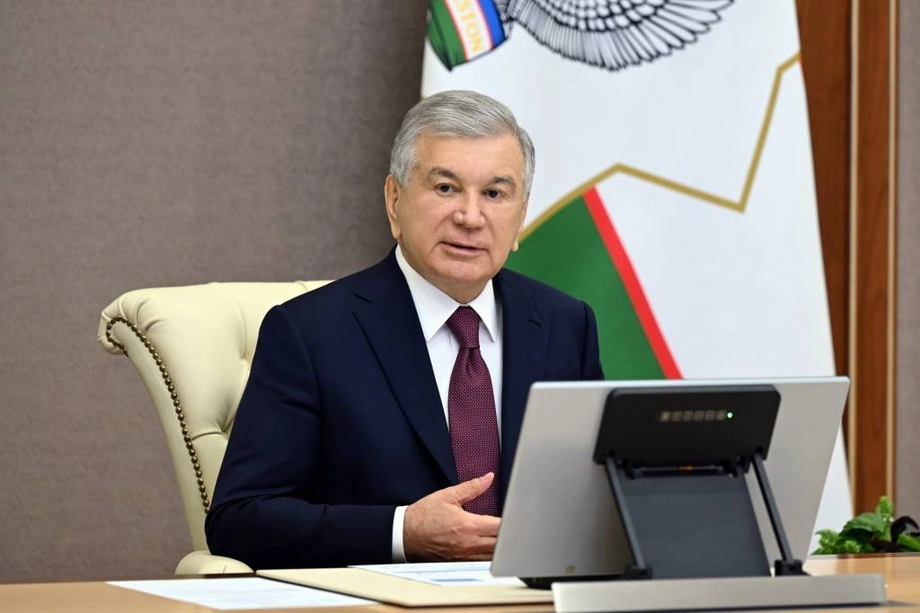
President Shavkat Mirziyoyev proposed a three part Central Asia Climate Integration Model at COP31: shared environmental information and early warnings; technologies for land restoration and control of dust and sandstorms; and new financing instruments for regions facing water shortages and prolonged drought.
Mirziyoyev, Uzbekistan's president, set out the case for regional action in his address to leaders:
No country can address the challenges of climate change on its own.
The proposed information system would draw on support from the World Meteorological Organization. Uzbekistan also wants its Central Asia ECO-EXPO to become a permanent meeting platform for technology providers, investors and regional authorities. The country is due to chair the International Fund for Saving the Aral Sea in 2027.
Uzbekistan and Türkiye signed an environmental cooperation agreement covering climate adaptation, pollution prevention, waste management and desertification. Mirziyoyev's summit meetings with development banks and UN officials addressed water security, land restoration, weather monitoring and investment.
Energy plans accompany this adaptation agenda. Uzbekistan's NDC 3.0, submitted in November 2025, targets a 50% reduction in greenhouse gas emissions per unit of GDP by 2035 compared with 2010. This measures the emissions produced for each unit of economic output, so the future national total also depends on economic growth. Summit statements set out a carbon neutrality ambition for 2055; the World Bank's 2023 study assessed a transition through 2060.
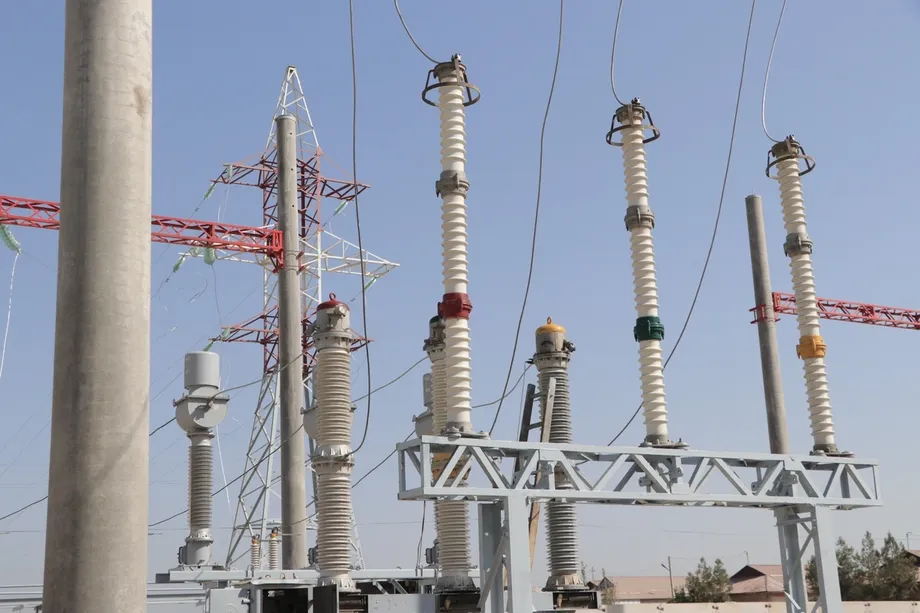
Uzbekistan aims to generate 54% of its electricity from renewables by 2030. Pavilion targets include 9,395 megawatts of solar, 12,200 megawatts of wind, 4,000 megawatts of smaller solar installations and 4,548 megawatts of energy storage power capacity. Storage helps manage changes in solar and wind output. The World Bank estimates that decarbonisation could deliver more than $178 billion in infrastructure benefits through 2060, including $112 billion in avoided costs and $66 billion in fossil fuel import savings.
Dates that shape the next stage
Uzbekistan's plans now connect several deadlines, from project launches in 2027 to investment and emissions targets in 2035. The main milestones are:
- November 21, 2023: The World Bank Group released its Uzbekistan Country Climate and Development Report.
- November 2025: Uzbekistan submitted NDC 3.0, setting its emissions intensity target for 2035.
- October 2026: Uzbekistan was identified as a BRIDGE pilot country; the Green Climate Fund approved CLiCA on October 28.
- November 13, 2026: Stiell addressed the COP31 ministerial dialogue on climate finance in Antalya.
- 2027: ANORA's full launch and CLiCA implementation are scheduled; Uzbekistan assumes the Aral Sea fund chairmanship.
- 2030 and 2035: Estimated cumulative adaptation needs reach $15.7 billion and $30.1 billion, respectively.
The next practical steps concern project preparation, financing agreements and delivery. Uzbekistan's largest stated needs lie in agriculture and water, making the performance of irrigation, land restoration and rural finance programmes central to its adaptation effort.
Key Points
- Uzbekistan estimates adaptation investment needs of $30.1 billion by 2035.
- Agriculture and water resources account for about 92.7% of that total.
- Stiell called for lower financing costs and stronger institutions, without announcing new funding specifically for Uzbekistan.
- ANORA aims to mobilise up to €1.5 billion, with a full launch planned for 2027.
- CLiCA allocates €103.7 million to Uzbekistan and aims to improve resilience for about 342,000 people.
- The World Bank projects that at least 8 million people will live in areas of very high climate risk by 2030.