Three Colombo Rail Corridors Set for Major Investment
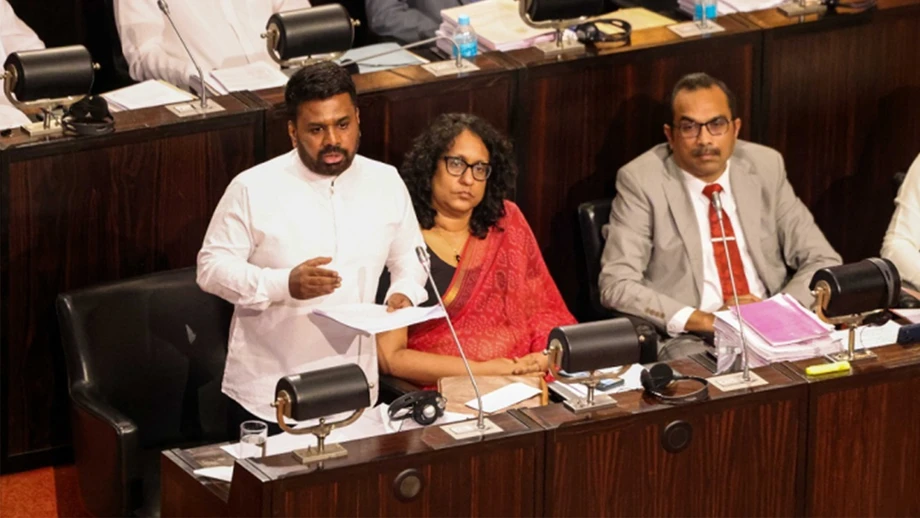
Sri Lanka plans to invest more than Rs. 1,200 billion in electrifying three major railway lines, with President Anura Kumara Dissanayake proposing Rs. 80 billion for the first phase in the 2027 Budget presented to Parliament on November 12, 2026.
Contents
- Three Colombo Rail Corridors Set for Major Investment
- Where the First Rs. 80 Billion Would Go
- A Large Programme Beginning With a Smaller Allocation
- Domestic Funding for Electrification, Indian Loans for Repairs
- What Electrification Means for Passengers
- Five New Trains and Repairs to Neglected Stations
- Cyclone Recovery Has Its Own Timetable
- How Rail Fits Into the Wider Budget
- Key Points
The proposed spending covers routes from Maradana to Homagama on the Kelani Valley Line, Ragama on the Main Line and Panadura on the Coastal Line. The Kelani Valley section would receive Rs. 45 billion, more than half of the first phase allocation.
The programme aims to give passengers faster, more efficient and more comfortable rail services. It forms part of a wider Rs. 95 billion proposal to modernise railway and public bus services, alongside purchases of new trains, repairs to neglected stations and the restoration of routes damaged by Cyclone Ditwah.
Dissanayake said the electrification project would use domestic funds without borrowing. Transport, Highways and Urban Development Minister Bimal Rathnayake holds responsibility for the sector covered by the proposals.
The two headline figures describe different spending commitments: more than Rs. 1,200 billion is the planned investment across the electrification programme, while Rs. 80 billion is proposed for its first phase in 2027. At Rs. 1,200 billion, the programme would be equivalent to Rs. 1.2 trillion.
Where the First Rs. 80 Billion Would Go
The three route allocations total Rs. 79.1 billion. Another Rs. 900 million, equivalent to Rs. 0.9 billion, would cover land acquisition and related operational expenses, bringing the proposed first phase budget to exactly Rs. 80 billion.
- Kelani Valley Line, Maradana to Homagama: Rs. 45 billion.
- Main Line, Maradana to Ragama: Rs. 16.4 billion.
- Coastal Line, Maradana to Panadura: Rs. 17.7 billion.
- Land acquisition and related operational expenses: Rs. 900 million.
The Kelani Valley allocation represents 56.25% of the first phase total. The Coastal Line receives about 22.1%, the Main Line 20.5%, and land and operational expenses about 1.1%. These figures show where the government intends to concentrate its initial spending.
Maradana is the common starting point for all three proposed sections. The first phase therefore focuses on railway corridors serving Colombo and its surrounding areas, with Homagama, Ragama and Panadura marking the named outer limits of the planned work.
The budget breakdown puts the Kelani Valley allocation above the combined Rs. 34.1 billion proposed for the other two railway sections. Route lengths, engineering requirements and detailed construction costs were not specified, so the figures describe spending priorities rather than a cost comparison for each kilometre.
A Large Programme Beginning With a Smaller Allocation
The Rs. 80 billion proposed for 2027 amounts to less than 6.7% of a programme expected to cost more than Rs. 1,200 billion. In simple terms, the first allocation would cover less than one rupee in every fifteen of the planned total investment.
That scale makes future funding central to the programme. More than Rs. 1,120 billion would remain beyond the initial Rs. 80 billion if the total investment exceeds Rs. 1,200 billion as announced.
The first phase appears in Annexure II of the budget spending proposals under Colombo suburban rail electrification. Its inclusion places it among the new spending measures announced for 2027, rather than simply describing a general ambition to improve railway services.
The announcement leaves the full construction timetable, the date electric passenger services would begin, procurement arrangements, electricity supply requirements and funding allocations after 2027 unspecified. Passengers have a proposed investment programme, while the detailed delivery schedule is still to be set out.
Domestic Funding for Electrification, Indian Loans for Repairs
Dissanayake said the electrification programme would be carried out using domestic funds without borrowing. This sets a funding direction for the project: the government intends to pay from resources available within Sri Lanka rather than finance this programme through new loans.
The railway recovery work described alongside electrification has a different funding arrangement. Rehabilitation on the Rambukkana to Peradeniya section, the Peradeniya to Gampola section of the Up-Country Line, and the Matale Line is proceeding with Indian loan assistance.
The government is therefore pursuing two railway tasks at once. One involves investing in electric services around Colombo. The other involves repairing damaged railway connections, including routes serving the central and hill country areas.
For passengers, these tasks address different needs. Electrification is intended to improve the service offered on the three suburban corridors. Restoring cyclone damage is about reconnecting places whose railway services were interrupted.
What Electrification Means for Passengers
Railway electrification means providing the infrastructure that allows trains to use electricity for traction, the power that moves them along the track. It is more than replacing a locomotive: trains and the railway power system must be designed to work together.
The government's stated goal is faster, more efficient and more comfortable passenger transport. On the three named corridors, that would mean improving journeys between Colombo and the communities served along the routes to Homagama, Ragama and Panadura.
Journey times and service frequency depend on several parts of a railway working together, including trains, tracks, signalling, stations and operating schedules. Electrification provides a change in how trains receive power, while the passenger experience also depends on those other parts of the service.
The accompanying proposals for trains and station repairs therefore matter to the practical value of the investment. Passengers encounter the railway as a complete journey, from entering a station and waiting for a train to reaching their destination.
Five New Trains and Repairs to Neglected Stations
The budget proposals include Rs. 5 billion to purchase five new trains and Rs. 2 billion in 2027 to repair railway stations that have remained poorly maintained for an extended period.
The train allocation works out to an average budget provision of Rs. 1 billion for each of the five trains. That is a simple division of the announced funding, with the final purchase cost depending on the specifications and procurement arrangements.
Station repairs address a different part of the passenger journey from the electrification works. The government has identified prolonged poor maintenance as the reason for setting aside the Rs. 2 billion, making improvements to existing facilities a stated spending priority.
The Rs. 80 billion for electrification, Rs. 5 billion for trains and Rs. 2 billion for stations add up to Rs. 87 billion. Taken together, they account for about 91.6% of the announced Rs. 95 billion rail and passenger bus modernisation package.
The wider package also aims to strengthen connections between transport networks and support sustainable public transport. For someone travelling by both bus and train, better connections can matter alongside the speed of either part of the journey.
Cyclone Recovery Has Its Own Timetable
Colombo to Peradeniya train services have resumed following damage caused by Cyclone Ditwah. Dissanayake credited the Department of Railways with deploying resources to restore that connection.
The cyclone damaged 223 locations along the Colombo–Badulla line, with damage across the railway network estimated at Rs. 69 billion. As of April 19, 2026, the Udarata Menike was operating only as far as Rambukkana, and uninterrupted travel between Colombo and the central highlands remained disrupted.
At that stage, a senior Ministry of Transport, Highways and Urban Development official, speaking on condition of anonymity, gave December 31, 2026 as the revised full-restoration target and said five places along the Kandy to Jaffna route had been washed away. Sri Lanka Railways Spokesperson and Superintendent – Traffic Asanka Samarasinghe said the department aimed to restore Nanu Oya–Badulla services within one to three months.
Repairs to the Black Bridge at Peradeniya remained a major engineering challenge. Sri Lanka Railways Engineer Ishara Udayanga said floodwater had hollowed out a cavity beneath a support pier, causing it to tilt about 7–8 degrees. Engineers had filled the cavity with concrete to stop further tilting and were straightening the pier through a jacketing process. The ministry official said the bridge's superstructure was undergoing testing, with the results determining whether an entirely new bridge would be needed.
Rehabilitation has also begun on the Rambukkana to Peradeniya, Peradeniya to Gampola and Matale routes with Indian loan assistance. The government has set out further service restoration targets for 2027, alongside the proposed start of suburban electrification spending.
- November 12, 2026: Dissanayake presented the 2027 Budget, including the proposed Rs. 80 billion electrification allocation.
- First quarter of 2027: Train services are expected to reach Kandy.
- During 2027: The first phase of suburban electrification is proposed to receive Rs. 80 billion, with Rs. 2 billion also set aside for station repairs.
- By the middle of 2027: Full restoration of the Up-Country Line, including services to Badulla, is targeted.
Kandy and Badulla are the named destinations attached to the recovery timetable. Those targets give passengers specific periods to watch as repairs progress, while the suburban electrification programme moves through its initial funding phase.
How Rail Fits Into the Wider Budget
The Rs. 80 billion suburban electrification proposal is the largest individual item among 73 new spending proposals worth Rs. 363 billion. It represents about 22% of that total, showing the weight given to the project within the new measures.
The 2027 public investment plan totals Rs. 2,000 billion, equivalent to 5.12% of gross domestic product, the value of goods and services produced by the economy. The first phase of electrification amounts to 4% of that public investment figure.
Highways, expressways and railways have a broader allocation of Rs. 251 billion. Dissanayake also described Rs. 487 billion in transport infrastructure spending when including Rs. 146 billion for new proposals and Rs. 90 billion to repair transport infrastructure damaged by the cyclone.
Railway spending appears within several of these budget headings. The Rs. 80 billion electrification allocation, the Rs. 95 billion rail and bus package and the wider transport totals describe overlapping parts of the spending plan, so the same railway investment can appear within more than one figure.
The immediate priorities are concrete: begin funding three suburban electrification corridors, procure five trains, repair neglected stations and restore damaged routes. Delivery will determine how the proposed investment translates into journeys for passengers in Colombo, its surrounding communities and the hill country.
Key Points
- Sri Lanka plans more than Rs. 1,200 billion in railway electrification investment, starting with a proposed Rs. 80 billion in 2027.
- The first phase covers Maradana to Homagama, Ragama and Panadura.
- The Kelani Valley section receives Rs. 45 billion, the largest share of the initial allocation.
- Dissanayake said electrification would use domestic funds without borrowing.
- Separate proposals provide Rs. 5 billion for five trains and Rs. 2 billion for station repairs.
- Cyclone recovery targets include services to Kandy in the first quarter of 2027 and full restoration to Badulla by the middle of 2027.