A second attempt after the April 17 defeat
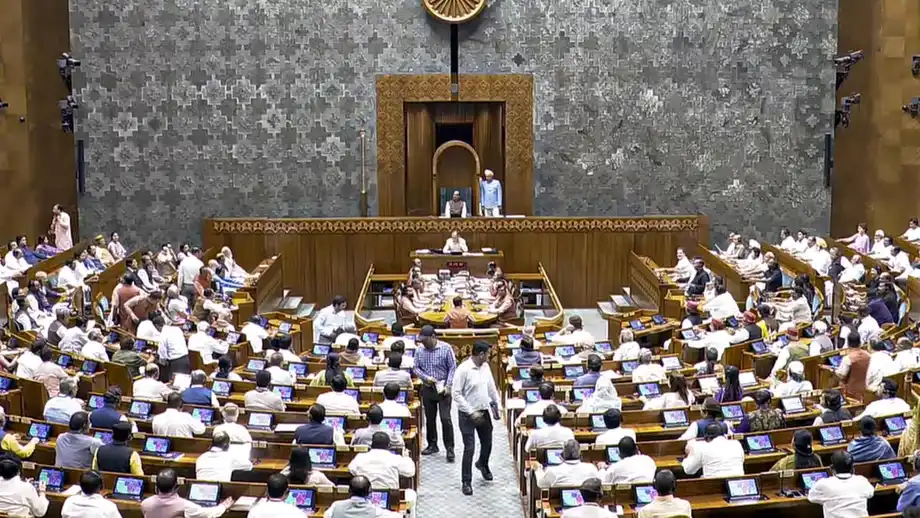
India's government is considering a special sitting of Parliament to revive legislation linking women's reservation to a larger Lok Sabha and a new allocation of parliamentary seats. Government sources say the Centre believes it has at least 15 to 16 votes more than it needs, with other estimates putting the expected margin at 15 to 18 votes.
Contents
- A second attempt after the April 17 defeat
- What Parliament rejected in April
- Why women's reservation depends on the census
- The dates behind the renewed push
- Why the vote count needs care
- Why southern states care about the formula
- More seats can still mean a smaller share
- Who would draw the new constituencies?
- A larger Lok Sabha would change Parliament
- How Parliament could be recalled
- Key Points
The renewed push follows the defeat of the Constitution (131st Amendment) Bill, 2026, on April 17. PRS Legislative Research's constitutional amendment tracker records that the bill was introduced on April 16 and rejected the following day. The accompanying Delimitation Bill became infructuous, meaning it could no longer serve its intended purpose after the constitutional changes failed.
The government's objective is to bring the reservation of one third of Lok Sabha and state assembly seats for women into operation before the 2029 general election. Achieving that through the proposed package would also require decisions about the census used to distribute seats and the share of national representation held by each state.
Government sources have disclosed neither the dates nor the duration of the proposed sitting. A potentially decisive change is under consideration: preserving existing proportions of seats among states, rather than redistributing them according to the 2011 census as the April package proposed. No final revised text has been announced.
The renewed effort builds on the October revival proposal, which described outreach to regional parties after April's parliamentary setback. The central political task remains assembling support for both women's reservation and the accompanying changes to representation.
What Parliament rejected in April
The April initiative consisted of three measures: the Constitution (131st Amendment) Bill, the Delimitation Bill, and the Union Territories Laws (Amendment) Bill. Together, they sought to change the constitutional rules, provide machinery for redrawing constituencies and extend related arrangements to Delhi, Puducherry and Jammu and Kashmir.
PRS Legislative Research's Delimitation Bill analysis explains that the package would have allowed the next exercise to use the latest published census when a Delimitation Commission was constituted. In practice, that meant the 2011 census.
The constitutional amendment would also have raised the Lok Sabha's maximum permitted membership from 550 to 850. Within the proposed ceiling, states could have up to 815 seats and Union Territories up to 35. The current elected strength is 543 seats, with three vacancies leaving 540 members at the time of the renewed discussions.
The difference between 543 and 550 matters: 543 is the existing number of elected seats, while 550 is the constitutional ceiling. Similarly, a proposed ceiling of 850 would set an upper limit. The final number of constituencies would depend on the legislation and allocation process.
Why women's reservation depends on the census
The 106th Constitutional Amendment, passed in 2023, provides for the reservation of one third of seats for women in the Lok Sabha and state legislative assemblies. Its implementation is tied to a delimitation exercise following the first census after the law began.
The next census has a reference date of March 1, 2027. A reference date is the point in time to which the population count relates. Census results must then be published and used to carry out the required redistribution and redrawing of constituencies.
PRS assesses that completing delimitation using the 2027 census before the 2029 Lok Sabha election is unlikely. The previous Delimitation Commission was constituted in 2002, and its orders were finalised in 2008, illustrating the amount of work such an exercise can involve.
The April constitutional amendment sought to remove the requirement that women's reservation wait for the first census after the 2023 law. Combined with the proposed use of 2011 population figures, this offered the government a route to introducing the quota before 2029.
Women seeking election would gain access to constituencies reserved for female candidates once the scheme takes effect. For political parties, implementation would require changes to candidate selection across the Lok Sabha and state assemblies. The timetable therefore affects an election cycle, rather than simply the date on which another law is passed.
The dates behind the renewed push
The legislation has moved through several distinct stages, from the passage of the reservation law to the failed constitutional amendment and the current discussion about recalling Parliament.
- 2023: Parliament passed the 106th Constitutional Amendment, providing for reservation of one third of Lok Sabha and state assembly seats for women.
- April 16, 2026: The government introduced the constitutional amendment, delimitation and Union Territories bills in the Lok Sabha.
- April 17, 2026: The constitutional amendment was defeated, and the Delimitation Bill was marked infructuous.
- August 13, 2026: Both Houses were adjourned without a date for their next sitting, while the Monsoon Session remained formally open.
- October 26 and 27, 2026: The 12th BRICS Parliamentary Forum was scheduled at Samvidhan Sadan, a calendar consideration cited during discussions about an October sitting.
- March 1, 2027: The reference date for the next census, which is central to the existing implementation route.
- 2029: The next Lok Sabha election is the government's target for bringing women's reservation into operation.
Some accounts of the continuing parliamentary pause put the period without prorogation at 91 days, longer than the previous cited record of 87 days in 2008. Those accounts describe a later point than the October scheduling discussions. The proposed sitting still requires a formal timetable.
Why the vote count needs care
Government sources put the support required for the constitutional amendment at 361 votes and say they expect to exceed it by 15 to 18. The earlier April vote was discussed against a threshold of 363.
A constitutional amendment requires a majority of the total membership of each House and at least two thirds of members present and voting. The number needed on the day therefore depends partly on attendance and voting. With all 540 current Lok Sabha members voting, two thirds would be 360; the cited figure of 361 is the government's stated working target.
The BJP led National Democratic Alliance is seeking support beyond its existing parliamentary base. Government sources describe talks with the Dravida Munnetra Kazhagam, or DMK, and smaller opposition parties. Other accounts cite defections or offers of support from politicians associated with the Trinamool Congress, Aam Aadmi Party and Shiv Sena led by Uddhav Thackeray.
One account attributes the government's stronger position to 20 Trinamool Congress MPs and six Shiv Sena MPs moving to the ruling side. These are reported political alignments; the next parliamentary vote will determine how much support the legislation receives. Passage would also require the necessary majority in the Rajya Sabha.
Why southern states care about the formula
Delimitation means deciding how seats are distributed and drawing constituency boundaries. The principle of representation according to population aims to give constituencies broadly comparable numbers of people. Applying newer population figures across states, however, would change their relative political weight.
Parliament froze state allocations using the 1971 census through the 42nd Constitutional Amendment in 1976. The 84th Constitutional Amendment in 2001 extended that freeze until publication of the first census after 2026. The stated purpose included allowing states to pursue population stabilisation without losing parliamentary representation.
PRS projects that, under a scenario without a substantial expansion of the Lok Sabha, using 2011 population figures would reduce Tamil Nadu's allocation from 39 seats to 32 and Kerala's from 20 to 15. Uttar Pradesh would rise from 80 to 89, Bihar from 40 to 46, and Rajasthan from 25 to 30.
The numbers explain the concern in states where population growth has slowed. Kerala's projected reduction of five seats would equal a quarter of its current 20. Tamil Nadu's reduction of seven would be about 18% of its existing 39. Bihar's increase of six would equal 15% of its current allocation.
India's uneven population growth has also placed states on different paths for employment and ageing. In Parliament, those demographic differences affect how much influence each state could hold when national laws and governments are decided.
More seats can still mean a smaller share
The government is considering increasing seats across states by about 50% to address concerns over losses. A second formulation would preserve existing proportions among states based on the 1971 census. The choice between those approaches is central to negotiations.
PRS's population based expansion model shows why adding seats alone may leave southern concerns unresolved. Tamil Nadu could gain seats from 39 to 48 while its share of the total fell from 7.18% to about 5.90%. Kerala could rise from 20 seats to 22 while its share declined from 3.68% to about 2.71%.
Uttar Pradesh, by comparison, could increase from 80 seats to 133, with its share rising from 14.73% to about 16.36%. A state's delegation can therefore become larger while representing a smaller fraction of the House, if other delegations grow faster.
Preserving existing state proportions would produce a different result from the April proposal to redistribute seats according to 2011 population. The revised allocation formula will determine whether negotiations have changed the balance among states or mainly increased the number of MPs.
Who would draw the new constituencies?
The April Delimitation Bill empowered the central government to constitute a Delimitation Commission. Its chair would be a serving or former Supreme Court judge appointed by the Centre.
The commission would also include the Chief Election Commissioner, or an Election Commissioner nominated by that official, and the State Election Commissioner of the state concerned. Its work would turn population and allocation rules into constituency boundaries.
The related constitutional amendment would give Parliament authority to decide by law when delimitation occurs and which census it uses. PRS identifies this as a shift from constitutional rules connecting delimitation to each census toward decisions that Parliament could make through ordinary legislation.
For voters, these choices affect the geographical area their MP represents. For states, they determine the number of constituencies available. PRS also notes that the April constitutional amendment introduced the term Delimitation Commission into the Constitution without defining it there.
A larger Lok Sabha would change Parliament
Expanding the Lok Sabha would affect more than constituency maps. PRS calculates that increasing membership from 543 to about 815 would change its size relative to the Rajya Sabha from roughly 2.2 to one to 3.3 to one. The Rajya Sabha's constitutional ceiling of 250 would remain unchanged.
More Lok Sabha members would give that House greater numerical weight in joint sittings on ordinary legislation where constitutional conditions permit them. Constitutional amendments themselves require separate passage in each House and cannot be settled through a joint sitting.
The permissible size of the Union Council of Ministers would also increase. Article 75 limits ministers to 15% of Lok Sabha membership. PRS calculates that an expansion from 543 to 815 MPs would raise the limit from 81 ministers to 122.
Individual MPs could face tighter competition for parliamentary time. Questions and some opportunities to raise public issues are allocated by ballot. With more members competing for the same opportunities, each MP's chance of being selected would fall unless parliamentary arrangements changed.
How Parliament could be recalled
Both Houses were adjourned sine die on August 13, meaning no date was fixed for their next sitting. The Monsoon Session was not formally ended through prorogation. That leaves a procedural route for sittings to resume within the existing session.
An extended sitting is described as requiring at least two days of notice, compared with at least 14 days for a fresh session. Government sources discussing the October proposal also suggested that about a week's notice might be given.
The Constitution sets no specific deadline for prorogation after adjournment without a return date. The government's eventual notification will determine whether Parliament resumes the existing session or begins a new one.
The immediate decisions are the sitting's timetable, the revised legislative text and the allocation formula offered to states. Together, they will determine what MPs are asked to approve and whether the government's promised support survives the vote.
Key Points
- The government is considering a special parliamentary sitting after the April 17 defeat of its constitutional amendment.
- Government sources expect support exceeding their stated target by 15 to 18 votes.
- The April package proposed using the 2011 census and raising the Lok Sabha's constitutional ceiling from 550 to 850.
- The government wants women's reservation implemented before the 2029 election.
- Population based redistribution could reduce some southern states' share of seats even if their delegations grow.
- Preserving existing proportions among states is under consideration, but a final revised text and sitting dates have not been announced.