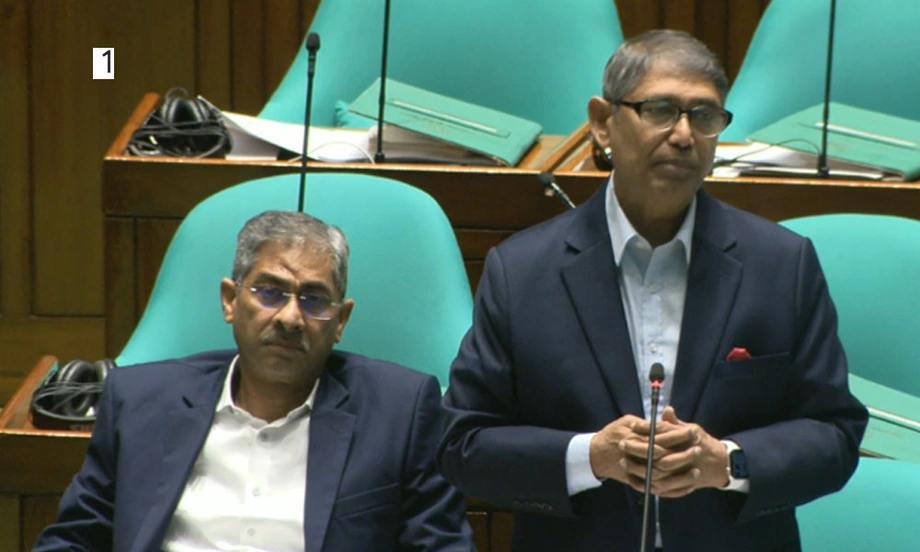
Minister outlines cancellations and support for veterans
Bangladesh has cancelled the gazette entries of 6,476 people recognised as freedom fighters after examining complaints, Liberation War Affairs Minister Ahmed Azam Khan told parliament on November 11, 2026. He also reported 206,536 freedom fighters receiving allowances and outlined a proposed housing programme for another 25,000 veterans and their families.
Contents
- Minister outlines cancellations and support for veterans
- How complaints become cancellation decisions
- Two national totals cover recognition and allowances
- Accurate lists come before a register of collaborators
- The dates behind the review and housing proposal
- Housing for 25,000 depends on approval and land
- Medical assistance varies by hospital and illness
- Monthly payments remain unchanged for now
- Museums preserve the history behind the records
- Key Points
Khan gave the cancellation figure in response to a question from Jamaat-e-Islami MP Mashiur Rahman Khan during a question session chaired by Deputy Speaker Kayser Kamal. His answers covered the accuracy of recognition records, financial support, medical assistance and the preservation of memories of the 1971 Liberation War.
A gazette is an official government publication used to record decisions, including recognition as a freedom fighter. For a veteran and their family, inclusion in these records connects public recognition of wartime service with access to government support. The review therefore concerns both historical records and benefits that help meet everyday expenses.
The minister's parliamentary answers also contain figures that require careful explanation. He has described 6,476 names as removed from freedom fighter gazettes, the Lal Muktibarta and Indian lists since the establishment of the Jatiya Muktijoddha Council, known as JAMUKA. In another answer, he gave 6,465 as the number of people whose gazette cancellations the council had recommended across 103 meetings.
The first meeting of the parliamentary standing committee on the Ministry of Liberation War Affairs was also told that JAMUKA had recommended cancelling the gazette entries of 6,465 people since its establishment in 2010. The meeting was told that the council had recommended recognising 18,417 people as freedom fighters: 768 martyrs, 198 war wounded freedom fighters, 529 Biranganas and 16,922 general freedom fighters.
Those figures refer to removals and recommendations respectively. The parliamentary answers gave no reconciliation of the 11-person difference, the relationship between two national totals for recognised fighters and allowance recipients, or the differing descriptions of action completed in 481 recent cases.
How complaints become cancellation decisions
JAMUKA examines allegations that someone obtained recognition without having been a genuine freedom fighter. According to Khan, a council subcommittee investigates specific complaints and holds hearings before recommending cancellation of a person's certificate and associated benefits.
Khan described this process during an April 15 parliamentary session, answering Rangpur-4 MP Akhter Hossen. Speaker Hafiz Uddin Ahmad chaired that session. The minister said scrutiny was continuing and that complaints from Rangpur-4 would follow the same procedure as those from elsewhere in Bangladesh.
Ahmed Azam Khan, the liberation war affairs minister, gave the number of complaints received during the recent review period:
"Since August 2024, a total of 842 complaints related to non-freedom fighters have been received," Ahmed said.
Investigations had concluded in 481 cases, with final recommendations to cancel entries in the gazettes, Lal Muktibarta and Indian lists, he said in the April answer. In another parliamentary answer, he described the gazette entries or recognition of 481 people as already cancelled after investigation.
The 481 completed investigations represent about 57 percent of the 842 complaints. Subtracting those completed cases leaves 361 outside that completed group. Khan also alleged that some people had secured inclusion in the Indian list by submitting false information, making verification of those entries a particular part of the review.
Two national totals cover recognition and allowances
The ministry's integrated list contains 198,037 recognised freedom fighters, Khan said in response to ruling party MP AM Mahbub Uddin Khokon. His November 11 answer gave a different administrative total: 206,536 freedom fighters receiving allowances.
The allowance figure is 8,499 higher than the integrated recognition figure. One counts entries in the ministry's consolidated recognition records, while the other was presented as a count of allowance recipients. Readers need both labels to understand what the minister was counting.
The government is also reviewing individual entries while working on the method for preparing more accurate national lists. That means the parliamentary discussion involves several separate tasks: investigating complaints, deciding on recognition and maintaining records used to administer support.
Accurate lists come before a register of collaborators
Khan said the government's immediate priority was to prepare an accurate list of genuine freedom fighters and a list of those killed in the 1971 Liberation War. He gave that answer to Naogaon-4 MP Ikramul Bari Tipu.
A register of Razakars, Al-Badr, Al-Shams and others who opposed the Liberation War would be considered later, the minister said. Those names refer to groups associated with opposition to Bangladesh's independence during the war. His answer placed the documentation of fighters and the war dead ahead of that separate exercise.
Responding to Kurigram-2 MP Atikur Rahman Mojahid and MP Mardia Momtaz, Khan said several roundtable discussions had already brought together civil society representatives, academics, researchers, journalists and freedom fighters. Further meetings would help determine an effective method for preparing the lists.
The proposed approach puts research and consultation at the centre of the work. Individual complaint hearings address whether a particular person's recognition should continue; the wider discussions concern how the country should identify and record those who fought and those who died.
The dates behind the review and housing proposal
The parliamentary statements place the recognition review alongside a longer programme of support for veterans. The recent complaint figures begin in August 2024, while the cumulative cancellation figure reaches back to JAMUKA's establishment.
- Since JAMUKA's establishment: Khan said 6,476 names had been removed from recognition records. Another answer listed 103 council meetings and recommendations to cancel 6,465 gazette entries.
- Since August 2024: The council received 842 complaints, with investigations completed in 481 cases.
- April 15: Khan explained the investigation and hearing process in an answer to Rangpur-4 MP Akhter Hossen.
- November 11, 2026: Khan told parliament that 6,476 gazette entries had been cancelled and reported 206,536 allowance recipients.
- 2027: The minister said a second phase of housing construction could begin if the proposed project receives approval and preparations proceed as expected.
The next step for housing is consideration by the Planning Commission. For the recognition lists, the minister described further consultation before the government settles the method it intends to use.
Housing for 25,000 depends on approval and land
A proposal for another housing project has been sent to the Planning Commission, Khan said in response to Sirajganj-4 MP Md Rafiqul Islam Khan. Approval would allow housing to be allocated to another 25,000 freedom fighters and their families.
The proposal would continue an existing programme for freedom fighters in financial hardship. Land ownership problems prevented many eligible veterans from receiving homes during the earlier phase, according to the minister.
Officials are now verifying and listing genuine freedom fighters who have their own identified land. Khan said this would help ensure construction takes place on the correct plots and support reaches the intended beneficiaries.
For applicants, land documentation is therefore a practical part of access to the proposed programme. Identifying a suitable plot is one task; securing approval for the project is another. The minister's reference to a possible start in 2027 was conditional on preparations and approval proceeding successfully.
Medical assistance varies by hospital and illness
Freedom fighters and Liberation War associates can receive annual medical assistance up to specified limits under the policy described by Khan. The maximum rises with the level of hospital and, at specialised hospitals, with the complexity of the illness.
- Upazila, or subdistrict, hospitals: Up to Tk 10,000 a year.
- District hospitals: Up to Tk 20,000 a year.
- Divisional hospitals: Up to Tk 30,000 a year.
- Specialised hospitals for ordinary illnesses: Up to Tk 100,000 a year.
- Specialised hospitals for complex illnesses: Up to Tk 500,000 a year.
Spouses of freedom fighters have the same annual limits at upazila, district and divisional hospitals: Tk 10,000, Tk 20,000 and Tk 30,000 respectively. At specialised hospitals, their limits are Tk 50,000 for ordinary illnesses and Tk 200,000 for complex illnesses.
The specialised hospital ceiling for a freedom fighter with a complex illness is therefore two and a half times the spouse's ceiling, Tk 500,000 compared with Tk 200,000. For ordinary illnesses at those hospitals, the freedom fighter's maximum is twice the spouse's, Tk 100,000 compared with Tk 50,000.
Khan said the government was considering wider medical assistance and social security benefits. These annual ceilings describe the maximum assistance available under the stated categories; the amount relevant to a family depends on the patient, hospital level and illness.
Monthly payments remain unchanged for now
Khan said an increase in freedom fighters' honorariums was not currently under government consideration. An honorarium is the regular payment made in recognition of their service. For a freedom fighter in the standard category, the monthly amount is Tk 20,000.
The minister also listed a festival allowance of Tk 10,000 and a Bangla New Year allowance of Tk 2,000. Living freedom fighters receive a further Tk 5,000 for Victory Day. The standard monthly honorarium alone amounts to Tk 240,000 over 12 months, before those additional payments.
Support administered through the Bangladesh Freedom Fighters Welfare Trust includes a monthly honorarium of Tk 23,000 for each martyr's family and Tk 28,000 for each Bir Sreshtho family, according to the minister. He also listed Tk 2,000 in medical allowance and Tk 5,000 in food allowance for martyrs' families.
In his separate breakdown for recipients of gallantry awards and their families, Khan listed monthly honorariums of Tk 30,000 for a Bir Sreshtho family, Tk 25,000 for Bir Uttom, and Tk 20,000 each for Bir Bikram and Bir Protik. He also listed two annual festival allowances of Tk 10,000 and a Bangla New Year allowance of Tk 2,000 for those award categories. Bir Sreshtho is Bangladesh's highest gallantry award.
War wounded freedom fighters receive monthly honorariums according to four categories: Tk 30,000 in category A, Tk 28,000 in B, Tk 23,000 in C and Tk 20,000 in D. The payment schedule therefore has several categories rather than a single rate for every veteran or family.
Museums preserve the history behind the records
Khan also addressed the preservation of Liberation War history in response to Kishoreganj-1 MP Mohammad Mazharul Islam. He cited the Liberation War Museum in Agargaon, Dhaka, including its library, as a place for preserving history and passing it on to younger generations.
The minister said projects to preserve historic Liberation War locations and establish memorial museums had also been implemented. Local museums serve as repositories for memories of the war in the communities where events took place.
The museum work adds another dimension to the parliamentary discussion. Recognition lists record the people the state formally honours, benefit programmes provide financial and medical support, and museums preserve accounts and objects through which younger Bangladeshis can learn about the war.
Key Points
- Khan told parliament on November 11, 2026, that 6,476 freedom fighter gazette entries had been cancelled after scrutiny.
- JAMUKA received 842 complaints since August 2024, with investigations completed in 481 cases.
- The minister reported 206,536 allowance recipients; another answer put the ministry's integrated recognition list at 198,037 people.
- Accurate lists of freedom fighters and the war dead take priority over a register of wartime collaborators.
- A housing proposal for another 25,000 freedom fighters and their families awaits approval, with construction potentially starting in 2027.
- Medical support varies by hospital and illness, while an increase in freedom fighters' honorariums is not currently under consideration.