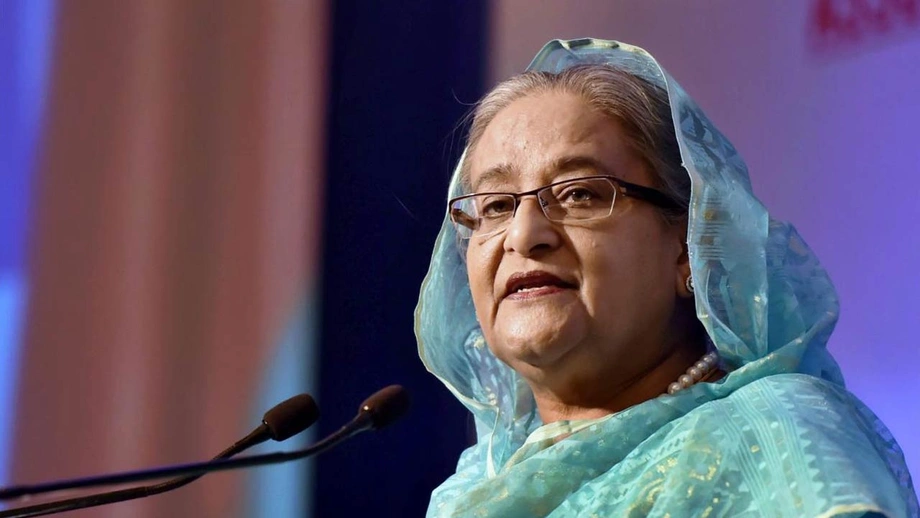
Dhaka demands a handover under its treaty with India
Bangladesh is pressing India to hand over former Prime Minister Sheikh Hasina under their extradition treaty as she renews her pledge to return in December despite a death sentence. State Minister for Foreign Affairs Humaiun Kobir says the government is pursuing a judicial handover, dismissing questions about issuing her a passport or travel pass.
Contents
- Dhaka demands a handover under its treaty with India
- Why the passport question became a dispute
- Hasina says her decision to return has not changed
- The verdict and the deaths behind the case
- India gives no timetable for a decision
- How the confrontation developed
- A banned party and competing accounts of repression
- Hasina rejects foreign protection
- Key Points
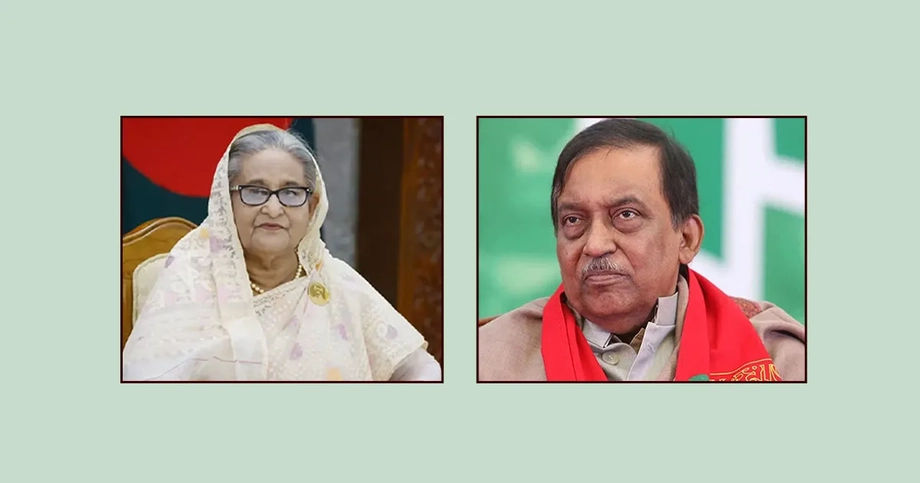
Hasina and former Home Minister Asaduzzaman Khan Kamal were sentenced to death on November 17, 2025, for crimes against humanity during the crackdown on the 2024 uprising. A United Nations report estimated that approximately 1,400 people were killed during the unrest. Hasina denies ordering killings and rejects the tribunal's verdict.
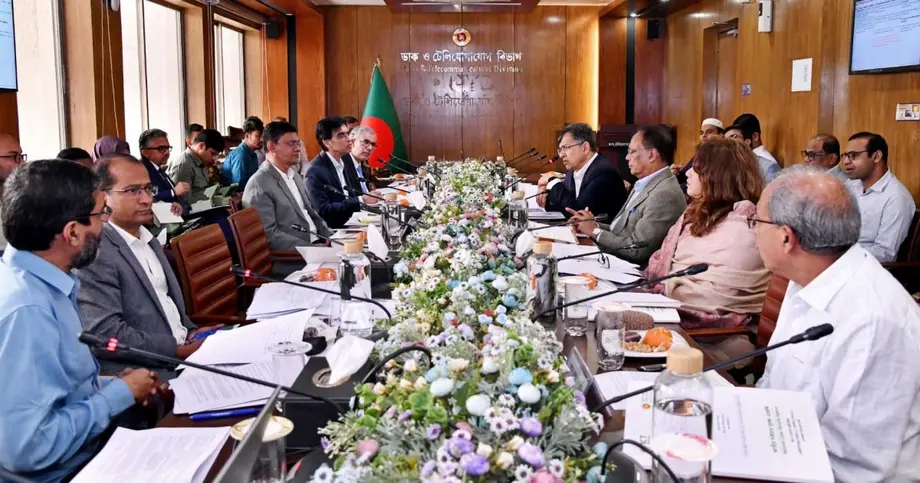
Kobir spoke at Hazrat Shahjalal International Airport in Dhaka after seeing off Liu Haixing, minister of the International Department of the Communist Party of China Central Committee. He said Bangladesh would pursue Hasina's return through established legal and diplomatic channels.
Kobir, the minister responsible for explaining Bangladesh's position, made the demand explicit:
We want Hasina to be handed over. She will be handed over. She is a terrorist. She is a fugitive. There is an active extradition treaty between Bangladesh and India.
India has not handed Hasina over. Its stated position is that Bangladesh's request is being examined through established procedures. Indian High Commissioner Dinesh Trivedi said on October 3 that courts were involved and that no timeframe could be given.
The immediate dispute concerns who would arrange Hasina's return and under what process. She presents December as her own decision to come home. Bangladesh's government says her return should take place through extradition, the formal process by which one country transfers a person to another to face criminal proceedings or punishment.
Why the passport question became a dispute
Kobir was responding to questions about whether Hasina, who has lived in India since August 2024, would receive a Bangladeshi passport or travel pass. He called the suggestion ridiculous and said a fugitive sought through extradition did not require those documents for a handover.
Bangladesh's position, as he explained it, rests on court arrest warrants, existing judicial proceedings and the extradition treaty with India. The government is asking Indian authorities to transfer Hasina through those channels.
The 2013 treaty provides for the surrender of people who commit crimes in one country and take shelter in the other, but also sets grounds for refusal. Article 6(1) allows extradition to be refused if the offence is of a political character. Article 8(III) provides a further ground against extradition where the accusation has not been made in good faith in the interests of justice. Article 10(3) was amended in July 2016 to facilitate the expeditious extradition of fugitive criminals.
An analysis by the Institute of South Asian Studies also identifies Section 29 of India's Extradition Act, 1962, as allowing refusal where a request is trivial, made in bad faith, driven by political considerations or contrary to the interests of justice. Those provisions offer possible grounds for refusing surrender; they do not establish that India has rejected Bangladesh's request.
A passport normally identifies a person travelling internationally. Extradition concerns a request between governments for the transfer of someone wanted in a criminal case. Kobir's argument is that the second process, rather than ordinary passenger travel, applies to Hasina.
Kobir also said he did not know whether Hasina had applied for a passport or travel pass. He explained that he had just returned from the Commonwealth Heads of Government Meeting in Antigua and Barbuda. His comments therefore set out the government's position on extradition without resolving whether an application had been submitted.
Hasina says her decision to return has not changed
Hasina, who served as prime minister from 2009 until her removal in 2024, says she intends to return even though she expects arrest and other dangers. She has not disclosed a route, a precise arrival date or arrangements for entering Bangladesh.
The former prime minister described her determination in written answers to interview questions:
If death is my destiny, I would rather die on the soil of my own country, among my own people," she said. "So, I will return to Bangladesh. That decision has not changed.
Hasina also said she was aware that she could be arrested, imprisoned, tortured or killed. Those were risks she described, rather than an announced course of action by the authorities.
She said in a July interview that she planned to return by December and surrender to the court. She publicly stated her intention to return in August and has now repeated that commitment. Her proposed return would bring her back to a country where she faces a death sentence and her political party remains banned.
The verdict and the deaths behind the case
Bangladesh's International Crimes Tribunal found Hasina responsible for ordering the deadly crackdown on protesters during the uprising that forced her from power. The November 2025 judgment also imposed a death sentence on former Home Minister Asaduzzaman Khan Kamal. Other cases against them remain under way.
In its 453-page written ruling, the three-member bench said Article 7 of the Rome Statute of the International Criminal Court, which defines crimes against humanity, formed the basis of the proceedings, and that victims' testimony informed its findings. Bangladesh had amended its International Crimes (Tribunals) Act in November 2024 to bring provisions on command responsibility and crimes against humanity closer to the Rome Statute.
The tribunal convicted Hasina on three of five charges, finding that she incited violence, ordered killings and failed to prevent or punish atrocities. Its findings included orders to use drones, helicopters and lethal weapons against demonstrators, and responsibility for the killings of 12 protesters in Chankharpul in Dhaka and Ashulia in Savar. The judges also noted that, while Hasina blamed breakdowns in discipline among security forces, she had accepted her leadership responsibility.
The prosecution called 54 witnesses, about half of whom gave expert testimony, while the others were victims or family members. Evidence against Hasina included audio recordings in which she appeared to order the use of lethal weapons. Hasina and Kamal were tried in absentia. Former police chief Chowdhury Abdullah Al-Mamun, who was in custody and cooperated as a state witness, received a reduced sentence of five years in prison. The tribunal also ordered the seizure of Hasina's and Kamal's assets and compensation for victims' families.
Human Rights Watch said the proceedings failed to meet international fair trial standards, including the opportunity to present a full defence and representation by counsel of the defendants' choosing. It said any extradition should allow those sought to contest their transfer in Indian legal proceedings meeting due process standards, and that no one should be extradited to face an unfair trial that could result in the death penalty.
The United Nations estimated approximately 1,400 deaths during the 2024 unrest. Thousands of people were also injured in the crackdown. The scale of the violence is central to Bangladesh's demand that Hasina be returned to face the country's judicial process.
Hasina denies wrongdoing and has challenged the legitimacy of the trial and verdict. Her lawyers have also disputed the death toll. The tribunal's finding, the UN estimate and her defence are separate parts of the dispute: the court assigned criminal responsibility, the UN assessed the human toll, and Hasina contests the case against her.
For families who lost relatives and people injured during the uprising, the extradition request concerns accountability for that violence. For Hasina, returning would mean placing herself within reach of the authorities responsible for enforcing the tribunal's judgment.
India gives no timetable for a decision
Bangladesh has sent several letters seeking Hasina's return. Dhaka says it has received no response to those letters, while India's Ministry of External Affairs has publicly said the request is being examined in accordance with established procedures.
Bangladesh had formally requested Hasina's extradition at the end of 2024. After the November 2025 verdict, its Foreign Ministry urged India to hand over both Hasina and Kamal under the extradition agreement, describing shelter for people convicted of crimes against humanity as an unfriendly act and a disregard for justice. Then Foreign Affairs Adviser Md Touhid Hossain said the completed judicial process had changed the situation and Bangladesh would officially communicate its position to India. Tribunal prosecutor Gazi Monawar Hossain Tamim said a request for Interpol assistance was also being prepared.
In its initial official response to the verdict, India's Ministry of External Affairs said it had noted the decision and remained committed to the best interests of Bangladesh's people, including peace, democracy, inclusion and stability, and would engage constructively with all stakeholders. That statement did not announce a decision to surrender Hasina or Kamal. Hasina remains in India, and the extradition request remains unresolved.
Prime Minister Tarique Rahman raised the extradition request during a meeting with Indian High Commissioner Dinesh Trivedi in Dhaka in August. Trivedi subsequently said on October 3 that the matter was moving through a structured legal process involving courts.
Trivedi also gave India's account of Hasina's arrival. He said she was still Bangladesh's prime minister when she reached India and described the circumstances as tragic. He said neither the Indian Air Force nor the Indian Army had brought her there.
Hasina's continued presence in India has strained relations between the two neighbours. Bangladesh is seeking a transfer under their treaty, while India continues to describe a legal examination of the request. Kobir's confidence that she will be handed over stands alongside India's refusal to give a timetable.
How the confrontation developed
The demand for extradition follows a sequence of political upheaval, a change of government and a criminal judgment. Hasina's proposed December return adds a personal deadline to a process that India says has no fixed completion date.
- August 2024: Student protests and a mass uprising forced Hasina from power. She fled to India, where she has remained.
- After her removal: Muhammad Yunus led an interim administration for 18 months.
- November 17, 2025: The tribunal sentenced Hasina and former Home Minister Asaduzzaman Khan Kamal to death.
- February 2026: Tarique Rahman won a landslide election held under the interim administration. Hasina's Awami League was barred from contesting.
- August: Rahman raised Bangladesh's extradition demand with Trivedi in Dhaka.
- October 3: Trivedi said the legal process was continuing and gave no timeframe.
- December: Hasina says she intends to return to Bangladesh.
The February election changed the government handling the demand for her return. Rahman's administration is now pursuing a case that arose from the violence preceding the interim government.
A banned party and competing accounts of repression
Hasina's Awami League remains banned, and senior figures have been arrested or have gone into exile. Its exclusion from the February election means her planned return would take place outside an ordinary contest between parties participating in the same political process.
Hasina alleges that at least 20,000 Awami League members have been killed since August 2024, with thousands more arrested, tortured or forced into hiding. She also says supporters have lost homes, businesses and livelihoods because of their political affiliations. These are allegations made by Hasina; the government denies them and says arrests concern specific criminal charges.
Hasina described the political conditions facing her party in blunt terms:
"There is no normal political or democratic environment," she said.
Human Rights Watch and other rights groups have criticised assaults on civil and political rights under Rahman's government. Minority groups have also described intimidation, while concerns about radical groups grew during the interim administration. The Yunus administration denied allegations directed at its handling of those conditions.
The dispute extends beyond Hasina's personal fate. Party members facing prosecution, families alleging political violence and people seeking justice for the 2024 crackdown all have a direct stake in how the government handles her possible return.
Hasina rejects foreign protection
Hasina says she has not sought protection from India or the United States to secure her return. Asked whether foreign governments should press Bangladesh to guarantee her safety, she said she did not need the protection of a foreign power to go home.
Her position places her stated willingness to return alongside Bangladesh's demand for extradition. A voluntary journey would begin with arrangements made for her travel. A handover would require action by Indian authorities in response to Bangladesh's request. Either would bring her within reach of Bangladesh's criminal proceedings.
Kobir's remarks came during wider diplomatic activity involving China. During Liu Haixing's visit, Bangladesh and China discussed political cooperation, trade, investment and regional connectivity. Kobir also expressed interest in a proposed economic corridor linking Bangladesh, Myanmar and China, while making regional stability and a sustainable solution to the Rohingya crisis priorities.
The extradition demand remains a matter between Dhaka and New Delhi. Bangladesh is pressing for a judicial transfer, India says its examination is continuing, and Hasina is maintaining her promise to return in December.
Key Points
- Bangladesh wants India to hand over Sheikh Hasina under their extradition treaty.
- Hasina and former Home Minister Asaduzzaman Khan Kamal received death sentences on November 17, 2025.
- A United Nations report estimated approximately 1,400 deaths during the 2024 unrest.
- Hasina denies wrongdoing and says she intends to return in December despite the risk of arrest.
- Kobir says extradition, rather than the issuance of a passport or travel pass, is the applicable process.
- India says the request is undergoing legal examination and has given no timetable.
- The Awami League remains banned after being excluded from the February election won by Tarique Rahman.