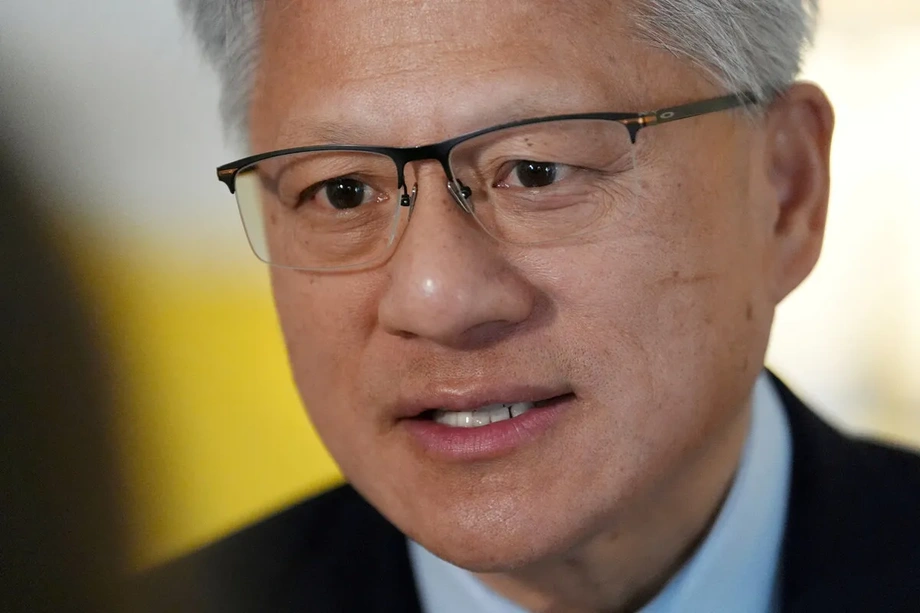
November 11 meeting puts Nvidia's leadership in focus
Nvidia's board met late on November 11, 2026, to consider whether to remove chief executive Jensen Huang after an allegation that he had a relationship with Kimberly Powell, the company's vice president of healthcare and one of his direct reports. No decision had been announced by late Wednesday.
Contents
- November 11 meeting puts Nvidia's leadership in focus
- What is alleged about Huang and Powell?
- Why a relationship with a direct report matters
- How the crisis developed
- The intelligence allegations and Nvidia's response
- Who can decide whether Huang stays?
- Replacing the founder would be a demanding task
- Investors reassess Nvidia and its rivals
- Asian suppliers face continuity and customer choices
- Washington scrutiny meets the earnings deadline
- Key Points
The meeting came three days after directors expressed confidence in Huang while opening an independent investigation into allegations that he had been targeted by Chinese intelligence through another woman, former Megaspeed executive Alice Huang. Huang acknowledged infidelity in a message to employees, without naming the woman.
Nvidia shares fell sharply after regular trading as the second relationship allegation and possible removal became public. The stock closed at $173.73, up about 2.9%, before falling more than 9% at one point after the close. The leadership uncertainty also spread to companies that manufacture Nvidia chips, supply memory and build servers around its technology.
For Nvidia's customers and suppliers, the immediate concern is who would make decisions about products, deliveries and investment if the founder leaves. Huang has led the company since its creation in 1993 and remains central to its technology strategy and relationships with major customers.
The board is now confronting two different responsibilities: investigating conduct involving its chief executive and keeping the dominant supplier of advanced artificial intelligence processors running. Its response will affect employees inside Nvidia and businesses across Asia that help manufacture the systems used to develop and operate AI.
What is alleged about Huang and Powell?
Five people who had worked at Nvidia reportedly described a relationship between Huang, 63, and Powell, 48. Both are married. The allegation concerns a senior executive who reports directly to the chief executive, bringing workplace authority and possible conflicts of interest into the investigation.
Huang and Powell were reportedly seen being affectionate at a hotel in San Jose, California, during Nvidia's annual GTC developer conference in March. A person allegedly recorded the encounter on a phone. Members of Huang's security team then reportedly took that person aside and proposed a nondisclosure agreement, which is an agreement restricting what someone can disclose.
The video has not been publicly released, and the account describing it said it had not been viewed by the publication that first detailed the allegation. Nvidia, Huang and Powell have not confirmed the reported relationship. Nvidia declined to comment on the allegation, and Powell did not respond to requests for comment.
Powell joined Nvidia as a director in 2008, became senior director of AI business development in 2016 and took charge of healthcare as a vice president in late 2017. Her responsibilities cover hardware and software used in medical imaging, life sciences, drug discovery and healthcare analysis.
Powell also canceled a planned appearance at the Milken Institute Health Summit in Washington on Thursday. The panel moderator announced the cancellation without giving a reason.
Why a relationship with a direct report matters
Nvidia's code of conduct identifies personal relationships as a potential source of conflicts of interest and says reports of misconduct are promptly investigated. A conflict can arise when a manager's personal relationship intersects with decisions about someone's job, pay, promotion or responsibilities.
Peter Jaworski, a professor of business ethics at Georgetown University, argued that the reporting relationship makes the allegation a matter for the board rather than simply a private concern.
You can't have a relationship like this with a direct report.
Jaworski said removal could be appropriate and urged directors, at a minimum, to place Huang on administrative leave while investigating both relationships. Administrative leave would temporarily remove him from his duties while the inquiry proceeds.
The alleged involvement of Huang's security team also brings the company's response into focus. Directors may need to examine how staff handled the reported encounter, who authorized any response and when board members learned about the alleged relationship.
How the crisis developed
The board meeting followed less than two weeks of public scrutiny involving Huang's personal conduct, Nvidia's security arrangements and the destination of advanced chips sold to customers in Asia.
- October 29: Allegations became public about Huang's relationship with Alice Huang and suspicions that she had worked on behalf of Chinese intelligence.
- November 8: Nvidia announced an independent investigation, expressed confidence in Huang and said he would continue leading the company. Huang apologized to his family in a message to employees.
- November 10: Former acting US Attorney Joon H. Kim was reportedly named to lead the inquiry involving outside law firm Wachtell, Lipton, Rosen & Katz.
- November 11: The allegation involving Powell became public, and directors met into the evening to consider Huang's future.
- November 17: Nvidia is scheduled to release its fiscal third quarter earnings.
- November 18: Congressional committee leaders have requested a private briefing with Huang.
The November 11 meeting marked a change from the board's public position when it announced the independent investigation. At that point, directors said they had confidence in Huang and his leadership team.
Huang, Nvidia's founder and chief executive, acknowledged his conduct in the employee message issued on November 8.
I was unfaithful to my wife. My actions hurt her and our children. There is no excuse for what I did. I am deeply sorry.
Huang also said he supported the independent investigation and would cooperate fully. Directors subsequently began considering whether he should remain in office while the company examines the allegations.
The intelligence allegations and Nvidia's response
Alice Huang, also known as Huang Le, worked as an executive at Singapore computing company Megaspeed between March and November 2023. She is unrelated to Jensen Huang. US intelligence officials reportedly suspected that she had been recruited by China's Ministry of State Security, its principal civilian intelligence agency.
Megaspeed's purchases were already attracting scrutiny before the latest workplace allegation. A Malaysian company linked to the business bought at least $4.8 billion in equipment built around Nvidia technology in less than two years, as detailed when the Megaspeed purchases drew scrutiny in October.
Another allegation puts the value of Nvidia chips allegedly smuggled into China through Alice Huang's activities at $7.5 billion. Nvidia has said a chip diversion allegation involving Megaspeed was investigated and debunked. Singapore authorities are investigating Megaspeed over alleged evasion of US export restrictions, and Megaspeed has said it appointed outside legal advisers to examine the accusations.
Nvidia's board stated its assessment when announcing the inquiry on November 8.
While the Board has no reason to believe that either national security or NVIDIA secrets were compromised, the Board's inquiry will examine all available information.
China has denied the intelligence allegations. Foreign Ministry spokesperson Guo Jiakun described them as entirely groundless and intended to malign China. The underlying intelligence, the information Alice Huang allegedly obtained and any findings about chip diversion have not been publicly disclosed.
Who can decide whether Huang stays?
Nvidia has 11 directors, including Huang. The company considers the other 10 independent. A majority of directors can remove the chief executive with or without cause, giving the board authority to replace the founder.
Huang owns about 3.6% of Nvidia and has no special class of shares carrying extra votes. Nvidia's structure gives each share one vote. His personal ownership therefore gives him less control over the board than founders whose companies issue shares with greater voting power.
About 800 million Nvidia shares are reportedly held in trusts jointly owned with his wife, Lori Huang, while roughly 70 million are held personally by Huang. His influence over Nvidia has depended heavily on his leadership, technical judgment and standing with employees and customers.
Directors are reportedly considering an interim chief executive while working with an outside firm to explore successors. Other possible responses include a temporary leave of absence or a change in Huang's role. The board's immediate choice is whether he can continue managing the business during the investigation.
Replacing the founder would be a demanding task
Huang has around 60 direct reports at a company employing roughly 42,000 people. That arrangement places many decisions and relationships close to him, increasing the work a successor would need to take over.
Potential interim leaders mentioned include chief financial officer Colette Kress and Nvidia cofounder Chris Malachowsky, who previously led product engineering. Ian Buck, associated with the creation of Nvidia's CUDA software platform, has also been discussed as a possible successor. None had been announced as the board's choice.
Armina Rosenberg, cofounder of Nvidia shareholder Minotaur Capital, described Kress as the natural choice for an interim appointment. Melius Research identified the absence of a clear successor as a risk.
Gil Luria, head of technology research at D.A. Davidson, explained the difficulty of an immediate transition.
Huang being removed immediately could be challenging for Nvidia since it does not have a succession plan in place.
For customers, continuity would mean more than naming someone to the position. A new leader would need to maintain product development, approve spending, coordinate suppliers and preserve relationships with companies investing heavily in AI infrastructure.
Investors reassess Nvidia and its rivals
Nvidia's fall after the market closed reversed its regular session gain. Shares were down 7.2% at about 7 p.m. Eastern time and fell more than 9% at another point. The company had already experienced a decline during the week before the latest allegations.
AMD rose about 4.5% and Broadcom about 2.9% after hours as investors considered whether customers might direct more spending toward alternatives. Intel fell, showing that the reaction varied among Nvidia's competitors.
Businesses tied to Nvidia also declined. Memory supplier Micron, server manufacturer Supermicro, chip manufacturer TSMC and cloud computing provider CoreWeave all fell after hours. Their exposure differs, but each participates in the chain that turns Nvidia designs into computing services.
Research firms took different positions on Nvidia's prospects. Baird lowered its rating to Neutral and cut its price target from $500 to $200, citing uncertainty around government investigations, possible revenue effects and Huang's tenure. Bernstein also downgraded the stock and reduced its target to $200. Morgan Stanley maintained an Overweight rating while describing Huang's leadership as central to the company's direction.
A price target is an analyst's estimate of a share's future value. The divided assessments reflect different judgments about how Nvidia's business might perform through a leadership and regulatory crisis.
Asian suppliers face continuity and customer choices
Nvidia supplies an estimated 80% to 90% of the AI chip market, giving decisions at the company a wide reach. TSMC manufactures its chip designs, while South Korean memory makers Samsung Electronics and SK hynix supply technology used alongside AI processors.
High bandwidth memory, or HBM, helps processors access large amounts of data quickly. AI systems need both powerful processors and fast memory, which connects Korean suppliers' business closely to demand for Nvidia systems.
Existing supply agreements are expected to support continuity in the immediate period. A prolonged leadership disruption could affect later negotiations, product approvals or investment schedules. At the same time, continuing demand for AI computing could bring memory suppliers more business from Nvidia's rivals.
An Ki-hyun, an executive at the Korea Semiconductor Industry Association, said continued AI infrastructure investment could give Korean HBM manufacturers an opportunity to broaden their customer base and strengthen their position in negotiations.
AMD's Instinct processors and ROCm software, along with Intel's Gaudi accelerators, are among the alternatives customers could examine. Moving requires testing and software work: many Nvidia customers have built applications around CUDA, the tools that allow developers to use its processors for AI and other demanding calculations.
Washington scrutiny meets the earnings deadline
House Foreign Affairs Committee Chairman Brian Mast and two other Republican committee leaders have requested that Huang attend a closed briefing on November 18 about his contacts with Alice Huang and Nvidia's security protections. Republican lawmakers have said a subpoena could follow if he does not respond voluntarily. A subpoena is a legal demand to appear or provide information.
President Donald Trump has said the FBI is investigating. The company inquiry focuses on conduct, security and possible harm to Nvidia, while federal scrutiny could examine national security and compliance with restrictions on advanced technology exports.
Nvidia's November 17 earnings release arrives one day before the requested congressional briefing. Investors will be looking for information about AI chip demand, sales affected by China restrictions and who will lead the company through its next product and investment decisions.
Employees, customers and suppliers now face the same immediate issue: whether directors retain Huang, temporarily replace him or appoint a new chief executive while the investigation continues.
Key Points
- Nvidia directors met late on November 11 to consider Huang's future; no decision had been announced by late Wednesday.
- A reported relationship with healthcare vice president Kimberly Powell added workplace conduct concerns to an existing intelligence investigation.
- Huang acknowledged infidelity, while the alleged Powell relationship remains unconfirmed.
- The board previously said it had no reason to believe national security or Nvidia secrets had been compromised.
- Nvidia shares fell more than 9% at one point after regular trading, with several suppliers also declining.
- Directors can replace Huang by majority vote, but no successor has been announced.
- Nvidia's earnings are scheduled for November 17, followed by a requested congressional briefing on November 18.