Tokyo warns as the yen approaches a sensitive level
Japan's yen weakened to 159.94 per U.S. dollar before steadying on Thursday, November 12, bringing it within a fraction of the 160 level as the country's top currency official warned that recent moves had been excessively rapid. The renewed pressure follows roughly 15.4 trillion yen in intervention during the summer, including a coordinated operation with the United States on July 31.
Contents
- Tokyo warns as the yen approaches a sensitive level
- Why 160 attracts so much attention
- U.S. inflation gives the dollar another lift
- Japan's central bank faces competing pressures
- What intervention involves, and why Mimura defends it
- A year of repeated market action
- Why cooperation with Washington matters
- How a weaker yen reaches households and businesses
- What traders will watch next
- Key Points
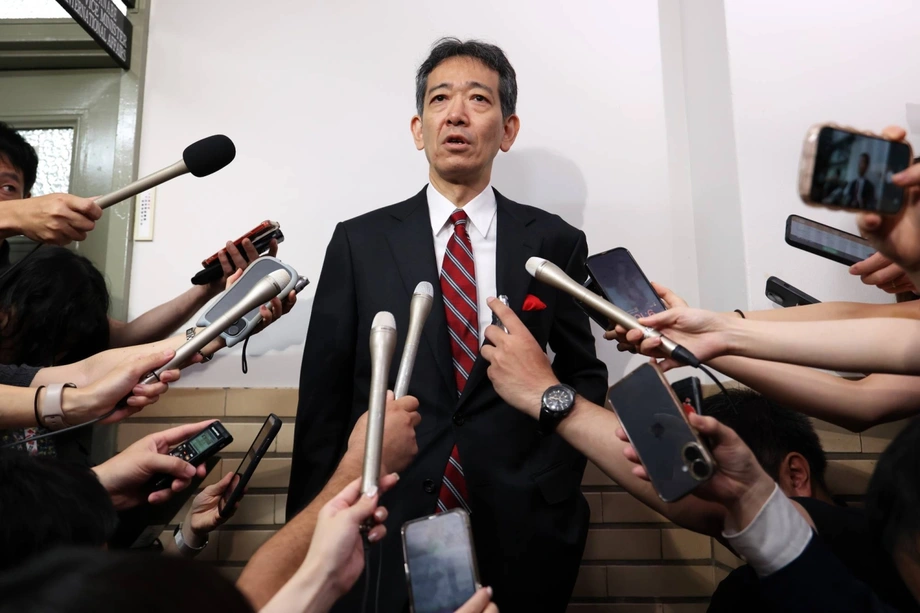
Atsushi Mimura, vice finance minister for international affairs, focused on the speed of the currency's decline rather than announcing a target exchange rate. Speaking to reporters on Thursday morning, he said:
I won't comment on the current exchange-rate level, but I believe recent currency moves have been excessively rapid.
Mimura also invoked the government's recent purchases of yen, delivering a warning to traders considering further bets against the currency:
It's still too early to forget what happened this summer.
The yen had fallen as much as 0.8% overnight as stronger than expected U.S. inflation increased expectations of further Federal Reserve interest rate rises. It subsequently edged 0.1% higher to 159.63 per dollar, although the recovery was brief. Later trading put the dollar at about 159.83 yen, leaving the Japanese currency close to its weakest level in more than two months.
Why 160 attracts so much attention
The 160 level carries weight because Japan has intervened after the dollar crossed it earlier this year. Authorities bought yen around the late April and early May holidays, then returned to the market during the summer as the currency weakened further.
For readers following the exchange rate, a higher number means a weaker yen: it takes more Japanese currency to buy one dollar. A move from 159 to 160 therefore represents a loss of purchasing power for someone holding yen and paying a bill priced in dollars.
Mimura gave no exchange rate or timetable that would trigger another intervention. His refusal to comment on the current level leaves traders watching both the size and speed of further moves.
Sho Suzuki, a market analyst at Matsui Securities, said crossing 160 would increase traders' concern about an official response:
Once dollar/yen rises above 160, I think caution will increase another notch.
Suzuki said a sustained move higher would need fresh momentum, such as stronger expectations of Fed rate increases or weaker expectations of a Bank of Japan increase. Those competing interest rate expectations are central to the yen's immediate direction.
U.S. inflation gives the dollar another lift
Stronger than expected October U.S. consumer inflation encouraged investors to expect another Federal Reserve rate increase in December. Comments from Fed policymakers added to that shift, with officials expressing concern about persistent inflation and leaving open the possibility of an increase of 50 basis points.
A basis point is one hundredth of a percentage point. A rise of 50 basis points would therefore lift the policy rate by half a percentage point. Higher rates generally make borrowing more expensive and can help slow spending and price increases.
Goldman Sachs and other major brokerages expected a December increase followed by another early the next year. The yield on the U.S. Treasury bond maturing in 10 years approached 5%, adding to the appeal of dollar investments.
The dollar's gains extended beyond Japan. An index measuring it against a basket of major currencies rose 0.15% to 103.02, its highest level since April 2025. Investors were responding to a broader reassessment of U.S. interest rates, while the yen faced its own domestic pressures.
Japan's policy rate stood at 1.25%, below rates in the United States and Europe. When investors can earn more interest elsewhere, they have an incentive to sell yen and buy currencies that provide higher returns. Expectations that this gap could widen helped drive the latest decline.
Japan's central bank faces competing pressures
Japan's inflation figures also pointed toward tighter monetary policy. Wholesale prices rose 7.1% in October from a year earlier, compared with 6.8% in September. That was an acceleration of 0.3 percentage points in the prices businesses charge one another.
Many economists expected the Bank of Japan to raise rates as soon as its December meeting. The central bank had already increased borrowing costs to 1.25% in September, and it had signalled that further increases could follow if the risk of inflation exceeding its 2% target grew.
Bank of Japan board member Toichiro Asada pushed back against an early increase, however. In a speech on Thursday, he warned that raising rates prematurely could damage growth and push down underlying inflation, the broader price trend that policymakers try to judge beyond temporary swings.
Asada was one of two policymakers who opposed September's rate increase. His comments showed that the timing of another move remained contested within the bank, even as wholesale inflation strengthened the case for action.
For the yen, the difference matters immediately. A Japanese rate increase could narrow the return gap with dollar investments. A delay, especially alongside further Fed increases, could keep pressure on the currency. December policy decisions in both countries are therefore important next events, although neither central bank's decision had been settled.
What intervention involves, and why Mimura defends it
Japan supports the yen through intervention by selling dollars and buying its own currency. The Ministry of Finance directs currency policy, while the Bank of Japan carries out the market transactions. Buying yen creates demand for it and can interrupt a rapid decline.
Mimura has described intervention as the "ultimate means of sending a message" to market participants. In an earlier interview, he said it should be used when exchange rate moves that diverge from economic fundamentals persist. Fundamentals include factors such as interest rates and the condition of the economy.
Mimura also argued that yen depreciation had exceeded what the interest rate gap between Japan and the United States justified, while speculative positions against the yen had accumulated. Such positions are bets that traders can profit from a further fall in the currency.
In an interview published on July 1, he defended the effect of Japan's spring operation:
Judging from how the market moved afterward, I think it clearly had meaning.
The return toward 160 now shows the continuing pressure from interest rate expectations. Intervention can force traders to reassess their bets quickly, while borrowing costs and expected investment returns continue to influence demand for each currency.
A year of repeated market action
Japan's latest warning follows two substantial periods of yen purchases. The government and the Bank of Japan conducted interventions totaling more than 11 trillion yen between April 28 and May 27. Summer purchases from late July through early August amounted to about 15.4 trillion yen.
The main developments have unfolded across several months:
- April 28 to May 27: Japan conducted more than 11 trillion yen in currency intervention, including operations around the late April and early May holidays.
- May 12: Japanese Finance Minister Satsuki Katayama and U.S. Treasury Secretary Scott Bessent affirmed cooperation on currency issues at a meeting in Tokyo.
- July 31: Japan and the United States jointly intervened after the yen had weakened beyond 163 per dollar during the summer.
- Late July through early August: Japanese intervention totaled approximately 15.4 trillion yen.
- November 11 to 12: Strong U.S. inflation data lifted the dollar, and the yen approached 160 before Mimura renewed his warning.
- December: Markets expected possible rate increases from both the Federal Reserve and the Bank of Japan.
The yen traded at 158.87 to 158.89 per dollar at 5 p.m. in Tokyo on November 11 before weakening overnight. Its move to 159.94 brought the currency close to a level associated with earlier official action in less than a day.
Why cooperation with Washington matters
Japan and the United States confirmed their summer coordination in early August. The joint yen purchases were described as the first such coordinated operation since the Asian financial crisis in 1998.
Mimura had also indicated in his July interview that Japan encountered no U.S. opposition to its spring market intervention. That followed a written agreement reached the previous September between then Japanese Finance Minister Katsunobu Kato and Bessent, recognizing intervention as a way to address excessive currency fluctuations.
In a later interview discussing that agreement, Mimura explained its scope:
It was the first time that we recognized on paper that an intervention could be a valid approach against both a stronger and weaker yen.
Katayama and Bessent reaffirmed cooperation at their May 12 meeting. Those contacts give context to Mimura's latest reference to the summer operation: Japan has already acted with Washington, rather than relying solely on unilateral purchases.
Mimura also said Japan had a framework that would allow intervention in crude oil futures if authorities chose to use it. He announced no such operation. Oil prices matter to the currency debate because Japan depends heavily on imported energy, much of which is priced in dollars.
How a weaker yen reaches households and businesses
Japanese import prices measured in yen were up nearly 25% from a year earlier, led by oil. A weaker currency adds to that pressure because importers need more yen to pay the same dollar invoice.
For example, a purchase costing $100 requires 15,994 yen at an exchange rate of 159.94, compared with 16,000 yen at 160. The small difference between those two rates helps explain why officials focus on the pace of the broader decline, alongside the attention traders give the round number.
Higher energy prices amid tensions in the Middle East compound the problem. Companies face more expensive fuel, transport and imported materials. They must decide whether to absorb those costs or pass them to customers, putting household budgets under further pressure.
Japan's dependence on imported resources makes that pressure especially difficult. Higher interest rates can support the currency, but they also increase borrowing costs for businesses and households. Intervention offers a more direct response to the exchange rate, while the central bank must weigh inflation against the risk of weaker growth.
Market concerns about Japan's public finances have added another strain. Prime Minister Sanae Takaichi's push for more fiscal spending has contributed to investor unease about the country's fiscal health, alongside the continuing interest rate gap with the United States.
What traders will watch next
Mimura's comments brought only limited relief for the yen. The dollar returned to around 159.83 later on Thursday, showing that the warning had not produced a lasting change in market direction.
New York Fed President John Williams was scheduled to appear on a panel later Thursday. Traders were watching for guidance on whether the Fed would move toward another rate increase after the October inflation figures.
Tokyo's language will also draw attention. A stronger warning, particularly alongside another fast fall in the yen, would increase concern about intervention. The December central bank meetings will then test whether the interest rate gap begins to narrow or remains a source of selling pressure.
Key Points
- The yen weakened to 159.94 per dollar before recovering modestly, approaching a level associated with earlier intervention.
- Currency official Atsushi Mimura called recent moves excessively rapid and reminded traders of Japan's summer action.
- Japan conducted about 15.4 trillion yen in intervention from late July through early August, including joint action with the United States on July 31.
- Stronger U.S. inflation increased expectations of Fed rate rises, supporting the dollar.
- Japan's policy rate stood at 1.25%, with markets expecting a possible December increase despite disagreement within the central bank.
- Import costs and energy prices are transmitting currency weakness to Japanese businesses and households.
- Mimura announced no exchange rate trigger or timetable for another intervention.