Oruç Reis heads toward Pakistan's offshore waters
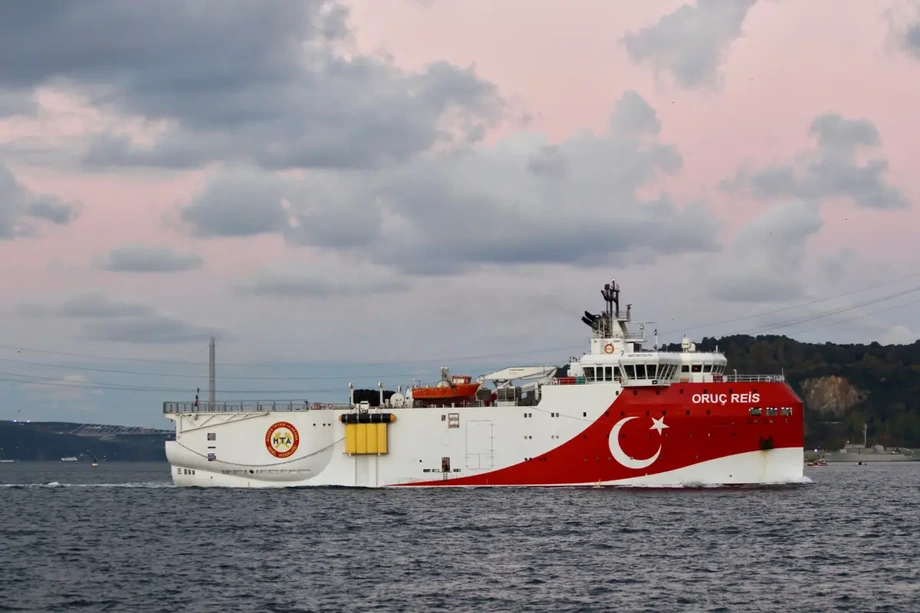
A Turkish seismic survey vessel is expected to arrive in Karachi between November 17 and 20, 2026, as Pakistan advances an offshore exploration campaign backed by about $80 million in initial commitments across newly awarded blocks. The vessel will gather geological information to help companies choose where to search for oil and gas beneath the Arabian Sea.
Contents
- Oruç Reis heads toward Pakistan's offshore waters
- What the vessel will do before drilling
- Who owns the main exploration block?
- How much money is committed?
- What changed after the long bidding gap?
- Why the 2019 well matters
- Karachi preparations involve several ministries
- Türkiye's wider overseas energy push
- What the search could change for Pakistan
- Key Points
Pakistan's Petroleum Division announced the arrival window after Petroleum Minister Ali Pervaiz Malik chaired a meeting in Islamabad on preparations. Turkish Energy and Natural Resources Minister Alparslan Bayraktar identified the vessel heading toward Pakistan as Oruç Reis.
The campaign follows the award of 23 offshore exploration blocks covering approximately 53,500 square kilometres. Pakistan had offered 40 blocks in its Offshore Bid Round 2025, reopening an investment process that had been dormant for about 18 years.
Pakistan imports about half its oil, making the search for domestic supplies a priority for a government seeking to reduce spending on imported fuel. Any production would follow further geological assessment, drilling and development, a process that could take years.
The country has drilled only 18 offshore exploratory wells since independence in 1947, according to Petroleum Ministry figures released in May. Its offshore zone covers roughly 300,000 square kilometres, leaving a large area with relatively little drilling history.
Malik, Pakistan's petroleum minister, described the planned arrival as a milestone in relations with Türkiye and expressed his intention to welcome the vessel:
This is a special moment for Pakistan-Türkiye friendship. I will try to personally receive the vessel upon its arrival in Karachi.
What the vessel will do before drilling
Oruç Reis will conduct seismic surveys, which use sound waves and their returning echoes to build pictures of rock formations beneath the seabed. Different layers reflect sound differently, allowing specialists to map structures that might hold oil or natural gas.
Exploration companies use those pictures to select promising targets and assess whether the cost of drilling is justified. Offshore drilling requires expensive equipment and careful planning, so better geological information can help companies decide where to commit their money.
The survey is an early stage in a longer process. Exploratory wells must test whether a target contains hydrocarbons, how much might be recoverable and whether the resource can be produced at a commercially workable cost.
The Petroleum Division gave the vessel's expected arrival window but did not announce a survey completion date, a drilling schedule or a date for possible production. The immediate task is to prepare the maritime, security and operational arrangements needed for the survey to begin.
Who owns the main exploration block?
Turkish Petroleum Offshore Company, known as TPOC, holds a 25 percent interest and operatorship in Eastern Offshore Indus-C, a block in the Arabian Sea. TPOC is a subsidiary of Turkish Petroleum Corporation, also known as TPAO.
Pakistan Petroleum Limited, or PPL, holds the largest ownership share at 35 percent. Oil and Gas Development Company Limited, or OGDCL, and Mari Energies each hold 20 percent. Together, the three Pakistani companies own 75 percent of the block, while the Turkish partner is responsible for leading operations.
Operatorship means managing the exploration work on behalf of the partnership. The operator can hold a smaller financial share than another partner while still directing technical activities and coordinating the project.
PPL estimates that Eastern Offshore Indus-C has potential for 1.5 trillion to 2 trillion cubic feet of gas, drawing on earlier two dimensional and three dimensional seismic surveys. Further exploration will determine how much gas is present and whether it can be recovered commercially.
How much money is committed?
The wider offshore bidding programme attracted initial exploration commitments of about $80 million over three years. Investment could reach $750 million to $1 billion if projects advance to drilling, according to the figures announced for the programme.
The larger range is roughly nine to twelve times the initial $80 million commitment. The difference reflects the rising cost of moving from geological investigation to testing targets with wells. The eventual spending will depend on which projects progress.
Four consortiums led by local energy companies received the 23 blocks, with foreign participation in some partnerships, including Turkish Petroleum. The awards covered about 58 percent of the 40 blocks offered in the 2025 round.
TPOC's agreements with Pakistani companies also extend onto land. The company has a 25 percent interest in Sukhpur-II and a 10 percent interest in Ziarat North. Those holdings give the partnership interests in both offshore and onshore exploration, with different costs and operating requirements.
The offshore awards cover approximately 18 percent of Pakistan's stated 300,000 square kilometre offshore zone. That comparison shows the scale of the licensed acreage within a much larger maritime area, while the survey and later drilling will concentrate on selected geological targets.
What changed after the long bidding gap?
Pakistan launched Offshore Bid Round 2025 in January 2025, offering blocks in the Indus and Makran offshore basins near Sindh and Balochistan. The government later awarded 23 blocks and signed production sharing agreements and exploration licences in May as part of reopening the sector.
A production sharing agreement sets the terms under which companies search for petroleum and share any future production with the state. An exploration licence gives permission to carry out the search within a specified area, subject to its conditions.
The key stages in the renewed campaign are:
- January 2025: Pakistan launched a bidding round offering 40 offshore blocks after an approximately 18 year gap.
- 2025: The government awarded 23 blocks covering about 53,500 square kilometres to four consortiums.
- May: Pakistan signed production sharing agreements and exploration licences for blocks awarded under the round.
- November 17-20, 2026: The Petroleum Division expects the Turkish seismic vessel to arrive in Karachi.
Officials have described the initiative as reviving offshore exploration after nearly two decades. Pakistan also conducted offshore drilling in 2019, when the Kekra-1 well was abandoned. The long interruption in competitive block awards and the more recent drilling attempt are both part of the campaign's history.
Why the 2019 well matters
Kekra-1, drilled in the Arabian Sea by a consortium that included ExxonMobil, Eni and Pakistani energy companies, failed to find commercially viable hydrocarbons. The consortium abandoned the well in 2019.
That outcome provides a concrete example of the financial and geological uncertainty facing the new partnerships. Companies can identify a promising structure and spend substantial sums drilling it, yet still find too little recoverable fuel to support production.
A basin study by the US firm DeGolyer and MacNaughton identified substantial potential for hydrocarbons yet to be found in Pakistan's offshore basins. The planned seismic work will help companies narrow that broad assessment into specific places worth investigating.
Pakistan's offshore waters lie near energy producing countries including Oman, the United Arab Emirates and Iran. For the companies investing in Pakistani blocks, the practical decisions will depend on the geology within their licensed areas and the results of their own surveys and wells.
Karachi preparations involve several ministries
Malik's meeting reviewed operational, logistical, maritime, security and interdepartmental arrangements for the vessel's arrival and the start of exploration. Departments were directed to coordinate closely so that preparations could be completed in time.
Participants included TPOC's project manager, the petroleum secretary and additional secretary, the director general of petroleum concessions, and the managing directors of OGDCL, PPL and Government Holdings Private Limited.
Representatives also attended from the foreign affairs, maritime affairs, defence and interior ministries, along with the Board of Investment, the National Hydrographic Office Pakistan and the Directorate General of Ports and Shipping. Their involvement reflects the permissions, navigation arrangements, port services and security planning required for an offshore campaign.
The petroleum secretary called for coordination among the departments involved. TPOC's project manager thanked Pakistani authorities for their cooperation and expressed confidence in the project, while Malik pledged government support for the exploration effort.
Türkiye's wider overseas energy push
Bayraktar placed the Pakistan mission within Türkiye's effort to expand TPAO's international operations through acquisitions, mergers and partnerships with major oil companies. He discussed the vessel's journey during a meeting with international media representatives in Istanbul.
Bayraktar, Türkiye's energy and natural resources minister, described work in Pakistan alongside Turkish drilling activity off Somalia:
That is why we are drilling off the coast of Somalia. We have work underway concerning Pakistan. Our seismic research vessel Oruç Reis is currently heading towards waters off Pakistan.
Malik also linked the vessel's arrival to closer relations between Pakistan and Türkiye following the signing of the Makkah Joint Defence Agreement. The exploration project brings that cooperation into the energy sector through company partnerships, technical work and investment commitments.
For Pakistan, the Turkish role combines operational leadership in Eastern Offshore Indus-C with access to a seismic vessel. For TPAO, the Pakistan projects provide another location for the overseas expansion Bayraktar described.
What the search could change for Pakistan
Pakistan's reliance on imported oil means domestic discoveries could eventually reduce the amount of foreign currency needed to buy fuel. Successful gas exploration could also expand the country's domestic energy supply.
Malik said the initiative would contribute to energy security and strengthen energy cooperation with Türkiye. Energy security means having reliable access to enough fuel at a cost the country can sustain.
The benefits depend on several decisions still ahead. Survey results must identify attractive targets, partners must approve further spending, and drilling must find resources that can support commercial development. Production would then require facilities to extract and transport the fuel.
The next scheduled milestone is the vessel's November 17-20 arrival window. The campaign's first practical contribution will be new geological information, giving the companies a firmer basis for deciding where, and whether, to drill.
Key Points
- The Petroleum Division expects a Turkish seismic vessel in Karachi between November 17 and 20, 2026; Türkiye's energy minister identified it as Oruç Reis.
- The vessel will collect geological data to guide decisions on future offshore drilling.
- TPOC holds 25 percent and operatorship in Eastern Offshore Indus-C; Pakistani partners hold the remaining 75 percent.
- Pakistan awarded 23 offshore blocks covering about 53,500 square kilometres under its renewed bidding programme.
- Initial exploration commitments total about $80 million over three years, with larger spending possible if projects reach drilling.
- Pakistan has drilled 18 offshore exploratory wells since 1947; its Kekra-1 attempt ended without a commercial discovery in 2019.