A growing campaign turns its attention to turnout
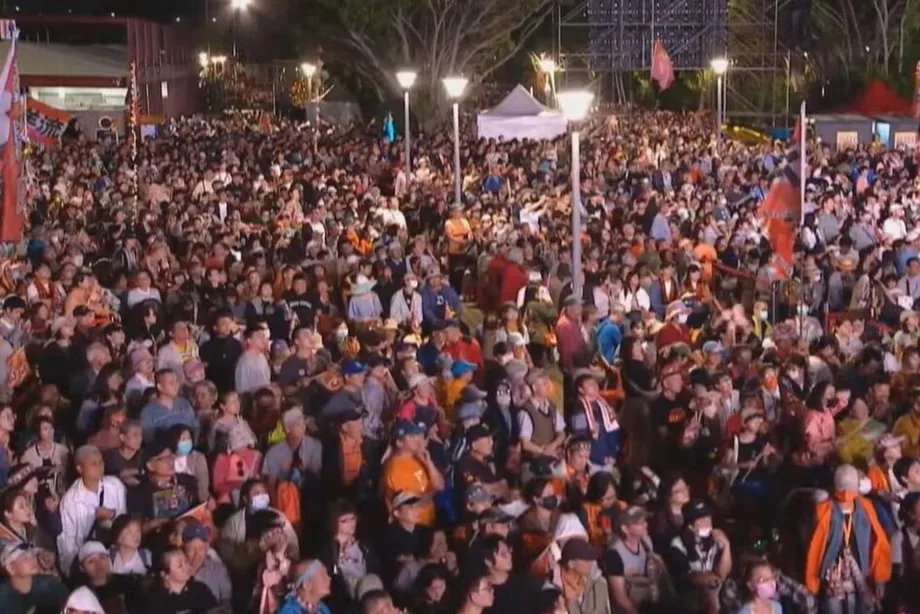
Democratic Progressive Party Taipei mayoral candidate Puma Shen says about 360,000 supporters have collected crew credentials for his Ocean Wave campaign, with Taipei residents accounting for nearly half. His next task is to persuade that network to bring friends and relatives to the polls on November 28.
Contents
- A growing campaign turns its attention to turnout
- What the crew credentials tell the campaign
- How Ningxia Night Market became a turning point
- Shilin and Beitou supporters plan a welcome by water
- A polling lead comes with a closer election forecast
- Beijing's pressure becomes part of the contest
- Pressure reaches homes, families and public supporters
- The dates leading to the ballot
- Key Points
In an interview, Shen said his team asks people collecting the credentials where they come from. For now, he is less concerned about their geographical distribution than about whether they can encourage others to vote. Taking nearly half of 360,000 as a rough guide puts the Taipei contingent at around 180,000, although Shen gave no exact city total.
The campaign is also preparing a November 15 motorcade through Shilin and Beitou. Local supporters have been organizing chartered boats to gather at Guandu Wharf, extending the campaign's nautical identity from membership credentials and street events onto the water.
Shen's account brings together several forces behind his campaign: supporters who supplied its name, growing crowds during neighborhood visits, television interviews that widened his exposure, and controversy that kept him in public discussion. Pressure from Beijing has added another dimension, with sanctions and a criminal investigation making the candidate a target beyond the mayoral contest.
The immediate electoral challenge is local. Supporters elsewhere can help organize, publicize events and contact relatives, while the decision over Taipei's next mayor belongs to the city's eligible voters. Shen is therefore trying to turn a broad network of enthusiasm into participation in a specific election.
What the crew credentials tell the campaign
Shen described the people joining his campaign as already interested in politics, even when they did not have a particularly strong political preference. He said more of them began participating when his campaign's appeals connected with their concerns.
The crew credentials give those supporters a shared identity. Shen said the Ocean Wave name came from supporters themselves, making it part of a campaign culture that participants helped create rather than simply a label handed down by his staff.
His explanation of the geography is practical. A supporter living outside Taipei may have parents, siblings, colleagues or friends who can vote there. Shen wants the people collecting credentials to become organizers within those personal networks.
The figure of 360,000 measures participation through the campaign's credential scheme. Opinion surveys measure preferences among people interviewed, while the election will count ballots cast by eligible voters. Each stage involves a different action, and Shen's remarks put the focus on moving people from signing up to helping secure votes.
How Ningxia Night Market became a turning point
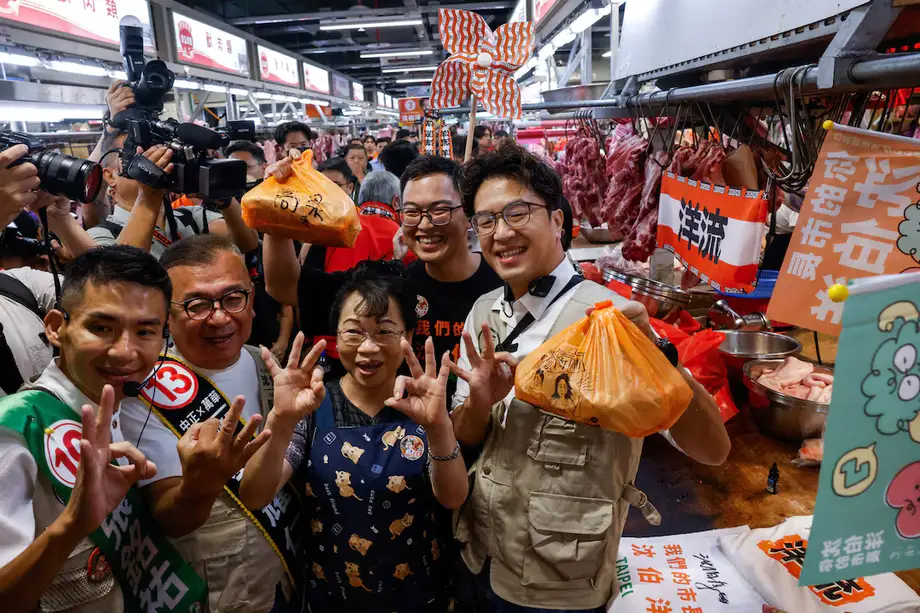
Shen recalled beginning the contest well behind incumbent Mayor Chiang Wan-an of the Kuomintang. His response, he said, was to build support gradually through street visits, with crowds increasing as the campaign continued.
He identified an event at Ningxia Night Market as a key turning point. In his telling, a popular movement needs a symbol, and the Ocean Wave identity gave people a recognizable way to express their involvement.
Accusations that his campaign had fabricated its popularity, followed by demeaning descriptions of supporters, helped draw more attention to the contest, Shen said. He presented that controversy as part of the sequence through which a campaign initially struggling for support became a larger public conversation.
Shen also credited interviews with media personalities Wang Wei-chung and Jaw Shaw-kong with helping his campaign. Those appearances gave him another route to audiences beyond the people attending street events or already following his campaign activities.
His account places personal contact, shared symbols and broadcast exposure alongside one another. Street visits brought him into neighborhoods, the campaign identity gave supporters something to join, and interviews allowed him to explain himself to viewers at greater length.
Shilin and Beitou supporters plan a welcome by water
The November 15 event is scheduled as the final Shilin and Beitou stop in the campaign's series of motorcades and discussions about city government. It follows gatherings in Daan and Wenshan that drew large crowds.
Supporters in local groups have been coordinating boat charters to converge on Guandu Wharf. Yacht and ferry operators were reportedly receiving heavy booking demand for that date after the plan circulated.
The water gathering gives the Ocean Wave theme a visible expression in northern Taipei. It also shows supporters taking responsibility for an activity alongside the candidate's scheduled route, rather than waiting for every part of an event to be arranged centrally.
For the campaign, the concrete opportunity is another gathering in two Taipei districts shortly before voting. The electoral work continues after the boats and motorcade leave: maintaining contact with participants and encouraging them to bring other voters into the contest.
A polling lead comes with a closer election forecast
A survey released on October 20, 2026, offered evidence of a substantial change in the race. The Taipei Xinmin Cross-Strait Research Association put Shen at 50.3% and Chiang at 33.3%, a gap of 17 percentage points.
The association's September survey had shown Chiang ahead by 41.7% to 40.5%. Shen therefore gained 9.8 percentage points between the two surveys, while Chiang lost 8.4 points. Together, those movements shifted the gap between them by 18.2 points toward Shen.
The same polling exercise produced a more competitive picture when analyst Tai Li-an accounted for voting intention, strength of commitment and previous election results. His estimates put Shen's possible vote share between 49.2% and 52.9%, and Chiang's between 46.9% and 49.9%.
As the October polling analysis explained, the detailed scenarios ranged from Chiang winning by 0.7 percentage points to Shen winning by about six points. The central issue was participation: which people expressing a preference would ultimately cast a ballot.
Shen's emphasis on friends and relatives fits that narrower forecast. A campaign with a large pool of people willing to collect credentials still needs reliable contact with voters, particularly when different assumptions about turnout produce different winners.
Beijing's pressure becomes part of the contest
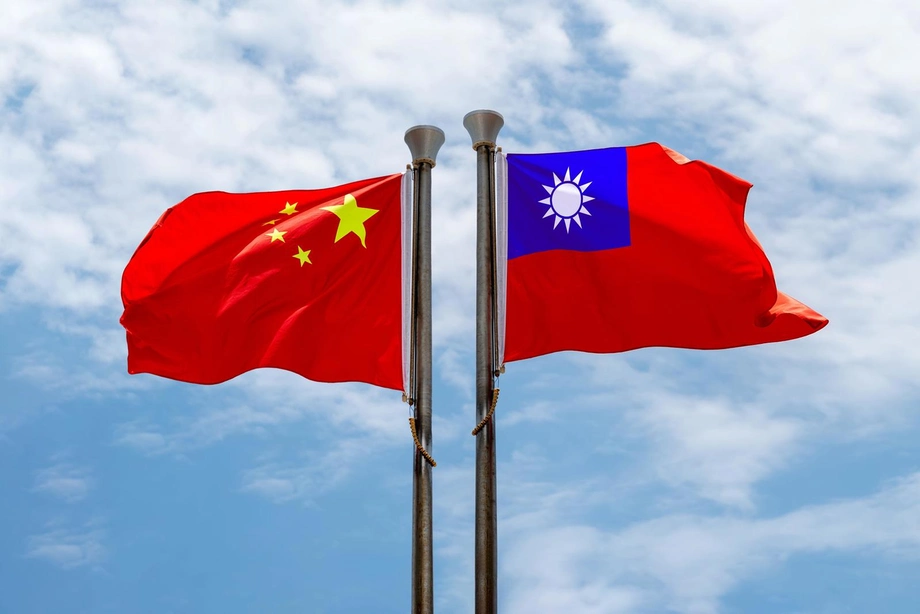
Beijing imposed sanctions on Shen in 2024, before his mayoral bid. China's Taiwan Affairs Office designated him a Taiwanese independence separatist, and the Chongqing Municipal Public Security Bureau subsequently opened a case alleging secession. Sanctions were also extended to his family and affiliated businesses.
Shen's work on civil defense and responses to pressure below the level of open warfare forms part of this confrontation. Civil defense concerns how ordinary people and public institutions prepare for emergencies and protect communities. Pressure below open warfare can include intimidation and attempts to manipulate information.
John Lim, a distinguished research fellow at the University of Tokyo's Institute for Advanced Studies on Asia, argues that Beijing's actions have helped the Ocean Wave gain momentum. His interpretation is that attempts to isolate Shen have instead encouraged some Taiwanese voters to rally around him.
Lim describes a familiar political response to an outside threat: people may become more willing to defend someone targeted by an external power. In this contest, he argues, Beijing's treatment of Shen has strengthened the candidate's appeal among supporters of Taiwanese independence and some voters leaning toward the DPP.
Shen's own account gives greater attention to neighborhood campaigning, the Ningxia event and media appearances. Together, the two explanations describe a campaign developing through local organizing while also drawing energy from a confrontation with Beijing.
Pressure reaches homes, families and public supporters
A reported case handled by the Taipei District Prosecutors' Office involved people from Hong Kong hiring a detective agency to monitor Shen's Taipei residence. Shen was also reportedly tracked during overseas travel.
The pressure has extended to a prominent person who publicly supported his campaign. Entertainer Kevin Tsai faced a boycott by Chinese internet users and lost business deals with Chinese brands after attending the opening of Shen's campaign office.
Those events give the dispute consequences beyond campaign speeches. For Shen, they concern his home and family connections. For a public supporter such as Tsai, participation in a Taipei political event has carried commercial costs in China.
Lim interprets these actions as attempts to discourage participation through fear of personal or financial consequences. He argues that such pressure can also provoke solidarity, encouraging people to participate because they object to the treatment of the candidate or his supporters.
The wider legal concern has already been raised in Taipei. In March, Taiwanese officials warned that China's newly approved Law on Promoting Ethnic Unity and Progress could create another basis for pursuing people outside mainland China. The earlier warnings over extraterritorial powers focused on Article 61, which provides for legal liability involving organizations and individuals abroad. Shen's case sits within that broader dispute over Beijing's assertion of authority beyond its borders.
The dates leading to the ballot
The campaign's recent development stretches from sanctions imposed before the mayoral bid to the final weeks of neighborhood events. The main dates are:
- 2024: Beijing imposed sanctions on Shen, making him a target before the Taipei mayoral campaign.
- September 16 to 18, 2026: The association conducted the survey that put Chiang at 41.7% and Shen at 40.5%.
- October 14 to 16: Interviewers conducted the next survey, whose results were released on October 20 with Shen at 50.3% and Chiang at 33.3%.
- November 15: Shen's Shilin and Beitou motorcade is scheduled, with supporters organizing a gathering by boat at Guandu Wharf.
- November 28: Voters are scheduled to cast ballots in Taiwan's local elections.
Shen's immediate priority is to connect the campaign's growing public presence with those final dates. The crew credentials provide a way for people to identify with the campaign; district events provide occasions to gather; personal networks provide a route to voters who may never attend a rally.
For Taipei residents, the contest is moving toward a choice between Chiang's continued leadership and Shen's bid to replace him. The strength of the Ocean Wave will ultimately be expressed through how many eligible voters its participants persuade to take part.
Key Points
- Shen says about 360,000 supporters have collected campaign crew credentials, with nearly half coming from Taipei.
- He is prioritizing whether supporters can encourage friends and relatives to vote.
- A November 15 Shilin and Beitou motorcade is scheduled, alongside plans by supporters to gather at Guandu Wharf by boat.
- An October survey put Shen 17 percentage points ahead, while turnout forecasts showed a much closer contest.
- Beijing's sanctions and other pressure have become part of the campaign, with researcher John Lim arguing that they have encouraged solidarity with Shen.
- Taiwan's local elections are scheduled for November 28.