Extreme heat added to an already heavy burden
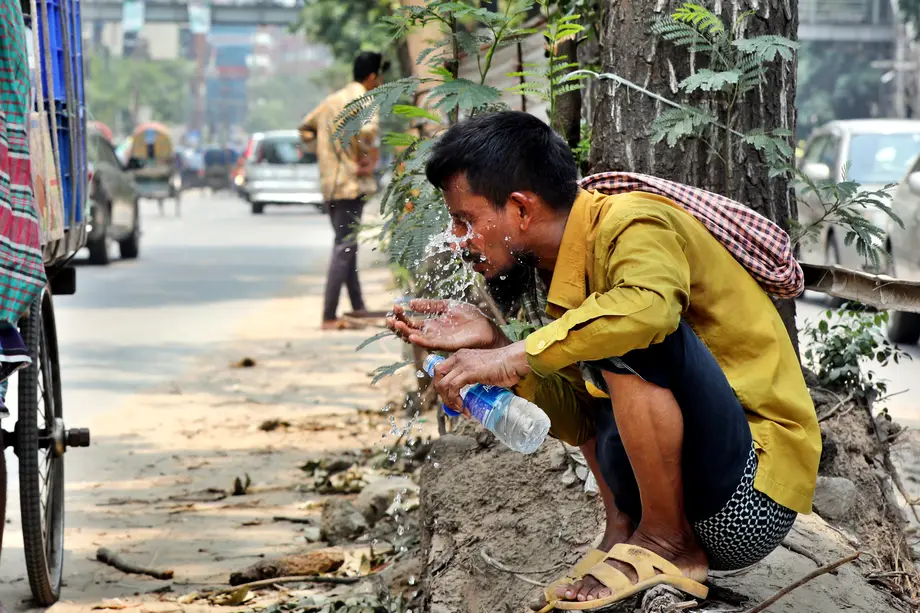
Bangladesh experienced an estimated 5,515 additional preterm births during the extreme heat of April 2024 compared with a typical April, according to analysis by Zero Carbon Analytics (ZCA). Of those, an estimated 1,479 were attributable to the extra warming caused by human activity.
Contents
- Extreme heat added to an already heavy burden
- What the two Bangladesh estimates measure
- Why the map of risk matters
- How heat can affect a pregnancy
- A regional problem with unequal effects
- What an ordinary April could bring by mid century
- Protection needs to reach routine pregnancy care
- Tracking harm before and after birth
- Climate responsibility and the capacity to respond
- Key Points
The estimated increase associated with the heat event was 11.9%, equivalent to about 19 additional preterm births for every 1,000 births. Bangladesh had the largest percentage increase among the three countries examined, ahead of the Philippines at 10% and India at 3.6%.
Dhaka and Chittagong, Bangladesh's two most populous divisions, accounted for 47% of the estimated additional cases. Mymensingh experienced the sharpest temperature increase and the highest number of excess preterm births relative to its number of births, showing why the places needing the most hospital capacity may differ from those facing the greatest increase in risk.
A preterm birth occurs before 37 completed weeks of pregnancy. Babies born early have had less time to develop in the womb and can need extra help with breathing, feeding and maintaining body temperature. Preterm birth is the leading cause of death among newborns worldwide and can bring lasting physical and developmental difficulties.
Bangladesh entered the heat event with an unusually high existing burden. Its estimated preterm birth rate was 16.2% in 2020, the highest national average globally, compared with 13.2% across South Asia. That amounts to roughly one in six births in Bangladesh, against about one in eight across the region.
What the two Bangladesh estimates measure
ZCA's figures answer two different questions. The estimate of 5,515 additional preterm births compares April 2024 with the temperatures of a typical April during 1991–2020. It describes the estimated burden associated with that month's exceptional heat.
The estimate of 1,479 asks how many preterm births would have been avoided if human activity had not added to global warming. Researchers make this comparison by estimating conditions in a world without that additional warming and assessing the resulting change in health risk.
About 27% of Bangladesh's estimated 5,515 excess cases were attributed specifically to human caused warming, using the two figures in the analysis. The estimates use different climate comparisons: a typical recent April for the larger figure, and a world without human caused warming for the smaller one.
World Weather Attribution found that climate change made the heat event around 45 times more likely. That figure describes the likelihood of the weather event. ZCA's health analysis then estimates how the associated temperatures affected the number of babies born early.
The birth figures are statistical estimates linking temperature exposure with preterm birth risk, rather than a count of individual medical records in which heat was identified as the cause. The analysis uses that relationship to calculate the additional burden across populations.
Why the map of risk matters
Dhaka and Chittagong together accounted for nearly half of Bangladesh's estimated excess preterm births. Their large populations mean that even a similar increase in risk can produce more cases than in a smaller division, placing greater demands on maternity wards and newborn services.
Mymensingh's April temperature averaged 3.59°C above its usual April baseline. It had an estimated 24 excess preterm births per 1,000 births, the highest rate among Bangladesh's eight divisions, although it ranked sixth in the total number of additional cases.
Sylhet had the lowest estimated rate, at 16 additional preterm births per 1,000 births. Mymensingh's figure was therefore 50% higher than Sylhet's. Across all divisions, the estimated increase in preterm birth risk was approximately 10–15%.
Health planners face two related tasks: preparing enough beds, staff and newborn support where the greatest number of cases is expected, and reaching pregnant women in places where heat is driving the sharpest rise in risk. A national average alone cannot show both needs.
How heat can affect a pregnancy
Pregnancy places extra demands on the body, including the work needed to support the developing baby and manage body temperature. Extreme heat can add strain through dehydration, changes in circulation and inflammation, potentially activating processes that begin labour.
The placenta supplies the developing baby with oxygen and nutrients through the mother's blood. Reduced blood flow to the placenta is one possible route through which heat exposure can affect pregnancy. These biological pathways help explain why researchers examine temperature alongside birth outcomes.
Dr. Ummay Hafsa Mazumde, a medical officer at Cumilla Sadar South Health Complex, warned that intense heat can put pregnant women at serious risk. She explained that excessive sweating can cause substantial loss of electrolytes, the minerals needed for functions such as muscle activity and fluid balance, potentially causing serious complications for mother and baby.
Poverty, nutritional anaemia, strenuous physical work and limited antenatal care can compound that exposure. Anaemia means the blood has too little haemoglobin, the protein that carries oxygen. Poorly ventilated homes and building materials that retain heat can also leave women exposed indoors, especially when cooling is unavailable.
A regional problem with unequal effects
Across Bangladesh, India and the Philippines, ZCA estimated approximately 16,150 excess preterm births associated with the April 2024 heatwave compared with a typical April. About 10,600 were attributed to human caused warming: 8,830 in India, 1,479 in Bangladesh and 263 in the Philippines.
India had the largest absolute number of cases attributed to warming, while Bangladesh had the largest percentage increase associated with the heat event. The difference matters for public health: total cases help determine how much care is needed, while percentage increases show how sharply the burden has grown compared with usual conditions.
Bihar, Uttar Pradesh, West Bengal and Jharkhand accounted for about two thirds of India's excess burden. The concentration resembles Bangladesh's pattern in one practical respect: national totals conceal substantial differences between regions.
Professor Rashmi Agarwalla, the climate change nodal officer in the Department of Community and Family Medicine at AIIMS Guwahati, called for maternal heat protection to become part of health service preparedness, antenatal care and community maternal services. She identified anaemia, poor nutrition and prolonged outdoor work as factors that increase vulnerability.
What an ordinary April could bring by mid century
Bangladesh could experience approximately 1,500 additional preterm births during a typical April in 2041–2060 compared with the climate baseline of 1985–2014, according to ZCA's projections under moderate and higher warming scenarios. The estimated range is 630–2,900 cases, reflecting a projected April temperature increase of about 1.1°C.
Dhaka Division is projected to have the largest burden, followed by Chittagong and Rajshahi. The calculations account for projected changes in the number of births, an important consideration because future demand for maternity care depends on both temperatures and population changes.
The projections assume no additional adaptation measures and that the relationship between temperature and preterm birth risk remains consistent with current evidence. Better protection during pregnancy could change those outcomes. The range describes uncertainty around the estimate.
India could face more than 15,000 additional preterm births in a typical April by mid century, with Uttar Pradesh projected to have the largest absolute burden, followed by Bihar and Rajasthan. These projections concern a typical future April, while the 2024 estimates concern an exceptional heat event.
The main reference periods show how the analysis moves from existing vulnerability to future risk:
- 2020: Bangladesh's estimated preterm birth rate was 16.2%, compared with 13.2% across South Asia.
- April 2024: Extreme heat was associated with an estimated 5,515 excess preterm births in Bangladesh compared with a typical April during 1991–2020.
- 2024: Bangladesh launched national guidance to protect children and pregnant women from heat stress.
- 2041–2060: ZCA projects about 1,500 additional preterm births during a typical April compared with the 1985–2014 climate baseline, assuming no additional adaptation.
Protection needs to reach routine pregnancy care
Bangladesh's Directorate General of Health Services worked with UNICEF in 2024 to launch national guidelines on protecting children and pregnant women from heat stress. The guidance recognises the risk of preterm birth, but heat protection is not yet systematically integrated into routine maternal healthcare.
Professor Dr. Iqbal Kabir, a climate and public health expert, called for heat protection to become part of maternal care. His recommendations include stronger screening and counselling during antenatal visits, better equipped frontline health workers, improved warning systems and access to safe, cool environments for vulnerable communities.
Antenatal care offers a regular opportunity to identify women exposed to strenuous work, hot housing or limited drinking water. Community maternal services can also reach women whose access to clinics is restricted. Connecting heat warnings with these services would give health workers a way to act before and during dangerous temperatures.
Hospitals and clinics in Dhaka and Chittagong need preparation proportionate to their expected case numbers. Mymensingh's higher rate of excess cases points to a parallel need for targeted protection where temperature increases are especially severe.
Tracking harm before and after birth
The World Health Organization, UNICEF and two other United Nations agencies have introduced a global framework for tracking extreme heat's effects on mothers and children. It encourages countries to monitor preterm births, stillbirths, low birthweight, pregnancy complications and childhood deaths during extreme heat.
Research cited alongside the framework associates extreme heat exposure with a 26% increase in the odds of premature birth. Odds compare the chance of an event happening with the chance of it not happening. This measure differs from the percentage increase in the number of cases used in ZCA's country estimates.
Babies younger than one experienced 389% more heatwave days in 2024 than the 1986–2005 average, nearly 4.9 times as many. Approximately 1.5 billion children worldwide face increasingly frequent, prolonged or intense heatwaves, extending the need for protection well beyond pregnancy.
For Bangladesh, linking temperature records with maternity and newborn health data could help identify where services face the greatest pressure. Tracking stillbirths, birthweight and pregnancy complications would also capture harms beyond early delivery.
Climate responsibility and the capacity to respond
Dr. Joanne Bentley-McKune, ZCA's lead author and senior research analyst, said increasingly frequent and intense heat raises the risk of preterm birth and potentially lifelong health effects. She argued that the estimates can help identify where to prioritise health service capacity, antenatal care and early warning systems.
Bangladesh has contributed relatively little to historical greenhouse gas emissions, Bentley-McKune noted, yet faces a disproportionate burden from extreme weather compared with wealthy countries that have emitted more and have greater resources to adapt. Families with limited income face the added difficulty of securing cooling, safer working conditions and timely medical care.
The findings connect two levels of action. Maternal services can reduce exposure and prepare for more babies needing care, while limiting further warming can restrain the growth of the hazard itself. Bangladesh's division level estimates give health authorities a more specific starting point: the largest numbers in Dhaka and Chittagong, and the sharpest rate increase in Mymensingh.
Key Points
- April 2024 heat was associated with an estimated 5,515 excess preterm births in Bangladesh, an increase of 11.9% compared with a typical April.
- ZCA attributed 1,479 additional preterm births to human caused warming.
- Dhaka and Chittagong accounted for 47% of estimated excess cases; Mymensingh had the highest rate, at 24 per 1,000 births.
- Bangladesh could face about 1,500 additional preterm births during a typical April by 2041–2060, assuming no additional adaptation.
- Priorities include heat screening during antenatal care, community services, cooling, hydration, early warnings and stronger newborn care capacity.