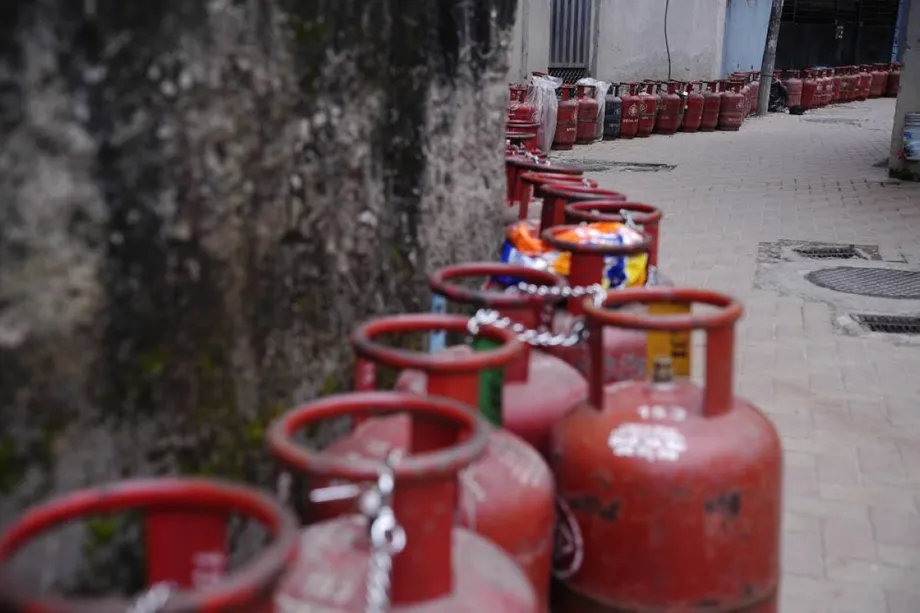
A new split between household and business gas
Nepal Oil Corporation has proposed requiring LPG industries to buy and sell 30 per cent of their monthly gas quota at commercial rates, introducing a defined business allocation while it also pursues mergers across a sector with 58 industries operating under different brands.
Contents
- A new split between household and business gas
- How the 30 per cent allocation would work
- Why cylinder brands matter to consumers
- NOC has asked industries for merger plans
- Two merger applications are already on the table
- Industry support comes with tax conditions
- Operators want mergers to remain voluntary
- Distribution reform sits beside a larger supply plan
- Key Points
The corporation presented the quota proposal at a Friday meeting with officials of the Nepal LPG Industry Association. Until cylinders of different capacities designed specifically for commercial use reach the market, industries would collect that share directly from the corporation at commercial prices and sell it exclusively for business use.
Operators would have to ensure the gas goes to commercial customers or designate particular brands for commercial sales. Association representatives agreed to discuss the proposal internally and communicate their position within a week of the meeting.
The discussion brought together three possible changes: separating commercial gas sales from domestic sales, combining LPG businesses to reduce operating costs, and introducing a single logo on cylinders distributed nationwide. Each addresses a different part of the journey from bulk gas purchases to the cylinder a customer receives.
LPG, short for liquefied petroleum gas, is the fuel stored under pressure in cylinders used for cooking and other purposes. The proposed commercial allocation concerns gas sold for business use, rather than household consumption. For operators, it would create a specific obligation covering both the price at which they obtain part of their monthly supply and the customers to whom they sell it.
How the 30 per cent allocation would work
The proposed rule would apply to each industry's monthly quota. In a simple example, an operator allocated 100 units of LPG would have to purchase 30 units at commercial rates and sell those 30 units for commercial purposes. The remaining 70 units would fall outside that particular commercial requirement.
Commercial gas would therefore account for three out of every 10 units in an industry's allocation. The proposal describes a share of fuel supply, rather than requiring 30 per cent of companies to become commercial suppliers.
NOC has outlined two ways to manage the arrangement during the transition to dedicated commercial cylinders. Operators could track and ensure business use of the relevant gas, or they could identify particular brands for commercial sales. Either approach would require a way to distinguish commercial transactions within the distribution system.
The price difference between domestic and commercial gas, the proposal's starting date, and detailed checks on final use have not been specified. Those details would determine the extra purchasing cost for businesses and how much record keeping distributors would need. The immediate next step is the industry's response within the agreed week.
Why cylinder brands matter to consumers
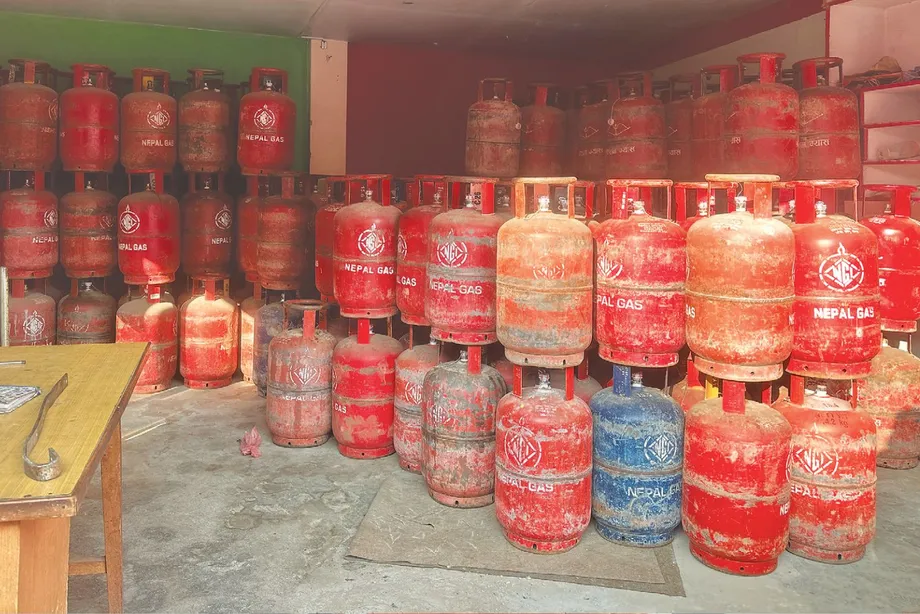
Nepal's LPG market has 58 industries operating under different brands. Consumers can face difficulties when they hold an empty cylinder from one company but the gas available nearby belongs to another. Cylinder management, transport expenses and market monitoring also become more complicated across numerous brands.
NOC Director Binit Mani Upadhyay, who heads the corporation's LPG and Aviation Department, has linked consolidation to simpler sales and distribution, better operating efficiency and consumer interests. The corporation wants fewer industries and brands, although it has set no target for the final number.
For a household, the practical issue is obtaining a refill for the cylinder it already holds. Combining brands could bring some of those cylinders into a shared business network, depending on how companies organise the merger. NOC expects a more organised market to make supply easier for consumers.
The single logo discussed at the Friday meeting would address cylinder identification. A common logo, the combination of brands and the legal merger of companies are distinct changes: one concerns a mark on a cylinder, another concerns the name under which gas is sold, and the third concerns the businesses themselves.
NOC has asked industries for merger plans
NOC says its merger initiative follows Point 32 of its approved policy and programme for fiscal year 2083/84 in Nepal's calendar. The corporation has asked LPG industries to prepare action plans and begin the process of combining businesses operating under different names and brands.
The corporation's outreach has been dated October 29, with accounts in Nepali identifying Kartik 12; November 12 has also been given as the date of the letters. Those dates have not been reconciled publicly.
The main milestones described in the initiative are:
- Fiscal year 2083/84: NOC identifies Point 32 of its approved policy and programme as the basis for continuing its merger policy.
- October 29: NOC's request for merger action plans is dated to this day, while accounts in Nepali identify Kartik 12 and another date given is November 12.
- November 2, 2026: NOC's merger initiative and its request for companies to prepare plans become public.
- Friday meeting, calendar date unspecified: NOC discusses the 30 per cent commercial quota, mergers and a common cylinder logo with industry representatives.
- Within a week of that meeting: Industry representatives are due to communicate their position on the commercial quota proposal.
NOC describes the letters as an instruction to prepare proposals and advance discussions. Nepal LPG Industry Association President Diwan Bahadur Chand, however, has said the association had received no formal correspondence from NOC or the ministry on mergers. His account places the recent meeting at an initial discussion stage.
Two merger applications are already on the table
Upadhyay has identified two formal merger applications submitted to NOC: one involving Nepal Gas and HP Gas, and another involving Nepal Gas Gandaki and Rajdhani Gas. These applications give the broader consolidation policy specific companies to consider.
The corporation's priority includes bringing together brands already controlled by the same owner or business group. Upadhyay cited roughly eight brands associated with Nepal Gas as an example of names that could be combined into one. He also referred to bringing Everest's various brands together.
Combining eight brands into one would remove seven separate brand identities within that group. That illustrates the scale of simplification NOC is discussing, although the example concerns brands and cannot be used to calculate how many of the country's 58 industries would remain.
The two applications move part of the discussion into a formal process. Approval, legal arrangements and the way cylinders and distribution networks would be handled would still shape what customers experience when those businesses combine.
Industry support comes with tax conditions
Chand has said operators are willing to merge, but want tax and legal arrangements comparable to those made available for mergers among commercial banks. His central concern is Section 57 of the Income Tax Act and the financial consequences of changes in ownership.
A merger combines businesses under an agreed ownership structure. Depending on the transaction and the tax rules applied, changing ownership can create tax obligations. Chand argues that those costs need to be addressed for LPG operators to combine their businesses.
The association president has specifically raised capital gains tax and other liabilities associated with ownership changes under Section 57. He wants the government to provide legal clarity and tax concessions that make mergers financially workable for participating industries.
Chand's position puts a concrete condition alongside NOC's distribution goals. The corporation is seeking simpler operations and lower costs; operators want to know the cost of entering the new structure before committing to it. A plan that reduces transport or administrative expenses could still require companies to meet substantial expenses at the point of merger.
Operators want mergers to remain voluntary
Chand has also argued that participation must be voluntary and that the government should not force companies to combine. He opposes setting a compulsory final number of industries and says businesses that wish to merge should be able to proceed while others remain independent.
The association president described the latest meeting as a preliminary exchange, saying its record acknowledged that discussions had taken place and that no concrete decision had been reached. His description places negotiations over merger terms alongside NOC's efforts to encourage action plans.
NOC's stated objective is to reduce the number of industries and brands, but Upadhyay has said no exact numerical target has been fixed. The parties therefore share an interest in considering mergers while approaching the terms from different directions.
For operators, voluntary participation, tax treatment and legal procedures are central to deciding whether a merger makes business sense. For NOC, the intended result is a distribution system that is easier to manage and more convenient for customers. The commercial quota proposal adds another issue for the same companies to assess during these discussions.
Distribution reform sits beside a larger supply plan
NOC is also advancing plans for a roughly 131 kilometre LPG pipeline from Motihari in India to Sarlahi in Nepal and storage capable of holding 50,000 tonnes. The proposed pipeline and gas reserve would address the movement and storage of imported fuel before it reaches bottling plants.
The earlier project outline included a plant capable of filling 25,000 cylinders a day and equipment to load at least 100 gas tankers daily. Nepal's 58 private bottling and refilling plants would remain part of the onward supply system.
At the planning figure of about 1,500 tonnes of LPG imports a day, a full reserve of 50,000 tonnes would cover roughly 33 days of consumption. That planned buffer responds to disruptions caused by damaged roads, traffic delays or transport disputes.
The merger initiative addresses a different stage: how businesses organise bottling, brands, cylinders and distribution. The commercial quota would address the allocation and sale of part of that supply to business users. Together, the proposals reach from bulk imports to the final customer, with separate decisions needed for each part.
Consumers and businesses will encounter the changes through practical details: which cylinder they can refill, which brand serves them, and which price applies to their gas. The next immediate development is the industry's response to the proposed 30 per cent commercial allocation, while merger discussions turn on company plans, voluntary participation and tax arrangements.
Key Points
- NOC has proposed requiring LPG industries to buy and sell 30 per cent of their monthly quota at commercial rates for business use.
- Industry representatives agreed to discuss the quota internally and respond within a week of the Friday meeting.
- The proposal includes tracking commercial use or designating brands for commercial sales until dedicated cylinders are introduced.
- NOC is pursuing mergers under Point 32 of its policy and programme for fiscal year 2083/84.
- Nepal has 58 LPG industries operating under different brands, with no final consolidation target announced.
- Two formal merger applications involve Nepal Gas and HP Gas, and Nepal Gas Gandaki and Rajdhani Gas.
- Industry representatives want voluntary mergers and tax and legal arrangements addressing Section 57 of the Income Tax Act.
- A common cylinder logo was also discussed, alongside separate plans for a pipeline and a 50,000 tonne gas reserve.