Godzilla returns to Hollywood with a bigger stage
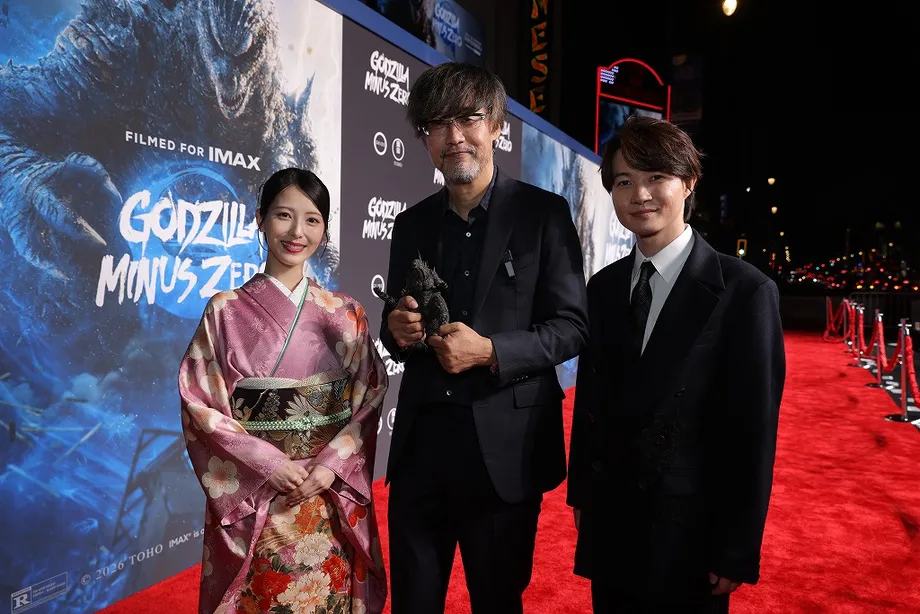
Godzilla Minus Zero received a standing ovation at its October 28, 2026, Los Angeles premiere, bringing director Takashi Yamazaki and returning stars Ryunosuke Kamiki and Minami Hamabe to the TCL Chinese Theatre before its November cinema release. The sequel to the Oscar winner Godzilla Minus One arrives with a technical milestone: it is the first Japanese production certified as Filmed For IMAX.
Contents
- Godzilla returns to Hollywood with a bigger stage
- A Hollywood welcome rooted in Godzilla history
- A new threat interrupts Japan's recovery
- Familiar faces carry the story forward
- What the IMAX milestone means for viewers
- Strong reactions, with reservations about the drama
- A tougher US rating changes the audience
- An Oscar winner sets a demanding benchmark
- From festival screenings to the November opening
- Key Points
The venue gave that achievement a fitting showcase. The historic Hollywood theatre has a 932-seat IMAX auditorium, where the audience watched Yamazaki return as director, screenwriter and visual effects supervisor. Four members of the production team also travelled from Japan for the event.
Japan gets the film on November 3, followed by North America on November 6. Special IMAX screenings in North America are scheduled for November 3, giving some viewers access three days before the wider opening. An Indian release is expected on November 20.
The premiere brings together two kinds of anticipation: interest in the next chapter of a story about people rebuilding after war, and expectations for monster action following a film that won the 2024 Academy Award for Best Visual Effects. Early reactions have praised the sequel's scale, sound and imagery, while some reviewers have found its human story less cohesive than its predecessor.
A Hollywood welcome rooted in Godzilla history
Kamiki and Hamabe visited Godzilla's star on the Hollywood Walk of Fame before the screening. Installed in 2004 to mark the original film's 50th anniversary, the star connected their visit with the character's long history in American cinemas.
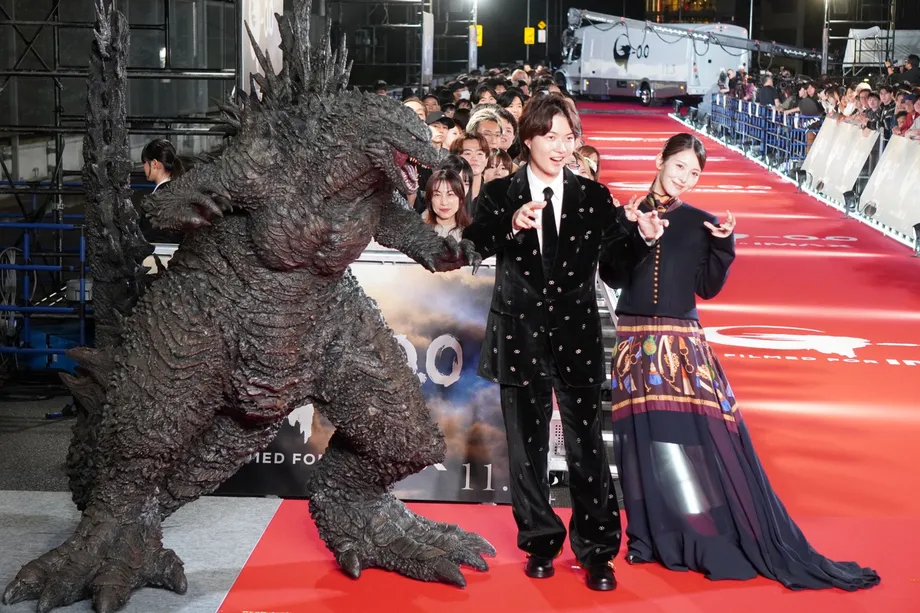
Hollywood Boulevard was decorated with oversized film posters, a Godzilla banner and a statue standing two metres tall. A specially decorated TGR Haas F1 Team car joined the display, extending the premiere beyond the theatre entrance.
Inside, the actors toured displays and Godzilla figures before joining the screening. The presentation made the monster itself the centre of the occasion, while the appearance of the Japanese cast and production team highlighted the people responsible for bringing it back.
Yamazaki said the enthusiastic reception at the previous film's Los Angeles premiere had inspired the team during work on the sequel. This time, applause again greeted the filmmakers after the screening, with clips of the standing ovation circulating online on October 29.
A new threat interrupts Japan's recovery
Godzilla Minus Zero takes place in 1949, two years after the previous film's story. Japan is still struggling to rebuild after World War II, and the characters have only begun to recover an ordinary daily life when another threat arrives.
Toho, the Japanese studio behind the film, describes that fragile recovery in its synopsis:
War reduced Japan to zero, and Godzilla plunged it into minus. Two years have passed since then, and the country has faced agonizing struggles to achieve recovery and finally reclaim its daily life. Just as humanity managed to cling to a hard-won peace, a new threat strikes, crushing hope in an instant. There is no third time. Everything ends here.
King Ghidorah, the winged monster familiar to Godzilla fans, enters the story as a new danger. Early reactions single out its appearances and battles with Godzilla among the sequel's major attractions. The Japanese term kaiju, used frequently in those reactions, means a monster of the kind at the centre of this series.
The setting gives the destruction a personal cost. Homes, families and routines are being rebuilt after wartime losses. Another monster attack threatens the small gains people have made, connecting the spectacle to the struggle to feel safe again.
Familiar faces carry the story forward
Kamiki and Hamabe return alongside Hidetaka Yoshioka, Kuranosuke Sasaki, Yuki Yamada, Sakura Ando and Miou Tanaka. Min Tanaka, Masami Nagasawa and Jun Kunimura join the cast as new characters.
The returning ensemble allows the sequel to continue relationships established in Godzilla Minus One rather than starting again with an entirely different group. Early responses describe a story concerned with grief, responsibility, parental anxiety and the lasting effects of war.
Yamazaki's three production roles also continue from the earlier film. As screenwriter, he shapes the characters and action; as director, he guides the performances and staging; as visual effects supervisor, he oversees the images that bring the monsters and destruction to the screen.
Godzilla Minus Zero was filmed entirely in Japan. Its setting, cast and production location keep the sequel rooted there even as its premiere tour and release schedule reach audiences across several countries.
What the IMAX milestone means for viewers
The Filmed For IMAX certification makes the intended cinema presentation a central part of the sequel's launch. IMAX presentations can use a taller image than a conventional widescreen release, allowing certain scenes to fill more of the screen vertically.
Early viewers repeatedly praised that expanded image and the scale of the monster battles. One reaction described seeing a presentation with an aspect ratio of 1.90:1 and anticipating the taller 1.43:1 version. Those numbers describe the width of an image compared with its height: a lower first number means a taller picture for the same width.
The Chinese Theatre's IMAX auditorium therefore served as more than a famous premiere address. It provided a setting suited to the visual format being promoted, with the filmmakers also discussing the film's visual and sound design during the event.
Music has drawn praise alongside the effects. Several early responses describe the score as a major part of the experience, linking the force of the monster scenes with the emotions of the human story.
Strong reactions, with reservations about the drama
Godzilla Minus Zero registered 92 percent positive reviews on Rotten Tomatoes from 50 reviews in one early snapshot, with a Metacritic score of 78 and a Letterboxd rating of four stars. These services measure different things: Rotten Tomatoes counts the share of reviews judged positive, Metacritic combines weighted review scores, and Letterboxd gathers ratings from its users.
Enthusiasm has centred on the action, the effects and the combination of human stakes with monster combat. Filmmaker and game creator Hideo Kojima said he attended the Japanese premiere at TOHO Cinemas Hibiya and watched the film in IMAX.
Kojima described his anticipation as both a Godzilla admirer and a fan of Hamabe:
As a huge Godzilla fan and a fan of Minami Hamabe, this is a film I've been eagerly waiting three years to see.
Other early viewers have been more divided about the balance between spectacle and character. Some praised the emotional continuity with Godzilla Minus One; others felt the sequel traded part of the earlier film's emotional force for larger scenes of destruction.
Reviewer Peter Howell described the multiple plotlines as becoming tangled while praising Yamazaki's action staging, especially the King Ghidorah sequences. The main disagreement is therefore less about the size of the spectacle than about how well the many human stories hold together around it.
A tougher US rating changes the audience
Godzilla Minus Zero is reported to be the first Godzilla film given an R rating in the United States, for violent content and bloody images. Its reported Japanese classification is G, making the different national ratings especially relevant for families planning a visit.
In the United States, an R rating means viewers younger than 17 must be accompanied by a parent or adult guardian. Japan's G classification permits general audiences. The two countries use separate classification systems and can reach different decisions about the same film.
Yamazaki has described securing the R rating as "essential to the film." The reported increase in bloody and intense action fits the early descriptions of a more forceful monster spectacle.
The reported running time is two hours and 15 minutes. Together, the length and US rating give cinema audiences practical information beyond the enthusiastic premiere reactions, particularly when deciding whether to bring younger children.
An Oscar winner sets a demanding benchmark
Godzilla Minus One earned more than $100 million worldwide against a reported production budget of about $15 million. Its 2024 visual effects Oscar was the first Academy Award in the Godzilla franchise's history and the first victory for a film in a language other than English in that category.
Using those reported figures, worldwide ticket sales exceeded six times the production budget. Cinemas retain part of ticket revenue, and marketing costs are separate, so a studio's financial return depends on more than that comparison. The figures nevertheless explain the commercial scale of the earlier film's success.
The sequel now faces comparisons with both its predecessor's storytelling and its awards achievement. Early Metacritic scores put Godzilla Minus Zero at 78 against 81 for Godzilla Minus One, a small gap that sits alongside the strong praise for the new film's action.
Toho's international release arrangements have also changed since the earlier film. North American distributor GKIDS was acquired by Toho in 2024, bringing the company releasing the sequel there into the Japanese studio's business.
From festival screenings to the November opening
Los Angeles was one stop in a release campaign that began with the world premiere at the New York Film Festival on September 26. Press screenings followed ahead of the Tokyo International Film Festival's Centerpiece gala on November 1.
The schedule moves from festival audiences to public cinema screenings in quick succession:
- September 26, 2026: World premiere at the New York Film Festival.
- October 28: Los Angeles premiere at the TCL Chinese Theatre.
- November 1: Centerpiece gala screening at the Tokyo International Film Festival.
- November 3: Japanese cinema release and scheduled North American IMAX early access screenings.
- November 6: Wider North American release through GKIDS.
- November 20: Expected Indian cinema release.
Japan's November 3 opening falls on Godzilla Day, the anniversary of the original film's 1954 release. The date ties the sequel's launch to the beginning of the franchise, while the November 6 opening carries its latest Japanese chapter to a broader North American audience.
Key Points
- Godzilla Minus Zero received a standing ovation at its October 28 Los Angeles premiere.
- Takashi Yamazaki returns as director, screenwriter and visual effects supervisor, with Ryunosuke Kamiki and Minami Hamabe leading the returning cast.
- The story takes place in 1949, two years after Godzilla Minus One, and introduces King Ghidorah as a new threat.
- The sequel is the first Japanese production certified as Filmed For IMAX.
- Early reactions praise the action and effects, while some reviewers find the human plot less cohesive.
- The film opens in Japan on November 3 and North America on November 6, with an Indian release expected November 20.