From a startling debut to a life beyond fiction
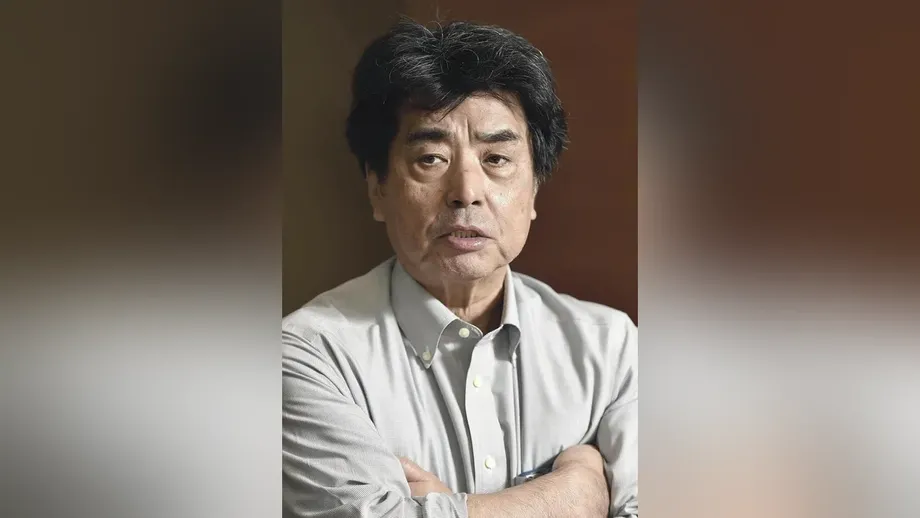
Ryu Murakami, the Japanese novelist whose debut Almost Transparent Blue sold about 3.5 million copies and launched a career exploring violence, sexuality, war and social discontent, died at home on October 17, 2026. He was 74.
Contents
- From a startling debut to a life beyond fiction
- A private farewell and a request for space
- The experiences behind Almost Transparent Blue
- Abandoned children, isolation and recognition
- Political upheaval and imagined wars
- A practical book for young readers
- Twenty years of television and work in film
- A career spanning five decades
- Key Points
His publisher, Gentosha, announced his death on October 23. A funeral attended by close family had already taken place. No cause of death was given.
Murakami became a major literary figure in 1976 while still an art student, winning both the Gunzo New Writers' Award and the Akutagawa Prize for Almost Transparent Blue. His later books moved from abandoned children and urban alienation to political extremism, imagined wars and the difficult choices facing young people.
His audience extended far beyond readers of fiction. The 2003 career guide 13-Year-Olds' Hello Work introduced more than 600 occupations and sold over 1.8 million copies. On television, he spent about 20 years interviewing business leaders on TV Tokyo's Cambria Palace before leaving the program in April 2026.
Those two books alone, his unsettling debut and his practical guide to working life, reached combined sales of more than 5.3 million copies. Their different subjects capture the range of a writer who addressed young people through both disturbing stories and concrete information about their futures.
The sources and specific editions behind these sales figures are not given in this article.
A private farewell and a request for space
Gentosha said the family wished to decline condolence visits, condolence money, flowers, telegrams and gifts. The publisher also asked journalists and others to refrain from contacting relatives for interviews or inquiries.
This article does not link to or reproduce Gentosha's original announcement, so its exact wording and the reported family requests cannot be independently checked here.
The announcement came six days after Murakami's death. It described a writer who had continued to produce striking work for younger generations, beginning with Almost Transparent Blue, and expressed grief at his loss.
Gentosha editor Kosuke Minowa offered a personal response on social media. He said he happened to be in Sasebo, the city where Murakami was born, when the news emerged. Describing the author's influence on his own thinking, Minowa wrote:
My values were shaped by Ryu's works. Thank you!!
Minowa also said a tribute to Murakami would be urgently added to Toru Kenjo's book Haisha no Gaisen. His response connected the public announcement with a more personal consequence: readers and publishing colleagues were reassessing how deeply Murakami's books had entered their lives.
The experiences behind Almost Transparent Blue
Murakami was born in Sasebo, Nagasaki Prefecture, in 1952. His legal name was Ryunosuke Murakami. After graduating from Sasebo Kita High School, he later lived in Fussa, western Tokyo, near a United States military base.
His experiences in Fussa helped shape Almost Transparent Blue, a novel about young people living amid drugs, sex and destructive excess. Its treatment of lives outside respectable social expectations attracted attention for both its subject matter and its force.
Murakami wrote the novel while attending Musashino Art University, which he later left without graduating. In 1976, it received the 19th Gunzo New Writers' Award and the 75th Akutagawa Prize, bringing him national recognition at the beginning of his career.
The Akutagawa Prize is a major Japanese award associated with emerging literary writers. Winning it alongside a debut award gave Murakami both critical recognition and an unusually large readership. Almost Transparent Blue eventually sold about 3.5 million copies across hardcover and paperback editions.
His name was later paired with Haruki Murakami's in the label Double Murakamis. The shared surname became a shorthand for two prominent voices in contemporary Japanese literature, while Ryu Murakami's work developed its own direct engagement with social distress and violence.
Abandoned children, isolation and recognition
Coin Locker Babies carried Murakami's attention to vulnerable young people into another disturbing setting. The novel follows children abandoned in coin lockers who struggle to survive, placing people discarded at the beginning of life at the center of its story.
The book received the Noma Literary New Face Prize. Its premise gave a concrete form to a recurring concern in Murakami's writing: what happens to people who grow up without security, protection or a dependable place in society.
In the Miso Soup brought another major award. The novel, which had been serialized in a newspaper, received the Yomiuri Prize for Literature in 1998. Parasites followed with the Tanizaki Prize in 2000.
These honors show that Murakami's standing continued well beyond the sensation surrounding his first novel. Across different books, his interest in disturbing behavior remained connected to wider questions about loneliness, belonging and the pressures of contemporary life.
Political upheaval and imagined wars
Murakami also used fiction to place Japan under extreme political pressure. His 1987 novel Love and Fantasy of Fascism depicts young people rising to political prominence during a global depression. Economic collapse becomes the setting in which power and political ambition develop.
His 1994 novel The World Five Minutes From Now imagines a world in which Japan did not surrender in World War II. This is an alternative history, a story that changes a major historical event and follows the consequences within an invented world.
From the Peninsula, published in 2005, brings an imagined military crisis to a recognizable Japanese location. Its story involves North Korean special forces occupying the Fukuoka Dome, turning a familiar public venue into the center of an armed confrontation.
The novel won both the Noma Literary Prize and the Mainichi Publishing Culture Award. Its recognition placed a book about national crisis alongside the earlier honors Murakami had received for stories focused more closely on individual lives.
Read together, these novels show a widening scale. Murakami moved from young people living near a military base to societies facing economic breakdown and military conflict. His characters faced pressure from both their immediate surroundings and the larger institutions governing their lives.
A practical book for young readers
Murakami reached a different audience in 2003 with 13-Year-Olds' Hello Work. Rather than telling a fictional story, the book introduced more than 600 occupations to children considering what they might do as adults.
Sales exceeded 1.8 million copies. That was more than half the approximately 3.5 million copies sold by Almost Transparent Blue, a substantial readership for a book organized around working life rather than a novel.
The career guide broadened the choices young readers could see. A child familiar with only a handful of jobs could encounter hundreds of possibilities, making the transition from school to adult life easier to imagine in concrete terms.
Its place in Murakami's career is striking. A writer known for depicting young people in destructive or insecure circumstances also produced a practical resource about finding a place in the working world. Both kinds of writing addressed youth, though they did so through very different forms.
Twenty years of television and work in film
Murakami began appearing on Cambria Palace in 2006. As the main interviewer on TV Tokyo's economic talk program, he brought his attention to business, management and the people running companies.
He shared presenting duties with actor Eiko Koike and remained associated with the program for about two decades. He stepped down in April 2026, roughly six months before his death.
The program gave Murakami a continuing public role outside publishing. Viewers could encounter him through conversations about companies and employment, subjects that also connected with the practical concerns of his career guide.
Film was another substantial part of his work. Murakami wrote the screenplays and directed adaptations of Topaz and KYOKO. Topaz explored women's loneliness and emotional longing in Tokyo during Japan's economic bubble, while KYOKO followed a young woman's journey toward renewal.
His activities also included painting, photography, radio presenting and event production. Across these forms, Murakami worked as both a storyteller and a public figure whose interests extended beyond the boundaries of the novel.
A career spanning five decades
Murakami continued publishing long after his first major awards. The Singing Whale received the Mainichi Art Award in 2011, and Missing: What Is Lost appeared in 2020. Gentosha identified YouTuber as his final work. Gentosha's basis for that identification is not given in this article.
The sequence of books and public roles traces a career that lasted about 50 years from his prizewinning debut:
- 1952: Born in Sasebo, Nagasaki Prefecture.
- 1976: Almost Transparent Blue wins the Gunzo New Writers' Award and the Akutagawa Prize.
- 1987: Love and Fantasy of Fascism depicts political ascent during a global depression.
- 1998: In the Miso Soup receives the Yomiuri Prize for Literature.
- 2000: Parasites wins the Tanizaki Prize.
- 2003: 13-Year-Olds' Hello Work introduces readers to more than 600 occupations.
- 2005: From the Peninsula wins the Noma Literary Prize and the Mainichi Publishing Culture Award.
- 2006: Begins his long association with Cambria Palace.
- April 2026: Leaves the television program after about 20 years.
- October 17, 2026: Dies at home, aged 74.
- October 23, 2026: Gentosha announces his death.
Murakami's books repeatedly brought readers close to people living under intense pressure, whether abandoned children, alienated young adults or citizens caught in an imagined national emergency. His career guide and television interviews approached working life more directly, extending his audience beyond literary fiction.
Key Points
- Ryu Murakami died at home on October 17, 2026, aged 74. Gentosha announced his death on October 23.
- His family held a private funeral and asked for no visits, condolence money, flowers, telegrams or gifts. The original announcement is not linked or reproduced here, so its exact wording and the reported family requests cannot be independently checked here.
- Almost Transparent Blue won two major literary awards in 1976 and sold about 3.5 million copies.
- His books included Coin Locker Babies, In the Miso Soup, Parasites and From the Peninsula.
- 13-Year-Olds' Hello Work introduced more than 600 occupations and sold over 1.8 million copies.
- The sources and specific editions behind the sales figures are not given in this article.
- He spent about 20 years on Cambria Palace before leaving in April 2026.
- Gentosha identified YouTuber as his final work. Its basis for that identification is not given in this article.