Karawang begins making batteries before presidential inauguration
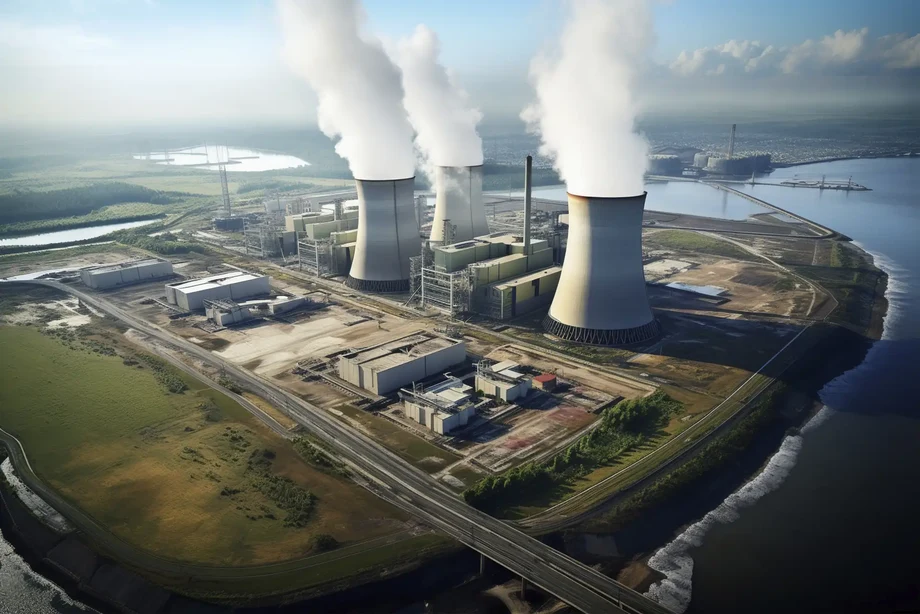
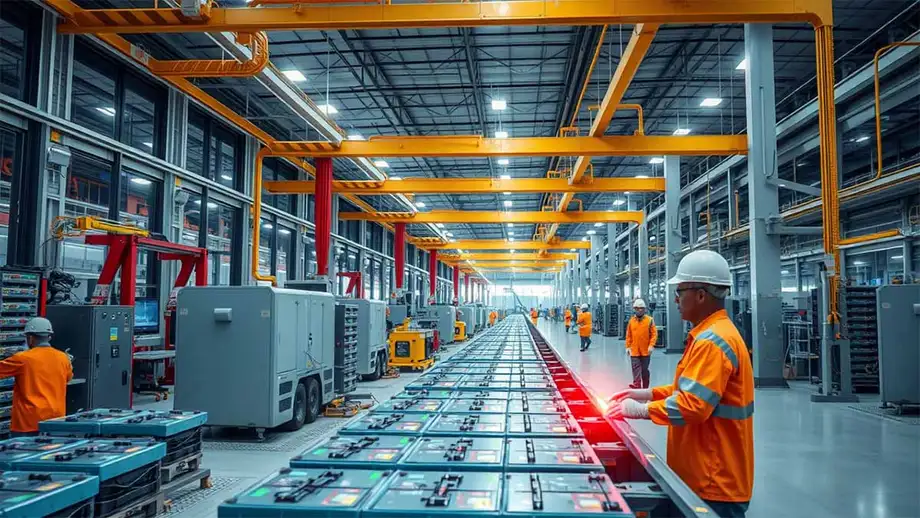
Indonesia's CATL-Antam battery plant in Karawang, West Java, has begun production, adding an initial annual capacity of 6.9 gigawatt hours to an industry that the government says now has three operating electric vehicle battery factories. The facility forms part of a planned investment of nearly $5.9 billion connecting battery manufacturing in Java with nickel mining, processing and recycling in East Halmahera, North Maluku.
Contents
- Karawang begins making batteries before presidential inauguration
- Who owns the plant, and how large is it?
- Six projects connect Java with North Maluku
- How nickel becomes a battery material
- Indonesia's three factories add up to 24.9 GWh
- Ownership changes across the supply chain
- Domestic buyers come before exports
- The milestones from groundbreaking to production
- Village electricity was also on the presidential agenda
- Key Points
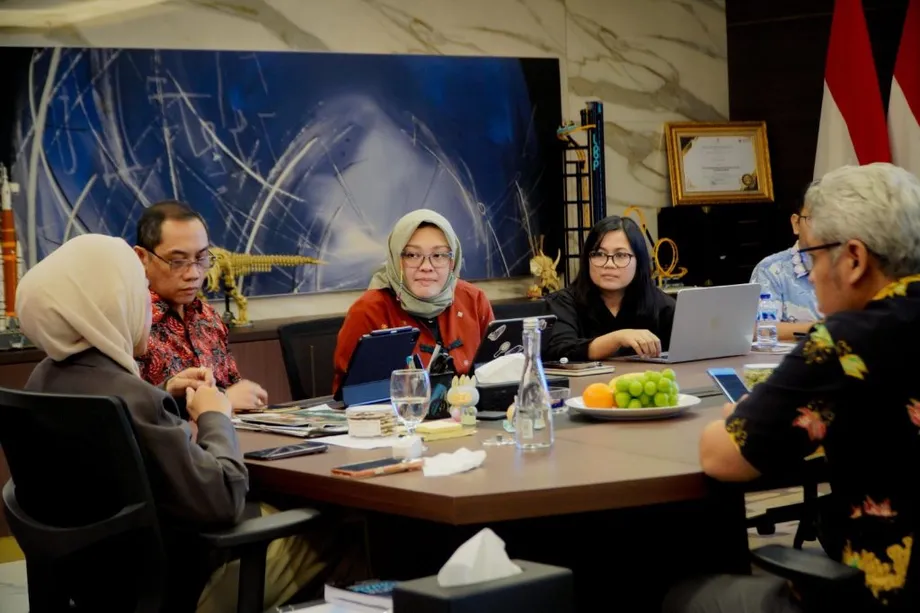
Bahlil Lahadalia, coordinating minister for downstreaming and energy transition and also energy and mineral resources minister, announced the production milestone after meeting President Prabowo Subianto at the Presidential Palace in Jakarta on Thursday, October 29, 2026. Prabowo is expected to inaugurate the plant soon.
Bahlil said he had informed the president that the factory was ready for its formal opening:
It will be inaugurated soon because the plant has begun production,
Construction began in June 2025, when Prabowo attended the groundbreaking ceremony. The move into production comes about 16 months later. Bahlil gave neither an inauguration date nor the plant's current production volume, leaving its operating scale and the timing of its expansion unspecified.
The immediate change is concrete: Indonesia has another factory turning battery materials into cells, the units that store and release electrical energy. The government's larger ambition is to connect that manufacturing activity with domestic mineral resources, keeping more processing and production inside the country.
Who owns the plant, and how large is it?
The Karawang factory is operated by PT Contemporary Amperex Technology Indonesia Battery, or CATIB. Its ownership brings together Ningbo Contemporary Brunp Lygend, known as CBL and affiliated with China's Contemporary Amperex Technology Co. Limited, or CATL, and Indonesia Battery Corporation, or IBC.
CBL holds 70% of CATIB and IBC holds 30%. Antam, the Indonesian state owned mining company formally named PT Aneka Tambang Tbk, participates in the wider integrated development through its mineral and industrial partnerships.
The cell factory carries an investment figure of about $1.2 billion. Its initial annual capacity of 6.9 gigawatt hours, or GWh, is planned to rise to 15 GWh. A gigawatt hour measures stored energy; for a battery factory, annual GWh capacity describes the combined energy storage of the cells it can produce in a year.
The proposed expansion would add 8.1 GWh, taking capacity to about 2.17 times the initial level. Production has started at Karawang, while 15 GWh remains the target for a later development stage.
Six projects connect Java with North Maluku
The nearly $5.9 billion investment plan, announced in June 2025 and valued at about Rp96 trillion at the time, covers six projects. Karawang hosts cell manufacturing, while the other five projects are in East Halmahera.
East Halmahera's role begins with nickel mining and continues through mineral processing, battery materials and recycling. Karawang sits at the manufacturing end of that chain. The arrangement links two regions with different industrial tasks rather than placing every stage inside a single factory.
The planned East Halmahera facilities are:
- A nickel mine with investment of $500 million and capacity of 10 million tonnes a year.
- A rotary kiln electric furnace facility with investment of $1.4 billion and annual capacity of 88,000 tonnes of ferronickel.
- A high pressure acid leach facility with investment of $1.9 billion and annual capacity of 55,000 tonnes of mixed hydroxide precipitate.
- A battery materials facility with investment of $700 million, designed to produce 16,000 tonnes of nickel sulfate, 30,000 tonnes of precursors and 30,000 tonnes of cathode active material annually.
- A recycling facility with investment of $200 million and annual capacity of 20,000 tonnes.
The five East Halmahera investment figures total $4.7 billion. Adding the $1.2 billion Karawang cell plant gives the announced $5.9 billion package. Those figures show how much of the planned spending lies in the mineral processing and materials stages that support cell manufacturing.
How nickel becomes a battery material
Bahlil described the emerging industry as a connected chain running from mines and smelters through chemical processing to finished battery cells. Several of those stages require different technologies, which explains why the development includes multiple facilities.
A rotary kiln electric furnace, usually shortened to RKEF, uses heat and electricity to process nickel ore into ferronickel, an alloy containing iron and nickel. High pressure acid leach, or HPAL, uses acid under high pressure to extract metals from suitable ores. Its planned output here is mixed hydroxide precipitate, an intermediate material that can undergo further refining.
Nickel sulfate is a processed chemical used in making certain battery materials. Precursors are intermediate ingredients used to produce cathode active material. A cathode is one of a battery's two electrodes, and its chemistry helps determine how much energy the battery can store.
Bahlil, explaining the government's assessment of Indonesia's progress, said:
Our car-battery ecosystem is fully integrated, from mining and smelting to HPAL, precursors, cathodes and battery cells. Few countries have this,
The recycling facility adds a route for recovering materials from batteries and returning useful metals to processing. Its planned capacity is expressed in tonnes, while the cell factory's capacity is expressed in GWh because the two facilities measure different outputs.
Indonesia's three factories add up to 24.9 GWh
Bahlil counted three operating battery manufacturing facilities: the new CATL-Antam project, a Hyundai and LG Energy Solution venture in Karawang, and a factory backed by Chinese investment in Halmahera.
The Hyundai and LG facility is operated by PT HLI Green Power. Hyundai Motor Group and LG Energy Solution each own 50%, and its initial investment was about $1.1 billion. Its annual production capacity is 10 GWh.
The Halmahera facility is operated by PT REPT Battero Indonesia and has annual cell capacity of 8 GWh. It began commercial operations in October 2026 and forms part of the Indonesia Weda Bay Industrial Park development. The CATL-Antam-IBC mineral and materials projects are located in East Halmahera under their own integrated development.
Adding HLI Green Power's 10 GWh, REPT Battero Indonesia's 8 GWh and CATIB's initial 6.9 GWh gives 24.9 GWh of stated annual capacity across the three factories. CATIB accounts for about 28% of that combined figure.
If CATIB reaches its planned 15 GWh and the other two figures stay unchanged, their combined capacity would rise to 33 GWh. Capacity describes what factories are designed to produce; actual annual output depends on their operating levels.
Ownership changes across the supply chain
Antam and its Chinese partners hold different stakes at different stages of the development. The cell factory's 70% CBL and 30% IBC ownership structure is one part of a wider network of companies responsible for mining and industrial operations.
At PT Feni Haltim, which is involved in developing the East Halmahera industrial area, Antam owns 40% and Hong Kong CBL Limited owns 60%. Hong Kong CBL Limited is a CBL subsidiary.
At nickel mining company PT Sumberdaya Arindo, Antam holds 51%, while a CBL affiliate holds 49%. Antam therefore has a majority stake in that mining company and a minority stake in Feni Haltim. These separate corporate arrangements place Indonesian and Chinese partners in different ownership positions along the same production chain.
Domestic buyers come before exports
Bahlil said the government would prioritize Indonesia's own battery requirements before promoting sales abroad. He presented the order of priorities as part of the country's effort to develop domestic processing and manufacturing:
Once domestic needs are met, we can export to other countries,
Indonesia's policy of downstreaming means processing natural resources into more valuable products rather than stopping at extraction. In this project, the sequence extends from nickel ore to processed materials and then battery cells. Each stage adds a different industrial activity inside the country.
For domestic vehicle manufacturers, the expansion increases the battery manufacturing capacity available within Indonesia. For Karawang and East Halmahera, it assigns distinct roles in a national supply chain: cell production in West Java, and mining, processing, materials production and recycling in North Maluku.
The domestic priority also defines the government's intended route to international markets. Indonesia wants to supply its own needs first, then use the developing industrial base to sell batteries abroad.
The milestones from groundbreaking to production
The project has moved from its public launch to initial production over more than a year. October 2026 also brought the commercial opening of the REPT facility, expanding the group of factories cited by Bahlil.
- June 2025: The integrated battery development was announced with planned investment of nearly $5.9 billion, and Prabowo attended the Karawang groundbreaking.
- October 2026: PT REPT Battero Indonesia began commercial operations in Halmahera.
- October 29, 2026: Bahlil told journalists that the CATL-Antam factory had begun production and was ready for presidential inauguration.
Karawang's production start is the latest milestone in a development whose full plan stretches across mining, chemical processing, cell manufacturing and recycling. The factory's next planned capacity step is an increase from 6.9 GWh to 15 GWh annually.
Village electricity was also on the presidential agenda
Prabowo's meeting with Bahlil also addressed electricity access in rural communities. Bahlil said nearly 11,000 villages and hamlets still lacked access to electricity, placing a basic household need alongside the discussion of advanced manufacturing.
The government is preparing to inaugurate 1,413 locations under a village electrification program associated with 2025. Bahlil also described the planned event as covering about 1,400 locations through 13 inauguration points, with Sulawesi the likely venue.
The two announcements concern different uses of Indonesia's energy development effort. The battery project expands industrial production, while village electrification targets communities still waiting for electricity access. Both were presented to the president during the same meeting.
Key Points
- The CATL-Antam battery factory in Karawang has started production ahead of a planned inauguration by President Prabowo.
- The cell plant has initial annual capacity of 6.9 GWh, with expansion to 15 GWh planned.
- The wider development comprises six projects and nearly $5.9 billion in planned investment across Karawang and East Halmahera.
- Indonesia's three factories have combined stated annual capacity of 24.9 GWh at their current listed sizes.
- Bahlil said domestic battery demand would take priority before exports.
- The presidential meeting also covered plans to inaugurate 1,413 village electrification locations.