Fire inquiry triggers resignation and sweeping reforms
Hong Kong plans to make bid rigging in major building renovations a criminal offence carrying up to 10 years in prison, following an independent inquiry into the Wang Fuk Court fire in Tai Po that killed 168 people. The government also announced HK$300 million for a new renovation support body, a review of official responsibility and changes to how buildings are inspected and repaired.
Contents
- Fire inquiry triggers resignation and sweeping reforms
- Who will answer for failures?
- How renovation tender manipulation would become a crime
- Police, corruption investigators and competition officers would work together
- A new service would guide owners through repairs
- What owners would receive, and what would be required
- Inspections and construction would face separate checks
- Fire materials and disabled equipment receive closer scrutiny
- Building regulators would be reorganised
- Shared records and cleaner decisions inside buildings
- The timetable has several separate deadlines
- Key Points
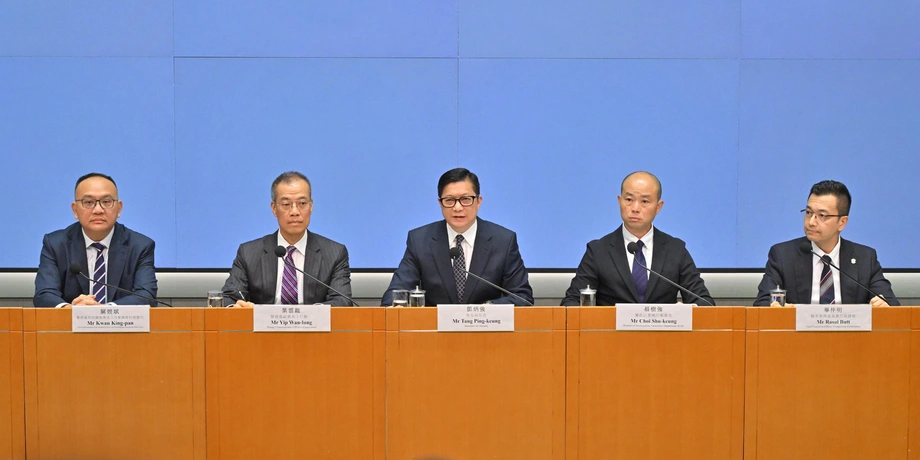
Chief Executive John Lee and senior officials bowed in apology to victims and the public. Housing Secretary Winnie Ho resigned to accept political responsibility and was to cease her duties from October 29. Deputy Financial Secretary Michael Wong would serve as acting housing secretary.
The independent committee made 120 recommendations covering tender manipulation, unsafe materials, professional supervision and government oversight. Public hearings examined substandard scaffolding nets that contributed to the rapid spread of fire, suspected links between competing contractors and inspections that amounted to little more than approval on paper.
The response reaches from the meeting rooms where owners choose contractors to the scaffolding outside their windows. Owners seeking government renovation subsidies would have to use a new support service, while professionals could face stricter supervision duties and removal from registration for specified offences.
Chief Secretary Eric Chan will lead a steering committee to examine each recommendation and oversee implementation across departments. The government aims to bring legislative proposals forward before the end of the year, although consultation, passage of legislation and the launch of new services involve separate steps.
Who will answer for failures?
The government will activate a two level administrative investigation mechanism under its responsibility system for department heads. About 40 to 50 people are expected to come under investigation, with the Public Service Commission expected to complete its work within three months.
Police, the Independent Commission Against Corruption, the Labour Department, the Buildings Department and the Fire Services Department are also pursuing prosecutions within their respective responsibilities. Administrative accountability examines how officials performed their duties; criminal proceedings address alleged breaches of the law.
Ho's resignation places political responsibility at the top of the Housing Bureau. The administrative investigation extends scrutiny to the management and execution of government work. The number of people ultimately facing disciplinary action or criminal charges has not been announced.
How renovation tender manipulation would become a crime
Secretary for Justice Paul Lam said the government had developed proposals with the Commerce and Economic Development Bureau, the Security Bureau, the Competition Commission and police to strengthen the law against renovation tender manipulation.
Bid rigging happens when supposedly competing bidders secretly arrange the outcome of a tender. Owners may believe they are comparing independent offers when the price or winning contractor has already been agreed behind the scenes. The proposed offences would cover major renovation projects, including preliminary work and consultancy services, and extend to serious anticompetitive conduct such as price fixing and dividing markets.
The proposed maximum criminal penalties include 10 years in prison. Financial penalties could reach HK$10 million, three times the commercial gains from the offence, or 50% of local turnover for each year during which the offence occurred. A turnover based penalty ties the potential fine to the scale of the business involved.
The Competition Ordinance currently addresses bid rigging through civil enforcement. The government intends to retain that route alongside criminal prosecution, allowing enforcement to follow the circumstances and evidence in each case.
Lam's detailed proposal puts the proposed civil maximum at HK$80 million, twice the commercial gains, or 30% of local turnover for up to three years of the offence. An earlier account gave the fixed maximum as HK$8 million. The government also proposes longer periods during which offenders could be barred from serving as company directors or taking part in company management.
Police, corruption investigators and competition officers would work together
Security Secretary Chris Tang will lead a joint task force involving police, the ICAC and the Competition Commission. Police participation will include the Organised Crime and Triad Bureau, reflecting concerns about criminal groups influencing renovation contracts.
Tang described the conduct identified by the inquiry when explaining why the agencies would combine their investigative work:
"The report showed that there are people with suspect backgrounds, including triad members, who manipulated tender results and conspired with consultants, professionals and contractors," he said in Cantonese.
The proposed legal package would add the new offences to the Organized and Serious Crimes Ordinance. Investigators could use powers to summon people for questioning, demand information and materials, and freeze assets. Courts could confiscate criminal proceeds and increase sentences according to the circumstances, the harm to the community and the prevalence of the offence.
Amendments to the Independent Commission Against Corruption Ordinance would give the ICAC corresponding powers to investigate the new offences. The government also intends the Interception of Communications and Surveillance Ordinance to apply, allowing investigators to gather evidence through procedures governed by that law.
A new service would guide owners through repairs
Financial Secretary Paul Chan said the proposed Building Maintenance Support and Services Bureau would help owners arrange inspections, plan repairs and procure services at different stages of a renovation. It would take over relevant support work from the Urban Renewal Authority.
Despite its name, the bureau would be a company rather than a government department or a body created by its own statute. It would be wholly owned by the Financial Secretary Incorporated, the government corporation that holds interests in companies established for public purposes.
The government has reserved HK$300 million: HK$100 million in initial funding and HK$200 million to reduce service charges for eligible owners. The subsidy allocation is twice the initial funding and represents two thirds of the total commitment. The company would charge for its comprehensive service, with the longer term aim of covering its costs.
Registration and board appointments are targeted for completion by year end, with recruitment for a chief executive and other staff already under way. Services are scheduled to begin the following January. Officials describe the new arrangement as broader and more extensive than the Urban Renewal Authority's existing Smart Tender service. Charges and subsidy levels will be announced later.
What owners would receive, and what would be required
The new bureau would arrange inspection consultants in advance, allowing one to be assigned without a separate inspection tender for every building. Three lists of providers screened in advance are due to be prepared progressively by year end, supporting project tenders in the first quarter of the following year.
After an inspection report passes the required review, the bureau would arrange procurement and assessment separately for the consultant supervising the works and the contractor carrying them out. It would recommend up to three bids, ranked by their scores.
Owners applying for government renovation subsidies would have to use the comprehensive service and appoint providers from the recommended bids. That requirement would connect public financial assistance to a defined procurement process, rather than leaving each owners corporation to devise its own arrangements.
The supervising consultant would remain primarily responsible for helping owners oversee construction. The bureau would check whether that consultant was delivering the contracted service, including through regular progress reports. Substantial changes to the scope of work or increases in costs would require a report in advance so the bureau could advise owners.
Owners outside the comprehensive service could obtain the screened provider lists, tender documents, sample construction contracts and past project cost data free of charge. An electronic platform would allow them to conduct their own tenders. Those records would give residents a practical basis for comparing proposed prices and contract terms.
Inspections and construction would face separate checks
Development Secretary Bernadette Linn said the latest proposals to amend the Buildings Ordinance would go to the Legislative Council by the end of 2026. Major building renovations would become a distinct category of work, subject to stronger statutory control and higher penalties.
Under the proposed system, reports produced through the Mandatory Building Inspection Scheme would need acceptance by the Buildings Department before forming the basis of repairs. Work that currently requires notification would instead need permission before construction begins, supported by plans and a supervision programme.
Different professionals would have to carry out the initial inspection and the subsequent planning and supervision of repairs on the same project. Separating those roles would reduce the financial connection between identifying defects and obtaining the work that follows.
The Buildings Department would gain stronger powers to prosecute breaches directly. Professionals and contractors who commit offences under laws including the Prevention of Bribery Ordinance or the Competition Ordinance could be removed from registration without a separate disciplinary hearing. Disciplinary penalties would also rise and proceedings would be accelerated.
Lee said the mandatory inspection system, introduced in 2011, needed reform on both sides of the regulatory relationship: professionals and contractors must carry out their responsibilities, while government departments must supervise, investigate and enforce standards. He also said owners, many of whom lack construction knowledge, need neutral advice they can trust.
Fire materials and disabled equipment receive closer scrutiny
The inquiry committee recommended independent verification of laboratory certificates through laboratories designated and recognised by the government. Temporary materials enclosing the outside of a building would face the same strict testing and certification requirements as safety nets.
Inspectors would no longer accept a test in which material is set alight at the site as evidence that it meets fire performance standards. The committee also proposed a direct criminal offence for registered building professionals or contractors who use, or approve the use of, temporary protective materials that fail statutory fire safety requirements.
For major fire service installations, the committee recommended a cumulative shutdown limit of 60 days, with extension applications requiring reasons and review by the Fire Services Department. Fire alarms and other protective installations can be affected by renovation work, making the duration and supervision of shutdowns a practical safety issue for residents.
Registered fire service installation contractors could face a new offence if they submit shutdown notices or sign certificates without personally performing or directly supervising the relevant work. Registered building inspectors would also have to perform supervision at important stages themselves, rather than handing those duties to less experienced representatives.
The committee recommended surprise inspections, minimum numbers of site visits and an end to advance appointments or notifications for material safety checks and complaint investigations. A substantial proportion of renovation projects involving external scaffolding would be subject to mandatory site inspections.
Building regulators would be reorganised
The Buildings Department plans to begin restructuring in the first quarter of 2027, creating separate arms for new buildings and existing buildings. Its geographical organisation would expand from six groups to 10 districts, each with a district head responsible for local inspection and enforcement work.
District heads would convene teams involving the Housing Bureau, Labour Department and Fire Services Department to discuss mandatory inspections and renovation projects. A dedicated audit and monitoring unit would report directly to the director of buildings.
The Housing Bureau plans to establish a Public Housing Building Control Unit in November to replace its Independent Checking Unit. Its responsibilities would include repairs at estates sold or divested by the Housing Authority, subsidised sale developments, new public housing construction and relevant works at estates still held by the authority.
Each project would have a dedicated team and a liaison officer to contact the owners corporation. A senior Buildings Department officer would be seconded to the unit to provide Buildings Ordinance advice and training. Regular audits would seek to align enforcement methods and standards between the two organisations.
The Fire Services Department would create a dedicated command for the prevention and control of major fires, including response plans for settings assessed as presenting high risks. The Labour Department would strengthen occupational safety work on major renovation projects.
Shared records and cleaner decisions inside buildings
A central system would bring together inspection breaches, sanctions, convictions, conduct records and building safety information held by different departments. Officials would be able to compare records rather than rely only on information within their own agency.
Renovation complaints would enter the same system. The government proposes using artificial intelligence to analyse repeated complaints involving the same location, company or person and to monitor how cases are handled and resolved.
The committee also recommended stronger checks on the authenticity of proxy votes used in building management decisions. Proxy voting allows an owner to authorise someone else to vote, making verification important when residents decide who will receive a large repair contract.
Before professionals and contractors are appointed under the mandatory inspection scheme, participating management committee members and property management staff would have to make statutory declarations about financial or personal interests connected to bidders. A statutory declaration is a formal statement made under legal requirements.
The timetable has several separate deadlines
Eric Chan's steering committee will oversee the full programme, including changes involving several departments. The Commerce and Economic Development Bureau will lead discussion of the competition proposals with the relevant Legislative Council panel and consult stakeholders before a bill is formally introduced.
The announced timetable combines an administrative investigation, new services and legislation:
- October 29: Winnie Ho was to cease her duties as housing secretary.
- Within three months: the Public Service Commission is expected to complete the administrative investigation.
- November: the Housing Bureau plans to establish its replacement building control unit.
- By year end: the renovation support company is targeted for registration and board appointments, alongside preparation of three screened provider lists.
- The following January and first quarter: services are scheduled to launch, with consultants assigned and project tenders arranged for owners.
- By the end of 2026: the Development Bureau plans to submit its latest Buildings Ordinance legislative proposals.
- First quarter of 2027: the Buildings Department plans to begin its structural reorganisation.
For residents, the most immediate changes would be a new route to obtaining renovation advice and clearer project contacts. The proposed criminal offences, stronger penalties and construction approval requirements must pass through the legislative process before they can operate.
Key Points
- The Wang Fuk Court fire killed 168 people; the independent committee issued 120 recommendations.
- Housing Secretary Winnie Ho resigned, and about 40 to 50 people are expected to face an administrative investigation.
- Proposed renovation tender offences would carry up to 10 years in prison and substantial financial penalties.
- A new support company would receive HK$300 million, including HK$200 million to subsidise service charges for owners.
- Owners seeking government renovation subsidies would have to use the comprehensive support service.
- Proposed reforms cover material testing, fire equipment shutdowns, professional supervision, inspections and shared complaint records.
- Buildings Ordinance proposals are due by the end of 2026, with departmental restructuring planned from early 2027.