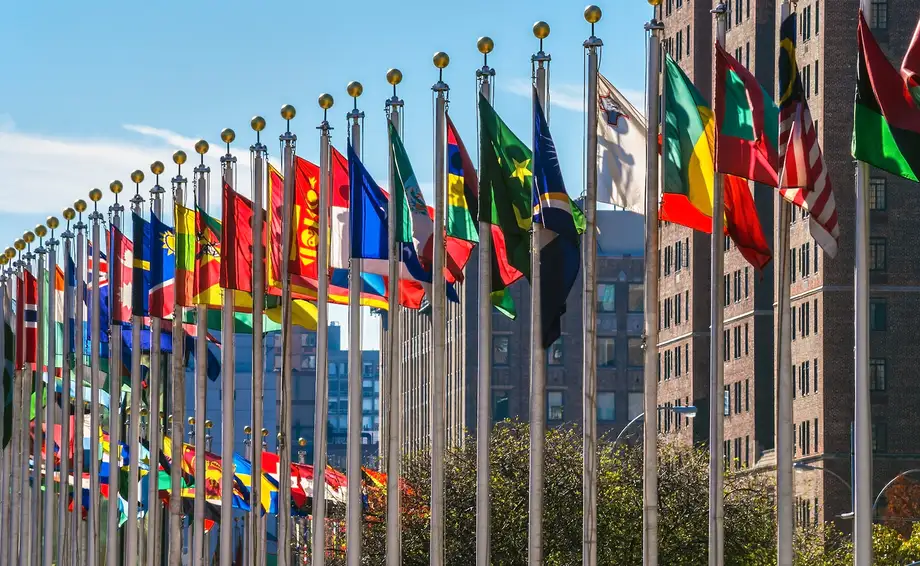
October 29 session puts November deadline in focus
Bangladesh's request to postpone its departure from the United Nations least developed country category until November 24, 2029, is due before the UN General Assembly on October 29, 2026. The decision would give the country three more years to prepare for changes affecting garment exports, pharmaceutical production and some development support.
Contents
- October 29 session puts November deadline in focus
- How the request reached the General Assembly
- Why Bangladesh wants another three years
- Bangladesh still meets the graduation benchmarks
- Europe is the largest immediate trade concern
- Medicines and financing face different changes
- What eight earlier graduates reveal
- Extra time would bring a trade and reform agenda
- Nepal's request carries its own conditions
- Key Points
Uruguay is expected to table a resolution backed by the Group of 77 and China covering Bangladesh and Nepal. The Assembly session is scheduled to begin at 10am in New York, or 8pm in Bangladesh, although the time when the proposal will be considered has not been confirmed. Bangladesh's current graduation date is November 24, 2026.
A senior Ministry of Finance official said both countries had received positive recommendations during earlier stages and expressed confidence that member states would support their requests. The official described consensus among all members as necessary, while the proposal is also described as requiring majority support. Consensus means adoption without a formal vote; majority approval means deciding through a vote.
The immediate issue is how much preparation time Bangladesh should receive. Its economic and social indicators remain comfortably above the thresholds used to qualify for graduation. The government argues that global trade disruption, inflation, energy uncertainty and domestic political change have made the transition harder to manage.
How the request reached the General Assembly
The Committee for Development Policy, the UN body that assesses countries for graduation, took a positive position on Bangladesh's request. On July 21, the Economic and Social Council recommended that the General Assembly decide the matter before November 24, 2026.
The finance ministry dates the government's request to February 18, 2026. The previously published chronology gave February 17. The main steps leading to the current decision are:
- 2018: Bangladesh began its graduation process.
- February 2026: The government sought another three years of preparation, taking the proposed graduation date to November 24, 2029.
- July 21, 2026: The Economic and Social Council recommended a General Assembly decision before the existing graduation deadline.
- October 19, 2026: Commerce Minister Khandakar Abdul Muktadir said he expected a resolution within October.
- October 29, 2026: The extension proposal is due before the General Assembly.
- November 24, 2026: Bangladesh is scheduled to graduate unless the timetable changes.
Bangladesh had already received extra preparation time during the COVID-19 pandemic, moving an earlier expected end date from 2024 to 2026. The latest request would extend that period again, this time to allow further trade negotiations and economic adjustments.
Why Bangladesh wants another three years
The government says businesses have faced a difficult combination of international and domestic pressures during the preparation period. Its case includes volatile global trade, geopolitical tensions, inflation and disruptions to supply chains, the networks that move materials and finished goods between producers and customers.
The recent crisis in the Middle East adds concerns about energy supplies and trade routes. For a manufacturer, unstable fuel availability or higher transport costs can make it harder to meet orders at an agreed price. Those pressures matter when factories are also preparing for possible changes in the taxes their customers pay on imported goods.
The proposed resolution also recognises Bangladesh's political transition following the February general election that brought the BNP government to power. Political changes do not normally justify extending the preparation period, but the Committee for Development Policy considered this transition relevant to its assessment.
The proposal connects the additional time with continued preparation. Bangladesh and Nepal would submit regular progress reports, while UN resident coordinators would support implementation and monitoring within their existing responsibilities and resources. The resolution also calls for international support so that graduation can proceed without disrupting development programmes and projects.
Bangladesh still meets the graduation benchmarks
Bangladesh's gross national income per person reached $2,684 in 2024, compared with a graduation threshold of $1,306. That is just over twice the threshold. Gross national income measures income received by a country's residents, including income from abroad, and dividing it by the population gives an average per person.
The country's Human Assets Index stood at 77.5 against a benchmark of 66. This index brings together measures of health and education. Its Economic and Environmental Vulnerability Index was 21.9, below the graduation benchmark of 32; a lower score indicates less vulnerability under that measure.
These figures explain why the government's case centres on managing the transition. Bangladesh has reached the required levels, while its exporters still depend heavily on special access to foreign markets. National development indicators and the readiness of particular industries measure different parts of the same economy.
Europe is the largest immediate trade concern
The European Union buys nearly half of Bangladesh's garment exports, making access to that market central to the debate. Bangladesh currently benefits from access without customs duties under arrangements linked to its LDC status. A customs duty, or tariff, is a tax charged when goods enter a market.
Without another preferential arrangement, Bangladeshi garment exporters could face tariffs of around 12% from December 2029 under the timetable associated with graduation in 2026. Such a charge would make goods more expensive for European importers unless factories, buyers or retailers absorbed some of the cost.
November 2029, the requested new graduation date, and December 2029, the cited point of exposure to EU tariffs under the current timetable, relate to different decisions. The General Assembly determines the graduation date. The EU determines the terms and transition periods for access to its market. Any revised trading timetable would therefore depend on the applicable EU rules.
Bangladesh is pursuing alternatives, including a free trade agreement or access through the EU's Generalised Scheme of Preferences Plus, known as GSP+. That scheme offers preferential treatment subject to its own eligibility requirements. Competitors such as Vietnam and India are also pursuing or using trade agreements that could strengthen their position with overseas buyers.
The South Asian Network on Economic Modeling estimates that Bangladesh could lose 11% of annual exports if it graduates in 2026. Textiles and apparel, leather and food products face the greatest risks in that assessment. The estimate places a number on the government's concern: the transition could affect export earnings across several industries, with garments carrying particular weight because of their reliance on Europe.
Medicines and financing face different changes
Bangladesh's pharmaceutical industry also benefits from rules connected to LDC status. Exemptions under international intellectual property arrangements allow domestic manufacturers to make certain patented medicines without paying royalties. A royalty is a payment to the owner of an invention for permission to use it.
Graduation could eventually bring those exemptions to an end, increasing costs for affected producers. The timing and practical effects would depend on the rules governing the exemptions and the medicines involved. For manufacturers, this makes preparation about production rights and costs as well as access to export markets.
Development finance presents another concern. Bangladesh could lose access to some concessional facilities, including support linked to multilateral institutions such as the World Bank Group. Concessional financing generally offers cheaper borrowing or easier repayment terms than ordinary loans.
Individual lenders and development institutions apply their own eligibility rules. A UN extension would give Bangladesh more preparation time, while the continuation of each financing benefit would depend on the institution providing it. Experience in countries that have already graduated shows that support can be phased out, replaced or extended over a longer transition.
What eight earlier graduates reveal
A study by the United Nations Economic and Social Commission for Asia and the Pacific examined eight countries that had already left the LDC category. It found that their experiences varied according to what they exported, how much they used trade preferences and where they obtained development finance.
Botswana and Equatorial Guinea faced limited exposure to the loss of trade preferences because natural resources dominated their exports. Botswana had built public finances around diamond revenues, while Equatorial Guinea's income from hydrocarbons reduced its reliance on concessional finance and grants. Both remained heavily dependent on those resources.
Cabo Verde and the Maldives faced greater risks for fish and processed fish sold to the EU, where ordinary tariffs could apply. Tourism accounted for much of their external earnings, reducing the weight of merchandise exports in their economies. Transition arrangements, alternative preferences and market positioning also helped cushion the effects.
Samoa and Vanuatu retained access to Australia and New Zealand through regional agreements that did not depend on LDC membership. Their economies nevertheless remained exposed to natural disasters, tourism disruption and changes in finance. Bhutan's trade and development financing were closely tied to India, limiting its direct dependence on support reserved for LDCs.
Bangladesh and Cambodia use trade preferences more extensively than many small island economies or countries exporting natural resources, the study found. That makes the structure of Bangladesh's manufacturing economy especially relevant. Losing preferential access can matter much more when factories employ large numbers of people to produce garments for markets where ordinary tariffs are substantial.
Extra time would bring a trade and reform agenda
Mohammad Abdur Razzaque, chairman of Research and Policy Integration for Development and a researcher involved in the UN ESCAP study, said Bangladesh would need to sustain export growth after graduation. He urged the country to follow the government's Smooth Transition Strategy, including its focus on retaining preferential access through agreements with major trading partners.
The study identified limited changes in productive capacity before graduation as a persistent problem among earlier graduates. In practical terms, a country can improve its income and social indicators while still relying on a narrow range of goods or industries. For Bangladesh, widening the export base would reduce dependence on the trading conditions facing garments.
The government's earlier extension push included a target to conclude negotiations on Comprehensive Economic Partnership Agreements or free trade agreements with eight to ten countries during 2026 and 2027. Its immediate European ambition was to complete negotiations on an EU free trade agreement before graduation.
Commerce Minister Khandakar Abdul Muktadir, who also holds the industries and textiles and jute portfolios, expressed confidence on October 19 that the UN process was nearing a decision:
"I am very optimistic that we will see a resolution of the matter next week or the week after," he said.
The government has shared an action plan with deadlines with the EU. Its agenda links trade talks with energy supply, investment procedures and storage for essential goods. Those measures would affect whether firms can produce reliably and compete on price when preferential treatment changes.
Nepal's request carries its own conditions
Nepal is seeking an extension through the same resolution, citing uncertainty over remittances and tourism, climate shocks and a difficult external trading environment. Remittances are money sent home by people working abroad, an important source of income for many households.
The Committee for Development Policy considers an extension appropriate if Nepal develops and carries out a clear plan, with deadlines, to revise its transition strategy. Both countries would face progress reporting requirements, supported by UN resident coordinators.
For Bangladesh, the next formal deadline is November 24, 2026. An extension would move graduation to November 24, 2029, giving the government and businesses another three years to pursue trade arrangements and prepare affected industries. Each trading partner and development institution would still determine how its own benefits apply.
Key Points
- The General Assembly is due to consider Bangladesh and Nepal's extension requests on October 29, 2026.
- Bangladesh wants to move its graduation date from November 24, 2026, to November 24, 2029.
- The Committee for Development Policy has taken a positive position, and the Economic and Social Council recommended a decision before the current deadline.
- Bangladesh exceeds the graduation benchmarks for income, human assets and economic and environmental vulnerability.
- The EU buys nearly half of Bangladesh's garment exports. Without alternative preferences, tariffs could reach around 12% from December 2029 under the current timetable.
- The proposed extension includes regular progress reports and continued work on transition plans.
- Bangladesh's trade negotiation agenda includes agreements with eight to ten countries during 2026 and 2027.