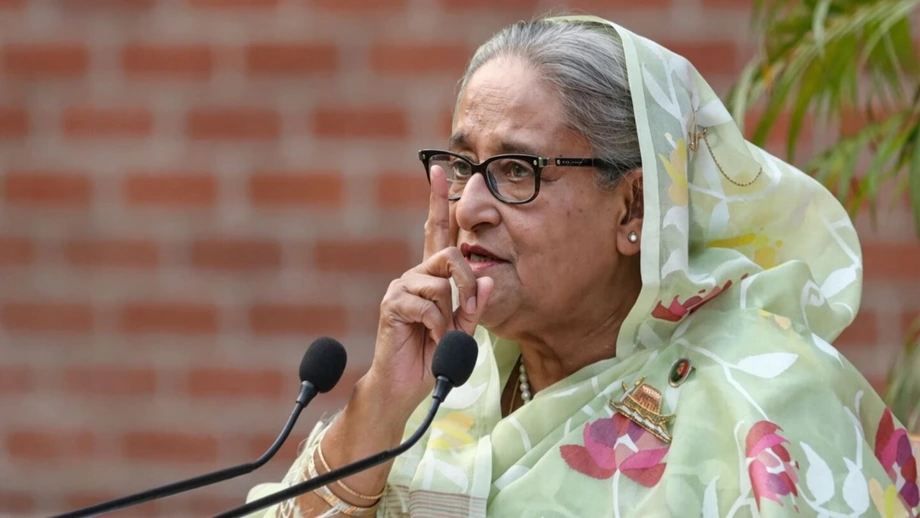
Death sentence puts legal safeguards at the centre of return talks
India said on November 13, 2026, that Sheikh Hasina's extradition would be handled through legal channels, while declining to comment on reported conditions for returning the former Bangladesh prime minister. The central difficulty is whether she could challenge the death sentence imposed on her on November 17, 2025, after Bangladesh's chief war crimes prosecutor said her appeal deadline had expired.
Contents
- Death sentence puts legal safeguards at the centre of return talks
- What India reportedly wants from Bangladesh
- The appeal deadline is the central legal obstacle
- How the extradition requests developed
- Why a passport request matters
- Military channels and the search for an arrangement
- A political return carries different expectations
- Consular delays affect travellers and detained citizens
- Other deadlines keep pressure on the relationship
- Key Points
Hasina, who has lived in India since fleeing Bangladesh on August 5, 2024, has said she intends to return in December 2026. Indian officials reportedly want Bangladesh's military to arrange her transfer and protect her, alongside guarantees that she can appeal and receive a fresh trial over the killings during the 2024 uprising.
Bangladesh's International Crimes Tribunal convicted Hasina of crimes against humanity in her absence. The United Nations estimates that as many as 1,400 people were killed during the crackdown on the uprising that ended her 15 years in power. Hasina denies wrongdoing.
Randhir Jaiswal, spokesperson for India's Ministry of External Affairs, was asked at the November 13 briefing about extradition and the reported conditions. He confined his response to the legal process:
What I refer to as a legal matter is the extradition part. And the extradition will be dealt with accordingly. On the other part of your question, I have no comments to offer.
Dhaka has continued to demand her handover. A Bangladesh foreign ministry official, speaking anonymously, said diplomats had received no Indian communication about the reported conditions. No agreed transfer arrangement, fresh trial procedure or specific December return date has been announced.
What India reportedly wants from Bangladesh
Indian government and military officials have reportedly outlined two main requirements in discussions about Hasina's return. The first concerns who would take responsibility for moving her and keeping her safe. The second concerns what would happen when she entered Bangladesh's judicial system.
Under the proposed transport arrangements, Bangladesh could send a military aircraft to New Delhi. Alternatively, Bangladeshi military personnel could receive Hasina at a land border point agreed by the two countries. India would reportedly provide the necessary transport and logistical support.
Hasina arrived in India aboard a Bangladesh military aircraft in August 2024. Indian officials reportedly regard military involvement in her return as a way to manage both the transfer and her security after arrival.
New Delhi also reportedly wants assurances that she could appeal against her death sentence and receive a fresh, impartial trial, potentially under international and global media scrutiny. Officials are said to be cautious about presenting those requests publicly because they concern Bangladesh's own courts.
India has reportedly discussed these arrangements with Dhaka through private channels for several months. Bangladesh's foreign ministry official said diplomats were unaware of such requests, leaving a gap between the reported private discussions and the communication acknowledged by Dhaka.
The appeal deadline is the central legal obstacle
Aminul Islam, Bangladesh's chief war crimes prosecutor, said on November 10 that Hasina had been given 30 days to appeal but had filed no challenge while remaining abroad. He said she had exhausted her legal options.
Islam described the consequences in direct terms:
With the appeal window closed and no other remedy left, execution is the only option remaining under the law.
An appeal asks a higher court to examine a judgment. A fresh trial would involve hearing the case again. India's reported requests therefore concern two different forms of legal review, each of which would need a workable procedure in Bangladesh.
Islam also said death sentences issued by the International Crimes Tribunal do not require confirmation by the High Court, unlike death sentences in ordinary criminal cases. His position places the prosecutor's account of the law in direct tension with the safeguards Indian officials reportedly seek.
Bangladesh Law Minister Md Asaduzzaman called Hasina a "convicted criminal" on November 8 and said the government was taking the necessary legal steps to bring her back through due process. Dhaka's public position remains that she should return to face the sentence already imposed.
How the extradition requests developed
Bangladesh first sought Hasina's extradition in December 2024, before the tribunal delivered its verdict. A note verbale, the diplomatic instrument used for the request, is a formal written communication between governments.
The request history contains two stages: before and after conviction. A more detailed chronology identifies three letters, dated December 20 and December 27, 2024, and November 21, 2025. Bangladesh also sent follow-up reminders. India has neither accepted nor rejected the requests, according to accounts of the diplomatic exchanges.
The main events are:
- August 5, 2024: Hasina left Bangladesh for India as the uprising brought down her government.
- December 20 and 27, 2024: Bangladesh sent letters seeking her extradition.
- November 17, 2025: The International Crimes Tribunal sentenced Hasina and former home minister Asaduzzaman Khan to death for crimes against humanity.
- November 21, 2025: Bangladesh renewed its request following the judgment, referring to the earlier letters and the completed judicial proceedings.
- October 3, 2026: India's high commissioner discussed a legal process for extradition at a public event in Dhaka.
- November 9, 2026: Lawyers acting for Hasina sought fresh Bangladeshi identity and travel documents.
- November 13, 2026: India again described extradition as a legal matter and declined to address the reported return conditions.
Bangladesh's foreign ministry said after the verdict that India had an obligation under the bilateral extradition treaty to hand over both convicted former officials. India responded by restating its commitment to peace, democracy, inclusion and stability in Bangladesh, without announcing a handover decision.
Why a passport request matters
London based law firm Matrix contacted the Bangladesh High Commission on Hasina's behalf on November 9 to request a fresh passport. Her lawyers also sought a national identity card. Her previous documents had been revoked after her removal from power.
Bangladesh ruled out issuing new travel documents to her. Foreign Minister Humaiun Kobir said Dhaka would pursue her return through an acceptable prisoner transfer arrangement, handled carefully and under proper surveillance.
Jaiswal was asked on November 10 whether extradition could proceed without a passport. He described that as a technical and legal question and referred questions about Hasina's document application to the Bangladesh High Commission.
The passport dispute reflects the competing approaches to her return. Hasina has spoken of coming home and surrendering before a court, while Bangladesh is pursuing the transfer of a convicted person. Arranging the journey requires the governments to settle the legal authority and documents for whichever process they use.
Military channels and the search for an arrangement
India's high commissioner to Bangladesh, Dinesh Trivedi, said on October 3 that extradition could take place through a "well-structured process" involving "legality" and that a legal process was "in place". He spoke at the Bay of Bengal Conversation, organised in Dhaka by the Centre for Governance Studies.
Trivedi also said Hasina's refuge in India followed consultation among those governing Bangladesh during July and August 2024. Describing India's position at the time, he said that "India had hardly any choice."
During a reported visit to New Delhi in the first week of October 2026, Trivedi met Prime Minister Narendra Modi and Army Chief General Dhiraj Seth. Those meetings have been linked in accounts of the private discussions to a possible military role in Hasina's return, although Jaiswal did not address that proposal at his November 13 briefing.
Military communication between the two countries has reportedly continued despite strains in diplomatic relations. India is said to want to use those channels to organise the transfer and secure Bangladesh Army responsibility for Hasina's safety after arrival.
New Delhi had also reportedly explored sending Hasina to a third country, approaching several governments without securing an arrangement. That left a negotiated return to Bangladesh as the option Indian officials increasingly viewed as practical.
A political return carries different expectations
Hasina wants to return as a political leader and reclaim her place in the Awami League. Her party's activities remain banned in Bangladesh. Indian policymakers reportedly see her presence in Bangladesh as important to any revival of their longstanding political ally.
Hasina has refused to apologise for the crackdown. She has maintained that police responded to angry agitators and militants rather than acting on her orders. The tribunal convicted her over the violence, making her political ambitions inseparable from the sentence awaiting her.
Indian officials reportedly worry that handing over a longstanding ally as a prisoner would damage India's credibility with friendly political leaders elsewhere in South Asia. Their preference for a negotiated transfer combines concern for Hasina's safety with concern about India's reputation among regional partners.
Officials in India's home and foreign ministries have also reportedly questioned whether Bangladesh's government wants her immediate return, citing fears of greater instability while it faces an energy crisis and garment workers' protests. Bangladesh's ministers, by contrast, continue publicly to demand extradition and describe legal steps to secure it.
The security concerns became more immediate in November. A bus driver was killed and at least 10 vehicles were set on fire during unrest on November 10. Police linked the violence to supporters of the Awami League and increased deployments.
Consular delays affect travellers and detained citizens
The fifth India and Bangladesh consular dialogue has been deferred to a mutually convenient date. A Bangladeshi diplomatic source said the meeting was unlikely to take place in 2026, although neither government announced a replacement date.
The dialogue was expected to address visas, border management, the repatriation of detained citizens and the Revised Travel Arrangement. Those subjects affect people seeking permission to cross the border and families waiting for relatives detained in the neighbouring country to come home.
The consular mechanism began in 2017. Four rounds have taken place, most recently in New Delhi on May 29, 2024, before Hasina's government fell. The proposed fifth round would be the first since that change.
Some travel services have resumed under the government led by Prime Minister Tarique Rahman, which took office in February 2026. Bangladesh resumed issuing visas to Indian citizens across categories after the change of government. India resumed tourist visa services for Bangladeshis in June after a prolonged suspension.
Jaiswal said on November 13 that India remained ready to discuss bilateral matters through the established mechanisms:
India remains ready to discuss all bilateral issues with Bangladesh through these existing mechanisms, including at the technical level.
Other deadlines keep pressure on the relationship
India and Bangladesh held a Joint Working Group on Trade meeting in October, the first in three years. Discussions have also covered reopening border markets, making land ports fully operational and easing restrictions on goods.
Jaiswal cited meetings on trade, railways, water resources and border management as evidence of India's wish for a positive and constructive relationship. Those channels allow practical business to continue while the Hasina dispute remains unresolved.
The Ganges water sharing treaty expires on December 12, 2026, giving the relationship another approaching deadline. Asked about it on November 10, Jaiswal said he had no update. He also had no update on whether Tarique Rahman might visit India in November or December.
Hasina's stated December return target now sits alongside that diplomatic calendar. The immediate decisions concern how Bangladesh would receive her, who would protect her and what legal process would follow. India's public commitment remains to handle extradition through legal channels; Bangladesh continues to seek enforcement of the tribunal's judgment.
Key Points
- India said on November 13, 2026, that Hasina's extradition would follow legal channels and declined to discuss reported conditions.
- India reportedly seeks Bangladesh Army involvement in her transfer and security, plus an appeal opportunity and a fresh trial.
- Bangladesh's chief war crimes prosecutor says Hasina missed the 30 day appeal deadline after her November 2025 death sentence.
- Hasina has said she intends to return in December 2026, but no specific date or agreed arrangement has been announced.
- Bangladesh has renewed its extradition requests and refused to issue her fresh travel documents.
- The next consular dialogue has been deferred, while the Ganges water sharing treaty expires on December 12, 2026.