Banks face demands to repay victims when safeguards fail
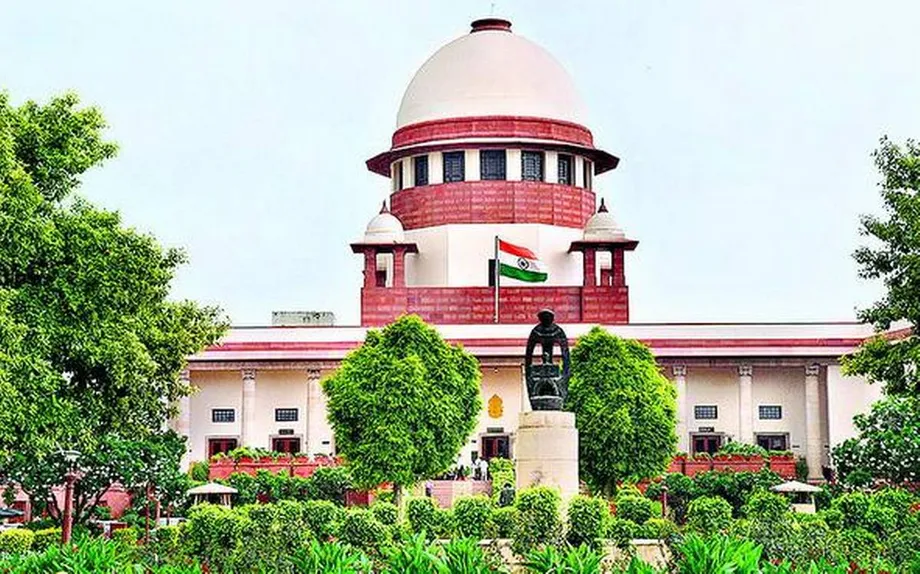
India's Supreme Court has called for banks and other financial institutions to compensate victims of digital fraud when an investigation finds that their failure to carry out necessary checks allowed the crime to happen. The compensation should be at least equal to the amount lost, the court said, including in scams where criminals frighten people into believing they are under "digital arrest".
Contents
- Banks face demands to repay victims when safeguards fail
- What would trigger compensation?
- Stopping an unusual transfer before it clears
- Why fear keeps the scams working
- Fewer reported cases, but substantial losses
- Cases show where the money moves
- Bank staff and the regulator face scrutiny
- The dates shaping the next steps
- Key Points
A bench comprising Chief Justice of India Surya Kant and Justices Joymalya Bagchi and V Mohana said it would examine the Reserve Bank of India's proposed KYC Amendment Directions, 2026, before issuing further directions. The proposed rules are expected to be notified by November 30 and brought into operation by December 31, 2026.
The court's intervention puts two concrete responsibilities at the centre of the debate: stopping suspicious transfers before money leaves an account, and making financial institutions pay when inadequate checks enable a loss. For customers, the proposed compensation requirement would connect reimbursement to an investigation into how their bank handled the transaction.
The proceedings concern In Re: Victims of Digital Arrest Related to Forged Documents, case number SMW (Crl.) 3/2025. It is a suo motu case, meaning the Supreme Court took up the matter on its own initiative.
What would trigger compensation?
The bench said the RBI framework must require financial institutions to compensate victims of digital arrest and other cyber frauds where the institution failed to exercise due diligence. In everyday terms, due diligence means carrying out the checks reasonably required to identify a customer, understand account activity and respond to warning signs.
The proposed minimum is the amount the victim lost. A person who lost money would therefore need an examination of whether failures by the financial institution enabled the fraud. The court has yet to settle the detailed process for deciding those claims, including how customers would apply and how quickly compensation would be paid.
Justice Bagchi observed that the court could impose strict liability on financial institutions. That legal approach places responsibility on an institution once specified conditions are met. The compensation framework described by the bench focuses on cases in which a failure of required checks is found.
Chief Justice Kant also raised possible prosecution during the hearing. Attorney General R Venkataramani opposed imposing bank liability through court directions, arguing that the RBI should address it through regulation. The bench will examine the proposed regulatory framework before deciding its next steps.
Stopping an unusual transfer before it clears
The Supreme Court questioned why banks could not temporarily stop transactions that depart from a customer's established banking history. Banks already hold records showing how an account is normally used, giving them information against which a sudden or unusual transfer can be assessed.
Chief Justice Kant challenged the value of responding only after funds have moved. Explaining why he wanted preventive action, he said:
Report will only be post-mortem. What about prevention? Moment a transaction comes, why can't it be withheld?
The safeguards discussed include temporarily suspending unusual transfers, automatically notifying the relevant police station and arranging physical verification to establish whether the payment is genuine. The Chief Justice also called for unusual transactions to remain suspended until their authenticity had been verified in writing.
For a customer being threatened over a phone or video call, a pause could create an opportunity for someone outside the conversation to check what is happening. Physical verification would bring the inquiry beyond the screen through which the fraudster is directing the victim.
The bench said enforceable accountability was needed because general advisories would be insufficient to secure compliance. Its proposed approach would give banks an obligation to act on warning signs, alongside a financial consequence when their failure to do so enables fraud.
Why fear keeps the scams working
Senior advocate N S Nappinai, assisting the court as amicus curiae, cited a recent case in which a woman lost ₹2.5 crore. An amicus curiae is a lawyer appointed to help the court examine the issues before it.
Nappinai said fear of arrest drives victims to follow the criminals' instructions. Her submission addressed why scams continue despite public warnings and earlier court interventions: a person who believes police are watching or threatening them may obey demands that would otherwise seem suspicious.
Digital arrest scams involve criminals pretending to exercise official authority through calls, messages or forged documents. They may accuse a person of involvement in a serious crime and demand money under the pretence of checking funds or resolving an investigation. The cases discussed in connection with the proceedings included callers claiming to represent police units and directing transfers supposedly for verification.
Chief Justice Kant questioned why educated people continued to believe such claims and pointed out that purported court orders could be checked on the relevant court's official website. Nappinai's account placed the pressure created by the threats at the centre of the victim's experience.
The proposed banking checks address the point at which that pressure becomes a financial loss. Awareness campaigns reach people before a scam; a transaction hold would intervene while someone is attempting to transfer money.
Fewer reported cases, but substantial losses
Attorney General Venkataramani told the court that reported digital arrest cases had fallen by around 50% from the previous year. Chief Justice Kant cited an estimated net loss of nearly ₹800 crore to the Indian economy from such frauds during the year.
A status report from the Indian Cyber Crime Coordination Centre, known as I4C, and the Ministry of Home Affairs recorded more than 21,900 digital arrest complaints involving over ₹647 crore between January 1 and August 31, 2026. The ₹647 crore figure covers that specified period, while the Chief Justice cited the broader estimate of nearly ₹800 crore during the hearing.
The scale is easier to understand in rupees: ₹647 crore is ₹6.47 billion, and ₹800 crore is ₹8 billion. Even with the reduction in reported cases described by the Attorney General, the losses cited in court show how much money individual victims and households continue to face losing.
Venkataramani said I4C works round the clock and that banks had become better at flagging suspicious transactions than they were six months earlier. He also said he had met the RBI to press for rule making and that the liability of banking officers was being addressed.
Cases show where the money moves
Delhi police arrested two men accused of operating a mule account connected to a ₹2.10 crore scam targeting a Janakpuri resident. A mule account is an account used to receive or move money for criminals, often putting another account holder between the victim and the people directing the fraud.
The Delhi account received ₹98,592 linked to the case on October 12. Officers recovered phones, debit cards and chequebooks from the accused. The amount received in that account was one part of the larger alleged loss, illustrating why investigators may need to trace several transfers and recipients.
Hyderabad cybercrime police arrested two men accused of cheating a retired employee aged 63 and his daughter of ₹29.17 lakh. Investigators alleged that the proceeds moved through mule accounts, cash deposit machines and cryptocurrency conversions. A third accused remained absconding.
In Kozhikode, a woman aged 57 allegedly lost ₹1.35 crore after callers posing as Mumbai Crime Branch officers threatened criminal proceedings. They instructed her to transfer money purportedly to the RBI for verification. Police registered a case involving WhatsApp calls received between September 22 and October 15.
Police in Karnataka's Dakshina Kannada district said a farmer aged 62 was coerced into transferring ₹1.31 crore. Callers claiming to represent Mumbai Police and the Anti-Terrorism Squad accused him of sending money to a Pahalgam terror attack suspect. He was allegedly kept under digital arrest between September 2 and October 6.
Bank staff and the regulator face scrutiny
Chief Justice Kant raised concerns about the alleged involvement of bank officials in fraud and questioned the RBI's consultation with banks while protective measures were being developed. His remarks brought attention to both transaction controls and the conduct of people working inside financial institutions.
Attorney General Venkataramani said action had been taken wherever officials were found to be involved. He also rejected the suggestion that every bank employee was colluding with fraudsters and said the RBI was speeding up its work.
The RBI's proposed KYC amendments are now central to the proceedings. KYC means "know your customer", the checks financial institutions use to establish who customers are. The court wants the proposed framework to include prevention and compensation obligations when failures in those checks allow cyber fraud.
The bench directed the RBI to submit a list of all authorised financial institutions by the next hearing. It indicated that it could issue directions covering those institutions without requiring every bank to become a separate party to the case. That would allow the court to address the sector through common requirements.
The dates shaping the next steps
The proceedings bring together a record of complaints, government submissions and a timetable for the RBI's proposed rules. The key dates are:
- January 1 to August 31, 2026: I4C and the Ministry of Home Affairs recorded more than 21,900 digital arrest complaints involving over ₹647 crore.
- October 28: The Attorney General's note on behalf of the Union government set out proposed directions for the court's consideration.
- November 30, 2026: The proposed RBI KYC Amendment Directions are expected to be notified.
- December 31, 2026: The proposed directions are expected to be operational.
The RBI must also provide its list of authorised financial institutions at the next hearing. The bench said it was inclined to issue directions proposed by both the amicus curiae and the Union government, but would first examine the RBI amendments.
For victims and banks, the next stage is therefore about the precise obligations in that framework: when a suspicious transaction must be paused, how police are notified, how verification takes place and how compensation follows a finding of failed checks.
Key Points
- The Supreme Court wants compensation of at least the amount lost when a financial institution's failure of due diligence enables digital fraud.
- The bench called for temporary holds on unusual transfers, automatic police alerts and physical verification.
- I4C and the Home Ministry recorded more than 21,900 complaints involving over ₹647 crore from January through August 2026.
- The RBI's proposed KYC amendments are expected to be notified by November 30 and operational by December 31, 2026.
- The court will examine the proposed rules before issuing further directions and has sought a list of authorised financial institutions.