Taiwan's chip factories sit at the centre of a strategic warning
Palantir defence chief Mike Gallagher has warned that competition over artificial intelligence could give Chinese President Xi Jinping a stronger reason to move against Taiwan, because control over the island could allow Beijing to seize or interrupt the production of chips essential to America's AI industry.
Contents
- Taiwan's chip factories sit at the centre of a strategic warning
- Why an American AI lead could create pressure
- How a chip shortage could interrupt AI development
- A 2028 scenario begins with a blockade
- Warnings and policy choices have developed over time
- Gallagher wants arms deliveries and sanctions prepared sooner
- More factories abroad, continued expansion in Taiwan
- Palantir has a commercial stake in military AI
- Deterrence depends on more than technological leadership
- Key Points
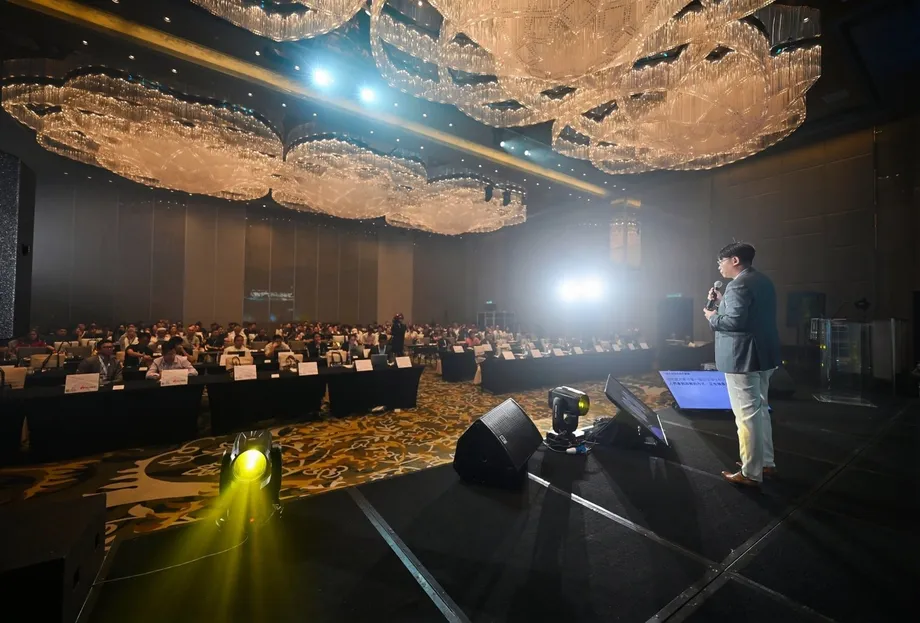
Speaking at a defence policy event in Indiana alongside Republican US Senator Jim Banks, Gallagher argued that a widening American lead in AI could make action against Taiwan more attractive to Beijing. Taiwan is home to Taiwan Semiconductor Manufacturing Co., or TSMC, the world's leading manufacturer of advanced chips used in AI systems.
Gallagher, a former Republican congressman who chaired the House committee on strategic competition with China, described the calculation he believes Xi could make:
The logic of Xi Jinping sacrificing enormously to take Taiwan is getting more compelling.
His warning connects two questions often discussed separately: who develops the most powerful AI systems, and whether the factories supplying their processors can continue operating. In Gallagher's argument, disrupting a rival's chip supply could become another way to compete for technological leadership.
A US intelligence assessment issued in March described an invasion of Taiwan as extremely challenging and carrying a high risk of failure. Gallagher's argument concerns Beijing's possible incentives, while the intelligence judgment addresses the difficulty of carrying out an invasion. Together, they describe a situation in which an operation could become more attractive to China's leadership while remaining militarily dangerous.
Why an American AI lead could create pressure
Gallagher's central claim is that technological progress may alter the timing of Beijing's decisions. If Chinese leaders believe the United States is approaching an advantage they cannot recover from, he argues, they could see an urgent reason to interrupt that progress.
Gallagher explained that concern at the Indiana event:
If we run away with AI, now is his moment to stop us from doing that, because he may not be able to catch up later on.
China claims Taiwan as its territory and has not ruled out using force. Gallagher is arguing that the AI race could add a new technological and economic incentive to Beijing's existing political objective.
No decision by Xi to attack Taiwan, or timetable for such an operation, was disclosed. Gallagher's comments present his assessment of how the competition could influence Chinese choices.
He also discussed the possibility of AI that can improve itself. If that capability becomes real, he said, its strategic importance could be comparable to nuclear weapons in the 1940s. Such a system would help develop better versions of AI, potentially speeding up advances beyond the pace achievable through human research alone.
How a chip shortage could interrupt AI development
TSMC manufactures processors designed by other companies. For AI developers, access to powerful processors determines how much computing work they can perform and how quickly they can train new systems. Data centres bring large numbers of those chips together, supported by electricity, cooling and communications equipment.
Nvidia has described Taiwan as the epicentre of AI. Gallagher has called the island the "single point of failure" for the technology, meaning a place whose disruption could interrupt a much larger network.
In an earlier commentary, Gallagher put TSMC's share at 90% of the world's most advanced semiconductors and 60% of semiconductors globally. Those figures were presented in his argument about dependence on Taiwan; the advanced chip share is especially relevant to the powerful processors needed for leading AI systems.
Gallagher described two possible consequences of a Chinese takeover:
If China takes Taiwan, they will control TSMC or disable TSMC.
He said Beijing would then be able to "hold the rest of the world economically hostage." Both outcomes would affect customers far beyond Taiwan, although operating factories and stopping their production would create different commercial and strategic situations.
A 2028 scenario begins with a blockade
The Hudson Institute, which identifies Gallagher as a Distinguished Fellow, published his commentary, AI and the Growing Threat. It opens with an imagined crisis in 2028: Beijing first blockades Taiwan and then invades, halting frontier AI development and freezing data centre construction as markets fall.
Frontier AI means the most capable systems being developed. Gallagher's scenario traces a chain from military action around Taiwan to interrupted chip supplies, stalled construction and financial losses in the United States.
A blockade would seek to restrict movement to and from the island. An invasion would involve taking territory by force. By placing a blockade first, Gallagher's scenario highlights how pressure on shipping and supplies could disrupt industry before an invading force gained control of factories.
The year 2028 belongs to that hypothetical scenario. Gallagher uses it to illustrate the exposure of America's AI investment to events across the Taiwan Strait, where Chinese coast guard patrols off Taiwan's east coast have also increased.
Warnings and policy choices have developed over time
Gallagher's latest remarks follow his move from Congress into the defence technology industry and earlier calls for Washington to strengthen Taiwan's military position. The main developments include:
- In 2024, Gallagher left Congress and later joined Palantir to lead its defence business.
- In March, a US intelligence assessment judged that an invasion of Taiwan would be extremely challenging and carry a high risk of failure.
- In May, President Donald Trump reportedly put a $14 billion Taiwan arms package on hold and described it as a negotiating chip.
- In his earlier commentary, Gallagher outlined a hypothetical blockade and invasion in 2028 and called for faster military support for Taiwan.
- At Wednesday's Indiana event with Senator Banks, Gallagher argued that the AI race could strengthen Xi's incentive to act.
The arms package illustrates a practical policy tension. Gallagher wants weapons delivered faster to help deter an attack, while holding a package for negotiations makes its timing part of a broader bargaining process.
For Taiwan, delivery schedules matter because equipment must arrive, personnel must learn to use it, and military units must incorporate it into their plans. Approval of a sale is one step in that process.
Gallagher wants arms deliveries and sanctions prepared sooner
Gallagher has urged Washington to accelerate arms sales to Taiwan and simplify the Foreign Military Sales process, usually called FMS. This is the government channel through which the United States arranges many military equipment sales to foreign partners.
He has also called for financial sanctions to be prepared in advance and coordinated with allies. His proposal is to make the economic costs of attacking Taiwan visible to Beijing before a crisis, rather than assembling a response after military action begins.
Taiwan has raised its defence budget to nearly 4% of gross domestic product and expanded drone production, according to Gallagher's commentary. GDP measures the value of goods and services produced by an economy, so the percentage describes the scale of defence spending relative to Taiwan's economic output.
Gallagher and former US deputy national security adviser Matthew Pottinger have separately advocated Pentagon spending of as much as 5% of US GDP, which their proposal put at a base budget above $1.2 trillion. Their broader approach combines military spending, reduced economic dependence on China and closer coordination among US partners.
Those proposals would commit substantial public resources. The immediate choices include which equipment Taiwan receives, how quickly it arrives, and whether allied governments agree on the financial measures they would use during a crisis.
More factories abroad, continued expansion in Taiwan
Gallagher has proposed deeper semiconductor cooperation with Japan and the Netherlands, alongside efforts to bring TSMC facilities in Japan and Arizona into operation as quickly as possible. Producing chips in more locations could give customers additional sources of supply.
TSMC is also continuing to expand within Taiwan. Chairman and Chief Executive C. C. Wei announced another Tainan factory for 2028, with commercial production scheduled for the first half of that year. A previously planned Tainan project is expected to begin mass production in the first half of 2027.
The additional factory will use TSMC's 3 nanometer process, a name for a generation of chip manufacturing technology. Wei said customers would need substantial amounts of that production for years, supporting further investment even as newer processes are developed.
Tainan's expansion shows why overseas construction and Taiwan's strategic importance can grow at the same time. Customers want more production, and the company is adding capacity in several places rather than replacing its Taiwanese manufacturing base.
TSMC has also begun exploring motors without rare earths for factory automation equipment, amid concern about dependence on materials subject to Chinese export controls. That work remains at an early stage, but it shows how manufacturing security reaches beyond finished chips to the components needed to keep machinery running.
Palantir has a commercial stake in military AI
Gallagher speaks as a former lawmaker and as an executive of a company that sells technology to defence customers. Palantir is a major Pentagon supplier, and its Maven AI system supports US military surveillance and targeting. NATO also uses the system.
The company's Army work includes data sharing, research into AI and targeting through the Tactical Intelligence Target Access Node project, known as TITAN. Palantir's Artificial Intelligence Platform has also been used in Ukraine.
Palantir Chief Executive Alex Karp has said the United States would "likely" go to war with China. Gallagher's warning therefore comes from within a business whose products are part of the military competition he is discussing.
The movement of senior officials into defence companies provides another relevant part of that context. A 2023 report by Senator Elizabeth Warren's office identified at least 700 former senior Pentagon and other government officials working for the 20 largest weapons contractors. A separate study found that 80% of generals with three or four stars who left government service during the five years it examined entered the arms sector in some capacity.
Gallagher's government experience gives him knowledge of congressional priorities and defence policy. His executive position also gives Palantir a direct commercial interest in decisions about military technology and spending. Readers weighing his recommendations need both parts of that picture.
Deterrence depends on more than technological leadership
The combined picture is more complicated than a race to build better AI. Gallagher argues that a decisive American lead could increase Beijing's incentive to disrupt Taiwan. His proposed response is to strengthen Taiwan's defences, prepare economic penalties and spread semiconductor production across more locations.
The March intelligence assessment adds the military constraints: an invasion would be exceptionally difficult and carry a high risk of failure. China's increased coast guard activity adds another form of pressure around an island whose factories serve customers across the world.
Diplomatic choices sit alongside those military and industrial decisions. Negotiations can affect arms deliveries, while sanctions planning depends on agreement among governments. Factory construction follows its own schedules, tied to equipment, workers, utilities and customer demand.
For Taiwan, the immediate stakes are its security and the continued operation of an industry central to its economy. For AI companies elsewhere, they include access to the processors behind research and data centre investment. Gallagher's warning brings those interests together: competition over AI increasingly depends on what happens to a small number of highly advanced factories and the society around them.
Key Points
- Palantir defence chief Mike Gallagher says a widening US lead in AI could increase China's incentive to seize or disrupt Taiwan.
- TSMC's role in advanced chip manufacturing makes Taiwan central to the supply of processors used in AI systems.
- A Hudson Institute commentary by Gallagher imagines a blockade and invasion in 2028 that halt frontier AI development and data centre construction.
- A US intelligence assessment in March judged an invasion extremely challenging and at high risk of failure.
- Gallagher advocates faster arms deliveries, advance sanctions planning and wider semiconductor production outside Taiwan.
- Palantir supplies military AI systems, giving Gallagher's employer a commercial stake in defence technology policy.