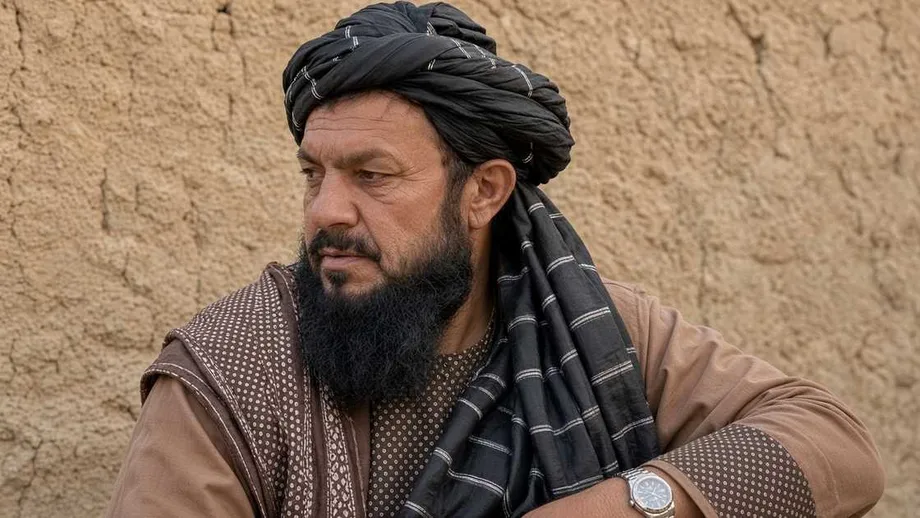
Two meals a day for a family of 58 children
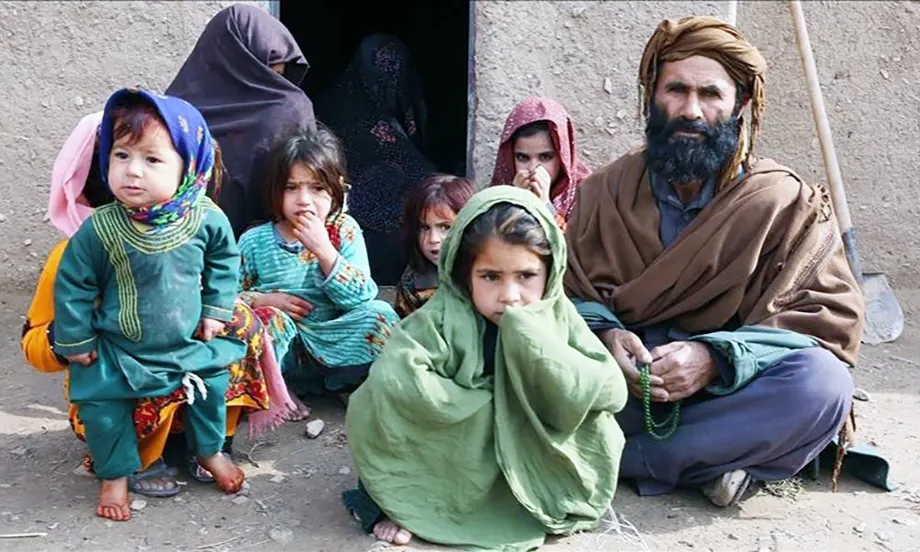
Muhammad Sadeq, a 57-year-old car dealership worker in Afghanistan's Uruzgan province, says he earns 1,000 Afghanis for each vehicle he sells. At home, he has four wives and 58 living children, some of whom go to bed hungry. His youngest child was three months old when the family's circumstances were described in an account published on October 20, 2026.
Contents
- Two meals a day for a family of 58 children
- What one car sale brings home
- A home short of warmth, privacy and fuel
- Four marriages began during childhood
- Fourteen children lost over the years
- UNICEF's figures show the scale of early marriage
- Schooling is one of the father's main wishes
- The dates behind the family account
- Key Points
Sadeq and his wives have also lost 14 children over the years. Their surviving children live with shortages of food, clothing, bedding and fuel. The family prepares just two meals each day, breakfast and dinner, and some children collect discarded paper and plastic to burn for cooking.
All four women married Sadeq when they were between 13 and 16, he says. Their experiences connect the family's immediate struggle for food with a wider concern: girls entering marriage and motherhood before adulthood, often with limited schooling, healthcare or financial security.
Eleven days before the account appeared, UNICEF issued a statement drawing on Afghanistan's Multiple Indicator Cluster Survey for 2022–23. It found that 28.7% of women aged 20 to 24 had married before turning 18. In some parts of the country, the proportion reached one in two women aged 20 to 49.
Sadeq is now asking the government, aid organisations and businesspeople for help. He says he wants his children to have enough to eat and to receive an education. Meeting those needs is a daily struggle in a household where even a successful car sale brings in only a small commission.
What one car sale brings home
Sadeq describes his dealership earnings as 1,000 Afghanis per vehicle sold, approximately $15 in the account of his circumstances. This is a payment tied to completing a sale, rather than a stated daily or monthly wage.
The scale of the household makes that amount easier to understand. Dividing 1,000 Afghanis among 58 children would leave about 17 Afghanis per child, before accounting for the adults, cooking fuel, clothing, healthcare or school expenses. The calculation illustrates how far a single commission must stretch.
Some of Sadeq's children also work to help support the household. Others gather paper and plastic for fuel. His earnings therefore sit alongside contributions from children whose own needs include food, shoes and time to study.
The number of cars Sadeq sells each month, the children's earnings and any response to his appeal for assistance have not been specified. Without those details, there is no reliable monthly household budget. What he describes is a family repeatedly unable to cover basic necessities.
A home short of warmth, privacy and fuel
The family's mud houses have rooms without proper doors or windows. Thin curtains cover openings, offering little protection from the weather. Many of the children walk barefoot because shoes are beyond the family's means.
Six or seven people sometimes share a thin blanket at night. Simple mattresses provide the rest of their bedding. During winter, the family eats inside the rooms; in summer, they gather in the courtyard.
Two of Sadeq's wives prepare the household's breakfast and evening meal. Cooking is constrained by a shortage of firewood, even though the family has a stove. Paper is used to start fires, and children bring home discarded material to burn.
The space used for bathing also serves for washing clothes and dishes and, at times, as a toilet. Separate facilities for these tasks help keep food, washing water and human waste apart. In this home, the same limited space must serve several competing needs.
Food is only one part of the shortage. A meal requires fuel; a cold night requires bedding; attending school brings expenses. The family's account shows those needs arriving together, while income depends on whether a vehicle sells.
Four marriages began during childhood
Sadeq says he was 20 when he married his first wife. Each of his four wives was between 13 and 16 at marriage, meaning all entered marriage before 18, the age UNICEF uses to measure child marriage.
Asked about marrying girls so young, Sadeq described spending years saving the bride price before each wedding. A bride price is a payment associated with marriage, made by the groom or his family. His account places the cost of arranging marriages alongside the later difficulty of supporting a very large household.
The four women have spent years experiencing pregnancy, childbirth and childcare. Their ages when they married matter because adolescent pregnancy brings particular health risks, while repeated pregnancies can place further demands on a mother's health.
Sadeq says his original aim in having a large family was to increase the number of followers of the Prophet Muhammad. He also acknowledges that he has failed to meet his responsibilities toward his children and says he would have chosen differently had he known they would struggle to obtain basic food.
His explanation describes a reason for wanting many children. His present appeal is focused on the practical consequences: feeding them, keeping them warm and paying for their education.
Fourteen children lost over the years
Sadeq and his wives say they have lost 14 children. Together with the 58 who are alive, that gives a total of 72 children, consistent with the description that he has fathered more than 70.
Sadeq, speaking about those deaths, attributed some to the mothers being very young and inexperienced in caring for infants. He also named tuberculosis, whooping cough and measles among illnesses that had killed his children.
"I married my wives when they were young. Many of my children died because their mothers were very young. They did not know how to care for the children, breastfeed them or look after them. Some of my children died from tuberculosis, whooping cough and measles," he said.
UNICEF places adolescent pregnancy within a broader health concern. Its October statement says deaths related to pregnancy are a leading cause of mortality among Afghan girls aged 15 to 19. The agency calls for adolescent mothers to receive healthcare, education, protection and other essential services.
The Afghanistan MICS 2022–23 Summary Findings Report records an adolescent birth rate of 62 births per 1,000 women aged 15 to 19 nationally, ranging from 16 in Paktya to 128 in Nimroz. This measures births during the three-year period preceding the survey. The report points readers to tables TM.1.1, TM.2.1 and TM.2.2W in the Survey Findings Report for its fertility data.
Access to medical care is also difficult in parts of Afghanistan, particularly remote communities. For young mothers, support can include advice on feeding and caring for an infant, care during pregnancy and childbirth, and treatment when a child becomes ill. These are needs shared by the women and children in a household carrying years of bereavement.
UNICEF's figures show the scale of early marriage
UNICEF's child marriage statement, issued on October 11, 2026, provides a national measure drawn from the Afghanistan Multiple Indicator Cluster Survey for 2022–23. Among women aged 20 to 24, 28.7% had married before 18, roughly 29 out of every 100.
The figures appear in the Afghanistan MICS 2022–23: Multiple Indicator Cluster Survey Summary Findings Report, which identifies table PR.4.1W in the Survey Findings Report for child marriage trend data. Among women aged 20 to 24, 9.6% had first married before 15; the proportions married before 18 were 20.2% in urban areas and 31.9% in rural areas.
The survey's provincial estimates refer to women aged 20 to 49, a broader age group than the national figure of 28.7%. In that broader group, 38.9% nationally had first married before 18, rising to 50.5% in Faryab and 52.2% in both Helmand and Herat. Geography therefore matters: a national percentage brings together communities with different levels of early marriage.
Dr. Tajudeen Oyewale, UNICEF's representative in Afghanistan, opened the statement by setting out what the agency says every girl should be able to expect from childhood.
Every girl deserves a childhood. She deserves to learn, to grow, to be safe, to develop her skills and to have the opportunity to shape her own future.
UNICEF says child marriage interrupts education, limits future opportunities and increases exposure to violence, social isolation and the risks of early pregnancy. Its proposed response combines schooling, health services, protection for girls and support for families facing economic hardship.
The agency also points to an estimated 68 million child marriages averted worldwide over 25 years through investment in education, legal reform and social protection. Social protection means practical help, such as financial or other support, intended to keep vulnerable households from being pushed further into poverty.
Schooling is one of the father's main wishes
Sadeq says he cannot read or write, but has tried to send his children to school. Education costs remain difficult to meet, while some children are already contributing work or collecting fuel for the household.
His difficulty remembering names illustrates another part of managing such a large family. Sadeq described how he often addresses his children when he cannot recall a name.
"I cannot remember all their names. Most of the time, I simply call them 'son' or 'child,'" he said.
He recalled giving a cleric the wrong daughter's name during a marriage ceremony. A son was sent to check with the girl's mother, who confirmed the mistake. On another occasion, he counted the children around a meal and discovered someone was absent, then learned that a child was staying with a grandmother.
For girls, access to education is also central to UNICEF's response to early marriage. The agency renewed its call on Afghanistan's de facto authorities to open schools to adolescent girls beyond grade 6. It describes keeping girls in school as one of the most powerful ways to protect their rights, alongside support for families and services for those already married.
The dates behind the family account
The family's present circumstances sit alongside survey findings collected several years earlier and an official appeal issued shortly before the October account. Keeping those dates separate helps explain what each tells readers.
- 2022–23: Afghanistan's Multiple Indicator Cluster Survey recorded that 28.7% of women aged 20 to 24 had married before 18.
- October 11, 2026: UNICEF released its International Day of the Girl statement calling for action against child marriage and access to schooling beyond grade 6.
- October 20, 2026: An account of Sadeq's household identified him as 57, living in Uruzgan, with 58 surviving children and 14 children who had died.
Sadeq's immediate request is for help with food and education. UNICEF's wider appeal addresses pressures that can shape a girl's life before she becomes a parent: leaving school, marrying early and entering pregnancy without sufficient support.
For this household, assistance would have concrete purposes: meals that reach every child, fuel for cooking, shoes, bedding and the costs of attending school. The four mothers also need support after years of childbirth and caring for children in severe poverty.
Key Points
- Muhammad Sadeq, 57, lives in Uruzgan province with four wives and has 58 living children.
- The family says 14 children have died over the years.
- Sadeq earns 1,000 Afghanis per car sold, while some children also work or collect fuel.
- The household prepares two meals daily, and some children go to bed hungry.
- All four wives were between 13 and 16 when they married him, he says.
- UNICEF cites survey findings showing 28.7% of Afghan women aged 20 to 24 married before 18; provincial estimates use women aged 20 to 49 and reach 52.2% in Helmand and Herat.
- Sadeq has appealed for help, naming food and education as his main wishes for his children.