A digital expansion with a national electricity bill
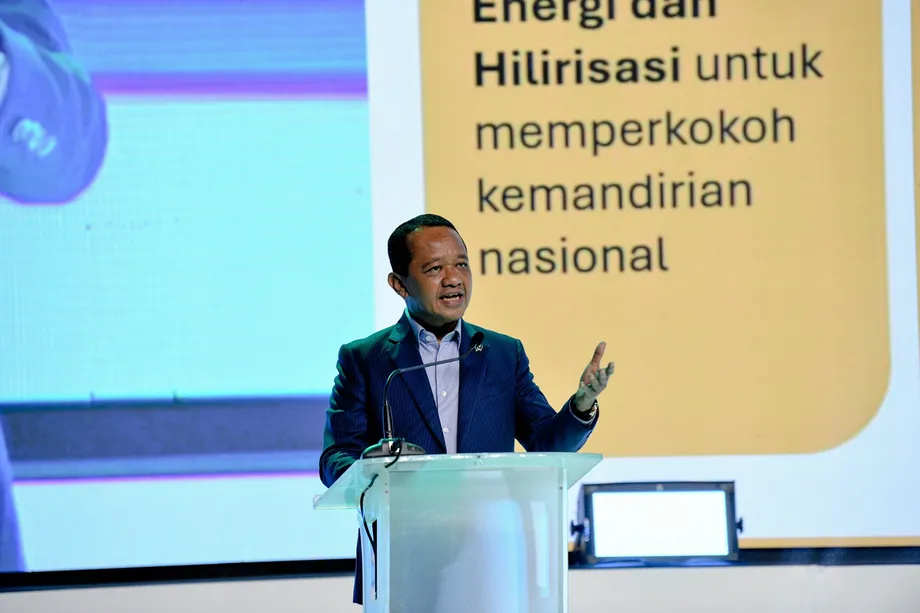
Indonesia's expanding data center industry will need an additional 20 gigawatts of electricity, Energy and Mineral Resources Minister Bahlil Lahadalia said on October 19, 2026, putting the requirement at roughly one fifth of the country's existing power capacity. In Batam, the expansion already includes a 450 megawatt supply contract between PLN Batam and data center company DayOne.
Contents
- A digital expansion with a national electricity bill
- Why artificial intelligence needs so much power
- Batam has a large pipeline, and a supply contract
- National electricity supply meets local bottlenecks
- What the electricity plan actually contains
- Water and permits are already shaping projects
- New rules would connect cables, sites and power
- How Indonesia compares with its neighbors
- The dates that define the expansion
- Key Points
Bahlil, who also serves as coordinating minister for downstream development and energy transition, presented the estimate at Bali Tech Week 2026 in Denpasar. He attributed it to discussions with the president director of state electricity company PLN, according to the Energy and Mineral Resources Ministry's October 19 statement.
The government wants Batam, Karimun and Bintan in the Riau Islands to become a new Indonesian hub alongside established centers in Singapore and Malaysia. Its pitch combines available sites, water resources and opportunities to develop renewable electricity. Investors would also be required to work with national and local businesses under rules being prepared.
The scale of the electricity requirement makes this more than a technology investment story. Servers need dependable power, cooling systems need water or other ways to remove heat, and digital services need connections to customers. Those demands must be planned alongside household electricity and water needs.
Indonesia's challenge is therefore both national and local: build enough electricity supply for a growing industry, then deliver it to the particular places where companies want to build. Industry research puts the wait for an electricity connection in Greater Jakarta and Batam at up to two years.
Why artificial intelligence needs so much power
Data centers contain the computers that process online activity, store information and run digital services. Their servers work continuously, while supporting equipment keeps them cool and connected.
The ministry puts the power requirement for a typical cloud computing data center at around 10 to 30 megawatts. A facility supporting artificial intelligence can require between 100 megawatts and 1 gigawatt. One gigawatt equals 1,000 megawatts, making the upper end of that range dozens of times larger than a conventional cloud facility.
Bahlil's estimate of 20 GW therefore means 20,000 MW of additional electricity capacity. The ministry did not give a deadline for reaching that level, a list of projects behind the estimate or a schedule for connecting them to the grid.
The estimate also sits alongside a separate industry forecast. Research published by MNC Sekuritas on September 4, 2026, put Indonesia's installed data center capacity at about 650 MW and projected 11.7 GW by 2030. Using those figures, capacity would grow eighteenfold. The forecast measures data center expansion through 2030, while Bahlil described a broader electricity requirement without a stated completion year.
Batam has a large pipeline, and a supply contract
Batam's data center capacity that is available, committed or under development totals 1.47 GW, according to the ministry. The figure combines facilities at different stages, from existing capacity to projects still being developed.
PLN Batam and DayOne have also signed a 450 MW electricity supply contract, which the ministry describes as Indonesia's largest for a data center. The contract gives a concrete indication of the size of individual investments entering the market.
Bahlil said Batam, Karimun and Bintan have lower population density than Jakarta, West Java and Bali, as well as water availability and opportunities for renewable energy development. The government plans to ask prospective investors for their proposed locations so that electricity supply can be prepared with PLN.
Site selection will matter as much as the headline capacity. A project needs land, cooling, fiber optic connections and electricity that reaches its site reliably. Concentrating investment in a promising region still requires planning each of those services around the locations companies choose.
National electricity supply meets local bottlenecks
Indonesia's national generation capacity is around 108 to 120 GW, according to the MNC Sekuritas research. Bahlil described the additional 20 GW requirement as about 20 percent of current capacity; against the research range, it would represent roughly 17 to 19 percent.
Local grid conditions explain why a country can have substantial electricity capacity while individual projects wait for connections. Electricity must travel through suitable transmission and distribution networks to reach a data center. Spare generation in one region does little for a project elsewhere until the necessary network is available.
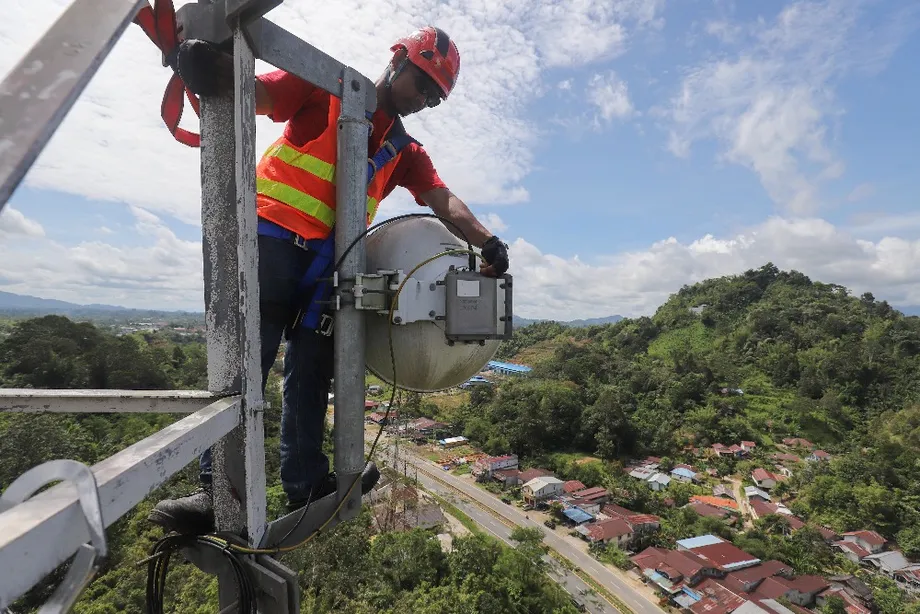
Budi Satria Dharma Purba, network director at PT Telkom Indonesia, told an October 20 discussion at Bali Tech Week that some regions outside Java have excess electricity supply. He argued for building data centers closer to energy and water sources, then extending telecommunications connections to those sites.
Budi also said most existing data center infrastructure was fully occupied and demand was queuing. He described a sharp increase in requests for development over the preceding six months, driven partly by electricity prices that he put at about one third of Singapore's.
Budi explained his preferred approach to locating new facilities:
If data center providers decide to build their facilities near energy and water sources, then telecommunications connectivity will be increased. In my opinion, this method is more efficient than having to bring energy sources from elsewhere.
What the electricity plan actually contains
PLN's Electricity Supply Business Plan for 2025 to 2034, known as the RUPTL, targets 69.5 GW of additional capacity. The ministry lists 42.6 GW from new and renewable energy, 10.3 GW from energy storage and 16.6 GW from fossil fuel generation, with potential investment of Rp2,967.4 trillion.
Bahlil also described a roughly 70 percent renewable share in remarks at the event. The ministry's detailed figures put new and renewable energy at about 61 percent of planned additions, rising to about 76 percent when storage is included. Storage holds electricity for later use and needs to be charged from a generating source.
The 20 GW data center requirement is equivalent to about 29 percent of the plan's 69.5 GW of additions. Other industries and households will also need electricity over that period, making the timing and location of new supply central to meeting demand.
Bahlil separately outlined a solar development ambition of around 100 gigawatts peak, covering large installations, floating projects, rooftops and industrial areas. Gigawatts peak measures solar panels' maximum rated output under standard conditions. Actual production changes with sunlight, weather and time of day, so continuous data center operations also require dependable supply when solar output falls.
Water and permits are already shaping projects
Batam's growth has been accompanied by public concern about water supply and the expansion of data centers. Cooling is a practical requirement: computers release heat as they work, and that heat must be removed to keep equipment operating safely.
Communication and Digital Minister Meutya Hafid said Indonesia should set the pace of artificial intelligence development according to its own resources and capabilities, while protecting basic public needs. She proposed stronger coordination across ministries for AI factories and data centers, rather than separate development by individual institutions.
West Java has already seen a project interrupted over permitting. The provincial government temporarily halted construction of BDx Data Center's AI Campus 2, known as CGK4, in Jatiluhur, Purwakarta, amid concerns that environmental assessment documents and building approval had not been completed.
The Batam water debate and the Jatiluhur halt bring the investment challenge down to everyday decisions: how much water a site can use, whether environmental requirements have been completed, and whether construction has the necessary approvals. Electricity contracts alone leave those tasks to be resolved.
New rules would connect cables, sites and power
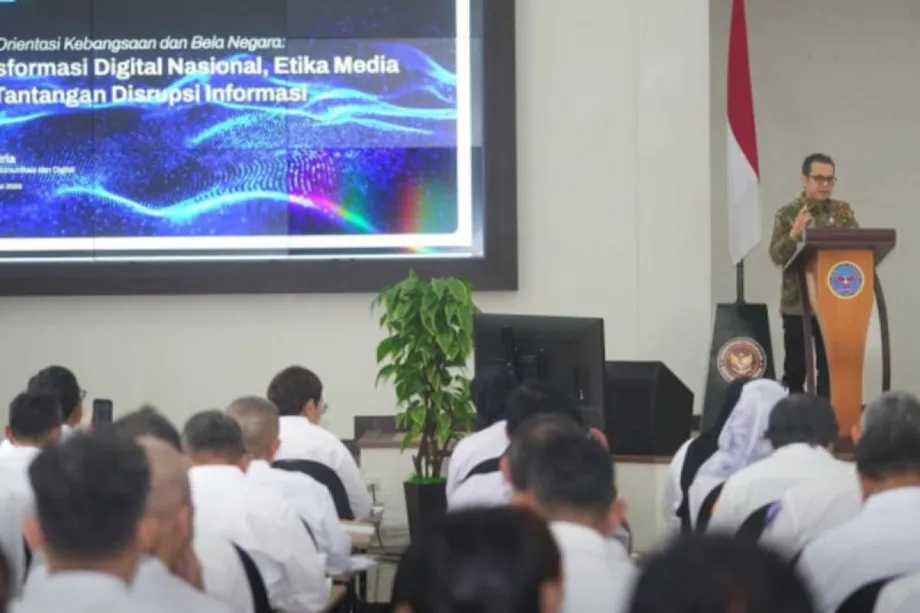
Wayan Toni Supriyanto, director general of digital infrastructure at the Ministry of Communication and Digital, said a draft presidential regulation on undersea cables and data centers had reached public consultation. Its scope brings together infrastructure decisions that often involve different authorities.
The draft covers the location and availability of electricity with low emissions, the scale of data centers, telecommunications capacity, land, cooling systems and simpler licensing across sectors. It also addresses connections to national and international digital hubs.
Wayan said policy is gradually encouraging development beyond Greater Jakarta and Batam. Choosing sites would take account of market demand, renewable energy access, disaster risks and telecommunications connectivity. Different regional conditions would require coordination with network operators and other parties.
Mehdi Paryavi, chairman of the International Data Center Authority, called for a national master plan covering electricity certainty, site planning, digital governance and skilled workers. He argued that Indonesia should build an industry capable of sustained development, rather than rely primarily on taking demand that other Southeast Asian locations cannot accommodate.
Bahlil's proposed partnership rules add another requirement for investors. The government wants national and regional entrepreneurs involved in projects, linking the arrival of large digital facilities to opportunities for Indonesian businesses.
How Indonesia compares with its neighbors
Indonesia had 204 data center facilities across 32 cities in September 2026, according to DataCenterMap listings. The dataset placed it fourth in Asia by facility count, behind China with 376, India with 305 and Japan with 261.
Jakarta accounted for 107 listed facilities, or just over half the Indonesian total. Batam had 20 and Surabaya nine. The distribution shows how heavily investment remains concentrated despite the presence of facilities across the country.
Capacity figures give another view of regional competition. MNC Sekuritas research, citing Cushman & Wakefield data, put Greater Jakarta at 62 operational facilities with 356 MW of capacity. It listed another 395 MW under construction and 1,304 MW planned. Those figures describe a different coverage area and measurement from the facility directory.
Singapore had 1,068 MW of operational capacity and Johor in Malaysia had 1,110 MW in the same research. Greater Jakarta's 356 MW was therefore about one third of either hub's operating capacity. Its construction and planning pipeline shows substantial ambition, with delivery dependent on electricity connections, permits and customer demand.
Company expansion plans add to the demand for power. DCI Indonesia had 132 MW of facility capacity and development potential exceeding 2 GW; BDx Indonesia had about 102 MW operating. Telkom's NeutraDC had approximately 90 MW and was targeting 300 MW by 2030.
The dates that define the expansion
Indonesia's plans combine a current investment pipeline with forecasts and electricity construction extending into the next decade. The main dates show how those separate schedules fit together:
- September 4, 2026: MNC Sekuritas published research estimating about 650 MW of installed Indonesian data center capacity and projecting 11.7 GW by 2030.
- October 19, 2026: Bahlil outlined the additional 20 GW electricity requirement and the Batam, Karimun and Bintan hub proposal at Bali Tech Week.
- October 20, 2026: Industry and government speakers discussed site selection, electricity connections and the draft regulation on undersea cables and data centers.
- October 23, 2026: Bali Tech Week was scheduled to conclude after five days of events.
- 2030: NeutraDC targets 300 MW of operational capacity, alongside the broader industry growth forecast.
- 2025 to 2034: PLN's electricity supply plan schedules 69.5 GW of additional capacity across generation and storage.
PLN and investors now face a practical coordination task: match proposed data center sites with electricity projects, network connections, water arrangements and approvals. The government is seeking investment on a scale that can support a regional digital hub, while communities need dependable access to the same basic resources.
Key Points
- Bahlil put Indonesia's additional data center electricity requirement at 20 GW, citing discussions with PLN.
- Batam, Karimun and Bintan are being promoted as a new Indonesian data center hub.
- Batam has 1.47 GW of available, committed or developing capacity, and PLN Batam has signed a 450 MW supply contract with DayOne.
- Electricity connection waits in Greater Jakarta and Batam can reach two years, according to industry research.
- PLN's 2025 to 2034 plan lists 42.6 GW of new and renewable energy, 10.3 GW of storage and 16.6 GW of fossil fuel generation.
- Water supply, environmental approvals, telecommunications connections and local business participation are central to delivering the expansion.