A living pigeon is central to an extinct bird's proposed return
Colossal Biosciences says its new artificial intelligence platform has identified about 2,300 DNA targets that may help explain the dodo's distinctive beak and facial structure. The Dallas biotechnology company's proposed route to a living bird runs through a species found in the Andaman and Nicobar Islands and elsewhere in Southeast Asia: the Nicobar pigeon.
Contents
- A living pigeon is central to an extinct bird's proposed return
- Why one surviving genome creates a difficult puzzle
- How GenoMorph searches for the dodo's beak
- What makes the Nicobar pigeon useful?
- Growing reproductive cells was an earlier turning point
- Why chickens are part of the plan
- A faster way to test changes inside an egg
- How closely could an engineered bird match a dodo?
- Mauritius needs more than a bird ready to hatch
- Conservation benefits and the debate over priorities
- Key Points
The company now has 36 Nicobar pigeons in a breeding colony in Texas. It plans to use their cells as the starting material for birds carrying selected dodo traits, combining ancient DNA, genetic engineering and reproductive techniques involving surrogate chickens.
Colossal's GenoMorph announcement describes a tool trained on developmental data from quails, ducks, chickens and pigeons. Its purpose is to narrow a vast list of genetic differences to candidates that scientists can test in the laboratory.
The project faces three connected tasks: finding which DNA changes produce the desired features, making those changes in cells that can pass them to offspring, and preparing a suitable habitat in Mauritius, the dodo's only native home. Progress in each area is needed before an engineered bird could become part of a breeding population there.
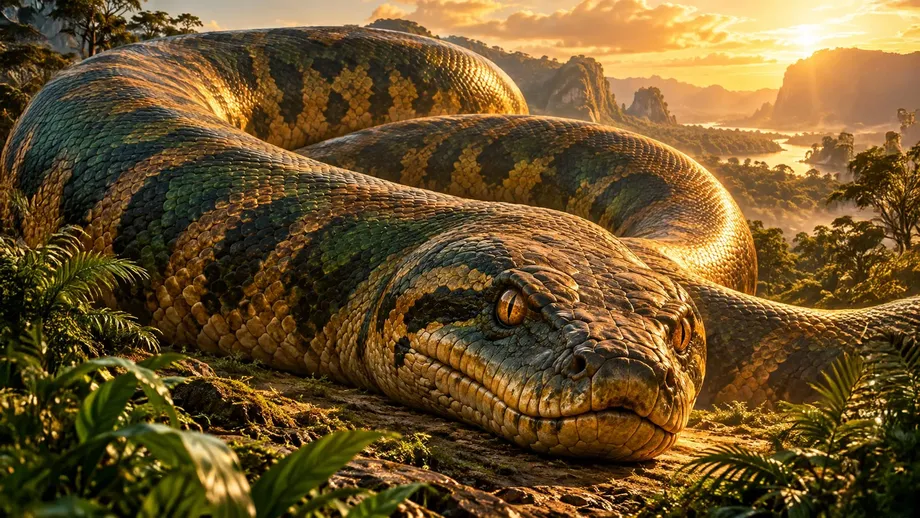
The company describes its intended animal as a functional dodo, carrying key characteristics of the extinct species. The Natural History Museum describes the proposed result as a dodo-like pigeon. That difference in language reflects a central scientific debate about how closely an engineered bird could match an animal whose appearance and behaviour are still incompletely understood.
Why one surviving genome creates a difficult puzzle
Colossal has assembled one high quality dodo genome, compared with 104 woolly mammoth genomes cited in its GenoMorph announcement. A genome is an organism's collection of genetic instructions. Having many examples helps researchers identify which differences are common within a species and which are associated with particular traits.
Mauritius presents a difficult environment for preserving those instructions. Heat and moisture break DNA into fragments, while the colder conditions associated with mammoth remains have preserved much more material. With only one high quality dodo genome, scientists have fewer opportunities to check whether a particular genetic feature was typical of dodos.
Beth Shapiro, Colossal's chief science officer, worked with Tom Gilbert and John Fjeldså of the University of Copenhagen to lead the sequencing and assembly team. They used DNA extracted from a skull held by the Natural History Museum of Denmark, according to the company's dodo project plan.
Colossal says the genome was sequenced at around 50X coverage. This means its DNA positions were read about 50 times on average, helping researchers check the sequence. The company has also described the genome as approximately 95% filled and its analysis as nearing completion. Coverage measures repeated reading; completeness concerns how much of the sequence has been recovered.
How GenoMorph searches for the dodo's beak
GenoMorph combines information about living birds with the ancient dodo sequence. Colossal says its training material includes regulatory DNA sampled across six stages of embryonic development and three regions involved in facial development, alongside genetic information and skull measurements from more than 70 bird species.
Regulatory DNA acts like a set of switches and dimmers. It helps control when a gene becomes active, where it works and how strongly it acts. Changes to these controls can affect the shape of a developing beak or skull.
The company's detailed breakdown lists 653 candidate regulatory elements associated with beak size and 1,698 associated with thickness and breadth. Together, those categories total 2,351 candidates, consistent with the approximate headline figure of 2,300 targets.
Shapiro explained how the company is moving from computer predictions to experiments:
So instead, GenoMorph studies how skulls and beaks develop across more than 70 living bird species and learns which genetic switches control their shape. It gave us a shortlist of about 2,300 candidates linked to beak size and shape. These targets are now being validated in the lab.
Laboratory validation means changing or testing a candidate DNA region and observing what happens. Researchers must work out which candidates affect development, how large their effects are and how they interact before choosing changes for the Nicobar pigeon cells.
What makes the Nicobar pigeon useful?
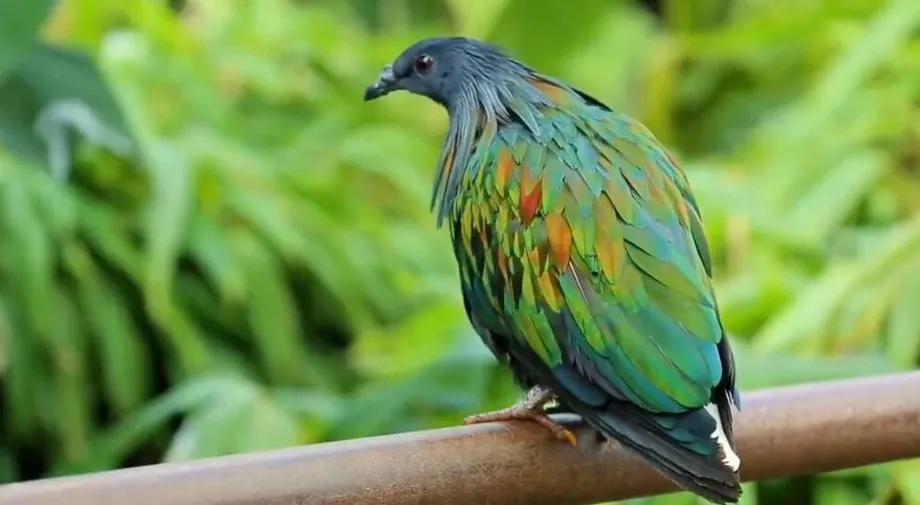
The Nicobar pigeon is the dodo's closest living relative. Its shimmering green and copper feathers and ability to fly make it look very different from the extinct bird, yet its genetic relationship makes it the foundation of Colossal's engineering plan.
The extinct Rodrigues solitaire provides another important comparison. Colossal identifies it as the dodo's closest genetic relative and is using its genome to help understand which features the two extinct birds shared. The distinction is straightforward: the solitaire offers ancient genetic information, while the living Nicobar pigeon can provide cells for experiments and reproduction.
Colossal says successful breeding has expanded its Texas colony to 36 birds. The colony allows researchers to study development, reproduction and genetics, while supplying the specialised cells needed for the proposed reproductive approach.
Those cells are called primordial germ cells, or PGCs. They are early cells that eventually become eggs or sperm. Editing them offers a way to pass genetic changes to offspring, rather than changing only the body of a single bird.
Growing reproductive cells was an earlier turning point
Colossal previously announced that it had grown primordial germ cells from the rock dove, the common pigeon found in cities, for 60 days. Its researchers tested more than 300 combinations of nutrients, growth factors and other ingredients before finding conditions that kept the cells growing.
Anna Keyte, Colossal's avian species director, said an established recipe for chicken germ cells had failed in other tested birds, including quail. Each species can require different conditions, making the pigeon result a practical step toward work with Nicobar pigeon cells.
The rock dove research had not undergone peer review when announced. Peer review is an assessment by other researchers before publication in a scientific journal. Colossal subsequently said it had created the essential cells that become eggs and sperm in its Nicobar pigeon work.
The next reproductive test described after the rock dove announcement was to use cultured pigeon cells to produce living pigeons through surrogate chickens. Colossal's plan also calls for testing different conditions to improve the growth of Nicobar pigeon primordial germ cells, then introducing selected dodo traits into those cells.
Why chickens are part of the plan
Bird reproduction requires a different approach from the cloning methods used in mammals. Colossal's strategy relies on chickens carrying reproductive cells derived from pigeons, with the chickens' own germ cells removed through genetic engineering.
Researchers would transfer edited pigeon primordial germ cells into developing chicken embryos. The intended result is adult surrogate birds that produce eggs or sperm derived from the transferred cells. Breeding through this system would then produce offspring carrying the selected genetic changes.
Chickens are useful because scientists already have extensive experience with their genetics and reproduction. Colossal also says their limited flight makes them easier to manage than pigeons.
Shapiro has explained that the need to establish maternal and paternal lines adds time. Researchers must obtain birds producing the required reproductive cells and breed them so offspring receive the intended changes from both parents. The company's project plan also identifies the limited efficiency of making many genetic edits at once as a technical constraint.
A faster way to test changes inside an egg
Colossal says it has developed lipid nanoparticles that can deliver genetic tools directly into developing bird embryos. These tiny particles made from fatty materials carry DNA, RNA or CRISPR components into cells. CRISPR is a tool used to make targeted changes to DNA.
The proposed advantage is speed. Scientists can observe how an edit affects embryonic development without waiting for a bird to mature and complete a breeding cycle. That could help them screen GenoMorph's candidates before committing to the longer reproductive process.
Initial experiments targeted Runx2, a gene involved in bone development, in birds including rock dove and duck embryos. Colossal reported visible changes to skull and facial features after those edits.
The company says preliminary findings have been presented at conferences on craniofacial development and molecular biology, with a paper planned for the bioRxiv preprint server. A preprint makes research publicly accessible before journal peer review. The next experimental task is to test the candidate regulatory elements and select promising changes for Nicobar pigeon germ cells.
How closely could an engineered bird match a dodo?
The Natural History Museum's dodo facts guide explains a basic difficulty: researchers have limited evidence about how dodos looked and behaved. No complete taxidermied specimen survives, and only two almost complete skeletons contain bones known to belong to a single individual. Both are held in Mauritius.
The museum estimates that dodos stood about 70 centimetres tall and weighed around 12 kilograms. Colossal's project page gives a larger range of 81 to 97 centimetres and 13 to 23 kilograms. The museum says weight probably changed with the seasons, and research depicts a more slender, agile bird than many familiar illustrations suggest.
Scott MacDougall-Shackleton, cofounder and director of Western University's Advanced Facility for Avian Research, says development involves interactions among genes, parental biology, hormones and the environment. He explained why he challenges the company's description of its goal:
During development our genome interacts with parental genomes, hormones and the environment such that genes are turned on or off in complex ways that we cannot know and cannot repeat for an extinct species.
Leonardo Campagna, an evolutionary biologist at the Cornell Lab of Ornithology, has also questioned how much scientists can reconstruct about the dodo's genetic architecture and its interactions with the environment. Colossal's position is that recreating key traits and ecological functions is its goal, rather than producing a completely identical genetic copy.
Mauritius needs more than a bird ready to hatch
Mauritius lost the dodo after hunting, habitat changes and introduced animals transformed the island. Rats, pigs and other arrivals threatened birds and nests. Any release programme would have to address those pressures while providing enough suitable habitat for a growing population.
The historical sequence also shows why the last sighting and the estimated extinction date are different:
- 1598: Dutch sailors reached Mauritius, where dodos had evolved without the introduced predators that followed human settlement.
- 1662: The best known reliable sighting was recorded. The Natural History Museum also discusses a possible sighting as late as 1680.
- Around 1690: Researchers David Roberts and Andrew Solow estimated the extinction date in an analysis published in 2003, cited by Colossal.
- 1865: The discovery of the Mare aux Songes marsh deposit provided extensive remains that helped scientists reconstruct the dodo's environment.
Colossal says it is working with Mauritian scientists, conservation groups and the government, including a partnership with the Mauritian Wildlife Foundation. Its search includes sites free of rats. Chief executive and cofounder Ben Lamm says release sites will be selected after ecological work and community consultation.
Lamm has described an ambition to produce thousands of birds with engineered genetic diversity. Shapiro says any introduction would proceed gradually. The latest AI announcement supplied no hatching date; Lamm's earlier estimate of at least five to seven years was a projection made during the reproductive cell announcement, rather than a newly confirmed schedule.
Conservation benefits and the debate over priorities
The techniques could also be used for birds that are still alive. Growing reproductive cells, preserving them and transferring useful genetic variants could help populations with little genetic diversity or severe disease threats.
Colossal points to the Mauritius pink pigeon, whose population its project page estimates at 375 to 490, compared with 77 birds in the wild in 1994. Those figures describe a recovery alongside continuing problems with inbreeding and disease, including infection by the parasite Trichomonas gallinae.
Cock van Oosterhout, a professor of evolutionary genetics at the University of East Anglia, sees potential in identifying disease resistance in historical samples or related species and introducing it into vulnerable populations. He has received a Colossal donation for his pink pigeon research. His position is that such technology can assist recovery, while habitat loss and other causes of the biodiversity crisis still require direct action.
Oxford biologist Rich Grenyer has warned that promises of revival could weaken the urgency of preventing extinctions. His concern is a moral hazard: people may become more willing to accept damage if they believe an extinct species can later be replaced.
Colossal's financing gives those arguments practical weight. Alongside its earlier cell announcement, the company disclosed $120 million in additional funding, bringing the total raised to $555 million and its valuation to $10.2 billion. Investor and XPRIZE founder Peter Diamandis has also announced NeoGenesis Capital to back businesses using Colossal's programmable biology platform in health, agriculture and conservation.
The dodo project now connects substantial private funding with specific laboratory tests and conservation planning. Its next milestones are concrete: validate the DNA candidates, produce healthy offspring carrying useful edits and establish conditions in Mauritius where a population could survive.
Key Points
- Colossal says GenoMorph identified about 2,300 candidate DNA targets associated with the dodo's beak and facial structure.
- The company has one high quality dodo genome and a colony of 36 Nicobar pigeons in Texas.
- The proposed reproductive route uses edited pigeon germ cells and surrogate chickens.
- Embryo experiments and laboratory validation are intended to identify which genetic changes produce useful traits.
- The intended bird would carry selected dodo characteristics; scientists debate how closely it could reproduce the extinct species.
- No hatching date accompanied the AI announcement, and release planning requires habitat work and consultation in Mauritius.