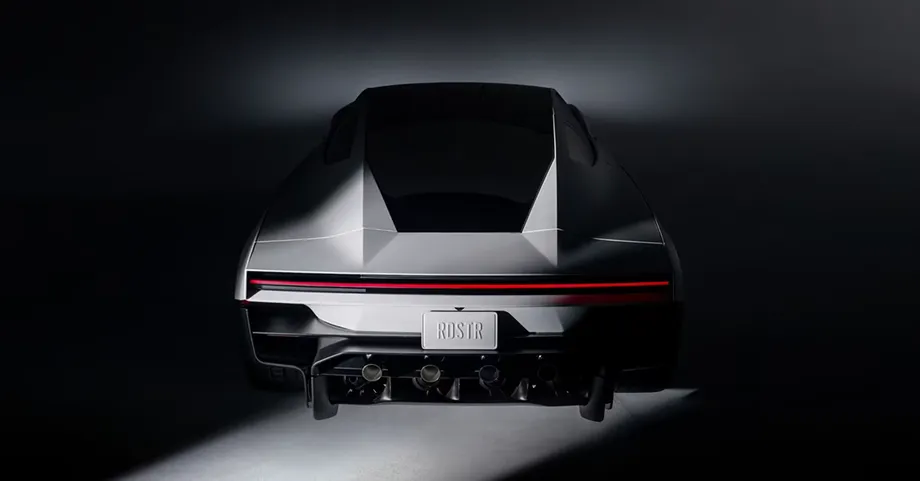
Large deposits, a 2028 production target and no delivery date
Tesla has opened Hong Kong reservations for its next Roadster, asking buyers for HK$390,000 for the Performance version or HK$1.95 million for the limited Thrust version. Those payments secure reservations, not finished cars. Final prices and delivery dates have not been announced, and chief executive Elon Musk has named 2028 as the planned start of production.
Contents
- Large deposits, a 2028 production target and no delivery date
- What the reservation payment actually covers
- Three versions with different purposes
- How the car generates grip while standing still
- Thrusters, a 0.81 second sprint and airborne stunts
- A steering wheel on the left complicates Hong Kong plans
- From a 2017 promise to a 2028 target
- A showcase product with a limited sales market
- Key Points
The Performance payment begins with HK$39,000 due immediately, followed by HK$351,000 within 10 days. Tesla describes the initial payment as fully refundable. Its Hong Kong reservation agreement says a reservation is not a formal vehicle order, with the final configuration, price and delivery arrangements still to be settled.
For Hong Kong buyers, another practical issue comes before the extraordinary performance claims: Tesla currently lists the Roadster only with the steering wheel on the left. Whether buyers will be able to register and drive it legally on local roads remains unclear. The most extreme version, the single seat Rocket, is explicitly described as not approved for public road use.
The reservations follow an October 15, 2026 demonstration at the SpaceX test site in McGregor, Texas. A prototype climbed a curved ramp, remained upside down, flipped through the air and hovered before landing. The presentation brought together two Musk companies and revived a vehicle project that first collected deposits in 2017.
Behind the spectacle are three different propositions: a sports car using fans and movable aerodynamic parts, a version adding acceleration thrusters, and an invitation only machine with a full flight system. Understanding which equipment belongs to which version matters as much as the headline acceleration figure.
What the reservation payment actually covers
Tesla's Hong Kong reservation page sets out the Performance payment in two stages. The HK$39,000 initial payment accounts for 10% of the HK$390,000 total reservation deposit. The remaining HK$351,000 must arrive within 10 days.
Tesla says reservations are not final until payment is received and may be cancelled if payment is not completed within that period. Buyers reserving either Performance or Thrust therefore face a short payment deadline for a vehicle whose production target is still in the future.
The Thrust deposit of HK$1.95 million is five times the Performance deposit. Neither amount is the purchase price, so buyers cannot yet calculate the balance they would eventually owe. Tesla has also not announced a purchase price for Rocket.
The payment page places a qualification alongside its refund language: while it calls the initial HK$39,000 fully refundable, it also says refunds for modifications will not be issued. Buyers need to account for both statements when considering changes to a reservation.
The US reservation process uses the same two stage structure: US$5,000 by credit card, followed by US$45,000 by wire transfer within 10 days. Reservations have also reopened in the United States, Canada and China, extending the renewed sales push beyond Hong Kong.
Three versions with different purposes
Tesla's current range begins with Performance, a model with two seats that the company describes as ready for the road. It includes active aerodynamics and a suction system beneath the car. Active aerodynamics means that parts such as wings can change position to adjust how air pushes against the vehicle.
Thrust also has two seats, but adds cold gas thrusters at the rear. Tesla presents it as a limited release intended for racing, with the extra propulsion providing a brief burst of acceleration.
Rocket has one seat and is available only by invitation. Its thrusters are positioned around the vehicle, allowing forward and upward acceleration as well as rotation sideways. Tesla describes it as having a full flight system and states that it is not approved for public road use.
Current Tesla product pages call the limited version Thrust. Some descriptions of the launch instead use the older Founders Series name for a reservation costing US$250,000. The current Performance, Thrust and Rocket labels give buyers the clearest guide to the range now being advertised.
Tesla also warns that features and specifications shown on its main product page reflect the optional Thrust upgrade, while several flight related passages carry a footnote assigning those capabilities to Rocket only. Readers therefore need to check the version and footnotes attached to each claim rather than assume every Roadster includes every demonstrated feature.
How the car generates grip while standing still
Tesla's Roadster product page describes a system of powered fans and seals beneath the body. The fans remove air from under the car, creating a pressure difference that pushes it toward the surface below.
Ordinary aerodynamic wings usually become more effective as a car gains speed. A powered fan can create suction even when the vehicle is stationary. Tesla says its system produces enough downforce, the force pressing a car toward the driving surface, to hold the Roadster upside down without moving.
Track Mode lowers the car and changes the suspension. Drivers can then select settings that favour more downforce for grip or less air resistance for speed. Active wings work alongside the fans to manage traction and cornering.
The launch demonstration reportedly included the prototype stopping upside down on a curved ramp before leaving the surface and turning in the air. Descriptions of the event put the fan system's downforce at up to twice the vehicle's weight. Tesla's product page makes the upside down claim but does not publish that numerical figure.
Magnesium, titanium and carbon fiber help reduce vehicle mass. Tesla also lists a fixed seating position and manual controls among its design choices. Less mass means the systems moving or rotating the vehicle have less weight to accelerate.
Thrusters, a 0.81 second sprint and airborne stunts
The prototype recorded a displayed time of 0.81 seconds from rest to 60 mph, about 97 km/h, during the launch demonstration. Tesla's Hong Kong page describes Thrust as accelerating from 0 to 100 in under one second, without stating the unit in that line. The two figures use different endpoints.
Cold gas thrusters work by releasing compressed gas through nozzles. Unlike a rocket engine that burns fuel, the immediate push comes from stored pressure. Descriptions of the prototype identify about 10 thrusters, around 260 kilograms of compressed air and an onboard compressor to replenish the supply.
Tesla says electric actuators make small adjustments within fractions of a second, controlling thrust precisely enough to help stabilize the vehicle in flight. The hardware described at the event also included pressure vessels and diffusers developed with SpaceX.
The aerial presentation reportedly included a stationary flip and a leap over parked vehicles and a Tesla Semi truck. The stunts used programmed remote control, with an Optimus humanoid robot placed in the driving seat. No human occupant was carrying out those airborne movements.
Speed claims require similar attention to their wording. One launch account gives a maximum speed of 230 mph, while Musk described half the speed of sound as a target. Tesla has not announced a complete set of final specifications for each production version.
Musk, Tesla's chief executive, gave a blunt description of the vehicle's priorities during the presentation:
This is not necessarily a safety-optimized car.
A steering wheel on the left complicates Hong Kong plans
Hong Kong traffic drives on the left, and the local vehicle market generally uses cars with the steering wheel on the right. Tesla's present offer is limited to left hand drive. That makes local registration requirements a central issue for prospective owners.
Tesla states that availability depends on each region's legal requirements and applicable laws. Its description of Performance as ready for the road sits alongside that regional qualification. A Hong Kong reservation can therefore be made while the question of local road access is still unresolved.
Rocket faces an explicit restriction: Tesla says it is not approved for public road use. Its invitation process and flight equipment place it in a different category from the conventional idea of ordering a sports car for daily driving.
The prototype also uses steer by wire, in which electronic signals convey steering commands, and a yoke rather than a conventional circular wheel. A central touchscreen and two smaller forward displays provide driving information.
The demonstration vehicle did not include Tesla's FSD automated driving system. Musk said the Roadster would be the last Tesla intended to be controlled by a human driver, presenting it as a driving experience at a time when the company is also pursuing vehicle automation.
From a 2017 promise to a 2028 target
Tesla first presented the second generation Roadster in November 2017 as a car with four seats, with production originally planned for 2020. The latest Performance and Thrust designs have two seats, while Rocket reduces that to one.
The project has passed through repeated missed delivery targets. Its main milestones show how far the design and timetable have moved:
- November 2017: Tesla unveils the second generation Roadster and begins accepting reservations.
- 2020: The original planned production year passes without the vehicle entering production.
- October 1, 2026: The planned unveiling date is postponed.
- October 15, 2026: Tesla demonstrates the new prototype at the SpaceX test site in McGregor.
- 2028: Musk's latest target for starting production.
The interval between the first unveiling and the new production target is 11 years. The latest target is eight years later than the original 2020 plan. Starting production and delivering a car to an individual customer are separate stages, particularly when sales span several regions.
Tesla originally discussed prices of about US$200,000 for the base Roadster and US$250,000 for the Founders Series. Those figures belong to the 2017 proposal; the company has yet to set the price of the newly demonstrated range.
Lawrence O'Connor, founder and chief executive of Other World Computing, reserved a Founders Edition in November 2017. He described his US$250,000 payment as an:
interest-free loan
O'Connor kept his reservation and attended the latest demonstration. His experience illustrates the concrete cost of waiting: a substantial sum can remain committed to a reservation for years before a vehicle is ready.
A showcase product with a limited sales market
The Roadster brings Tesla's vehicle engineering together with SpaceX propulsion technology in a product aimed at a small group of wealthy buyers. Its public role extends beyond the number of cars Tesla might sell: it displays technologies and draws attention to the brand.
A financial scenario discussed around the launch assumes 7,000 sales during the first 12 months at an average price of US$280,000. Multiplying those figures gives US$1.96 billion in revenue. Both the selling price and sales volume are assumptions, and revenue would still have to cover manufacturing and other costs.
Andrew Rocco, a strategist at Zacks, has argued that the high price and narrow market would limit the Roadster's effect on Tesla's financial results. The scale of the reservation deposits already points to a product far removed from the company's mass market vehicles.
The joint development has also encouraged speculation about a Tesla and SpaceX merger. SpaceX chief operating officer Gwynne Shotwell said a merger might make Musk's life easier, while Barclays analyst Dan Levy forecast a possible transaction before the end of 2026. The Roadster announcement itself concerned a vehicle developed through collaboration, with no merger agreement announced at the event.
For a prospective Hong Kong buyer, the immediate decision remains more practical than the corporate speculation: whether to commit HK$390,000 or HK$1.95 million before learning the final purchase price, personal delivery schedule and route to local road registration.
Key Points
- Hong Kong reservation deposits are HK$390,000 for Performance and HK$1.95 million for Thrust.
- Performance requires HK$39,000 immediately and HK$351,000 within 10 days. Tesla calls the initial payment fully refundable.
- A reservation is not a formal vehicle order. Final prices and customer delivery dates have not been announced.
- Musk targets production in 2028, following the project's first unveiling in 2017.
- Performance and Thrust have two seats. The invitation only Rocket has one seat and is not approved for public road use.
- Tesla currently offers only left hand drive, leaving Hong Kong road registration unresolved.
- The prototype demonstrated a displayed 0.81 second sprint to 60 mph and remotely controlled aerial stunts.