Legal drafting advances, but signing depends on tariff terms
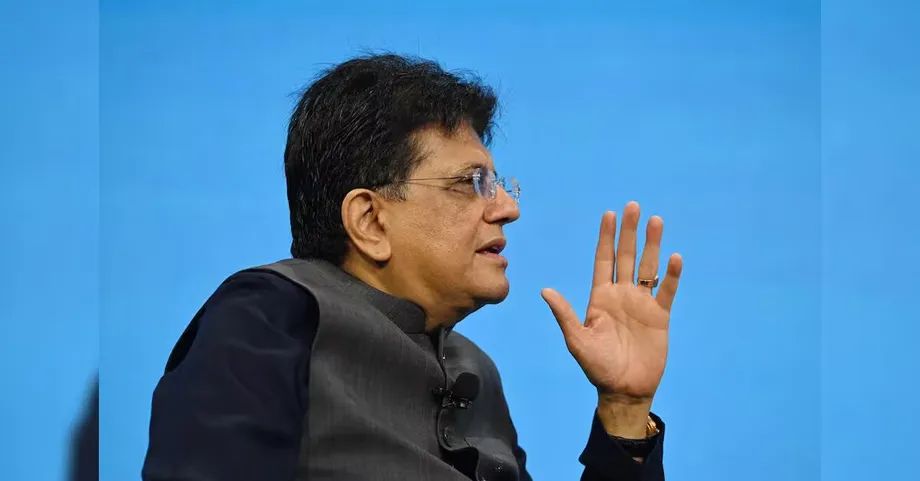
India said on October 15, 2026, that the first phase of its trade agreement with the United States had been finalised and was undergoing legal drafting. Commerce and Industry Minister Piyush Goyal said the pact would be put into operation once India secured a competitive advantage over rival exporters, making the final US tariff structure central to the agreement.
Contents
- Legal drafting advances, but signing depends on tariff terms
- Why India wants an edge over competing exporters
- Product details remain on the negotiating table
- Why the US tariff framework is being rebuilt
- Russian energy purchases create another tariff risk
- Exports are growing, raising the stakes for businesses
- Rubio visit brings energy and investment into focus
- India sets out a separate timetable for Europe
- The dates shaping the next stage
- Key Points
The negotiations concern a market that bought $42.79 billion in Indian goods between April and August, compared with $40.39 billion during the same period a year earlier. India is seeking preferential access and more predictable tariffs as Washington revises its trade arrangements following a Supreme Court ruling against the use of emergency economic powers to impose duties.
Commerce Secretary Rajesh Agrawal said negotiators were moving towards an agreement, while US Ambassador to India Sergio Gor said the broad framework and major issues had been settled. Their comments described substantial progress, with legal work and discussions over individual products continuing.
Agrawal, speaking at a briefing on trade data, expressed India's ambition to move quickly:
We anticipate concluding and signing the trade deal at the earliest possible time.
Signing and implementation remain separate steps. The legal text must turn the negotiated terms into precise commitments, while the tariff arrangements determine what businesses will actually pay when goods cross the border. Agrawal said the timing would be mutually agreed and would depend on the formalisation of the US tariff structure and outcomes under Section 301, a US trade law provision used to respond to trading practices Washington considers unfair.
Why India wants an edge over competing exporters
Goyal identified Bangladesh, Vietnam and Indonesia as competing exporters against which India seeks favourable treatment in the US market. New Delhi wants Indian businesses to face tariffs no higher than those imposed on competitors, while pursuing an advantage where possible.
A tariff is a tax charged when a product enters a country, usually paid by the importing business. If otherwise similar products face different duties, the product with the lower tariff can be cheaper to import. The difference can affect which supplier receives an order, especially when buyers are comparing prices closely.
Goyal, explaining the condition for putting the agreement into operation, said:
US bilateral trade agreement's first tranche has been finalised and it is going through final contours, the legal drafting and we hope to be able to finalise that soon and operationalise that once we get the competitive advantage over our peer countries.
India's demand therefore concerns both the rate applied to its exports and the rates applied to competing countries. A reduction in India's tariff can help exporters, but its commercial value also depends on what a US buyer would pay to import a comparable product from elsewhere.
Product details remain on the negotiating table
Gor told the Bloomberg New Economy Forum in New Delhi that negotiations had reached discussions about individual products and tariff percentages. He said he had participated in negotiating sessions involving US Trade Representative Jamieson Greer and Goyal.
The ambassador described the state of the talks this way:
The big picture, the big framework, the big items are done.
Gor said smaller matters were still being negotiated. He pointed to the size of the two economies, India's population of 1.4 billion and the many products and sectors involved as reasons why matching commitments takes time. Negotiations had been under way for about a year and a half.
Agrawal said negotiators had identified the sticking points by the end of June and that those differences had since narrowed. The remaining product discussions matter because a broad agreement must eventually specify which goods receive which treatment. Businesses need those details to calculate costs and decide whether a new trading arrangement makes an order commercially attractive.
Why the US tariff framework is being rebuilt
India and the United States agreed to a framework in February 2026 that brought the tariff on most Indian goods down from 50% to 18%. The higher rate had been imposed in August 2025 after an earlier round of negotiations collapsed.
The February change was a reduction of 32 percentage points. For a product valued at $100 for customs purposes, the difference between those two rates would be $32 in tariff charges, before other applicable costs. That illustrates why the legal basis and durability of the final rate matter to importers and exporters.
The US Supreme Court subsequently ruled against the administration's use of emergency economic powers for the tariffs. Gor said Washington had consequently needed to rework parts of the earlier trade arrangement.
Agrawal linked signing to that work in Washington. He said the United States was rebuilding its tariff structure and that outcomes under Section 301 would help determine when the two sides could proceed. India is seeking stability as well as preferential rates because a business agreeing to supply goods over several months needs to estimate the charges its customer will face throughout that period.
Russian energy purchases create another tariff risk
A second US policy decision could affect the negotiations: whether President Donald Trump will impose tariffs connected to purchases of Russian oil and gas. India continues to buy Russian oil and has defended its ability to purchase energy from different regions to meet the needs of its population.
The Lindsey O. Graham Sanctioning Russia and Iran Act of 2026, signed on September 18, authorises tariffs of up to 100% on major buyers of Russian energy. Gor said the legislation received 86 votes in the 100 member Senate and covered oil, gas and sanctions evasion. The duties require a presidential decision, and Gor said no country had yet been sanctioned under the legislation.
Gor expected a determination within about 10 days of his October 15 remarks; a stated deadline of 30 days from the September 18 signing would instead fall around October 18. The precise decision date and any exemption for India were unresolved, as were the final US deal date, remaining product terms and published tariff schedule.
The ambassador said decisions on relief for India rested with Trump. Explaining the administration's stated purpose for the sanctions powers, Gor said:
The goal is not to punish anyone. The goal is to try to bring an end to this war.
Ajay Srivastava of the Global Trade Research Initiative warned that Washington could use the threat of duties over Russian oil purchases to press New Delhi into an unequal agreement. He linked that warning to Washington's decision to buy Russian diesel, saying it had raised hopes of relief for India while leaving the possibility of tariff pressure in place.
Exports are growing, raising the stakes for businesses
India's goods exports to the United States increased by $2.40 billion between April and August compared with the same period a year earlier. Using the reported figures of $42.79 billion and $40.39 billion, that represents growth of about 5.9%.
India also recorded a trade surplus of nearly $34 billion with the United States in the fiscal year 2025/26. A trade surplus means a country sells more to a trading partner than it buys from that partner. The figures show why access to US customers is a substantial commercial issue for India.
For an exporter, a favourable tariff can support a competitive price. Greater predictability also makes it easier to agree on delivery schedules, buy materials and plan production. For a US importer, stable duties make the eventual cost of goods easier to estimate.
Agrawal's two stated goals, preferential market access and tariff stability, address those different needs. Preferential access concerns the treatment Indian products receive relative to alternatives. Stability concerns whether companies can rely on that treatment when making commitments that extend beyond a single shipment.
Rubio visit brings energy and investment into focus
US Secretary of State Marco Rubio was scheduled to visit India and Uzbekistan from October 17 to 22, meeting government and business leaders for discussions that included energy cooperation, commercial investment and broader economic ties. The visit places those issues alongside the final work on the trade pact.
Gor highlighted business activity beyond goods trade. He cited Reliance Industries' plans for a US refinery, describing it as the first such project in the country in 50 years. He also named Google, Microsoft, Adobe and Micron when discussing investment in India's data centres and semiconductor manufacturing, and pointed to cooperation in defence production.
Those investments give the relationship a wider commercial base. A refinery processes crude oil into fuels and other products; data centres house computing systems; semiconductor factories produce chips used in electronic equipment. Each involves substantial decisions about where to build, employ workers and buy supplies.
The talks are also taking place amid diplomatic strains. Tensions have included Trump's repeated claim that he brokered an India-Pakistan ceasefire and a US military attack on a ship off Oman that killed three Indian seafarers. The trade negotiations have continued against that difficult backdrop.
India sets out a separate timetable for Europe
Goyal also said the India-European Union free trade agreement would be signed in December 2026 and could take effect in February or March 2027. That gives businesses a more specific timetable for the European agreement than the one offered for the US pact.
The distinction between completing negotiations, signing an agreement and bringing it into force is useful here. Negotiators first settle the terms. Signing records the agreement between the parties. Entry into force is the point when its commitments begin to operate, following the required legal steps.
Gor contrasted roughly a year and a half of India-US negotiations with the nearly two decades taken by the India-EU process. His comparison reflected optimism about the pace of the American talks, while Goyal's comments kept the focus on the commercial terms India wants before implementation.
For Indian companies serving both markets, the next practical milestones are the final tariff schedules and the dates when the respective commitments begin. Those details will allow businesses to compare the cost of supplying customers in the United States and Europe.
The dates shaping the next stage
The negotiations stretch across an earlier tariff escalation, a framework agreement and new US sanctions powers. The main milestones are:
- August 2025: US tariffs on most Indian goods reached 50% after an earlier round of talks collapsed.
- February 2026: A bilateral framework lowered the rate on most Indian goods to 18%.
- End of June 2026: Negotiators had identified the sticking points, according to Agrawal.
- September 18, 2026: Trump signed legislation authorising tariffs connected to Russian energy purchases.
- October 15, 2026: Indian officials said the first phase was undergoing legal drafting, while Gor said the major issues were settled.
- October 17 to 22, 2026: Rubio was scheduled to visit India and Uzbekistan.
- December 2026: Goyal expected the India-EU agreement to be signed, with possible implementation in February or March 2027.
The immediate task for India and the United States is to complete the legal text while settling how the agreement fits within Washington's revised tariff structure. India's condition remains commercial: the resulting terms must give its exporters a competitive position against rival suppliers.
Key Points
- India says the first phase of the US trade pact is finalised and undergoing legal drafting.
- Goyal has tied implementation to securing a competitive advantage for Indian exporters.
- The February framework lowered tariffs on most Indian goods from 50% to 18%.
- Signing depends partly on the revised US tariff structure and outcomes under Section 301.
- Potential tariffs linked to Russian energy purchases remain a major issue for India.
- Indian goods exports to the United States rose about 5.9% in April-August from a year earlier.
- Goyal expects the India-EU agreement to be signed in December and potentially take effect in February or March 2027.