Four nominations expose a split over how merit is measured
Nepal's Judicial Council has recommended four judges for vacant Supreme Court seats, including judges ranked fifth, 13th and 16th among High Court judges, without recording comparative assessment scores in its decision. Two members of the five member council filed written dissents. Parliament's hearing committee has since moved to invite public complaints against the nominees for 10 days.
Contents
- Four nominations expose a split over how merit is measured
- What the law requires beyond seniority
- A roster of 30, but no recorded comparison
- Who was passed over, and why the rankings matter
- The two dissents raised different objections
- The Bar challenges exclusion of lawyers, women and Madhesis
- A transparency dispute with a long history
- Reform promises face scrutiny beyond these nominations
- Parliament opens a complaints window as dates differ
- Key Points
The candidates are Ratna Bahadur Bagchand, chief judge of Pokhara High Court; Chandra Bahadur Saru of Patan High Court; Janak Pandey of Patan High Court's Hetauda Bench; and Gokarna Dangi of Janakpur High Court's temporary bench in Birgunj. Bagchand ranks first among chief judges and is the only chief judge on the list.
Senior Supreme Court Justice Sapana Pradhan Malla objected to the entire recommendation process. Council member Mahesh Kumar Nepal supported Bagchand and Saru but dissented over Pandey and Dangi. The distinction matters: the council's disagreement concerned both the selection procedure and particular candidates, rather than a single objection shared by both dissenters.
The central dispute is not whether seniority must always determine promotion. The Judicial Council Act, 2016, permits consideration of several qualities beyond length of service. It is whether the council can demonstrate why these four candidates were preferred to others using the criteria the law specifies.
That explanation remains incomplete. Council secretary Ram Prasad Bhattarai said assessment records were presented to members, but numerical comparisons were not written into the recommendation decision. The resulting gap between having evaluation records and explaining a selection is now at the heart of the controversy.
What the law requires beyond seniority
Section 5 of the Judicial Council Act, 2016, sets out several bases for recommending Supreme Court and High Court judges. These include seniority, experience, knowledge of the subject, efficiency, honesty, impartiality, professional and ethical conduct, public reputation, and contributions to justice and law.
For serving or former judges, the assessment also includes inspection reports, performance evaluations, the proportion of cases decided annually, and whether higher courts upheld, partly overturned or fully overturned their decisions. For candidates from legal practice or other eligible fields, professional continuity, contributions to justice and law, and previous service records are relevant.
These criteria allow the council to look beyond a seniority list. A junior candidate is not automatically barred if experience, ability, integrity and other relevant qualities justify selection. Conversely, seniority is still a statutory consideration, not something the council can simply disregard without addressing it.
The dispute therefore turns on the quality of the comparison. A reference to Section 5 establishes the legal framework used, but does not itself explain how one candidate performed against another. Decision totals and appeal outcomes can contribute to that assessment, although neither figure alone establishes judicial quality. A credible explanation would connect the evidence to the choice made.
A roster of 30, but no recorded comparison
Bhattarai said the council secretariat prepared a roster of 30 people with the qualifications and experience needed for Supreme Court appointment. It also submitted a separate roster of judges. Annual work reports, inspection reports and performance evaluation records accompanied the material presented at a Monday meeting beginning at 1:30 p.m.
The chief justice and the other four council members reviewed the roster. According to accounts of the deliberations, Law Minister Sobita Gautam suggested that other members propose candidates because she did not know many of the judges. Chief Justice Manoj Kumar Sharma then put forward the four names eventually approved.
Council members gave differing descriptions of what followed. Some said other possible candidates were discussed and that the decision stayed within constitutional and legal guidance. One argued that many High Court judges had been appointed on the same day and therefore had similar experience, leaving seniority and other qualities to distinguish them.
Another member alleged that the recommendations reflected personal selection rather than an objective comparison of the records. Bhattarai confirmed that the decision cited subsections of Section 5, but said any scoring would have been undertaken confidentially by members and was not recorded in the decision. His account does not establish that no assessment occurred. It does establish that the written decision did not contain the comparative scores being sought.
Who was passed over, and why the rankings matter
Bagchand's position at the top of the chief judges' list contrasts with the other three nominations. Saru ranked fifth among High Court judges, Pandey 13th and Dangi 16th. Chief judges and other High Court judges are described in separate seniority lists, so those positions should not be treated as one combined ranking.
Four chief judges are specifically identified as having been left out: Rajan Prasad Bhattarai, Lal Bahadur Kunwar, Hari Prasad Bhandari and Rajeshwar Tiwari. Reports differ on the total number excluded. Some identify these four, while another says five other chief judges were not recommended.
Among other High Court judges, those passed over included Dinesh Prasad Yadav, ranked first, as well as Krishna Lal Bhattarai, Yamuna Bhattarai and Tek Narayan Kunwar. The ranking figures demonstrate that seniority was not decisive. They do not, by themselves, establish that the selected candidates were less capable.
The missing element is a documented explanation of why experience, performance, integrity or another lawful consideration outweighed seniority in each selection. Without that explanation, the public cannot distinguish a justified departure from seniority from an arbitrary one. The objections target that evidentiary gap rather than proving misconduct by any nominee.
The two dissents raised different objections
Justice Sapana Pradhan Malla, the senior Supreme Court justice serving on the council, said the recommendations lacked a transparent, objective, inclusive and credible evaluation process. Her written dissent also challenged the absence of clear reasons for bypassing seniority and the exclusion of women, Madhesis and the legal profession.
Malla argued that adequate representation of career judges was necessary because of their judicial experience, institutional memory and judicial maturity. In her dissent, she rejected an approach that would exclude such judges from representation:
"An approach that denies or excludes such career judges from representation cannot be justified or acceptable," she wrote.
Mahesh Kumar Nepal's dissent was narrower. He disagreed with the recommendations of Pandey and Dangi, while supporting Bagchand and Saru. Treating his objection as opposition to all four candidates would misstate the council's division.
There is also a difference in how career representation is described. The nominees have been described as career judges, and supporters said the choices addressed demands for promotion from the judicial service and lower courts. Malla nevertheless said the recommendations failed to provide adequate career judge representation. Those positions cannot be resolved simply by noting that all four nominees currently serve in High Courts; the controversy also concerns which career paths and levels of experience should be represented.
The Bar challenges exclusion of lawyers, women and Madhesis
The Nepal Bar Association added its objections in a statement issued on October 7 by General Secretary Kedar Prasad Koirala. It said the recommendations lacked an objective basis and transparency, and failed to respect the statutory considerations of seniority, experience, efficiency, honesty, impartiality and professional conduct.
The association pointed to Article 129(5) of the Constitution, under which eligible legal professionals can be considered for Supreme Court appointment, and Article 42(1), concerning inclusion. No candidate from legal practice was recommended in this round. The Bar also objected to the absence of women and Madhesis.
Association president Professor Dr Vijay Prasad Mishra said the Bar had not been consulted. The organisation said it had repeatedly sought respectful representation of lawyers through national conferences and committee meetings. Reports of the council discussions also describe calls to consider Dinesh Prasad Yadav and Yamuna Bhattarai for Madhesi and female representation.
These objections raise a separate issue from seniority: whether the selection adequately addressed constitutional inclusion and the range of eligible professional backgrounds. Eligibility for consideration does not by itself establish an entitlement to one of these four seats. The Bar's allegation that the process breached constitutional principles has not been presented as a judicial finding.
A transparency dispute with a long history
The current controversy follows years of criticism over appointments made without consistent, visible standards. Bishal Khanal's 2018 academic article, published in the Kathmandu School of Law Review, argued that bypassing seniority should be exceptional and supported by transparent, credible and convincing rules.
Khanal recorded that Court of Appeal chief judge Ek Raj Acharya resigned after being passed over for Supreme Court appointment in 2015. He also examined the January 2017 recommendation of 80 High Court judges, which advocates challenged because two council members were absent and constitutional inclusion requirements were allegedly disregarded.
That historical dispute differs from the current one. All five members are described as attending the latest deliberations; the problem is disagreement over assessment and selection, not an incomplete council. Khanal's criticism of using the doctrine of necessity for routine appointments therefore provides historical context, rather than a direct legal conclusion about these nominations.
The article also argued that performance and integrity benchmarks had not been developed or applied consistently. That is an academic assessment, not a binding ruling, but it identifies the same distinction now under scrutiny: a list of desirable qualities is not equivalent to a uniform procedure for measuring them.
Attempts to introduce appointment standards have also faltered. Criteria developed during Chief Justice Khil Raj Regmi's tenure were struck down by the Supreme Court. Standards for High Court appointments prepared during Hari Krishna Karki's leadership were not implemented by subsequent leadership. Accounts of the latest discussions indicate that a new, systematic framework was not debated.
Reform promises face scrutiny beyond these nominations
At a parliamentary hearing on May 19, Sharma committed to making Judicial Council recommendations visibly based on merit. His action plan proposed identifying objective ways to measure qualifications, capacity, experience and judicial integrity, with the aim of making appointments transparent and predictable.
The latest decision is being judged against that commitment. Supporters say the council regularly obtains and examines judges' decisions and does not advance candidates where problems are found. Critics say regular monitoring does not explain why particular candidates were chosen over others in this round.
A separate September 15 recommendation to the High Court has added to the debate. Himlal Belbase, previously a Kaski District Court judge, was appointed to Janakpur High Court and retired on September 20 after only four days in the post, having reached the mandatory retirement age of 63. The brevity of that appointment drew criticism about the purpose and timing of promotions.
Belbase had earlier allowed an amendment to charges in the organised crime and money laundering case involving Rastriya Swatantra Party chairman Rabi Lamichhane. Suggestions that his promotion rewarded that decision remain allegations, not established facts.
Bench selection has generated a separate controversy. On October 7, Constitutional Bench hearings in 38 cases could not proceed after Justice Hari Prasad Phuyal declined to sit. Disputes over that bench's composition are distinct from the four nominations, but both concern whether the reasons behind judicial personnel decisions are sufficiently visible.
Parliament opens a complaints window as dates differ
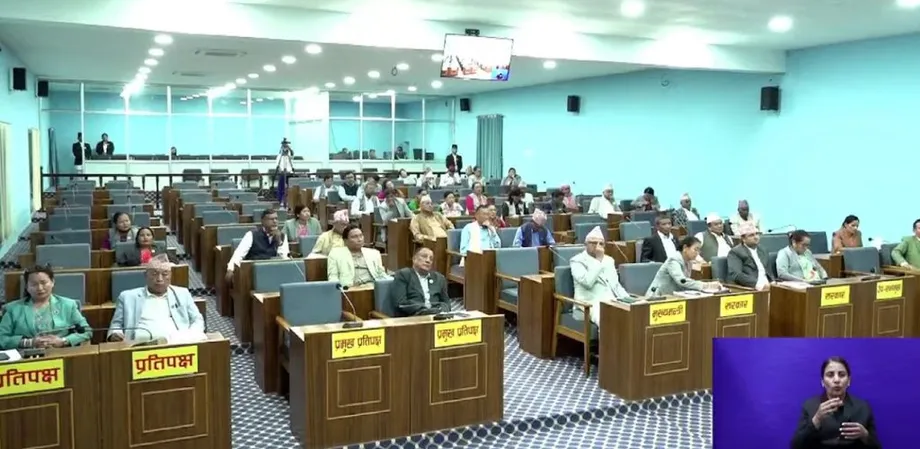
Parliamentary Hearing Committee chair Bodha Narayan Shrestha said a Monday meeting at Singha Durbar approved a 10 day notice inviting complaints against all four nominees. The secretariat was instructed to publish the notice through public channels. Another account specifies Kartik 9 as the planned publication date.
The chronology is not fully consistent across reports. Several place the recommendations on October 6, while another gives September 18. Nepali accounts date the decision to Tuesday, Ashoj 20, 2083. These accounts should not be silently combined into a single confirmed date.
- May 19: Sharma pledged at his parliamentary hearing to make appointment recommendations visibly based on merit.
- September 15: The council recommended three High Court appointments, including Belbase.
- September 20: Belbase retired after four days in his new post.
- October 6, according to several reports: The council recommended the four Supreme Court candidates. Another report gives September 18.
- October 7: The Nepal Bar Association issued its objections.
- A subsequent Monday meeting: The hearing committee approved a 10 day complaints notice, with one account naming Kartik 9 for publication.
The complaints period gives the public a route to submit objections before parliamentary consideration. It does not itself determine whether any nomination should be rejected. Appointment by the president follows the parliamentary hearing process. No confirmed hearing date, final outcome or calendar closing date for complaints is established here.
The council also decided to establish a committee with a three month tenure to examine court workloads and required staffing, including judge positions in High Courts and district courts. A proposal to increase Supreme Court positions from 21 to 25 has been discussed separately, but is not an approved expansion. Neither staffing review supplies the missing explanation for the current selections.
Key Points
- Ratna Bahadur Bagchand, Chandra Bahadur Saru, Janak Pandey and Gokarna Dangi were recommended for four Supreme Court vacancies.
- Bagchand ranks first among chief judges; Saru, Pandey and Dangi rank fifth, 13th and 16th among High Court judges.
- Sapana Pradhan Malla opposed the entire process. Mahesh Kumar Nepal dissented only over Pandey and Dangi.
- The council reviewed assessment records, but its secretary said comparative scores were not recorded in the decision.
- The Nepal Bar Association challenged the lack of transparency and representation of lawyers, women and Madhesis.
- Parliament's hearing committee approved a 10 day public complaints notice. Reports differ on the recommendation date, and no final hearing outcome is established.