A replacement spacecraft restores a vital escape route
China has carried out the first emergency launch in its human spaceflight program, sending the uncrewed Shenzhou 22 spacecraft to Tiangong after tiny cracks in another capsule's window disrupted the station's crew rotation. The mission restored a flightworthy return vehicle for three astronauts who had spent 11 days without a dedicated spacecraft ready to bring them home.
Contents
- A replacement spacecraft restores a vital escape route
- Why a small crack stopped a crewed return
- How windows and shields protect astronauts
- A standby system faces its first emergency
- Eleven days without a dedicated lifeboat
- Supplies, window treatment and a new return plan
- Small debris is difficult to avoid
- Different systems for keeping crews moving
- A practical test for China's wider space plans
- At a Glance
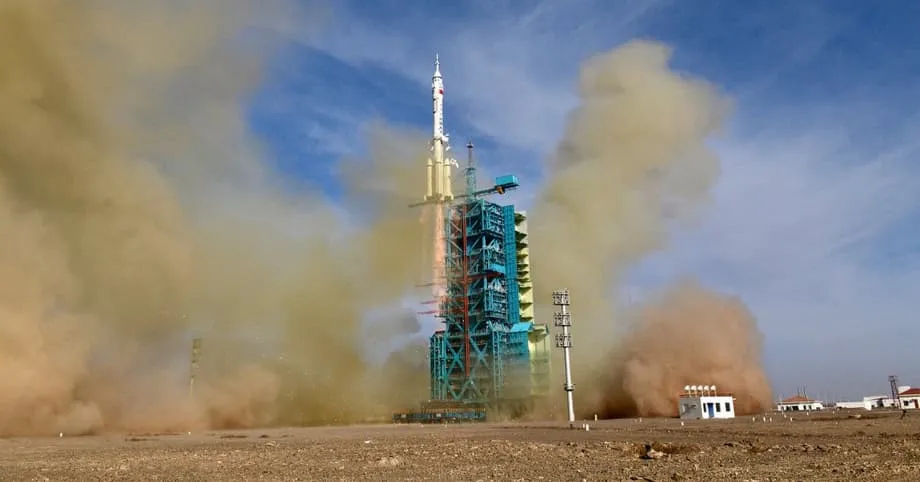
A Long March 2F rocket lifted off from the Jiuquan Satellite Launch Center at 12:11 p.m. Beijing Time. About three hours and forty minutes later, Shenzhou 22 docked with the forward port of Tianhe, the space station's core module. The spacecraft completed a fast, autonomous rendezvous, approaching and connecting to the station without astronauts aboard.
The emergency began with Shenzhou 20, whose crew was scheduled to return to Earth in early November. Inspections found tiny cracks in the return capsule's small port window, probably caused by a strike from orbital debris or a micrometeoroid. Mission managers decided against sending astronauts through reentry in a capsule with an uncertain window condition.
The Shenzhou 20 crew instead returned on November 14 aboard the newly arrived Shenzhou 21 spacecraft. That brought the outgoing astronauts home safely, but left the incoming crew, Zhang Lu, Wu Fei and Zhang Hongzhang, without their planned return vehicle.
A spacecraft docked at a station serves as more than transport at the end of an expedition. It is also a lifeboat during a fire, a loss of cabin pressure, a medical emergency or a collision risk from debris. Space agencies treat that escape capability as nonnegotiable for crew safety. Shenzhou 22's arrival closed the gap while allowing Tiangong to continue operating.
Why a small crack stopped a crewed return
Shenzhou 20's damage was concentrated on a small window in the capsule that would carry its crew through Earth's atmosphere. Engineers detected tiny cracks consistent with a hypervelocity impact, meaning a collision at extremely high speed. Orbital debris and micrometeoroids were the suspected causes.
A flake of paint or a metal fragment only a millimeter across can strike a spacecraft at several kilometers per second in low Earth orbit. At those speeds, even a tiny object can release enough energy to pit glass or scar metal. The danger comes from the speed of the collision as well as the size of the object.
A return capsule's windows must withstand pressure loads, vibration and intense heating during reentry. Uncertainty about whether a damaged window can tolerate those stresses makes a descent with astronauts unacceptable. Mission managers chose to stand down Shenzhou 20 for repair rather than accept added risk during one of the flight's most demanding stages.
Window damage has occurred on other spacecraft. Space shuttles often returned with surface pitting on their panes, and the International Space Station has replaced window covers after small strikes. Shenzhou 20's case was unusual because the damage appeared on a vehicle expected to bring people home within days.
The crew and ground teams identified the problem before undocking. That inspection gave managers time to change the return plan while the astronauts were still aboard the station.
How windows and shields protect astronauts
Crewed spacecraft use multiple window panes and protective outer covers. The outermost layer is typically sacrificial: it absorbs small impacts, while inner panes preserve the pressure barrier that keeps air inside. Damage assessment therefore depends on understanding which part of the window has been affected and whether the remaining protection is reliable.
Spacecraft also use shields mounted away from the hull, known as Whipple shields, to add another layer of defense. Careful approach trajectories reduce exposure during docking. Together, these measures help protect vehicles operating in an environment where fast fragments may cross their path.
Tiny fragments can still strike, and some are too small to track. Assessing their damage while a spacecraft remains in orbit can be difficult. Flight rules are consequently conservative when a return capsule's window shows cracks or chips, especially when astronauts would have to depend on it during descent.
A standby system faces its first emergency
China keeps a backup Shenzhou capsule and a Long March 2F rocket in near readiness at Jiuquan for emergencies involving Tiangong. This rolling backup policy is a central part of station operations: equipment for a replacement flight is prepared before an emergency requires it.
Preparing a Shenzhou spacecraft and its launcher usually takes more than a month of integrated testing and rehearsals. Once Shenzhou 20 was judged unfit to bring people home, teams compressed that work. Engineers streamlined checks, coordinated personnel and parts, and prepared the next spacecraft in the series.
Shenzhou 22 lifted off 16 days after China activated its contingency plan. After separating from the rocket, it entered orbit, completed its autonomous approach and docked with Tianhe. The China Manned Space Agency, known as CMSA, reported successful launch, orbital insertion and docking.
CMSA described the result in a brief statement issued after launch:
The launch mission was a complete success.
He Yuanjun, a senior CMSA official, expressed hope that the first emergency launch would remain an exceptional event as human spaceflight expands:
This emergency launch is a first for China, but I hope it will be the last in humanity's journey through space.
The response tested China's backup arrangements under real flight conditions. A capsule and rocket held in reserve became a replacement return vehicle, with the preparation cycle reduced from its usual duration of more than a month to 16 days.
Eleven days without a dedicated lifeboat
Zhang Lu, Wu Fei and Zhang Hongzhang continued experiments, maintenance and daily exercise while waiting for Shenzhou 22. CMSA said the three astronauts remained in good condition and carried out their planned tasks.
Tiangong itself continued operating, but the absence of a dedicated escape vehicle created a safety gap. An otherwise healthy station can still face an urgent medical problem, fire or pressure leak. The crew's ability to leave quickly depended on restoring a suitable return spacecraft.
Mission planners had to weigh risks for both crews. Bringing the outgoing astronauts home on Shenzhou 21 avoided a descent in the capsule with the damaged window. It also transferred the remaining risk to the incoming crew, whose spacecraft was now back on Earth. The emergency launch restored their escape route without interrupting station operations.
The disruption and response unfolded over several stages:
- Early November: Shenzhou 20's planned crew return was disrupted after tiny cracks were found in its return capsule window.
- November 14: The Shenzhou 20 crew returned to Earth aboard Shenzhou 21, leaving the incoming crew without a flightworthy return vehicle.
- After a preparation period of 16 days: Shenzhou 22 launched at 12:11 p.m. Beijing Time and docked about three hours and forty minutes later, ending the gap of 11 days.
- April or May 2026: Shenzhou 22 is expected to bring the current crew home.
Supplies, window treatment and a new return plan
Shenzhou 22 carried about 600 kilograms of supplies as well as restoring the crew's route home. Its cargo included food, fresh fruit and vegetables, clothing, medical kits, spare parts and a device designed to treat cracks in Shenzhou 20's port window.
A compact space oven was also delivered to warm meals. The cargo was reported to include frozen chicken wings, a small addition to the food available during a long expedition. Practical supplies and more varied meals accompanied the equipment needed to address the damaged spacecraft.
Shenzhou 22 also includes incremental upgrades, including refined displays and improved interfaces between astronauts and spacecraft systems. Its greater capacity to bring items back to Earth provides more room for material returning from the station. That capacity matters as expeditions grow longer and more experiments require analysis on the ground.
The replacement spacecraft will remain docked during the current expedition and is expected to return Zhang Lu, Wu Fei and Zhang Hongzhang around April or May 2026. An exact return date was not given.
Shenzhou 20 can still operate while docked. Engineers intend to use it for tests in orbit and, after treatment of the damaged area, to return cargo without passengers. It is slated to vacate its docking port before the next crewed flight in 2026.
The damaged capsule will not carry astronauts until engineers are satisfied with its condition. Its planned use for tests and a return without a crew gives teams a way to work on the problem while keeping the current astronauts' journey home assigned to Shenzhou 22.
Small debris is difficult to avoid
Low Earth orbit has become increasingly crowded as the United States, China, Russia, Europe and private operators have launched thousands of satellites in recent years. Old rocket bodies, fragments from earlier collisions and debris from tests of weapons designed to destroy satellites also occupy that environment.
Pieces only a few millimeters across can travel far faster than a rifle bullet and carry enough momentum to damage windows, radiators and sensors. The suspected strike on Shenzhou 20 shows why a small fragment can have a large effect on a crewed mission: damage to one component changed the return arrangements for two crews.
Tracking networks follow larger objects and can warn operators about predicted close passes. Crews and ground teams can then arrange collision avoidance maneuvers. Many smaller fragments remain beyond tracking capability, leaving shielding and inspections as essential parts of spacecraft protection.
Operators also seek to reduce future debris by designing satellites to vent stored energy at the end of their working lives and coordinating with regulators on disposal rules. Better tracking, more disciplined disposal procedures and future technologies for removing debris can reduce risk over time.
NASA once delayed a planned spacewalk after a debris alert linked to a recent test of a weapon intended to destroy satellites. A single event that breaks an object into fragments can increase danger for every spacecraft using the affected orbit. Protection therefore requires both measures aboard individual vehicles and efforts to limit new debris.
Different systems for keeping crews moving
China's human spaceflight program is led by the state. National teams design and operate Shenzhou spacecraft and Long March 2F rockets. The launcher is not reusable, so every flight requires a new rocket. Keeping another capsule and launcher ready is part of how China provides backup transport for Tiangong.
The United States uses a mixed system. NASA purchases rides from private companies and also relied on Russia's Soyuz spacecraft for years. SpaceX now provides regular crew transport using the reusable Falcon 9 rocket and Crew Dragon spacecraft.
Boeing's Starliner completed a test flight with astronauts but experienced propulsion problems that extended the International Space Station stay of NASA astronauts Suni Williams and Butch Wilmore by many months. They eventually returned to Earth in a SpaceX capsule.
Both approaches can provide for crew safety, but their arrangements shape how replacement transport is organized and how quickly another vehicle can launch after a problem. Shenzhou 22 put China's emergency launch capability into operation: a spacecraft held in reserve became the incoming Tiangong crew's new return vehicle.
A practical test for China's wider space plans
CMSA intends to keep Tiangong permanently staffed for at least a decade. Managers have discussed adding modules and inviting international astronauts to fly. Maintaining a backup rocket and capsule supports that commitment by providing a response when normal crew transport is disrupted.
Shenzhou 22 demonstrated that those procedures could be carried out quickly during a real emergency. Teams prepared a replacement spacecraft, delivered supplies and repair equipment, and restored the crew's lifeboat while station work continued.
China has also set a goal of landing astronauts on the moon around 2030. Development of lunar rockets, landers and new spacecraft is under way. Experience with rapid preparation, dependable supply lines and gradual cockpit improvements on Tiangong will support that effort.
The emergency mission was an unplanned test of equipment, inspections and operational decisions. Detecting the damaged window before departure allowed the outgoing crew to use another capsule. Launching Shenzhou 22 then restored the incoming crew's escape route and preserved station operations while engineers continued work on Shenzhou 20.
At a Glance
- Shenzhou 22 was China's first emergency launch in its human spaceflight program.
- The uncrewed spacecraft launched from Jiuquan at 12:11 p.m. Beijing Time and docked with Tianhe about three hours and forty minutes later.
- Tiny cracks in Shenzhou 20's return capsule window were probably caused by orbital debris or a micrometeoroid.
- The outgoing crew returned aboard Shenzhou 21 on November 14, leaving the incoming crew without a flightworthy return vehicle for 11 days.
- Launch preparations took 16 days, compared with a usual cycle of more than a month.
- Shenzhou 22 delivered about 600 kilograms of supplies, including food, medical kits, spare parts and equipment to treat the damaged window.
- Zhang Lu, Wu Fei and Zhang Hongzhang are expected to return aboard Shenzhou 22 in April or May 2026.
- Shenzhou 20 is planned for tests in orbit and a return carrying cargo without passengers after treatment of the damaged area.
- China keeps a standby capsule and rocket ready for emergencies, while small fragments that cannot be tracked remain a danger to spacecraft.