Thai food targets put local products at the center of expansion
Muji is using major new flagship stores in Bangkok and Ho Chi Minh City to deepen its Southeast Asian expansion, with locally sourced food, clothing and household goods taking a larger role alongside its familiar minimalist designs.
Contents
- Thai food targets put local products at the center of expansion
- What changes when a global retailer shops locally?
- Why snacks matter to the Thai business
- Clothing, home goods and commuting get local adjustments
- Thailand becomes a showcase for the strategy
- Ho Chi Minh City anchors the Vietnam push
- A regional growth plan with dated milestones
- Shorter supply routes change costs and decisions
- More local products bring more work inside stores
- The Bottom Line
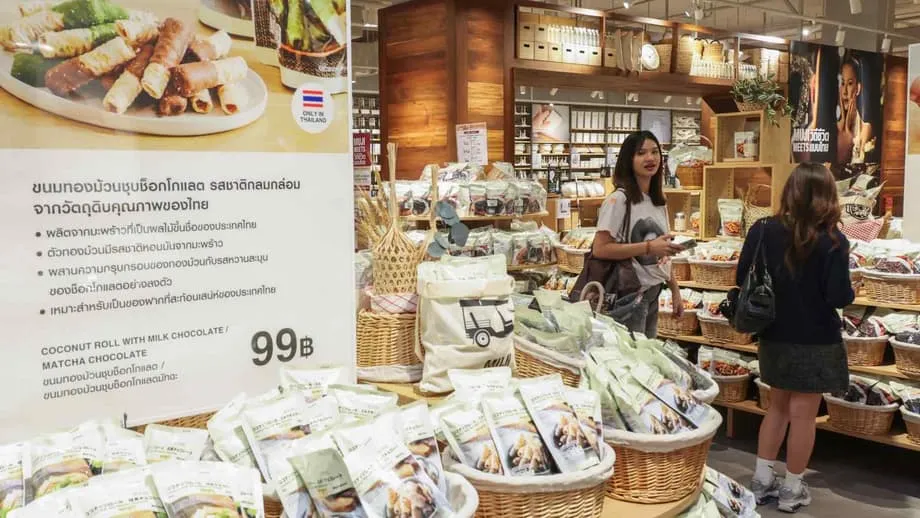
The Bangkok flagship at CentralWorld shows how far the retailer wants that shift to go. Its selection of snacks and staples made in Thailand has nearly doubled to about 200 items, with a target of roughly 300 to 350 by 2030. Food currently accounts for around 4 percent of Muji's Thailand revenue. The company wants that share to reach about 7 percent by 2028 and 10 percent by 2030.
Those targets would turn food from a small part of the Thai business into a more substantial source of sales. They also give customers reasons to visit between larger purchases of clothing, furniture and other household items.
Ho Chi Minh City's new flagship follows a similar direction, with products intended to suit local cuisines, tropical weather and everyday household needs. Both stores pair Muji's simple designs and absence of prominent logos with a broader selection developed for the people who live nearby.
Muji's parent company, Ryohin Keikaku, is counting on Southeast Asia and Oceania as major sources of growth while Japan and China are more mature markets. Revenue across Southeast Asia and Oceania rose around 28 percent in the year to August. The company's medium term targets are roughly 1 trillion yen in revenue and 100 billion yen in operating profit by the fiscal year ending August 2028.
The flagship strategy connects those financial ambitions to daily shopping habits. Muji wants its stores to become useful places for regular errands, as well as destinations for occasional home and lifestyle purchases.
What changes when a global retailer shops locally?
Muji's localization strategy goes beyond translating signs or adding a handful of regional products. It involves developing more goods with local producers, matching local tastes and setting prices that suit local budgets, while retaining the brand's calm stores and functional design.
Shoppers can see those changes in several parts of a store. Food selections reflect familiar flavors and eating habits. Clothing fabrics and cuts suit the climate and local body types. Household goods are chosen or developed with the size of typical city apartments in mind.
Packaging and instructions appear in local languages, while seasonal selections follow local holidays and school calendars. A store in Bangkok or Ho Chi Minh City can therefore remain recognizably Muji while carrying products that feel familiar and useful to its customers.
Store employees also play a part in deciding what reaches the shelves. They share information about products that sell, products that struggle and items customers request. Buyers can use that feedback to test small batches from local factories and food producers, then increase orders when a product succeeds.
Local sourcing changes the route goods take to a store. Shorter supply routes can help Muji replenish popular items faster, reduce its exposure to international freight costs and currency movements, and avoid large imports of products that do not match local preferences.
The practical aim is a quicker response to each market. Instead of relying entirely on decisions made months before imported goods arrive, local teams can adjust products and orders as shopping patterns become clearer.
Why snacks matter to the Thai business
Thailand's food shelves are a central test of this approach. Products already sold include chocolate coated fruit made with Thai mango and banana, natural mineral water sourced in Phetchabun, and shrimp snacks made without preservatives. These are items priced for frequent purchase, giving customers reasons to return between larger lifestyle purchases.
A customer entering for a drink or snack may also buy socks, storage boxes or kitchen tools. That is the commercial logic behind expanding groceries: frequent visits create more opportunities for customers to add other goods to their purchases.
Muji's food targets describe a change in the balance of the Thai business. Moving from around 4 percent of revenue to 10 percent would increase food's share by six percentage points, or make it 2.5 times its current share. The intermediate target is about 7 percent by 2028.
The assortment target is substantial too. Increasing the selection from about 200 items to 300 to 350 would mean roughly 100 to 150 additional products by 2030, an expansion of about 50 to 75 percent from the current level.
Groceries are intended to complement household and lifestyle products. Regular purchases can create a steadier flow of visits between seasonal shopping periods, such as preparations for a new school term or a refresh of the home. Those visits can also support sales of bedding, storage products and apparel.
Thai farmers and food processors gain a place in that model by supplying ingredients and finished products. Muji's local food program connects those suppliers with urban shoppers while keeping the focus on simple formulas and packaging intended to limit waste.
Clothing, home goods and commuting get local adjustments
Muji's clothing adaptations address long, hot seasons and local preferences. Lightweight cotton and linen, breathable knits and materials that dry quickly are suited to tropical conditions. Adjustments to the range of sizes available aim to improve fit, while color selections reflect popular local palettes.
Footwear has to work through heavy rain, and accessories such as hats and bags compete with changing streetwear tastes. Muji's approach is to retain clean silhouettes while making smaller changes that improve comfort and usefulness for local customers.
Urban homes shape another part of the assortment. Compact furniture and storage solutions suit smaller apartments, while pieces made locally from rattan, bamboo and wood can fit regional interiors. The same principle applies here as in clothing: keep the design simple, but make the product appropriate for its setting.
Travel and commuting products broaden the everyday appeal. Lightweight luggage, foldable carts and bicycle accessories serve customers in cities where transport on two wheels is common.
Personalization services add another local layer. Embroidery, screen printing and simple alterations allow shoppers to turn standard clothing or fabric goods into gifts or adapt them to their needs, while staying close to the brand's minimalist appearance.
Thailand becomes a showcase for the strategy
Muji operates dozens of stores across Thailand, making the country an important testing ground for its local approach. New openings in 2023 and 2024 brought sales gains in double digits and higher foot traffic, while store layouts have been adjusted for preferences in Bangkok, the north and the northeast.
Muji's Thai arm was named Brand Store of the Year at the 2025 Retail Asia Awards. The recognition highlighted business growth, inventive store formats and engagement with local communities.
The stores combine retail space with places to spend time and take part in activities. Coffee corners encourage longer visits. Personalization counters offer embroidery and screen printing, and dedicated areas feature products made with local materials and techniques.
Collaborations with universities and artisans have produced pieces inspired by Northern Thai heritage. Workshops also give small producers opportunities to introduce their work to shoppers in cities.
Chiang Mai, Khon Kaen, Udon Thani and Korat are among the places where stores host maker workshops and craft showcases. These activities connect the shopping experience to local culture and create opportunities for new ideas to move between producers, store employees and design teams.
The CentralWorld flagship brings several parts of that strategy together. Its wider food assortment can encourage quick, frequent visits, while household goods, clothing and services give customers reasons to stay longer or return for more considered purchases.
Ho Chi Minh City anchors the Vietnam push
Ho Chi Minh City's new flagship is intended to serve a market where a growing middle class and a young urban population are reshaping spending. Its assortment is designed around everyday needs and lifestyle upgrades, with attention to local cooking, climate and apartment living.
Muji's goal in Vietnam is similar to its goal in Thailand: attract repeat visits with useful daily items, then expand purchases with clothing and home goods that fit local budgets and tastes.
Vietnam's manufacturing base and design talent give the retailer opportunities to develop products with domestic partners. Textiles, furniture made from bamboo and wood, and everyday kitchenware are among the areas suited to local sourcing. Working closer to production can shorten the time between placing an order and receiving goods, while making product trials easier.
Breathable clothing, compact modular storage and foods matching local flavor and nutrition preferences are categories expected to appeal. Modular storage consists of pieces that can be combined or rearranged, making it useful when households need to fit their belongings into limited space.
Large flagship stores also serve roles beyond selling products. They can act as brand showcases and training centers, giving teams space to test services, refine layouts and prepare for additional openings.
The Vietnam flagship is intended to support a longer period of investment. A hub in the country can help expansion beyond Ho Chi Minh City and Hanoi, while local sourcing can feed products into nearby regional markets.
The Vietnam plans do not come with the numerical food targets set for Thailand. Their direction is broader: build an assortment and store experience suited to local customers, supported by domestic manufacturing and design.
A regional growth plan with dated milestones
Ryohin Keikaku's targets of roughly 1 trillion yen in revenue and 100 billion yen in operating profit by August 2028 depend on markets with room for more stores and more product categories. Southeast Asia and Oceania are central to that effort, supported by the region's roughly 28 percent revenue growth in the latest year to August.
Rising incomes and the development of urban retail districts support the regional opportunity. Localization is intended to widen Muji's customer base while preserving a consistent identity across countries.
A student buying snacks might also choose study organizers. A family returning for mineral water might add towels or storage baskets. These examples illustrate the intended blend of everyday and seasonal sales, reducing reliance on occasional large purchases.
The expansion and sales targets span several years:
- 2023 and 2024: New store openings in Thailand helped drive sales gains in double digits and higher foot traffic.
- 2025: Muji's Thai arm received the Brand Store of the Year award at the Retail Asia Awards. By November 27, the expansion included the new Bangkok and Ho Chi Minh City flagships.
- 2028: Muji aims for food to account for about 7 percent of Thailand revenue. Ryohin Keikaku targets roughly 1 trillion yen in revenue and 100 billion yen in operating profit for the fiscal year ending August.
- 2030: Muji aims for food to reach about 10 percent of Thailand revenue and for its Thai food assortment to grow to roughly 300 to 350 items.
Shorter supply routes change costs and decisions
Imported assortments expose retailers to changes in freight rates, exchange rates and delivery times. Buyers working with long delivery schedules must judge demand months before products arrive, which makes it harder to respond when customer preferences change.
Local sourcing can reduce those pressures. Less reliance on international freight can cut transport costs and emissions, while shorter supply routes make it easier to alter orders when an item performs poorly. Closer relationships with suppliers also help teams maintain standards for materials and workmanship.
Currency movements matter because imported goods can become more expensive when exchange rates shift. A broader local assortment can reduce that exposure and help keep prices steadier. Faster restocking also matters when demand for a particular snack, garment or household item suddenly rises.
Muji's loyalty apps and sales systems provide information about which products sell, at what prices and in which sizes. Teams can combine that information with feedback from stores to place small trial orders, change packaging or remove products that sell slowly.
The connection between data and suppliers is central to the approach. Smaller tests limit the risk of ordering too much of an unsuitable product, while successful trials can be expanded. That can also limit waste from large imports that fail to find buyers.
More local products bring more work inside stores
Muji must manage a wider assortment without weakening the consistency customers expect from the brand. Food tastes vary, and new suppliers can introduce differences in product quality. Those issues make quality control important as local production expands.
Inventory and display decisions become more complicated when stores carry more products. Employees need training and guidance so that a larger local selection remains easy to manage and fits the retailer's simple presentation.
Domestic lifestyle chains, international furniture and home retailers, and variety retailers focused on low prices compete for the same shoppers, often in the same malls. Prime retail space in Bangkok and Ho Chi Minh City is expensive, while customers expect fair prices.
Muji's progress will be visible in food's share of Thai sales, the frequency of customer visits and the stability of profit margins as local sourcing grows. Another measure is how quickly successful tests in flagship stores can be introduced across the country.
The challenge is to make many small local adjustments while keeping a clear brand identity. Community programs, supplier relationships and information from stores all contribute to that effort, but they also require coordination as the business expands.
The Bottom Line
- Muji's new Bangkok and Ho Chi Minh City flagships deepen its focus on locally sourced food, clothing and household goods.
- The CentralWorld flagship carries about 200 Thai snacks and staples, nearly double the previous selection, with a target of 300 to 350 by 2030.
- Food accounts for around 4 percent of Thailand revenue. Muji aims for about 7 percent by 2028 and 10 percent by 2030.
- Thai products include chocolate coated mango and banana, natural mineral water from Phetchabun and shrimp snacks without preservatives.
- Thailand's stores combine retail with coffee corners, personalization services, craft showcases and workshops involving local producers.
- The Vietnam flagship is intended to support local product development, staff training, further expansion and sourcing for nearby markets.
- Southeast Asia and Oceania revenue rose around 28 percent in the year to August.
- Ryohin Keikaku targets roughly 1 trillion yen in revenue and 100 billion yen in operating profit by the fiscal year ending August 2028.
- Shorter supply routes can improve restocking and reduce exposure to freight and currency changes, while a wider assortment requires close attention to quality, inventory and training.