A call to Tokyo after a warning from Beijing
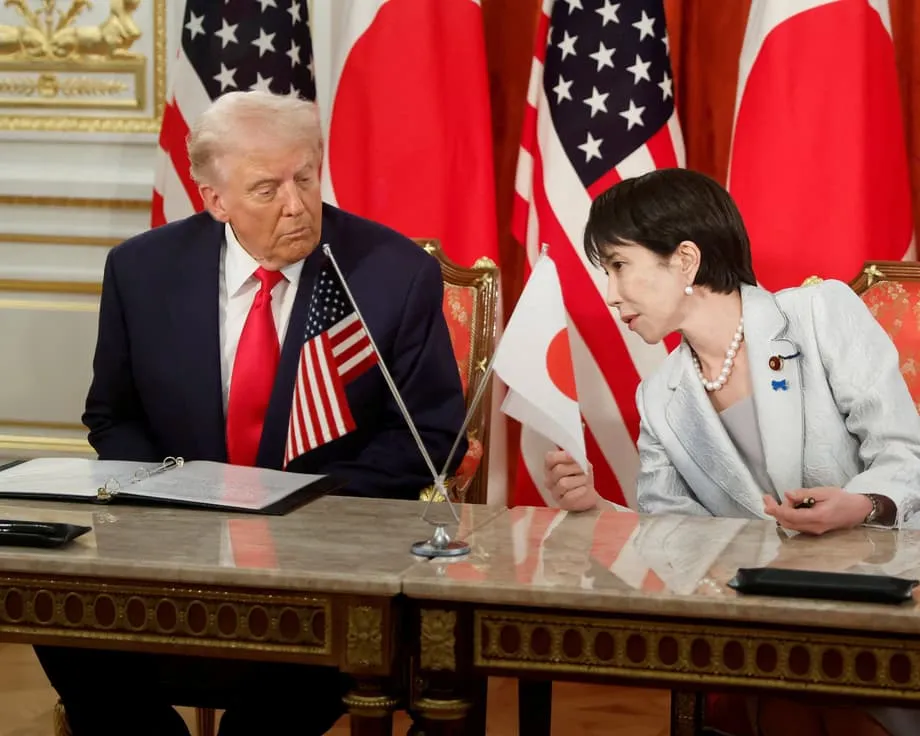
U.S. President Donald Trump asked Japanese Prime Minister Sanae Takaichi to avoid further escalation with China during a call this week, according to two Japanese government sources familiar with their conversation. His request followed Takaichi's statement to parliament in early November that a hypothetical Chinese attack on Taiwan could threaten Japan's survival and trigger Japanese military action.
Contents
- A call to Tokyo after a warning from Beijing
- What Takaichi said about a Taiwan conflict
- How Japan's security laws enter the dispute
- China presses its case with Washington
- Takaichi stresses her relationship with Trump
- Taiwan watches for signs of a bargain
- What the U.S.-Japan treaty covers
- Trade negotiations shape the diplomacy
- How the dispute developed
- Military activity adds a risk of accidents
- Key Points
The exchange placed Washington between Japan, a treaty ally, and China, its main strategic competitor. Beijing claims Taiwan and has demanded that Takaichi retract her remarks. Tokyo says its policy on Taiwan remains unchanged, while the prime minister has refused to withdraw her statement.
Trump made no specific demands and did not repeat Beijing's request for a retraction, according to the two Japanese government sources. His message instead left room for Tokyo and Beijing to lower tensions without either government having to declare a public reversal.
The call followed a separate conversation between Trump and Chinese leader Xi Jinping. China's official account of that conversation put Taiwan at the center of Beijing's view of the international order. Washington, meanwhile, is trying to preserve a fragile trade truce with China, a priority Trump has highlighted in recent days.
The White House described steady relations with Beijing as serving American interests and those of Japan. In a statement attributed to Trump, it presented calm relations with China as compatible with support for a close ally:
The United States relationship with China is very good, and that is also very good for Japan, who is our dear and close ally.
That balance runs through the dispute: Washington wants to maintain its alliance with Tokyo while keeping its negotiations with Beijing on track. Japan and Taiwan are watching how those priorities fit together as the diplomatic clash intensifies.
What Takaichi said about a Taiwan conflict
Takaichi told lawmakers in early November that a Chinese attack on Taiwan could create a situation threatening Japan's survival and could require a military response. Her wording was more direct than that generally used by recent Japanese leaders, who largely avoided saying how Tokyo would respond to a crisis across the Taiwan Strait.
Japan's position has usually relied on strategic ambiguity. In simple terms, that means leaving some uncertainty about what a government would do in a particular crisis, rather than announcing a firm commitment in advance. Takaichi's statement gave a clearer indication of the circumstances in which Japan might consider military action.
Japanese officials insist that the underlying policy remains centered on peaceful resolution and deterrence. Deterrence means trying to discourage an attack by making its possible costs clear. Beijing nevertheless reacted sharply to the prospect of Japanese forces becoming involved in a conflict over Taiwan.
Takaichi has said she will avoid discussing detailed hypothetical scenarios in the future, while standing by her comment. That leaves Tokyo defending its existing policy and trying to contain the diplomatic consequences of the prime minister's more explicit language.
How Japan's security laws enter the dispute
Japan's constitution renounces war. For decades, the country confined its Self Defense Forces to the narrow defense of Japanese territory. Security legislation adopted in 2015 allowed limited collective self defense when a close partner faces an existential threat and Japan's own survival is at stake.
Collective self defense means helping defend a partner under specified conditions. The survival requirement is central to Takaichi's remarks: she described a possible Taiwan conflict in terms that could bring it within Japan's security framework.
Taiwan's proximity to Okinawa and the sea lanes supplying Japan's economy helps explain why Tokyo sees a conflict there as a potential threat to Japan itself. A confrontation around the island could affect the surrounding waters and routes on which Japan depends.
Recent Japanese leaders generally used cautious language about those possibilities. Takaichi's reference to a threat to Japan's survival made the connection more explicit, even as her government maintained that its policy had not changed.
China presses its case with Washington
Chinese officials have demanded a retraction and criticized the prospect of Japanese military involvement in a Taiwan crisis. State media have reinforced those demands, urging Washington to restrain its ally and warning against what Beijing describes as a revival of Japanese militarism.
China's diplomats have framed the dispute as a question of the international order established after World War Two. Their argument invokes the wartime alliance between the United States and China against imperial Japan and presents Washington and Beijing, as leading victors of that war, as responsible for protecting that order.
An editorial in the Communist Party's flagship newspaper made that appeal directly, calling on the United States to help prevent actions it described as reviving militarism:
China and the United States share a common responsibility to jointly safeguard the post war international order and oppose any attempts or actions to revive militarism.
Xi also focused on Taiwan during his conversation with Trump. China's official account presented the island's future as a core interest, tied it to national rejuvenation and asked Washington to play a constructive role in maintaining stability.
According to that official account, Xi described Taiwan's place in Beijing's vision of the international system in these terms:
Taiwan's return to China is a key part of our vision for the world order.
Beijing's approach combines pressure on a U.S. ally with outreach to Washington. China has used that method before to shape the narrative during tense periods. In this dispute, it hopes the United States will encourage caution in Tokyo and avoid actions Beijing could interpret as support for Taiwanese independence.
Takaichi stresses her relationship with Trump
Takaichi described her call with Trump as cordial and stressed their personal rapport. Speaking to reporters in Tokyo, the Japanese prime minister relayed his message about their relationship and her ability to contact him:
President Trump told me that he and I are extremely good friends and that I should call him any time.
Trump later praised his relationships with both Xi and Takaichi in public remarks. He projected confidence that the tensions could be managed, even as the dispute over Taiwan grew sharper.
The Japanese prime minister's office confirmed that Takaichi and Trump discussed U.S.-China relations but did not elaborate on the substance of their conversation. The account of Trump's request to avoid escalation comes from the two Japanese government sources familiar with the call.
The White House has avoided public criticism of Tokyo while continuing to describe relations with China as stable and beneficial for Japan. The U.S. ambassador in Tokyo has also assured the Japanese government of American support in the face of coercion from China.
Taiwan watches for signs of a bargain
Taiwan's government rejects Beijing's sovereignty claim and says only the island's people can decide their future. Officials say a return to China is not an option for its 23 million residents.
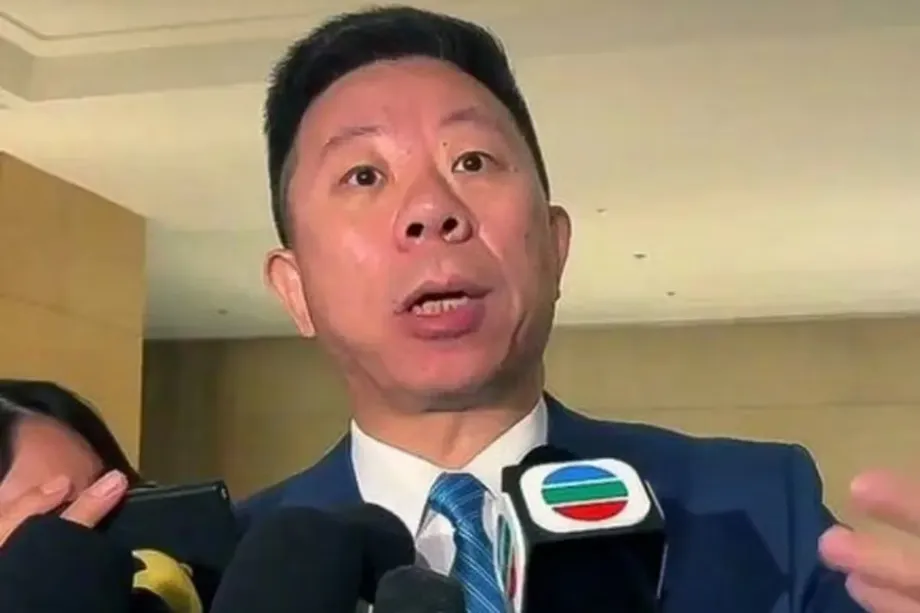
Taipei has closely watched the conversations among Washington, Beijing and Tokyo for signs that a trade or security agreement could affect its security. After the Trump-Xi call, Taiwan's Deputy Foreign Minister Francois Chihchung Wu welcomed the absence of language specifically about Taiwan in the U.S. public comments.
Wu described that omission as a sign that Taipei was not being used as a bargaining chip:
It is the best result, as it means we are not part of the deal.
Taiwan continues to deepen unofficial security ties with Washington through arms purchases, training and cooperation with U.S. industry. The United States has announced additional arms sales in recent months as part of a longstanding effort to help Taiwan maintain a credible ability to defend itself.
Beijing opposes those sales and often responds with military patrols and pointed rhetoric. Taiwan therefore faces pressure around its borders while also monitoring diplomatic discussions in which its future is a central concern.
What the U.S.-Japan treaty covers
The U.S.-Japan security treaty commits the United States to defend Japan if Japanese territories come under attack. American officials have repeatedly said that commitment applies to the Senkaku Islands, which Japan administers in the East China Sea, while Washington takes no position on sovereignty over the islands.
Taiwan is outside the treaty's coverage. A Taiwan crisis would therefore require complex coordination between Washington and Tokyo, including decisions about protecting American bases in Japan and keeping sea lanes open.
Japan hosts the largest concentration of U.S. forces overseas, with much of that presence in Okinawa. American air, naval and Marine units based in Japan would be central to any regional contingency, making the security of those facilities a major concern for both governments.
Tokyo has been investing in air and missile defenses, maritime patrol aircraft and new weapons capable of striking at long range. Those capabilities are intended to raise the cost of coercion, strengthen deterrence and contain escalation.
The U.S. ambassador's assurances to Tokyo sit alongside joint statements issued in recent years calling for peace and stability in the Taiwan Strait and opposing unilateral changes to the status quo. Together, those messages express support for Japan while keeping the public focus on regional stability.
Trade negotiations shape the diplomacy
Trump's conversations with Xi and Takaichi took place as Washington sought to stabilize trade relations with Beijing. The president has highlighted progress on agricultural purchases and cooperation to curb fentanyl flows, while signaling interest in visiting Beijing in April to advance negotiations.
Trump did not publicly mention Taiwan in those comments about trade and cooperation. That choice lowered the diplomatic temperature while leaving key security questions unaddressed.
Some in Tokyo and Taipei worry that a narrow focus on trade could dilute support for Taiwan at a critical moment. Japanese lawmakers who favor a stronger public declaration from Washington argue that clearer language would discourage miscalculation.
Washington is balancing several immediate objectives: keeping the trade truce intact, maintaining confidence among its allies and preventing the dispute between Japan and China from becoming more dangerous. Beijing's appeal for American restraint of Tokyo brings those objectives into the same conversation.
No specific demands beyond avoiding further escalation were described in the Japanese sources' account of Trump's call. Takaichi's office has not released further details, and Trump's possible April visit remains an expression of interest rather than a trip with a stated date.
How the dispute developed
The diplomatic clash began with Takaichi's parliamentary remarks and widened into conversations involving the leaders of Japan, China and the United States. Its sequence helps explain why a statement about a hypothetical conflict became an immediate issue for alliance management and trade diplomacy.
- In early November, Takaichi told parliament that a Chinese attack on Taiwan could threaten Japan's survival and require a military response.
- China demanded a retraction. Takaichi refused to withdraw her comment but said she would avoid detailed hypothetical scenarios in the future.
- This week, Trump spoke with Xi. China's official account stressed Taiwan's place in Beijing's vision of the international order.
- After that conversation, Trump spoke with Takaichi and asked her to avoid further escalation, according to two Japanese government sources.
- By November 27, Tokyo maintained that its Taiwan policy was unchanged, while the White House described stable relations with China as beneficial for Japan.
Trump's public praise for both leaders and Takaichi's account of a friendly conversation provided a calmer public tone. Beijing's demand for a retraction and Tokyo's refusal to give one remained central to the disagreement.
Military activity adds a risk of accidents
Japanese jets have scrambled after a Chinese drone approached Japanese airspace. Chinese aircraft and naval vessels also conduct regular patrols around Taiwan. Even without a declared crisis, the pace of activity near Taiwan and Japan's southwest islands increases the chance of an accident.
Ships and aircraft operating close to one another depend on professional conduct and rapid communication to prevent collisions. A small error can become harder to contain when governments are already engaged in a heated diplomatic dispute.
Tokyo has expanded sensors and defensive missiles across the Nansei island chain, which arcs toward Taiwan. Beijing describes that deployment as provocative. Around the Senkaku Islands, Chinese and Japanese law enforcement vessels maintain an almost constant presence.
The two sides lack a shared protocol for managing incidents in that setting. Without routine communication, mistakes at sea can grow into larger confrontations before officials have a common understanding of what happened.
Officials in Washington, Tokyo and Beijing say they want to reduce risk. Practical measures include fuller use of defense hotlines to coordinate responses to air and sea incidents, expanded Coast Guard communication procedures and clearer notification of drone flights near national airspace.
Plain language briefings about military exercises could also make activity easier to understand. A return to predictable trade and travel flows would help steady relations while the governments try to contain the dispute.
Key Points
- Trump asked Takaichi to avoid escalating the dispute with China, according to two Japanese government sources.
- He made no specific demands and did not ask her to retract her Taiwan remarks.
- Takaichi said a Chinese attack on Taiwan could threaten Japan's survival under the framework created by its 2015 security laws.
- Tokyo says its Taiwan policy remains unchanged; Beijing continues to demand a retraction.
- Xi put Taiwan at the center of China's vision of the international order during his call with Trump.
- Taiwan rejects Beijing's sovereignty claim and welcomed the absence of Taiwan language in U.S. public comments after the call.
- The U.S.-Japan treaty covers Japanese territory, including the Japan administered Senkaku Islands, but does not cover Taiwan.
- A fragile trade truce and Trump's interest in an April visit to Beijing form the backdrop to the diplomacy.
- Military activity around Taiwan and Japan's southwest islands adds urgency to efforts to improve communication and prevent accidents.