A new purpose for an old factory by Yanqi Lake
More than 200 researchers now work full time at the Beijing Institute of Mathematical Sciences and Applications, a mathematics campus built in a former cement plant on the northern edge of Beijing. About one third come from outside China. Beside Yanqi Lake, with mountain views and glimpses of the Great Wall on clear days, the institute has become a gathering place for scholars tackling geometry, algebra, quantum fields and string theory.
Contents
- A new purpose for an old factory by Yanqi Lake
- How the research campus is organised
- Teaching connects the campus to future researchers
- A congress brings leading scientists to Beijing
- Shared mathematics across political divides
- What attracts researchers to the institute
- Why Bimsa connects mathematics with AI
- From molecular models to public exhibits
- Growth brings demands on funding and openness
- Key Points
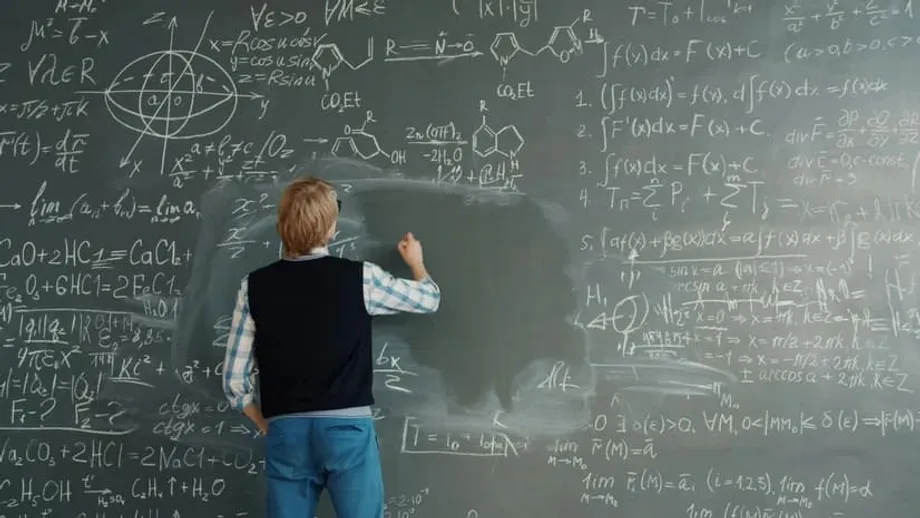
Known as Bimsa, the institute brings together mathematicians from countries whose governments are at odds, including Ukraine and Russia. Researchers share blackboards and work through difficult problems in bright rooms. Visiting scholars describe an unusual concentration of expertise, activity and opportunities to collaborate across disciplines.
The Beijing municipal government and Tsinghua University jointly support the institute. Their backing has helped fund competitive recruitment packages and a working structure designed to limit administrative duties, leaving researchers more time for seminars and mathematical work. Institute materials and public recruitment notices give annual salary ranges of 700,000 yuan to 3.5 million yuan.
Shing-Tung Yau, Bimsa's founding dean and president, has been central to that development. A Fields Medal winner whose work reshaped differential geometry and mathematical physics, Yau has used his international standing to attract established researchers and rising talent. His connections also link the campus to a wider network of institutes and conferences.
By November 27, 2025, Bimsa's appeal extended beyond its setting and salaries. Its combination of research time, international colleagues, teaching links and major scientific gatherings offered a place where scholars could pursue basic questions while also developing mathematics for artificial intelligence, scientific computing and other practical uses.
How the research campus is organised
Bimsa describes itself as an open research campus for both basic and applied mathematics. Roughly half of its work focuses on applied mathematics, about one quarter on pure mathematics, and the remainder on areas that cross disciplinary boundaries, including artificial intelligence and data science. The balance gives abstract research and practical projects substantial space within the same institution.
Its research groups cover algebraic geometry, algebraic topology, analysis and geometry, number theory, mathematical physics and general relativity. Other areas include quantum fields and strings, quantum symmetry, cryptography, computational mathematics, statistics and probability. Applied researchers work on machine learning, optimization, algorithms for scientific computing and mathematical models of complex systems, including projects connected to the digital economy.
Seminars, workshops and reading groups bring those researchers together regularly. Weekly gatherings ask faculty from different fields to present important recent results and techniques. The purpose is to help colleagues understand developments beyond their own specialties, generate collaborations and shorten the time between a breakthrough in one field and its use in another.
Kimyeong Lee, a South Korean theoretical physicist who has worked in the United States and Asia, described the daily exchange at Bimsa as a particular attraction. He contrasted the resources of large American universities with the more limited opportunities that researchers can encounter in smaller institutions.
In the US there are many excellent universities, but smaller institutions can offer limited opportunities. At Bimsa, interaction is everywhere.
Lee's observation points to an important part of the institute's model: assembling many active research groups on one campus gives scholars regular access to people with different mathematical tools. Weekly exchanges provide a structured way to turn that proximity into shared work.
Teaching connects the campus to future researchers
Many Bimsa researchers also teach at Tsinghua University's Qiuzhen College, which opened in 2021 to train students seeking research careers in mathematics. Instructors describe the students as highly motivated and quick to absorb new material. The connection gives the institute a role in developing future university faculty and researchers for industry.
Semen Artamonov, a Russian mathematician who teaches at the institute, described students arriving ready to move quickly beyond introductory material.
It is as if they already know the material and came for advanced level material.
Bimsa's proximity to Tsinghua's Yau Mathematical Sciences Center supports shared seminars, joint supervision of students and projects involving both campuses. Those links connect classroom teaching to active research groups and give students access to scholars working across pure mathematics, applied mathematics and mathematical physics.
The teaching relationship also connects two parts of Beijing's mathematics ambitions. International recruitment brings experienced researchers to the city, while Qiuzhen College develops students who aim to become researchers themselves. Bimsa faculty participate in both processes through their research appointments and teaching.
A congress brings leading scientists to Beijing
Since 2023, Bimsa has hosted the International Congress of Basic Science, a gathering lasting two weeks that brings together Fields Medal recipients, Turing Award winners, Nobel laureates and researchers in mathematics, physics and computer science. Its programme includes lectures, panel discussions and prize ceremonies recognising influential papers and lifetime contributions.
Leading figures in mathematics and physics have served as organisers and committee members. The congress gives young researchers concentrated access to senior scholars, alongside opportunities for open problem sessions and intensive courses. It also reinforces the campus's role as a meeting place for basic research, alongside applied projects with more immediate commercial uses.
The Frontiers of Science prizes recognise standout papers from recent years across mathematics, theoretical physics and computer science. At the inaugural congress, recipients included mathematicians Máté Matolcsi and László Végh. Their recognised work included advances on problems that had remained unresolved for a long time and breakthroughs in algorithms. Lifetime honours celebrated scholars whose contributions shaped entire branches of research.
Mohammad Hossein Yavartanoo, an Iranian theoretical physicist and Bimsa professor, described the event's scale in direct terms.
It was a very big event. I had not seen anything like it anywhere in the world.
The congress places the institute's daily research activity within a much larger international gathering. For young scholars, lectures and intensive courses offer opportunities to learn from leaders in their fields. For Bimsa, the event expresses an ambition to make Beijing a crossroads for fundamental science.
Shared mathematics across political divides
Researchers from Ukraine and Russia work alongside one another at Bimsa despite the conflict between their countries. The institute has made welcoming scholars from both countries part of its approach to international research. Cooperation also extends beyond individual appointments to partnerships with other institutions.
The Geometry and Physics project with HSE University in Moscow is one example. Its research focuses on homological mirror symmetry and birational algebraic geometry. Conferences in Beijing and Moscow have combined attendance in person with online participation, bringing together senior mathematicians and researchers at the beginning of their careers.
In November 2024, a joint conference on algebraic geometry and mathematical physics gathered more than 30 mathematicians. Three Fields Medal recipients were among the speakers. Doctoral students and postdoctoral researchers from China and Russia delivered a substantial portion of the programme, presenting new work and learning from senior figures.
Valery Gritsenko, head of HSE's International Laboratory for Mirror Symmetry and Automorphic Forms, described the value of those exchanges for younger participants.
It was a great learning experience for the new generation of mathematicians.
Repeated events and shared projects are intended to build lasting collaboration rather than rely on isolated visits. The institute's teaching links, congress and joint conferences have developed across several years:
- 2021: Tsinghua University opened Qiuzhen College to train students aiming for research careers in mathematics.
- 2023: Bimsa began hosting the International Congress of Basic Science.
- November 2024: A joint conference on algebraic geometry and mathematical physics brought together more than 30 mathematicians, with three Fields Medal recipients among the speakers.
Yevgen Makedonskyi, a Ukrainian mathematician, described the freedom to concentrate that he found at the Yanqi Lake campus.
Bimsa is one of the few places in the world where I can do maths and almost not worry about anything else.
What attracts researchers to the institute
Bimsa's recruitment packages combine pay with support for research and daily life. Public calls advertise annual salaries ranging from 700,000 yuan to 3.5 million yuan, alongside additional research support, housing assistance and grant opportunities. Appointments span positions from postdoctoral researcher to professor, and the institute continues to expand its research groups and roster.
The campus setting is another attraction. Its location near the mountains offers a quiet environment for concentrated work, while the surrounding Huairou science park has grown into a cluster of basic science institutes and laboratories. Links with Tsinghua provide access to shared academic activity beyond Bimsa itself.
China has increased resources for fundamental research over the preceding decade. Universities have gained greater success in rankings for natural sciences and engineering, and new philanthropic programmes have begun supporting basic science over longer periods. Government support remains the main source of backing, although programmes outside the state are becoming more visible.
Those developments make it easier for institutes such as Bimsa to plan research agendas lasting several years and compete internationally for scholars. The institute's appeal combines financial resources with the working conditions described by Lee and Makedonskyi: frequent contact with colleagues and time to focus on mathematics.
Why Bimsa connects mathematics with AI
Wu Rongling, Bimsa's deputy head, links the institute's mathematical work to China's wider technology goals. He argues that control over advanced artificial intelligence requires more than larger datasets or greater computing power. In his view, independent innovation depends on understanding the mathematics behind AI frameworks and tools.
Wu expressed that argument in terms of the knowledge needed to develop those systems.
Only by mastering mathematics ourselves can we develop our own AI frameworks.
Modern AI relies on linear algebra, probability and optimization. Those tools provide a starting point, but many scientific and industrial problems contain structures that standard models do not capture easily. Molecular dynamics involves rigid constraints. Physics involves symmetry and conservation laws. Materials can involve topological constraints.
Building those mathematical structures into a model's design and training objectives can help it learn from fewer examples and make it less fragile. The aim is to guide the system with relevant mathematical knowledge rather than depend entirely on larger amounts of training data and computation.
Wu described the challenge as a gap between complicated problems in the world and the relatively simple mathematics used in many deployed AI models.
AI now uses basic math, but real world problems are complex. Complex problems need complex tools.
His proposed next step is to place advanced mathematics closer to the centre of AI systems. That could help models handle constraints more effectively and reduce the heavy computing demands of brute force training. It also connects the institute's abstract research to the practical problems pursued by its applied groups.
From molecular models to public exhibits
The possible applications of that approach include faster drug discovery through better molecular modelling, more reliable predictions for climate and fluid systems, and improved design in materials science and engineering. These areas fit the interests of several Bimsa research groups and applied programmes at Tsinghua and partner institutions.
Bimsa laboratories also work with industry and government partners. Digital economy projects include indices and modelling, where statistical methods and measurement affect decisions in policy and business. Such programmes expose students to real datasets and practical constraints while keeping the work grounded in first principles.
The institute's efforts to build interest in mathematics start before students reach a research career. Faculty take part in student contests, summer camps and thematic workshops run through Tsinghua's Yau Mathematical Sciences Center. Those activities connect young people with researchers and with subjects beyond their regular classroom work.
The Yanqi Lake Mathematics Museum adds a public route into the field. Opened on the campus, it offers hands on exhibits explaining core ideas and famous problems. Its purpose is to make pure mathematics approachable for students and visitors and encourage interest among potential future researchers.
The museum, teaching programmes and applied laboratories serve different audiences. Together, they connect the campus's specialist research with students, public visitors and organisations using mathematical methods to address practical problems.
Growth brings demands on funding and openness
Bimsa's international model operates amid political tension, export controls and visa barriers affecting scientific collaboration. Conferences, joint laboratories and student exchanges depend on stable channels and predictable rules. Beijing's wider academic diplomacy has helped connect the institute with universities across Asia and Europe, while sustaining those relationships requires continued attention.
Campus leadership has prioritised protecting research time from heavy administrative duties and political interference. Preserving that approach as the institute grows is a task for its internal governance. Recruiting a diverse faculty, helping newcomers settle in and maintaining a balance between pure and applied work are practical demands that come with expansion.
Government budgets have supported Bimsa's growth, while new philanthropic programmes in China are increasing support for basic science through grants lasting several years. A wider base of funders willing to support lengthy projects would help the institute plan recruitment, major conferences and research that extends beyond annual budgets or short grant periods.
Bimsa's next stage depends on sustaining the conditions that have attracted researchers: time, colleagues, resources and access to international exchange. Its growing campus brings those strengths together, while making stable funding and the management of a larger institution increasingly important.
Key Points
- Bimsa occupies a former cement plant beside Yanqi Lake in northern Beijing and employs more than 200 researchers full time, about one third from outside China.
- The Beijing municipal government and Tsinghua University jointly support the institute. Recruitment notices advertise annual salaries from 700,000 yuan to 3.5 million yuan.
- Roughly half of its research focuses on applied mathematics, one quarter on pure mathematics and the remainder on areas crossing disciplines.
- Many researchers teach at Tsinghua's Qiuzhen College, which opened in 2021 to train future mathematics researchers.
- Bimsa has hosted the International Congress of Basic Science since 2023, bringing leading scholars together for lectures, discussions and scientific awards.
- Researchers from Ukraine and Russia work at the campus. A partnership with HSE University supports joint research and conferences.
- Deputy head Wu Rongling argues that advanced mathematics is essential to developing independent AI frameworks and handling complex scientific problems.
- Industry projects, student activities and the Yanqi Lake Mathematics Museum connect research with practical work and public learning.
- Maintaining open collaboration, protecting research time and securing stable funding are central demands as the institute expands.