A request to avoid lunch sparks a wider argument
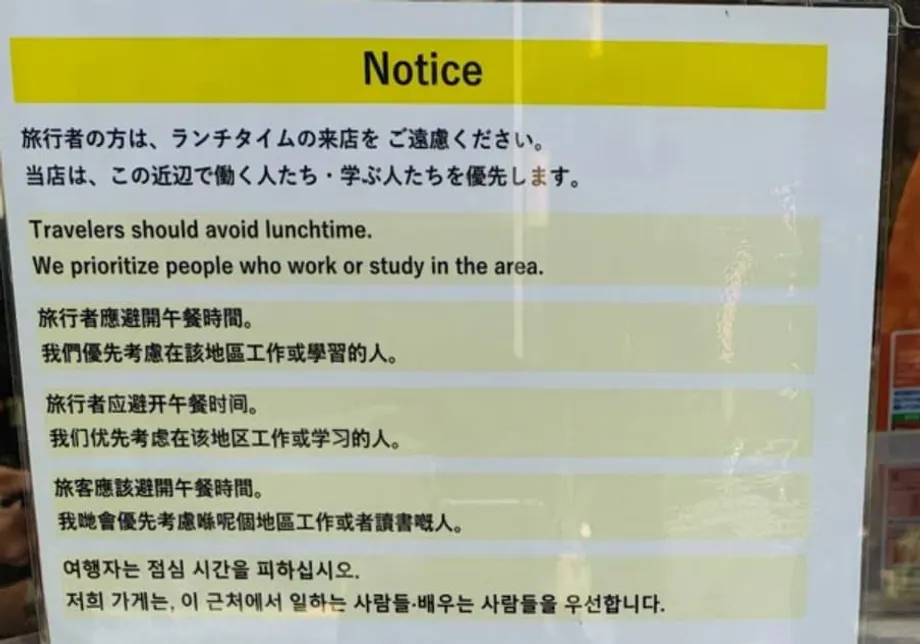
A Nadai Fuji Soba outlet in Tokyo's Kamiyacho area removed a multilingual sign asking travelers to avoid lunchtime after photographs of the notice spread online. The branch, in Minato Ward, said it would give priority to people who worked or studied nearby. Headquarters intervened, ordered the notice taken down and apologized for how the situation had been handled.
Contents
- A request to avoid lunch sparks a wider argument
- Why a few minutes matter at a soba counter
- Why some customers supported the notice
- Why critics questioned the fairness of the rule
- Headquarters says the branch acted alone
- Record arrivals put local routines under pressure
- Other destinations have tried targeted crowd controls
- A proposed tax increase would fund visitor services
- Practical changes could keep lunch moving
- Key Points
The dispute brought two everyday needs into conflict: office workers wanted a quick meal during a short break, while visitors wanted to eat at an affordable restaurant. The outlet stands in a business district with many offices and several hotels, bringing both groups to the same counter.
The branch's notice explained its proposed priority in these words:
The travelers should avoid lunchtime. We prioritize people who work or study in the area.
Supporters welcomed the attempt to protect lunch access for nearby workers and students. Critics called the message unwelcoming to paying visitors and questioned how staff would distinguish tourists from foreign residents or people employed in the neighborhood.
Nadai Fuji Soba's headquarters said the branch had acted independently and that the wording risked offending customers. The company also said tourists bringing luggage into the restaurant was not a problem and acknowledged a lapse in management.
As of November 27, 2025, the episode had become part of a broader argument about overtourism, meaning visitor numbers that put pressure on everyday life in a particular place. In Kamiyacho, that pressure was being discussed through a small but important service: getting a bowl of noodles before returning to work.
Why a few minutes matter at a soba counter
Standing soba shops are designed around speed. Many occupy small spaces, with counters instead of chairs. Customers usually buy a meal ticket from a vending machine and then take it to the counter, allowing the kitchen to prepare their order without a separate payment step.
A typical visit is intended to be brief: order, eat the noodles and leave. For a worker with a limited lunch break, a delay at the entrance or ticket machine can reduce the time left to eat and return to the office.
Nadai Fuji Soba has grown since the 1980s by serving simple bowls at low prices. The most expensive dish on the menu costs 930 yen, and many outlets remain open twenty four hours. That combination makes the chain a practical choice for students and office workers seeking a fast, affordable meal.
Visitors who have never used a meal ticket machine may need longer to understand the menu and ordering process. Large suitcases can also take up space in a narrow restaurant. Supporters of the Kamiyacho notice argued that these difficulties become especially disruptive during the tight midday window.
The chain's response focused on managing the rush and helping customers understand the system. It said luggage itself was not the issue. Better guidance and management, in the company's account, were the way to keep service moving while accommodating regular customers and travelers.
Why some customers supported the notice
People defending the sign described crowded entrances, narrow aisles and queues that grew when someone spent a long time at the ticket machine. Their concern was that a restaurant built for rapid service could become difficult to use precisely when local workers depended on it most.
An unnamed Japanese commenter supporting the notice described the frustration of trying to eat during a short work break:
I have to eat quickly and go to work, but a big suitcase is blocking the path, and if someone stands at the food ticket machine for a long time, it causes a jam.
Other supporters argued that asking travelers to avoid only the lunch rush would leave plenty of opportunities to visit at another time. They also said such a restriction would not hurt midday sales because office workers already kept the outlets busy.
Those arguments reflected the particular rhythm of the neighborhood. Employees often arrive with a fixed deadline for returning to work, while travelers may have more flexibility about when to eat. Supporters suggested that clearer advice about quieter hours could reduce friction between those schedules.
Why critics questioned the fairness of the rule
Kamiyacho's mix of residents, workers and visitors made the proposed priority difficult to define. Foreign residents and employees use the same neighborhood restaurants as tourists. Critics asked how a shop could decide who belonged to the area and who should be asked to come back later.
A notice aimed at travelers could leave people who live or work nearby feeling unwelcome. Opponents also worried that staff might make quick judgments based on appearance when trying to identify customers covered by the request.
Paying visitors, critics argued, should be able to use the restaurant without being treated as an inconvenience. Some warned that photographs of such notices, circulated widely online, could damage Japan's reputation for hospitality.
The disagreement was about more than whether a lunch queue moved quickly. Workers, residents and travelers all rely on small shops in busy districts. A rule giving one group priority affects the others, especially when the shop has little space and the busiest period is short.
Headquarters says the branch acted alone
Nadai Fuji Soba's headquarters apologized and said the sign did not reflect chain policy. The branch removed it after head office contacted the outlet. Daitan Group, the parent company, said staff should have managed peak demand without posting a message that could offend visitors.
A Daitan Group official explained that headquarters had not directed the branch to put up the notice:
It is not an order from the headquarters.
The same official acknowledged a problem with the approach taken toward customers:
I am reflecting that it was not a mindset to treat customers.
The company accepted that lunchtime was crowded while maintaining that travelers' luggage was not a problem. It said it would look for ways to serve regular customers and visitors efficiently, including clearer instructions for people using the restaurant for the first time and guidance about quieter hours.
The sequence of the dispute was straightforward, although no exact dates were given for the posting or removal:
- The Kamiyacho branch displayed a notice in several languages asking travelers to avoid lunchtime.
- Photographs spread online, drawing support for protecting quick lunches and criticism over hospitality and fairness.
- Headquarters contacted the branch, ordered the sign removed and apologized for the handling of the situation.
- The company said it would consider better guidance and management to serve both regular customers and visitors.
Record arrivals put local routines under pressure
Japan received 31.65 million foreign visitors from January through September 2025, reaching that total faster than ever before. A weak yen helped make travel and dining more affordable for people arriving from abroad.
A weaker yen means visitors exchanging foreign currency can receive more yen for their money. That makes meals, accommodation and other purchases easier to afford and helps explain the strong demand described in the tourism surge.
Shops and hotels have benefited from the growing number of visitors. Trains, sidewalks and small eateries have also faced pressure as more people use spaces and services shaped around local routines.
The Kamiyacho dispute showed how that pressure can be concentrated in a narrow period of the day. A restaurant may welcome business while struggling to accommodate customers with different levels of familiarity with its ordering system during the same lunch rush.
For workers, a fast bowl of soba is part of the daily schedule. For visitors, being told to avoid a restaurant can clash with the expectation of an accessible and welcoming Tokyo. The chain's response sought to address crowding while continuing to serve both groups.
Other destinations have tried targeted crowd controls
A town near Mount Fuji installed a large screen beside a convenience store to deter unsafe crowding by people photographing the mountain across a busy street. The measure addressed a particular place where sightseeing activity had created difficulties around traffic and public space.
In Kyoto's Gion district, residents and local groups pressed for etiquette rules to protect narrow private lanes and discourage intrusive photography of geiko and maiko. Their concerns centered on access to those lanes and the conduct of people taking photographs.
Shibuya officials in central Tokyo asked people to avoid Halloween gatherings and restricted drinking on streets near the station at night. Those measures aimed to ease congestion and litter in a busy area.
Each response addressed a different source of pressure: unsafe photography near a road, behavior in private lanes, or large gatherings and street drinking. Together, they illustrated efforts to protect daily life while continuing to welcome visitors.
The soba dispute concerned a smaller setting, but the practical problem was similar. A place used by residents and visitors had to manage demand without allowing crowding to overwhelm its normal function.
A proposed tax increase would fund visitor services
National leaders were considering raising the international tourism passenger tax from 1,000 yen to 3,000 yen per person. At those figures, the proposed charge would be three times the existing amount, an increase of 2,000 yen.
The debate included using the revenue for translation, signs, staffing and other services that help busy destinations operate smoothly. Those are also the kinds of support relevant to a restaurant where unfamiliar ordering procedures can slow a queue.
The proposal remained under consideration as of November 27, 2025. No decision date was given. The discussion focused on how to pay for services that could help destinations cope with visitor demand while protecting the everyday activities of residents and workers.
Practical changes could keep lunch moving
Restaurant operators and industry watchers pointed to several possible changes that would help visitors understand a fast soba shop before reaching the counter. Simple etiquette signs in several languages could explain how to buy a ticket, where to queue and what happens during the busiest hours.
A suggested dining time during the rush could help communicate the need for a quick turnaround. Advice to clear a seat or counter space after finishing would address customer behavior directly and apply to everyone using the restaurant.
Ticket machines with large photographs, item numbers and clear language options could make ordering faster for newcomers. Pictograms could show where to stand, collect food and return bowls, reducing the amount of written instruction a customer needs to understand.
Some outlets use mobile menus and QR codes at the entrance so customers can study their choices before reaching the machine. Staff able to offer a few words in English, Korean or Chinese can also resolve confusion at the door before it delays the queue.
Small changes to the physical space were another suggestion. A luggage rack near the entrance could keep aisles clear, while floor markings could guide customers into a single file line. Both would address the space problems described by supporters of the removed notice.
Advice about quieter visiting times could be posted at the shop or shared through nearby hotels when guests check in. That would encourage travelers with flexible schedules to arrive outside the tightest lunch window while keeping the restaurant open to them throughout its operating hours.
The chain had removed the disputed sign and said it would seek better ways to serve its customers. The central task remained practical: help newcomers order efficiently, keep movement through a small space manageable and preserve a quick lunch for people who need to return to work.
Key Points
- A Nadai Fuji Soba branch in Kamiyacho, Tokyo's Minato Ward, asked travelers to avoid lunchtime and prioritized nearby workers and students.
- Headquarters ordered the sign removed and apologized, saying the branch acted independently and the wording could offend customers.
- Supporters cited short lunch breaks, blocked aisles and delays at ticket machines. Critics questioned fairness toward visitors, foreign residents and local workers.
- Daitan Group said travelers' luggage was not a problem and called for better management of crowded hours.
- Japan received 31.65 million foreign visitors from January through September 2025, reaching that total faster than ever before.
- The government was considering increasing the international tourism passenger tax from 1,000 yen to 3,000 yen per person.
- Suggested restaurant improvements included multilingual guidance, easier ordering, luggage storage, queue markings and advice about quieter visiting times.