Red mud reaches farms as nickel leaves the country
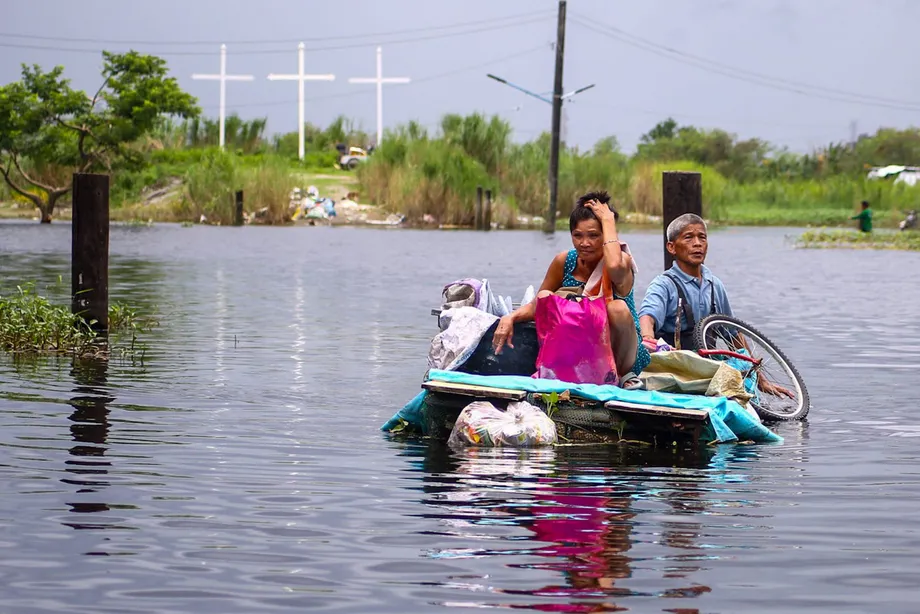
The Philippines mined metals worth more than 252 billion pesos in 2024, with nickel accounting for a major share. In Madrid, Surigao del Sur, residents describe a different measure of the mining boom: rice fields buried in silt, shrinking fish catches, and muddy floods that arrive higher and faster when heavy rain falls.
Contents
- Red mud reaches farms as nickel leaves the country
- How Caraga connects to the global nickel trade
- Why exposed hills send sediment downstream
- Families face less food and more health concerns
- Consent and consultation remain contested
- Speaking out can carry serious risks
- Investment plans meet local resistance
- What mining rules require
- Storm exposure makes mine controls more urgent
- Accountability from the mine to the battery
- Key Points
Surigao del Sur lies in Caraga, the region of Mindanao that has become the country's nickel heartland. Its steep green slopes and red laterite soils sit at the beginning of a global supply chain serving electric vehicles, batteries and other products. The Philippines is the world's second largest nickel producer and its leading exporter of raw nickel ore, yet communities near mines say the trade leaves them with damaged land and water.
Beth Samblado, 51, runs a small eatery in Madrid and joined mass protests years ago against mining permits. She described the renewed appeal of residents who live with recurring floods:
We are asking the government again to please stop the mining.
Residents say torrents spill from nearby hills, cross rice paddies and enter homes. Their complaints are growing as demand for nickel used in electric vehicles and energy storage pushes the country to expand extraction. Rights groups and community leaders warn that households beside mine roads and river mouths are carrying mounting costs.
The conflict reaches beyond individual mines. Manila wants investment in minerals needed for clean energy, while affected families want clean water, reliable harvests and a meaningful say over projects that reshape their surroundings. The central issue is how those goals can be pursued while protections required by law are enforced on the ground.
How Caraga connects to the global nickel trade
Caraga hosts dozens of metallic mines, a large majority extracting nickel. Companies operating in the region include San Roque Metals, Oriental Vision, Libjo Mining, and Marcventures Mining and Development. Their operations connect communities in southern Philippines to manufacturers and processing plants far beyond the country.
Most Philippine nickel ore shipments go to China, with some sent to Indonesia. Only a small amount of nickel is processed locally. Refined nickel is often processed in Japan for batteries and other products, extending the chain from Philippine hillsides through overseas smelters and refineries to factories making battery cells for global brands.
Nickel helps many lithium ion batteries store more energy. Batteries using nickel manganese cobalt chemistry, known as NMC, can provide greater energy density, meaning more energy can fit into a given battery and help a vehicle travel farther. Electric cars and electricity storage are expected to keep driving nickel demand.
Another battery chemistry, lithium iron phosphate, or LFP, contains no nickel. It has gained ground in some vehicle models, and more carmakers are using it for models with a standard driving range. These alternatives can reduce nickel demand, while recycling can recover the metal from used batteries. Recycling rates remain low and costs high.
For Caraga's communities, the international trade brings a local question about who benefits. Residents describe little gain beyond temporary work, even as farm yields decline and waterways change. The ore leaves their region, while the effects of excavation, road dust and sediment remain close to homes, farms and fishing grounds.
Why exposed hills send sediment downstream
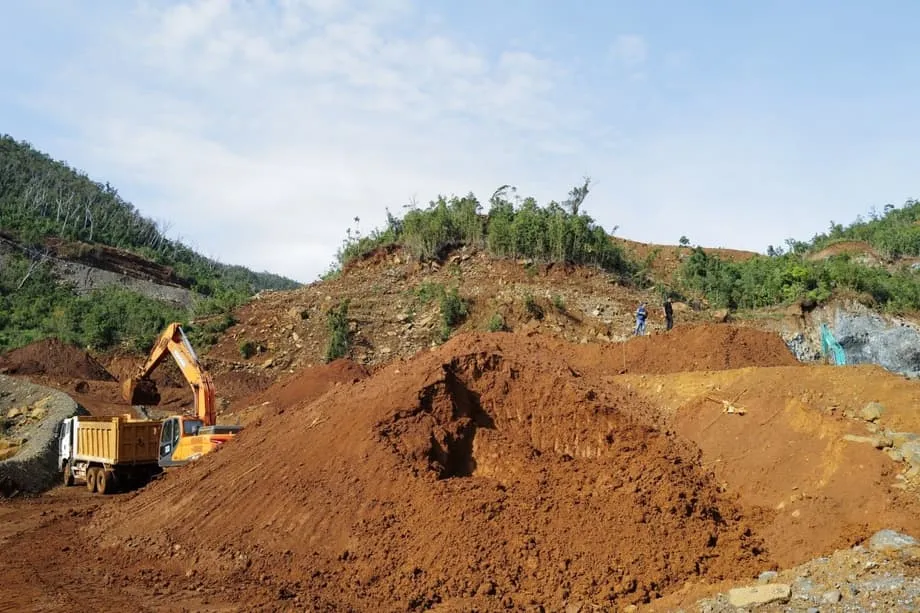
Most nickel in the Philippines is found in laterite, a red soil rich in iron near the surface. Open pit mining removes trees and topsoil, cuts stepped levels into slopes and gathers ore into stockpiles. Those changes leave soil exposed to the heavy rain common in the region.
Residents describe a repeated pattern: vegetation is cleared, rain washes loose earth into creeks and rivers, and sediment settles in farms and coastal waters. Sediment is the soil and other particles carried by flowing water. When enough accumulates, it can change drainage and fill channels that previously carried water away.
Mining companies must build settling ponds and controls for wastewater. Settling ponds slow muddy water so that particles can sink before the water moves onward. In a wet region exposed to storms, these controls can fail when their design or maintenance is inadequate, allowing sediment to reach farms and the coast.
Mangroves and seagrass provide nursery areas where fish grow. Sediment can smother mangroves and corals, make water less clear, and interfere with fish feeding and breeding. Fishers say damaged fishing grounds near shore force them to travel farther to find cleaner water and safer places to work, increasing costs and risks at sea.
Rice and vegetable farms face a different form of damage from the same runoff. Even a thin layer of silt can impair growth by blocking spaces in the soil where oxygen moves and by changing drainage. Fine red mud can also clog irrigation channels, leaving a season's work vulnerable to a single flood.
During dry months, dust from mine roads coats homes and crops. For families living beside those roads, the pressure shifts with the weather: muddy water during heavy rain, then dust and smoke when conditions become dry.
Families face less food and more health concerns
Residents and health workers near nickel sites in Mindanao and other islands describe murky streams and wells, lower water flow from springs, and reduced crop yields since excavation expanded. Along the coast, fishers report nets containing less catch and more debris.
Analiza, a mother of four aged 46 from Tubajon in the Dinagat Islands, described how runoff and silt have affected her family's ability to eat:
It is now hard to feed my family. We are hungry most of the time.
Farmers in Surigao del Sur describe harvests lost when paddies fill with mud. Fishers say mining has destroyed fishing grounds near shore, leaving them to travel farther while earning less. Together, those losses force households to buy more food just as their income falls.
Rights groups have documented water contamination and exposure to heavy metals in mining areas in Zambales and Palawan. Residents have also reported cough, asthma, skin irritation and other ailments. Doctors identify dust and poor water quality as likely triggers.
Families relying on rivers and shallow wells for drinking water and irrigation bear the costs first. When those supplies become unsafe or scarce, everyday tasks become harder alongside the loss of income from farming and fishing. Women and children face particular health risks from poor water access and exposure to smoke and dust.
In Palawan, activists have raised concerns about heavy metals around existing nickel mines and processing facilities. Environmental groups say communities near Rio Tuba have faced years of exposure to toxic substances, including hexavalent chromium, a known carcinogen, meaning a substance that can cause cancer.
Those groups are urging the company involved in processing and its mining partners to suspend operations until water safeguards can be checked publicly. Their demand links the immediate need for safe water to a wider call for accountability throughout the battery supply chain.
Consent and consultation remain contested
National and local groups have documented gaps in how mining projects involve affected communities. Investigations found that residents at some sites lacked full access to environmental impact assessments and other technical documents. Without those documents, communities have less information about expected effects and promised protections.
Consultation meetings sometimes included only areas close to a mine. Communities farther downstream could have little say even when rivers carried floodwater and silt toward their farms and homes. The reach of a project's effects can extend well beyond the area being excavated.
Indigenous leaders in Palawan say the process for obtaining Free, Prior and Informed Consent, or FPIC, has been undermined. Their allegations include bribery and the selective inclusion of people who support mining. FPIC requires consent before a project proceeds, based on information people can understand and without pressure.
Rights organizations want operations suspended where violations occur until independent investigations are completed and remedies provided. They also want electric vehicle and battery manufacturers buying nickel to examine their supply chains and require higher standards from suppliers. That work involves checking how minerals are produced and responding to harm connected with their purchase.
Community leaders say access to information and independent oversight are necessary to rebuild trust. Their concern is practical: residents need to understand proposed projects before decisions are made and to check whether companies keep their commitments afterward.
Speaking out can carry serious risks
The Philippines has been one of Asia's deadliest countries for land and environmental defenders. Research links mining to a large share of recorded killings of defenders, adding a safety concern to disputes over water, land and livelihoods.
Indigenous communities and leaders face threats, surveillance and arrests under sweeping anti terror laws. Rights groups in Mindanao report frequent red tagging, the practice of labelling activists as terrorists, which exposes them to further danger.
Civil society organizations are calling for an end to militarization in mining areas, accountability for perpetrators of abuse, and stronger protection for Indigenous land rights. These demands accompany calls for genuine consultation, because residents need to be able to discuss mining without fear.
Krista Shennum, a researcher at Climate Rights International who has interviewed residents across Dinagat and Surigao del Sur, described the balance of power facing affected families:
People living in mining communities are facing significant harms from powerful companies who act with almost total impunity.
Shennum also said global brands in transport and energy can use their purchasing power to demand cleaner operations and greater transparency throughout the nickel chain. For households living beside mine roads, that would connect corporate buying decisions abroad with conditions at home.
Investment plans meet local resistance
Manila is promoting investment in critical minerals, the materials sought for clean energy supply chains. Officials have accelerated permits and promoted new projects to capture more value from the nickel trade, rather than relying mainly on exports of raw ore.
Analysts caution that reproducing Indonesia's nickel industrialization would be difficult and risky for the Philippines. Assembling land for projects is complex, the energy supply still depends heavily on coal, and compliance with environmental rules is uneven.
Large new smelters could also displace miners working on a small scale or reshape local economies. Analysts warn that social conflict could grow if such changes proceed without strong safeguards. Processing more nickel at home would therefore bring decisions about land, electricity and livelihoods alongside investment.
Palawan has taken a different direction. A moratorium lasting 50 years was signed to stop new mining agreements and exploration permits in order to protect forests and watersheds. Its implementation is uncertain following political changes, and national law may still override local bans.
Industry representatives argue that the effects of extraction are temporary and that rehabilitation, reforestation and controls on mine waste can restore landscapes. Many residents remain unconvinced, pointing to years of rivers filled with silt and damaged crops. Rights groups say enforcement is weak and inspections too infrequent to turn written promises into better conditions.
What mining rules require
Mining projects in the Philippines need an Environmental Compliance Certificate following an impact assessment and public consultations. The assessment examines expected environmental effects, while the certificate forms part of the approval process for a project.
Companies must manage tailings and wastewater, prevent erosion and siltation, and set aside money for rehabilitation. Tailings are waste left after mineral processing. Rehabilitation funds are intended to support the work needed to restore areas affected by extraction.
FPIC is required by law where Indigenous Peoples are affected. Firms are also expected to fund Social Development and Management Programs that support host communities. Together, these requirements address environmental protection, community participation and local benefits.
Community leaders say implementation often falls short. Access to documents can be limited, monitoring data difficult to obtain, and penalties inconsistent. Rights groups point to weak enforcement, while residents want timely inspections by the Department of Environment and Natural Resources and the Mines and Geosciences Bureau.
Campaigners are calling for independent investigations into reported environmental and human rights abuses, open access to impact studies and monitoring data, and meaningful consent from Indigenous communities. Where harm is found, they want clean water supplies, health checks, irrigation canals cleared of silt, and fair compensation for lost harvests and fishing income.
Storm exposure makes mine controls more urgent
The Philippines lies in the Pacific typhoon belt. As the climate warms, storms are becoming more intense, bringing heavier rainfall and longer periods of flooding. For mining communities, the condition of slopes, forests, rivers and coastal vegetation affects how that water moves.
Forests and mangroves provide natural protection. Removing them for pits and roads weakens those defenses. Sediment accumulating in rivers reduces the space available to carry water, allowing floods to spread faster into farms and towns. Changes on steep slopes can also increase landslide risk.
Rights groups say nickel mining in Caraga is increasing vulnerability to climate hazards by removing protective vegetation and leaving large quantities of loose soil in a region with relentless rain. They want stronger screening of climate risks and hazard mapping to guide where mining is allowed and where it should be excluded.
Residents in Madrid, Cantilan and other towns in Surigao del Sur want erosion controls enforced before the next storm season. They also seek disclosure of water tests and monitoring that includes farmers and fishers, so problems can be flagged as they emerge instead of months later.
Accountability from the mine to the battery
Mining firms face calls to repair controls that keep silt out of waterways, dispose of waste properly, and publish water results for individual sites. Regular monitoring with public reporting would allow communities to track conditions and compare company commitments with results.
Practical measures proposed to reduce harm include rigorous erosion control, large settling ponds with sound designs, and areas closed to mining in watersheds at high risk. Replanting mangroves and stabilizing slopes would help reduce flood and landslide dangers around affected communities.
Battery and car manufacturers are being urged to identify their suppliers, require independent audits, and stop buying from those that fail to meet clear standards. Campaigners want buyers to support remedies for communities already harmed. International standards for responsible mining can help when they are connected to public reporting and firm deadlines.
Domestic processing also requires attention to electricity supply. Smelters powered by coal lock in high emissions, creating another environmental cost within a trade intended to support cleaner transport. Policymakers face calls to pair investment with strong audits and clear disclosure.
At the national level, residents want stronger public consultations and FPIC procedures, along with tougher penalties for firms that ignore permit conditions. No dates were given for the requested investigations, disclosures or enforcement measures. For families facing lost harvests and longer fishing trips, the immediate priorities remain clean water, safer farms and a fair voice in decisions affecting their future.
Key Points
- The Philippines mined metals worth more than 252 billion pesos in 2024, with nickel accounting for a major share.
- Caraga is the country's nickel heartland. Most ore goes to China, some to Indonesia, and only a small amount is processed locally.
- Residents in Surigao del Sur and the Dinagat Islands report muddy floods, damaged harvests, declining fish catches and difficulty feeding their families.
- Rights groups report water contamination, health concerns, inadequate consultation and contested Indigenous consent near mining operations.
- Environmental defenders face threats, red tagging and violence, with mining linked to a large share of recorded killings.
- Palawan signed a moratorium lasting 50 years on new mining agreements and exploration permits, but implementation faces political and legal uncertainty.
- Communities want stronger inspections, public water testing, repairs to erosion controls and compensation where harm is found.
- Battery and vehicle companies face calls to trace nickel supplies, demand independent checks and require remedies for affected communities.