A centennial shared across two cities
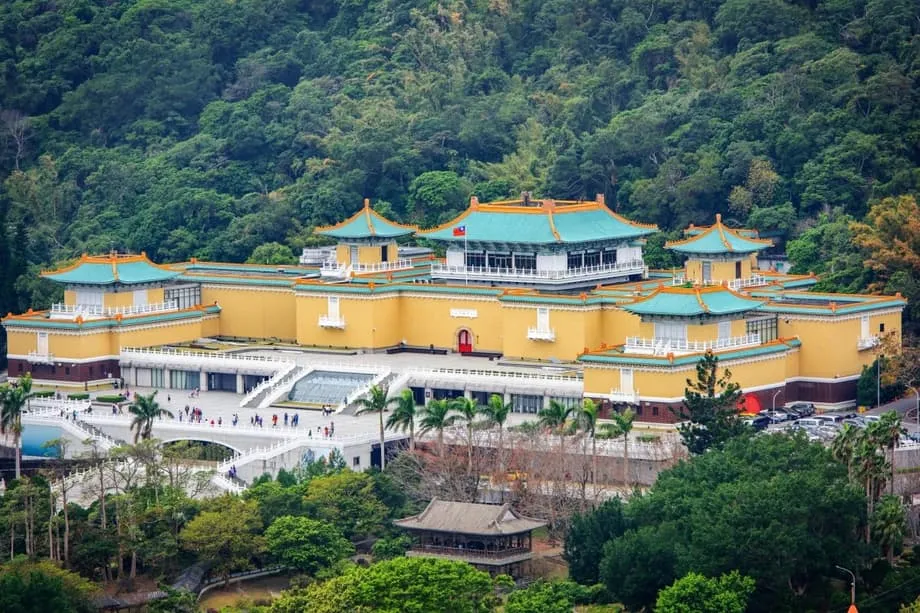
Taiwan's National Palace Museum is marking 100 years since the imperial palace in Beijing opened to the public, and 60 years since its permanent home in Taipei opened in 1965. The celebrations bring rarely seen Song dynasty paintings, books and calligraphy into view, alongside objects that tell the story of a collection moved through war and across the Taiwan Strait.
Contents
- A centennial shared across two cities
- How the collection reached Taiwan
- A collection's history in masterpieces and records
- Why the three Song landscapes matter
- Song books reveal the craft of printing
- Friendship, scholarship and the Western Garden
- Beijing's anniversary reaches the United Nations
- Digital access beyond the display cases
- Prague hosts 100 treasures and their stories
- Planning visits to Taipei and Chiayi
- Key Points
On October 20, heavy rain did not stop a small crowd from climbing the hill to the Taipei museum. Director Hsiao Tsung-huang welcomed guests at the door during a gathering that combined institutional pride with a sense of continuity. At a short ceremony, Hsiao announced the milestone:
The National Palace Museum is 100 years old!
The anniversary traces back to October 10, 1925, when the Forbidden City became the Palace Museum. The date also recalls the Wuchang Uprising in 1911, which helped end the Qing dynasty and begin a new political era. Beijing and Taipei are now marking the museum's centennial with their own programs.
Taipei's second anniversary has a cultural meaning as well as a calendar meaning. Its 60 years at Waishuangxi align with the traditional Chinese sexagenary cycle, a cycle lasting 60 years. The museum's holdings, assembled from the collections of emperors and scholars, now number in the hundreds of thousands and span more than ten millennia of art and material culture.
Three major exhibitions anchor the celebrations at the Northern Branch in Taipei and the Southern Branch in Chiayi. Their subjects range from monumental landscapes to printed pages, while archives and digital displays explain how generations of museum staff preserved, studied and shared the collection.
How the collection reached Taiwan
The Palace Museum's establishment in 1925 changed the role of the imperial collection. Objects once held within a royal court became the responsibility of a public institution. War soon made that responsibility a demanding task of packing, transport and careful record keeping.
In 1933, as invasion threatened Beijing, more than 13,000 crates left the city. They traveled by rail, river and road, moving south and west as conflict spread during the 1930s. Escort teams faced bombings, disease and difficult terrain while maintaining inventories of the treasures in their care.
After the war, part of the collection remained in Beijing. Another part came to Taiwan as the Nationalist government retreated in 1949, when 2,972 crates of art and archives were shipped across the strait. Staff who later helped establish the Taipei museum brought with them the discipline developed during those wartime journeys.
Family stories from that period describe lives organized around protecting scrolls, albums, bronzes and books. The centennial exhibitions recognize both the movement of the objects and the people who kept them safe. The museum's permanent Taipei complex opened in 1965, followed by its Southern Branch in Chiayi in 2015.
- October 10, 1925: The imperial palace in Beijing opened to the public as the Palace Museum.
- 1933: More than 13,000 crates began leaving Beijing to protect the collection from invasion.
- 1949: A total of 2,972 crates of art and archives were shipped to Taiwan.
- 1965: The museum opened its permanent site at Waishuangxi in Taipei.
- 2015: The Southern Branch opened in Chiayi.
- 2025: Centennial programs mark the museum's founding and 60 years at its Taipei home.
A collection's history in masterpieces and records
Enduring Legacy: A Centennial Celebration of the National Palace Museum is the central survey of the anniversary program. Spanning both branches, it brings together more than a hundred masterpieces and key documents to trace the transition from imperial collection to public museum.
Paintings and calligraphy associated with the museum's identity appear alongside ritual bronzes, carved jades and porcelains. Together, the objects show the skills of bronze casting, jade carving and ceramic production across successive dynasties. Archival materials add another kind of evidence, documenting relocations and the cataloging projects that helped staff keep track of the collection.
The Southern Branch is presenting three defining Song landscapes together in Chiayi for the first time: Fan Kuan's Travelers among Mountains and Streams, Guo Xi's Early Spring, and Li Tang's Wind in Pines among a Myriad Valleys. Their presence makes the southern site a major destination within the centennial program.
Loans from Japan extend the exhibition beyond the museum's own holdings. They include a group of blue and white porcelains from the Museum of Oriental Ceramics, Osaka, and objects from Kyushu National Museum. These partnerships reflect a growing network of cultural exchange.
Digital experiences connect the historical records with the physical objects. Visitors can examine enlarged brushwork, explore materials and learn about the science of conservation, the work of studying and caring for an object so it can survive for future generations.
Why the three Song landscapes matter
The Song dynasty, which lasted from 960 to 1279, shaped Chinese painting, printing, ceramic technology and calligraphy. Scholars serving in public office treated art as a serious part of moral life. Landscape painting offered a way to consider humanity's place within a much larger natural order.
Fan Kuan's Travelers among Mountains and Streams places tiny people and a mule train near a river beneath towering peaks. Layers of textured ink build crags, pines and mist. The painting rewards slow looking, with its vast scale suggesting that human plans must fit within the rhythms of nature.
Guo Xi's Early Spring depicts a moment when winter is loosening its grip but new growth has yet to arrive fully. Its forms suggest thawing ground, wind and moving water. Guo wrote about "the order of mountains" and the ways painting could convey weather and the time of day.
Early Spring balances solid forms with empty spaces to suggest air and depth. Rather than organizing everything around a single point of perspective, the picture allows its mountain forms and open areas to work together, giving viewers a sense of distance and changing atmosphere.
Li Tang's Wind in Pines among a Myriad Valleys stands at a transition in landscape painting. Broken strokes resembling cuts from an axe give the rocks sharp energy, while pines twist and cling to slopes as though a gust were moving through them. The work draws on the clear structure of Northern Song painting while anticipating the more intimate views of the later Southern Song period.
Song books reveal the craft of printing
Two Hundred Treasures: Song Dynasty Rare Books in the National Palace Museum opens the museum's rare book repository for its most comprehensive presentation to date of editions from the Song period. More than a hundred volumes show the quality of the printing, the arrangement of pages and traces left by readers over centuries.
Song printing was a golden age of book production. Woodblock printing used characters carved into blocks to reproduce pages, supporting refined editions of classics, histories, poetry and technical works. It spread Confucian classics, poetry anthologies and practical guides to broader audiences with a clarity that earlier manuscript culture could not match.
European incunabula, books from the earliest period of European printing, may be a familiar reference for visitors thinking about rare books. The Song equivalents came earlier. Their carefully cut characters, subtle paper tones and later annotations show both the skill of their makers and the journeys of the books through different hands.
Page design balanced columns and margins to guide reading. For visitors who know Chinese characters, the carving of individual strokes has an artistry of its own. Explanations of materials, tools and the lives of past readers also give visitors unfamiliar with the writing a way into the display.
Research presented in the exhibition compares different editions and examines marginalia, the notes written in a book's margins, along with collectors' seals. These physical traces help scholars follow the movement of ideas from the court to academies and private studies. A book's history survives in its pages as well as in its printed words.
Friendship, scholarship and the Western Garden
An Assembly for the Ages: The Legend of the Northern Song Elegant Gathering in the Western Garden explores the world of scholar officials who met to write poetry, paint and discuss ideas. Such gatherings sustained an ideal of moral cultivation, the effort to develop one's character through learning and artistic practice.
The exhibition brings together paintings and calligraphy associated with leading Northern Song literary and artistic figures, including Su Shi, Huang Tingjian and Mi Fu. Later works show how successive generations looked back at their achievements and kept their memory active.
A centerpiece is Li Gonglin's Five Horses, borrowed from the Tokyo National Museum and being shown abroad for the first time. Its precise lines and humane portrayal of horses reveal the artist's range and the tastes of the court during his era.
The Western Garden legend reaches beyond the memory of a single gathering. It became a reference point through which artists imagined friendship, talent and duty. Later generations copied the Song masters, reinterpreted their work and sometimes challenged the models they had inherited.
Seen beside the landscapes and books, the exhibition shows several sides of Song cultural life. Public service, literary friendship, careful observation and the handling of brush and ink belonged to a connected world of scholarship and artistic work.
Beijing's anniversary reaches the United Nations
Parallel centennial events in Beijing and Taipei have also brought the anniversary to an international stage. At the United Nations in New York, a related event unveiled a commemorative stamp sheet and opened an exhibition titled Endless Vitality.
The UN Postal Administration issued stamps with floral designs inspired by objects in the Palace Museum collections. Speakers at the ceremony discussed museums as places that preserve shared heritage and connect cultures.
Geng Shuang, charge d'affaires of China's permanent mission to the United Nations, described the purpose of the stamps:
The newly issued UN Postal Administration stamps not only mark the 100th anniversary of the Palace Museum, but also showcase the enduring charm of Chinese culture to the world.
Atul Khare, UN Under-Secretary-General for Operational Support, spoke about the role museums play in public life:
Museums are places where culture lives, where stories are told, and where people come together to learn and connect. They preserve our past, help us understand our present, and inspire our future.
Speakers also noted the Palace Museum's place on the UNESCO World Heritage List and the value of exhibitions and research in connecting communities. Taipei's loans and collaborations similarly bring audiences into contact with works created centuries ago.
Digital access beyond the display cases
The National Palace Museum is expanding access to objects that can be difficult to display for long periods. A 3D collection gallery allows close study, while electronic books, digitized archives and rare book databases serve students and researchers who cannot travel to the museum.
Digital viewing within exhibitions can reveal layers of brushwork and repairs that are invisible to the naked eye. These tools give visitors a closer understanding of how an object was made and how it has been cared for.
The Northern Branch combines its account of the museum's development with contemporary interpretation, including displays supported by artificial intelligence. These help visitors compare versions of works and follow motifs across centuries.
The Southern Branch balances its focus on Asian art and culture with major loans and new presentations of the museum's best known paintings. Across both sites, the centennial places physical objects, historical records and digital study alongside one another.
Prague hosts 100 treasures and their stories
International outreach is a substantial part of the anniversary. From September 11 to December 31, 2025, the National Palace Museum is presenting 100 Treasures, 100 Stories at the National Museum in Prague. The exhibition, still running as of November 26, is its first in the Czech Republic and introduces Taiwan's approach to cultural heritage.
The selection includes the Jadeite Cabbage, a small carving that turns naturally mottled jade into a cabbage with a locust and a katydid. The object celebrates an artisan's ability to work with the material's veins rather than against them. Its combination of skill and restraint has helped make it a beloved museum symbol.
Curio cabinets from the Qianlong court show an interest in materials and motifs from beyond the court's immediate world. A Qing dynasty handscroll of Along the River During the Qingming Festival presents a panorama of city life, with tiny figures gathered on a wooden bridge, vendors and boatmen.
The handscroll rewards patient viewing as its busy urban scene unfolds. Bronze mirrors offer another encounter between craft and observation, casting dramatic patterns when sunlight catches them and suggesting a meeting of science and art in early China.
Calligraphy inspired by Su Shi's Red Cliff odes connects literary memory with landscape. Each object in Prague is presented through a story intended to help audiences far from Taiwan engage with the collection.
Planning visits to Taipei and Chiayi
Both museum branches publish opening hours, ticket information and free entrance dates on their official pages. Annual occasions for free admission include New Year's Day, the Lantern Festival, International Museum Day, World Tourism Day and National Day.
Joint tickets and travel packages involving airlines, Taiwan High Speed Rail and partner hotels are in development to make visits to both branches easier for domestic and international travelers. Launch dates for those arrangements have not been given. Visitors can check the museum's centennial site for the latest exhibition schedules and visitor information.
The program spreads the celebration across Taipei, Chiayi and Prague, with different parts of the collection carrying different stories. In Taiwan, the Song landscapes, rare books and Western Garden exhibition connect artistic achievement with the scholarship behind it. Abroad, familiar treasures and less familiar objects introduce new audiences to the museum's holdings.
A century after the imperial palace became a public museum, the anniversary also returns attention to the work behind every display: recording objects, protecting them during upheaval, studying their materials and making them accessible. The wartime crates, the Taipei opening and today's international loans form successive chapters in that continuing public responsibility.
Key Points
- The National Palace Museum marks 100 years since the Palace Museum's founding in 1925 and 60 years at its Taipei home.
- Three major exhibitions cover the museum's history, Song rare books and the Northern Song Western Garden tradition.
- Fan Kuan, Guo Xi and Li Tang's celebrated landscapes are being presented together in Chiayi for the first time.
- Li Gonglin's Five Horses, borrowed from the Tokyo National Museum, is being displayed abroad for the first time.
- The rare book exhibition presents more than a hundred volumes in the museum's most comprehensive display of Song editions to date.
- The museum's history includes the evacuation of more than 13,000 crates from Beijing in 1933 and the shipment of 2,972 crates to Taiwan in 1949.
- A UN stamp release and Endless Vitality exhibition in New York form part of the parallel centennial celebrations.
- Digital galleries, archives, databases and exhibition tools broaden access to the collection.
- 100 Treasures, 100 Stories runs in Prague until December 31, 2025, with works including the Jadeite Cabbage.
- Both Taiwan branches offer free admission on several annual dates, while joint tickets and travel packages remain in development.