A long working life, but little financial security
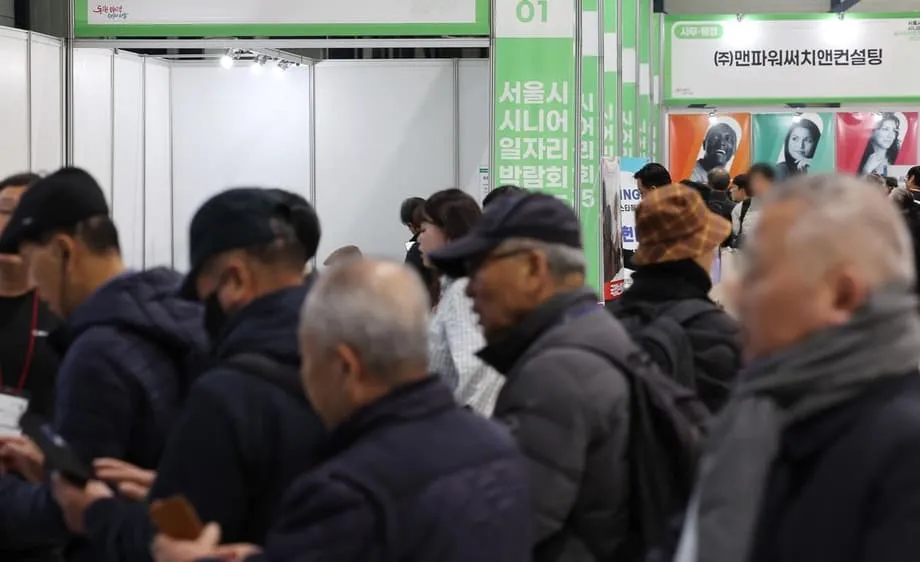
South Korea had the highest employment rate among people aged 65 and older in the OECD in 2023: 37.3 percent, compared with an OECD average of 13.6 percent and 25.3 percent in Japan. Yet working longer has not spared many older Koreans from poverty. The country's senior poverty rate was 40.4 percent in 2023, also the highest in the OECD.
Contents
- A long working life, but little financial security
- Living costs keep people working into their seventies
- Why a career can end long before a pension begins
- Pensions reach more people, but payments remain modest
- How pension rules influence retirement choices
- Replacement jobs often mean less pay and lost experience
- Families have less capacity to fill the gap
- What reforms are being discussed?
- Connecting retirement rules with everyday working lives
- What to Know
Behind those figures is a difficult sequence: workers often leave their main careers years before pension payments begin, find replacement jobs that pay less, and continue working after their pensions start because the benefits cannot cover daily expenses.
Kim Eun-hui spent three decades at a company before accepting voluntary retirement at 57. With two sons still in college, she now searches neighborhood job boards and online listings for work with part time hours. Age, wages and a limited choice of jobs have narrowed her options.
Kim, a former company employee trying to find stable work, described the pressure surrounding her departure:
If I had declined the early exit package, they would have fired me anyway. I tried to find another stable job, but given my age, it was not easy.
She plans to work for at least another five years, although finding enough reliable employment remains uncertain. Tuition, rent and everyday bills leave little room for a break. Her experience shows why a high employment rate among older people can sit alongside widespread financial hardship.
Kim also described how her job search had changed her understanding of people who start businesses without previous experience:
I did not realize how harsh the employment reality is. I understand why so many people start small businesses even without experience.
Living costs keep people working into their seventies
Korea entered the super aged category in 2025, with people aged 65 and older accounting for 20.3 percent of its population. That share is projected to exceed 40 percent by 2050. Financing longer lives is becoming a concern for more households, while the population available to support older relatives is shrinking.
Older people report wanting to remain employed until about 73.4 on average. For many, the reason is practical: 54.4 percent of older workers say they work to cover living costs. Only a minority cite enjoyment or avoiding boredom.
Employment can therefore serve two different purposes during later life. Before pension eligibility, it replaces income lost when a main career ends. After pension payments begin, it supplements benefits that may still fall short of household needs.
The work available during these years often consists of shifts with part time hours, daily contract jobs or small family businesses. Many of these roles have little connection to the experience people accumulated during decades with a previous employer.
Korea's figures show how widespread continued employment has become. Its rate of 37.3 percent for people aged 65 and older was more than twice the OECD average of 13.6 percent in 2023. Japan's rate of 25.3 percent was also high, but below Korea's.
Why a career can end long before a pension begins
Korea's legal retirement age is 60, but workers leave their main jobs at an average age of 52.9, according to the 2025 figure. Pension eligibility comes considerably later. People born between 1961 and 1964 can begin receiving their pension at 63, while those born in 1969 or later must wait until 65.
A household can consequently face years without either its former regular salary or an old age pension. People fill that gap by accepting work at lower wages, combining shifts or investing limited savings in a small business.
Seniority based pay helps explain why main careers end early. Under this system, wages and promotion depend heavily on years of service rather than the particular role or performance. As employees accumulate service, their pay rises, giving companies a financial incentive to encourage departures during their fifties.
The International Monetary Fund, in its assessment of Korea's labor market, identified wage and promotion practices as a cause of early exits from stable jobs:
Structural labor market rigidities in Korea, namely the seniority based wage and promotion systems, lead to premature retirement.
The law permits employers to set mandatory retirement at 60 or older. Many workplaces also use peak wage schemes, which reduce pay during the years approaching retirement. Rights groups say these arrangements push older employees toward insecure jobs with lower wages, often outside their previous field.
An attorney aged 52, quoted in a rights report, described the personal cost of losing the ability to continue an established career:
It is an infringement of human dignity. Just because I am older, I cannot work where I worked my entire life.
The timetable facing workers brings several different rules together:
- In 2025, the average age for leaving a main job was 52.9.
- Korea's legal retirement age is 60, and the law allows mandatory retirement at that age or later.
- People born from 1961 through 1964 become eligible for their pension at 63.
- People born in 1969 or later become eligible at 65.
Extending employment therefore involves more than changing a single retirement age. Workers need access to suitable jobs during the period between leaving a main employer and receiving pension income.
Pensions reach more people, but payments remain modest
The average monthly National Pension benefit in 2024 was about 660,000 won, or around 450 dollars. The government's estimate of the minimum monthly cost of living for one person was 1.34 million won. The average benefit was therefore less than half that amount, leaving a gap of about 680,000 won each month.
Korea has expanded pension coverage since the 2000s, including efforts to reach people who were outside the system during their working years. The share of seniors with no pension income fell from nearly 69 percent in 2006 to 8.7 percent in 2022.
Receiving some pension income, however, can still leave a household struggling to pay for necessities. The 40.4 percent senior poverty rate in 2023 shows why many people continue earning after benefits start.
Women face particular difficulty. In 2022, 32.4 percent of senior women received National Pension benefits, compared with 56.9 percent of men. Poverty among senior women reached 48.7 percent. Among people aged 75 and older, it reached 61.3 percent.
These differences matter for the design of support. A policy that helps someone stay employed may be useful during their sixties, while a person over 75 or someone with poor health may depend more heavily on adequate benefits.
Studies of Basic Pension expansions since 2014 found a meaningful reduction in old age poverty, especially among people at the bottom of the income distribution. The Basic Pension is a non contributory benefit, meaning it provides support without requiring recipients to have built up the same record of payments as a contributory pension.
Those studies found little sign that recipients stopped working because their benefits increased. Some families reduced the money they transferred to parents, but older people still gained income security, while adult children faced less financial strain.
How pension rules influence retirement choices
Korea's National Pension offers a financial reason to delay claiming benefits: each year of deferment increases the eventual payment by 7.2 percent. Older people who can find work may choose to keep earning and wait for a larger monthly pension later.
That choice depends on whether a household can manage without the pension immediately. Someone with a suitable job has more room to postpone payments than someone who needs cash for rent or groceries now.
An earnings test also affects some pension recipients who continue working. This rule reduces old age pension benefits when current earnings exceed a threshold. The reduction can reach 50 percent, although it mainly affects workers with higher pay.
For many seniors who need immediate income, employment still makes financial sense despite a temporary reduction in benefits. Their decision reflects both the wages available now and the pension they expect to receive later.
Economists studying Korea find that older workers respond strongly to these forward looking incentives. Additional earnings and the prospect of higher future benefits from delaying pension take up reduce the likelihood of immediate retirement.
The level of pension wealth alone, with other factors held constant, is a weaker predictor of when someone leaves the labor market. In simple terms, the reward for another period of work can influence retirement decisions more strongly than the total pension resources a person already expects to receive.
These findings help explain why retirement policy and job quality are closely connected. A financial reward for continuing to work becomes useful when a person can actually find a suitable role and remain healthy enough to do it.
Replacement jobs often mean less pay and lost experience
About 61 percent of older wage earners are in non regular positions, according to public data and budget office analyses. Nearly half, 49.4 percent, work at businesses with fewer than 10 employees.
Many jobs require manual effort or offer limited opportunities to use previous professional experience. Elementary occupations account for 35.4 percent of older workers, while about 15 percent operate machinery. More than half, 53.2 percent, say their new jobs have little or no connection to their earlier careers.
Average monthly pay falls from around 3.51 million won for workers in their late fifties to about 2.79 million won for those in their early sixties, who are often working again after retirement. That is a decline of roughly 20.5 percent.
Households can therefore lose both income and stability at a time when living costs and health needs often rise. Employers also lose the benefit of skills that took years to develop when experienced staff move into unrelated work.
Better matching between skills and vacancies, training designed for older learners, and stronger measures against age discrimination would help people remain in relevant positions. Employers can also reduce heavy lifting, offer gradual transitions to shorter hours and make use of older employees' experience in mentoring or dealing with clients.
Predictable schedules, access to health services, fair pay structures and work designed around older employees can reduce physical strain and staff turnover. Transparent promotion criteria and stronger enforcement of equal treatment regardless of age would make it easier for experienced workers to stay where their skills are useful.
Families have less capacity to fill the gap
Support from children has long helped older Koreans meet expenses. Research using the Korean Longitudinal Study of Ageing shows that these transfers remain meaningful around retirement, but the strength of that support is weakening.
Smaller families leave fewer adult children available to help. Younger adults also face their own economic pressures, making regular financial support harder to sustain.
Low fertility and rising life expectancy mean more years of retirement expenses must be financed with fewer family members of working age. Pensions and access to suitable employment consequently carry more of the responsibility for maintaining income.
Kim's circumstances show that money can also flow in the other direction. Her search for work is partly driven by the cost of supporting two sons through college. Leaving a main career does not necessarily mean that a parent's financial responsibilities have ended.
The findings on Basic Pension expansions offer another part of the picture. Public benefits can provide greater security for older people while easing pressure on adult children, even when families adjust the amount of private support they provide.
What reforms are being discussed?
The IMF has urged Korea to raise the retirement age and replace seniority based wages with pay linked to jobs and performance. The aim is to keep older employees in stable work without making continued service an automatically rising cost for employers.
Korea's statutory retirement age is lower than in many OECD countries. The IMF also notes that its pension eligibility age is among the lowest in the OECD. These are related but different rules: one concerns when an employer can end a career through mandatory retirement, while the other determines when pension payments can begin.
OECD analysis estimates that moving the pensionable age to 68 by 2035 could increase total employment by 14 percent and GDP by 12 percent by 2070. These figures describe a projected reform scenario, with the gains developing over decades.
Domestic discussions focus on three connected areas. One is changing wage systems so that pay reflects the job rather than mainly years of service. Another is broadening the social safety net for workers in non standard employment through expanded employment insurance, better access to benefits and support such as the Earned Income Tax Credit for work at low wages.
The third is strengthening income protection in old age. That includes improving both the adequacy and financial sustainability of the National Pension and directing the Basic Pension more effectively toward vulnerable people, including many women and those over 75.
Health care and long term care reforms are also part of the discussion because chronic conditions often determine whether someone can continue working. A longer expected working life needs arrangements for people whose health or occupation makes continued employment unrealistic.
Japan requires employers to secure employment opportunities for older people up to age 70, either inside the company or through other arrangements. Korean companies and regulators are discussing how longer working lives could fit different industries. Office jobs may be easier to adapt than physically demanding roles, making training, redesigned duties and worker protections central to any extension.
Connecting retirement rules with everyday working lives
Retirement rules, pensions, wages and health care affect the same person at different stages of later life. Aligning them could reduce the abrupt loss of earnings that follows departure from a main job and improve the quality of work available afterward.
A researcher at the National Pension Research Institute described the need to bring those policies together:
Older adults' quality of life cannot be improved if retirement, pension and employment policies continue to function in isolation. A coordinated overhaul is needed to reduce friction between these systems.
For Kim, those policy choices translate into the jobs she can find near home, the wages they offer and whether the hours are steady. Many of her peers consider small franchises, delivery routes, school safety posts and civic service roles.
The goal is to maintain income long enough to meet family commitments and, where possible, qualify for a higher pension later. National surveys show that older people often expect to work until around 73.4, provided their health allows it and suitable work is available.
Kim explained why small shops and shifts with part time hours increasingly appeal to people facing the same pressures:
I understand why people open small shops or take part time shifts. You do what you can until the pension starts, and even then you may still need the extra income.
Better jobs, pay linked to roles and stronger basic income protection would address different parts of that problem. Together, they could reduce hardship while allowing Korea to make better use of the experience of its older citizens.
What to Know
- In 2023, 37.3 percent of Koreans aged 65 and older were employed, compared with 13.6 percent across the OECD and 25.3 percent in Japan.
- Living costs are the reason 54.4 percent of older workers give for remaining employed.
- The average main job exit age was 52.9 in 2025, while pension eligibility begins at 63 to 65 depending on birth year.
- The average National Pension benefit in 2024 was about 660,000 won a month, compared with an estimated minimum living cost of 1.34 million won for one person.
- Senior poverty reached 40.4 percent in 2023, with women and people over 75 facing particularly severe hardship.
- Many older workers enter insecure jobs with lower pay and little connection to their previous careers.
- Basic Pension expansions reduced poverty with little sign that recipients stopped working, while National Pension deferment raises benefits by 7.2 percent for each year of delay.
- Reform discussions connect retirement ages, wage systems, pension protection, training, employment insurance and health care.